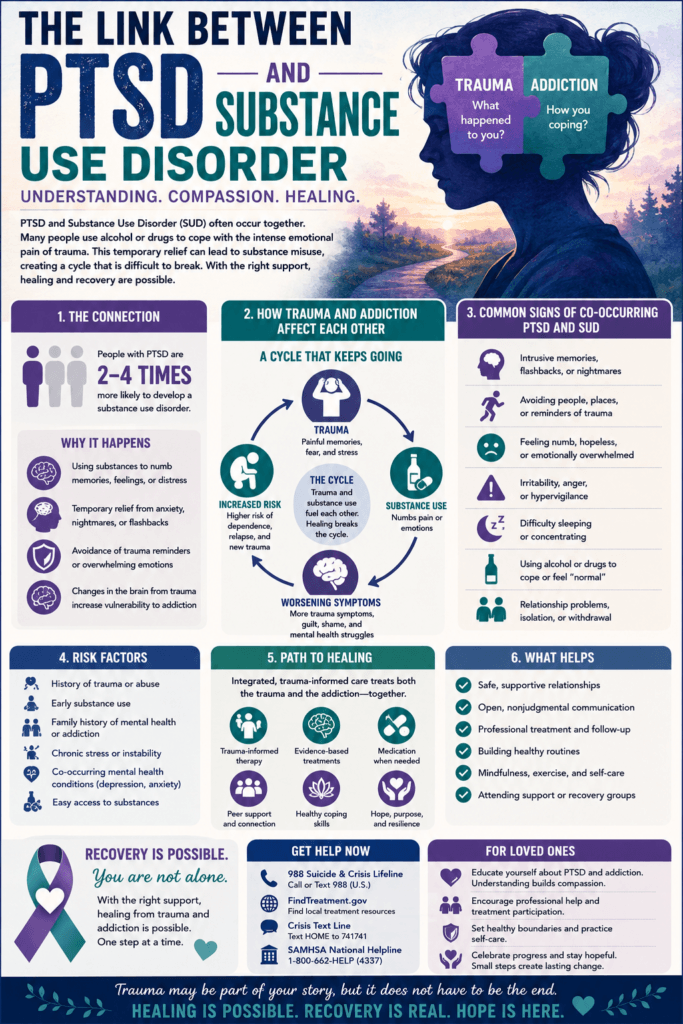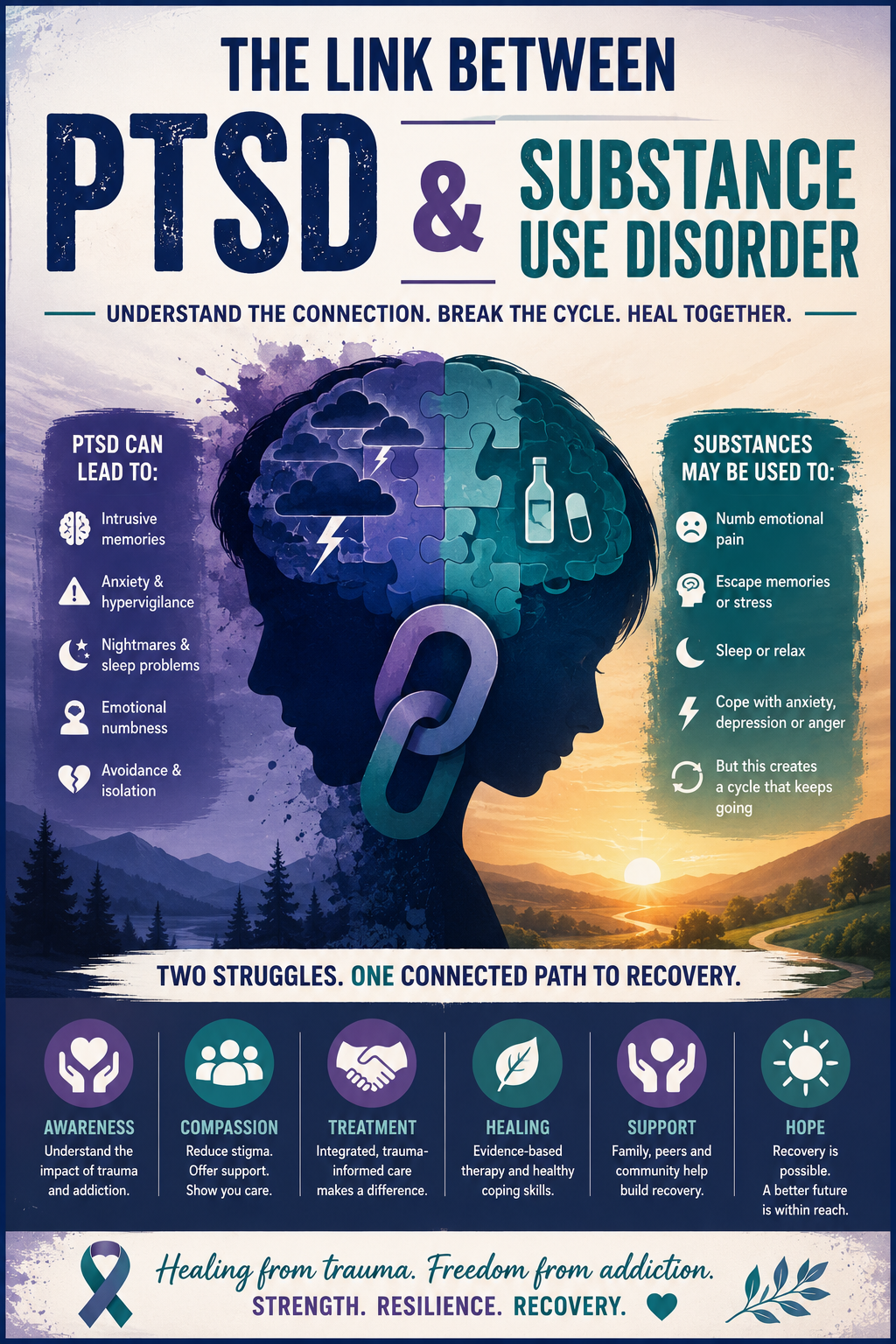
Post-traumatic stress disorder (PTSD) and substance use disorder (SUD) are closely connected conditions that often occur together and can have profound effects on a person’s physical health, mental well-being, relationships, and overall quality of life. PTSD develops after experiencing or witnessing a traumatic event, such as military combat, childhood abuse, sexual assault, domestic violence, serious accidents, natural disasters, or other life-threatening situations. In an effort to cope with distressing symptoms like anxiety, flashbacks, nightmares, emotional numbness, or chronic stress, some individuals turn to alcohol or drugs for temporary relief. While substances may briefly reduce emotional discomfort, they do not resolve the underlying trauma and frequently contribute to worsening PTSD symptoms, dependence, and addiction. Research shows that PTSD and substance use disorder share overlapping biological, psychological, and environmental risk factors, highlighting the need for integrated, trauma-informed treatment. By understanding how these conditions influence one another, individuals, families, healthcare professionals, and communities can better recognize the value of early intervention, compassionate support, and evidence-based care in promoting lasting recovery.
The Link Between PTSD and Substance Use Disorder
Post-traumatic stress disorder (PTSD) and substance use disorder (SUD) are closely connected conditions that frequently occur together. PTSD develops after a person experiences or witnesses a traumatic event such as military combat, physical or sexual assault, domestic violence, serious accidents, natural disasters, childhood abuse, or other life-threatening situations. While many people gradually recover after trauma, others develop persistent symptoms that interfere with daily life. Research shows that individuals with PTSD are significantly more likely to develop substance use disorders, making integrated treatment essential for long-term recovery.
Common Symptoms of PTSD
PTSD affects emotional, psychological, and physical well-being. Symptoms generally fall into four major categories:
- Intrusive symptoms
- Flashbacks
- Disturbing memories
- Nightmares
- Emotional distress when reminded of the trauma
- Avoidance behaviors
- Avoiding people, places, or situations linked to the trauma
- Avoiding conversations or thoughts about the traumatic event
- Negative changes in mood and thinking
- Emotional numbness
- Feelings of guilt or shame
- Depression
- Difficulty experiencing positive emotions
- Negative beliefs about oneself or others
- Increased arousal and reactivity
- Hypervigilance
- Irritability
- Difficulty sleeping
- Exaggerated startle response
- Difficulty concentrating
These symptoms can become so distressing that some individuals begin using alcohol or drugs in an attempt to escape emotional pain or temporarily reduce traumatic memories.
The Self-Medication Hypothesis
One of the most widely accepted explanations for the connection between PTSD and substance use disorder is the self-medication hypothesis. According to this theory, individuals may use substances to reduce symptoms associated with trauma.
Common reasons include:
- Relieving anxiety or panic
- Reducing chronic stress
- Improving sleep
- Numbing emotional pain
- Escaping intrusive thoughts or flashbacks
- Managing depression or fatigue
Although alcohol, opioids, stimulants, or cannabis may provide temporary relief, they do not treat the underlying trauma. Over time, substance use often worsens PTSD symptoms while increasing the risk of addiction.
How PTSD and Addiction Affect the Brain
Trauma and chronic stress produce measurable changes in several brain regions involved in emotion, memory, and decision-making.
Affected brain regions include:
- Amygdala – heightened fear responses
- Hippocampus – impaired memory processing
- Prefrontal cortex – reduced impulse control and emotional regulation
Substance use also alters the brain’s reward system by increasing dopamine release and reinforcing drug-seeking behaviors. When PTSD and substance use disorder occur together, each condition strengthens the other, making recovery more difficult.
A Two-Way Relationship
The relationship between PTSD and substance use disorder is bidirectional, meaning each condition can increase the risk of the other.
PTSD may:
- Increase vulnerability to alcohol or drug use
- Reduce healthy coping abilities
- Increase emotional distress
Substance use may:
- Increase exposure to violence, accidents, or assault
- Worsen PTSD symptoms during intoxication or withdrawal
- Interfere with recovery from trauma
- Increase the likelihood of additional traumatic experiences
This creates a cycle in which trauma and addiction continually reinforce one another.
Who Is Most at Risk?
Certain populations experience higher rates of both PTSD and substance use disorder.
Higher-risk groups include:
- Military veterans
- First responders
- Survivors of childhood abuse
- Survivors of domestic violence
- Survivors of sexual assault
- Refugees
- Individuals experiencing homelessness
- People exposed to repeated community violence
- Individuals with complex trauma involving multiple traumatic experiences
Why Integrated Treatment Matters
Because PTSD and substance use disorder are so closely linked, treating only one condition often produces poorer outcomes. Addressing addiction without treating trauma may leave unresolved emotional pain that contributes to relapse. Likewise, treating PTSD while ignoring active substance use can reduce the effectiveness of psychotherapy.
Integrated treatment addresses both disorders simultaneously through coordinated, patient-centered care, improving emotional stability, treatment engagement, and long-term recovery.
Evidence-Based Treatment Options
Several evidence-based treatments have demonstrated effectiveness for co-occurring PTSD and substance use disorder.
Common treatment approaches include:
- Trauma-informed care
- Cognitive Behavioral Therapy (CBT)
- Dialectical Behavior Therapy (DBT)
- Motivational Interviewing (MI)
- Seeking Safety
- Cognitive Processing Therapy (CPT)
- Eye Movement Desensitization and Reprocessing (EMDR)
- Prolonged Exposure Therapy (when clinically appropriate)
- Medication management for PTSD, anxiety, depression, or substance use disorder
Treatment plans are individualized based on each person’s symptoms, trauma history, stage of recovery, and readiness for therapy.
The Importance of Family and Community Support
Recovery is strengthened by supportive relationships. Family members who understand the connection between trauma and addiction can provide encouragement, reduce stigma, reinforce healthy coping skills, and motivate continued participation in treatment.
Helpful community resources include:
- Peer recovery support groups
- Veteran support services
- Trauma-informed treatment centers
- Community behavioral health clinics
- Crisis intervention services
- Recovery coaches
- Mental health counselors
- Addiction treatment programs
These resources provide education, support, and long-term recovery assistance.
Hope for Recovery
Recovery from PTSD and substance use disorder is possible, although it often requires patience, ongoing treatment, and strong support systems. Healing involves much more than achieving sobriety. It includes learning healthy ways to regulate emotions, process traumatic experiences, rebuild relationships, strengthen resilience, and improve overall quality of life.
By addressing both trauma and addiction through evidence-based, trauma-informed care, individuals can reduce symptoms, lower the risk of relapse, restore emotional well-being, and build healthier, more meaningful lives grounded in hope, healing, and lasting recovery.
Self-Management Strategies to Understand the Link Between PTSD and Substance Use Disorder
Post-traumatic stress disorder (PTSD) and substance use disorder (SUD) often occur together because many individuals use alcohol or drugs to cope with traumatic memories, anxiety, emotional numbness, or sleep disturbances. While substances may provide temporary relief, they do not treat the underlying trauma and can worsen PTSD symptoms over time. Understanding this connection empowers individuals to replace unhealthy coping mechanisms with healthier, evidence-based recovery strategies. Self-management plays a vital role in reducing relapse risk, improving emotional regulation, and supporting long-term healing.
1. Learn About PTSD and Addiction
Educate yourself about how trauma affects the brain, emotions, and behavior. Understanding that PTSD can increase vulnerability to substance use helps reduce self-blame and reinforces that both conditions are treatable. Knowledge also encourages active participation in recovery and informed decision-making.
2. Identify Personal Trauma Triggers
Recognize situations, memories, people, places, sounds, smells, or emotions that increase PTSD symptoms or substance cravings. Keeping a journal can help identify patterns and provide valuable information to discuss with your treatment team. Recognizing triggers early allows you to use coping skills before emotional distress escalates.
3. Practice Healthy Coping Skills
Replace substance use with healthier ways to manage stress and emotional pain. Helpful coping strategies include deep breathing, mindfulness meditation, progressive muscle relaxation, journaling, listening to calming music, engaging in creative hobbies, spending time in nature, prayer or spiritual practices if meaningful, and regular physical activity. Practicing these skills consistently makes them more effective during periods of distress.
4. Build Emotional Regulation Skills
PTSD can cause intense emotional reactions, while substance use often worsens emotional instability. Learn techniques such as grounding exercises, identifying emotions without judgment, practicing mindfulness, and using distress tolerance skills to manage overwhelming feelings without turning to alcohol or drugs.
5. Maintain a Structured Daily Routine
A consistent daily schedule provides stability and predictability, which can reduce PTSD symptoms and support recovery. Prioritize regular sleep, nutritious meals, hydration, exercise, medication adherence if prescribed, and scheduled therapy appointments. Healthy routines strengthen both physical and emotional well-being.
6. Attend Integrated Treatment
Because PTSD and substance use disorder influence one another, participate in treatment that addresses both conditions simultaneously. Attend counseling sessions, addiction treatment, trauma-informed therapy, peer recovery meetings, and follow-up appointments consistently to support comprehensive healing.
7. Develop a Personalized Relapse Prevention Plan
Work with your healthcare provider to identify high-risk situations, early warning signs of relapse, healthy coping strategies, emergency contacts, and steps to take if cravings or PTSD symptoms intensify. Review and update the plan regularly as recovery progresses.
8. Build a Strong Support Network
Stay connected with trusted family members, friends, peer recovery groups, mentors, or faith communities. Positive social support reduces isolation, encourages accountability, and provides encouragement during difficult moments.
9. Practice Good Sleep Hygiene
Sleep disturbances are common in PTSD and may increase cravings for alcohol or other substances. Improve sleep by maintaining a regular bedtime, limiting caffeine and screen time before bed, creating a relaxing nighttime routine, and discussing persistent sleep problems with your healthcare provider.
10. Avoid High-Risk Situations
Identify environments, relationships, or activities associated with past substance use or trauma exposure. When possible, avoid situations that increase cravings or emotional distress, especially during early recovery, while developing healthier alternatives with your treatment team.
11. Practice Self-Compassion
Recovery from PTSD and substance use disorder is a gradual process that may include setbacks. Replace self-criticism with self-compassion by recognizing that healing takes time. Celebrate progress, learn from challenges, and remember that asking for help demonstrates strength rather than weakness.
12. Know When to Seek Immediate Help
Recognize when PTSD symptoms or substance cravings become difficult to manage alone. Persistent flashbacks, severe anxiety, suicidal thoughts, relapse, or overwhelming emotional distress should be reported immediately to a mental health professional or addiction treatment provider. In the United States and Canada, calling or texting 988 connects individuals with trained crisis counselors who can provide immediate support during a mental health crisis.
Conclusion
Understanding the close relationship between PTSD and substance use disorder helps individuals recognize that addiction is often an attempt to cope with unresolved trauma rather than a personal failure. Through self-education, trigger awareness, healthy coping strategies, emotional regulation, structured routines, integrated treatment, and supportive relationships, individuals can actively participate in their recovery and reduce the risk of relapse. Healing requires patience, commitment, and ongoing support, but evidence shows that addressing both PTSD and substance use together leads to better mental health, stronger resilience, and improved long-term recovery. By practicing effective self-management and seeking professional help when needed, individuals can move beyond the cycle of trauma and addiction toward a healthier, more hopeful future.
Family Support Strategies to Understand the Link Between PTSD and Substance Use Disorder
Post-traumatic stress disorder (PTSD) and substance use disorder (SUD) frequently occur together because many individuals use alcohol or drugs to cope with the distressing symptoms of trauma. Family members often witness changes in mood, behavior, relationships, and daily functioning but may not understand that these conditions are closely connected. Learning about the relationship between PTSD and addiction enables families to respond with compassion, encourage treatment, and provide meaningful support while maintaining healthy boundaries. A trauma-informed family approach can strengthen recovery and improve long-term outcomes.
1. Learn About PTSD and Substance Use Disorder
Educate yourself about how trauma affects the brain, emotions, and behavior. Understanding that substance use may develop as an unhealthy coping strategy rather than a lack of willpower helps reduce blame, stigma, and frustration while promoting empathy and informed support.
2. Recognize PTSD Symptoms
Families should become familiar with common PTSD symptoms, including flashbacks, nightmares, avoidance of trauma reminders, emotional numbness, anxiety, hypervigilance, irritability, difficulty sleeping, and problems with concentration. Recognizing these symptoms helps family members better understand their loved one’s experiences and respond appropriately.
3. Encourage Open and Compassionate Communication
Create an environment where your loved one feels safe discussing their emotions without fear of criticism or judgment. Listen carefully, validate their feelings, and avoid minimizing statements such as “Just move on” or “That happened a long time ago.” Compassionate listening builds trust and strengthens family relationships.
4. Support Integrated Treatment
Encourage participation in treatment programs that address both PTSD and substance use disorder simultaneously. Offer practical support by helping schedule appointments, providing transportation, or assisting with childcare if needed. Integrated treatment often leads to better recovery outcomes than treating either condition alone.
5. Respect Trauma-Related Boundaries
Trauma survivors may not be ready to discuss painful experiences. Respect your loved one’s pace of healing and avoid pressuring them to share details about their trauma. Allow mental health professionals to guide trauma-focused discussions during therapy.
6. Learn to Recognize Triggers
Work together to identify situations, people, places, or events that increase PTSD symptoms or substance cravings. Understanding these triggers allows families to help reduce unnecessary stress and encourage healthy coping strategies before emotional distress escalates.
7. Reinforce Healthy Coping Skills
Encourage activities that support emotional well-being, such as exercise, mindfulness, hobbies, creative expression, relaxation techniques, spending time outdoors, or participating in peer recovery groups. Joining your loved one in healthy activities can strengthen both recovery and family relationships.
8. Avoid Enabling Substance Use
Support recovery without unintentionally enabling continued substance use. Avoid providing money for alcohol or drugs, making excuses for substance-related behaviors, or protecting your loved one from the natural consequences of their actions. Instead, encourage accountability while maintaining compassion.
9. Develop a Family Crisis Plan
Families should know how to respond if PTSD symptoms or substance use worsen. Keep contact information for mental health providers, addiction specialists, emergency services, and local crisis resources readily available. Discuss the plan during stable periods so everyone understands their role during a crisis.
10. Promote Healthy Daily Routines
Encourage regular sleep schedules, nutritious meals, physical activity, medication adherence, and consistent attendance at therapy or recovery meetings. Healthy routines support emotional regulation, reduce stress, and improve overall recovery.
11. Participate in Family Therapy or Support Groups
Family counseling and educational support groups can improve communication, strengthen problem-solving skills, and help loved ones better understand both PTSD and addiction. Learning together fosters teamwork and creates a stronger recovery environment.
12. Care for Your Own Well-Being
Supporting someone with PTSD and substance use disorder can be emotionally exhausting. Family members should prioritize their own physical and mental health by seeking counseling, joining family support groups, maintaining healthy boundaries, practicing stress management, and engaging in enjoyable activities. Caring for yourself allows you to provide more effective long-term support.
Conclusion
Families are essential partners in helping individuals recover from the combined challenges of PTSD and substance use disorder. By learning about trauma, recognizing PTSD symptoms, encouraging integrated treatment, supporting healthy coping skills, and communicating with empathy, families create an environment that promotes healing rather than shame. Recovery is rarely a straight path, and setbacks may occur, but consistent family support can strengthen resilience, reduce isolation, and encourage continued engagement in treatment. When families combine compassion with healthy boundaries and evidence-based knowledge, they help their loved ones move beyond trauma and addiction toward lasting recovery, improved mental health, and a more hopeful future.
Community Resource Strategies to Understand the Link Between PTSD and Substance Use Disorder
Post-traumatic stress disorder (PTSD) and substance use disorder (SUD) frequently occur together because many individuals use alcohol or drugs to cope with the emotional distress caused by traumatic experiences. Since trauma affects not only individuals but also families and communities, recovery is most successful when comprehensive community resources provide coordinated, trauma-informed care. Mental health providers, addiction treatment programs, peer support organizations, healthcare systems, schools, workplaces, and community agencies all contribute to helping individuals understand and recover from these co-occurring conditions. Access to evidence-based services reduces stigma, improves treatment engagement, and promotes long-term recovery.
1. Utilize Integrated Behavioral Health Programs
Seek treatment programs that address both PTSD and substance use disorder simultaneously. Integrated behavioral health services combine addiction treatment, mental health counseling, medication management, and trauma-informed care into one coordinated treatment plan. Treating both conditions together generally leads to better outcomes than addressing each condition separately.
2. Connect with Trauma-Informed Addiction Treatment Centers
Many community addiction treatment programs now use trauma-informed care principles that emphasize safety, trust, collaboration, empowerment, and respect. These programs help individuals understand how trauma influences addiction while teaching healthier coping strategies that reduce the risk of relapse.
3. Participate in Peer Recovery Support Groups
Peer support groups provide encouragement from individuals with lived experience of trauma, addiction, or both. Recovery meetings, veteran support groups, and trauma-informed peer programs reduce isolation, increase hope, and reinforce healthy coping skills while creating a supportive recovery community.
4. Access Mental Health Counseling Services
Licensed psychologists, counselors, psychiatrists, social workers, and addiction specialists provide evidence-based therapies that address PTSD symptoms and substance use simultaneously. Community mental health centers often offer affordable or sliding-scale services that improve access to care.
5. Utilize Crisis Intervention Services
Individuals and families should become familiar with available crisis resources before an emergency occurs. Mobile crisis teams, behavioral health crisis centers, emergency departments, and the 988 Suicide & Crisis Lifeline in the United States and Canada provide immediate assistance during severe emotional distress, suicidal thoughts, or mental health emergencies.
6. Participate in Community Education Programs
Hospitals, public health departments, universities, nonprofit organizations, and recovery centers frequently offer workshops on trauma, PTSD, addiction, stress management, and mental wellness. Community education helps reduce stigma while increasing awareness of evidence-based treatment options.
7. Encourage Family Education and Support
Community organizations often provide family counseling, caregiver education, and support groups that help loved ones understand the relationship between PTSD and substance use disorder. Educated families are better prepared to provide compassionate support and encourage ongoing treatment.
8. Utilize Veteran and First Responder Services
Veterans, active-duty military personnel, police officers, firefighters, emergency medical personnel, and other first responders often face higher rates of trauma exposure. Specialized community programs designed for these populations offer trauma-informed counseling, peer support, vocational services, and addiction treatment tailored to their unique experiences.
9. Promote Recovery Through Community Wellness Programs
Community recreation centers, exercise programs, yoga classes, mindfulness groups, art therapy, volunteer opportunities, and vocational rehabilitation programs help individuals develop healthy routines, reduce stress, improve emotional regulation, and rebuild meaningful lives after trauma and addiction.
10. Support Trauma-Informed Schools and Workplaces
Schools, colleges, and employers can strengthen recovery by providing employee assistance programs, counseling services, mental health education, flexible accommodations, and trauma-informed policies that reduce stigma and encourage early intervention.
11. Advocate for Accessible Behavioral Healthcare
Community leaders and advocacy organizations can improve recovery outcomes by supporting policies that expand access to affordable mental health care, addiction treatment, telehealth services, housing assistance, transportation, and recovery support programs. Reducing barriers allows more individuals to receive timely, comprehensive care.
12. Foster Community Awareness and Reduce Stigma
Public awareness campaigns that explain the connection between trauma and addiction help replace judgment with understanding. Reducing stigma encourages individuals to seek help earlier, participate in treatment, and remain engaged in recovery without fear of discrimination or shame.
Conclusion
Communities play a vital role in helping individuals understand and recover from the complex relationship between PTSD and substance use disorder. By providing integrated behavioral healthcare, trauma-informed addiction treatment, peer recovery support, crisis intervention, family education, and public awareness initiatives, communities create environments that promote healing and resilience. Recovery is strengthened when healthcare providers, educators, employers, faith communities, and advocacy organizations work together to address both trauma and addiction with compassion and evidence-based care. Through coordinated community support, individuals affected by PTSD and substance use disorder can access the resources they need to reduce symptoms, prevent relapse, rebuild healthy relationships, and achieve lasting recovery and improved quality of life.
Frequently Asked Questions
Here are some common questions:
1. What is post-traumatic stress disorder (PTSD)?
PTSD is a mental health condition that can develop after experiencing or witnessing a traumatic event such as military combat, childhood abuse, sexual assault, domestic violence, serious accidents, natural disasters, or other life-threatening situations. Symptoms may include flashbacks, nightmares, avoidance, anxiety, emotional numbness, and hypervigilance.
2. What is substance use disorder (SUD)?
Substance use disorder is a chronic medical condition characterized by the inability to control the use of alcohol or drugs despite harmful consequences. It affects brain function, behavior, decision-making, and physical health and ranges from mild to severe.
3. How are PTSD and substance use disorder connected?
Many individuals with PTSD use alcohol or drugs to temporarily reduce symptoms such as anxiety, nightmares, intrusive memories, emotional pain, or sleep disturbances. Although substances may provide short-term relief, they often worsen PTSD symptoms over time and increase the risk of addiction.
4. Why do people with PTSD have a higher risk of developing addiction?
Trauma can change the brain’s stress-response systems, emotional regulation, and reward pathways. These changes may increase vulnerability to substance use as a coping mechanism. In addition, chronic stress, depression, anxiety, and social isolation often contribute to substance misuse.
5. Does everyone with PTSD develop a substance use disorder?
No. Many people with PTSD never develop addiction. Factors such as strong family support, healthy coping skills, early mental health treatment, resilience, and access to community resources can reduce the risk of developing a substance use disorder.
6. Can substance use make PTSD symptoms worse?
Yes. Alcohol and drugs may temporarily numb emotional pain, but they often increase anxiety, depression, sleep disturbances, emotional instability, and intrusive memories over time. Substance use can also interfere with trauma recovery and make psychotherapy less effective.
7. What are common signs that someone may have both PTSD and substance use disorder?
Common signs include nightmares, flashbacks, avoidance of trauma reminders, emotional numbness, irritability, anxiety, depression, sleep problems, increased alcohol or drug use, cravings, social withdrawal, relationship difficulties, poor work or school performance, and unsuccessful attempts to stop using substances.
8. How are PTSD and substance use disorder treated together?
Current evidence supports integrated treatment that addresses both conditions simultaneously. Treatment may include trauma-informed care, Cognitive Behavioral Therapy (CBT), Dialectical Behavior Therapy (DBT), Motivational Interviewing (MI), Seeking Safety, Eye Movement Desensitization and Reprocessing (EMDR), medication when appropriate, peer support, and relapse prevention planning.
9. What is trauma-informed care?
Trauma-informed care is an approach that recognizes the widespread effects of trauma and creates treatment environments based on safety, trust, collaboration, empowerment, and respect. Rather than asking, “What’s wrong with you?” providers focus on understanding, “What happened to you?” to support healing without causing additional emotional harm.
10. How can families help someone with PTSD and substance use disorder?
Families can educate themselves about trauma and addiction, encourage participation in treatment, practice compassionate communication, avoid judgment and blame, recognize warning signs, reinforce healthy coping skills, maintain healthy boundaries, and develop a crisis plan for emergencies.
11. What community resources are available?
Helpful community resources include trauma-informed addiction treatment programs, community mental health centers, peer recovery groups, family support groups, crisis stabilization centers, veteran services, behavioral health clinics, employee assistance programs, and the 988 Suicide & Crisis Lifeline in the United States and Canada for immediate mental health crises.
12. Can someone fully recover from both PTSD and substance use disorder?
Yes. Many individuals achieve long-term recovery through comprehensive treatment, healthy coping skills, medication when appropriate, family support, peer recovery programs, and ongoing mental health care. Recovery is a gradual process, but significant improvements in quality of life are possible.
13. What can individuals do to reduce the risk of relapse?
Individuals can lower relapse risk by attending therapy regularly, taking prescribed medications as directed, avoiding high-risk situations, practicing stress-management techniques, maintaining healthy routines, participating in support groups, building supportive relationships, and seeking help early when PTSD symptoms or cravings increase.
14. When should someone seek immediate help?
Immediate professional help is needed if someone experiences severe PTSD symptoms, overwhelming cravings, relapse, suicidal thoughts, self-harm behaviors, or an inability to remain safe. Contact a mental health professional, go to the nearest emergency department, call emergency services if there is immediate danger, or call or text 988 in the United States and Canada to reach trained crisis counselors. Early intervention can be life-saving and supports continued recovery.
Conclusion
The strong connection between PTSD and substance use disorder demonstrates that addiction is often closely linked to unresolved trauma rather than simply a matter of personal choice or willpower. Trauma can alter the brain’s stress response, emotional regulation, and decision-making processes, increasing the likelihood that individuals will use substances to cope with overwhelming emotional pain. Unfortunately, this temporary relief often leads to worsening mental health symptoms, dependence, and a cycle that becomes increasingly difficult to break. Lasting recovery requires an integrated approach that treats both PTSD and substance use disorder simultaneously through trauma-informed care, evidence-based psychotherapy, medication when appropriate, peer support, and healthy coping strategies. Families, healthcare professionals, and community organizations all play essential roles in supporting recovery by reducing stigma, encouraging treatment participation, and creating safe, supportive environments. With early intervention, comprehensive treatment, and ongoing support, individuals living with both PTSD and substance use disorder can heal from trauma, maintain recovery, strengthen resilience, and build healthier, more meaningful lives filled with hope and purpose.
Video: What Happens When You Don’t Treat PTSD #addiction #trauma #recovery