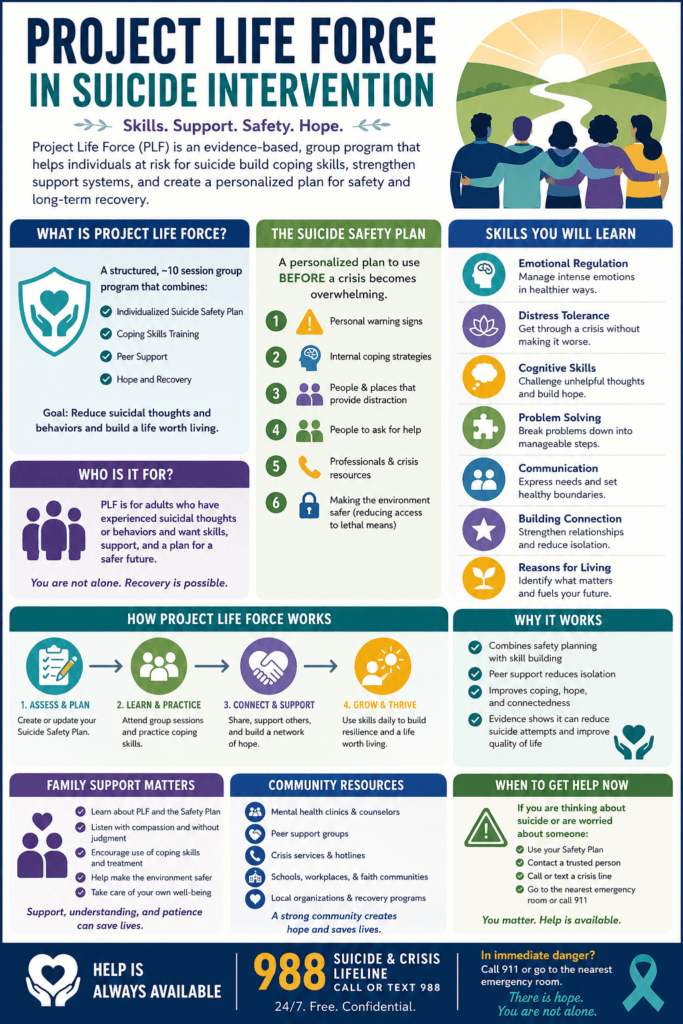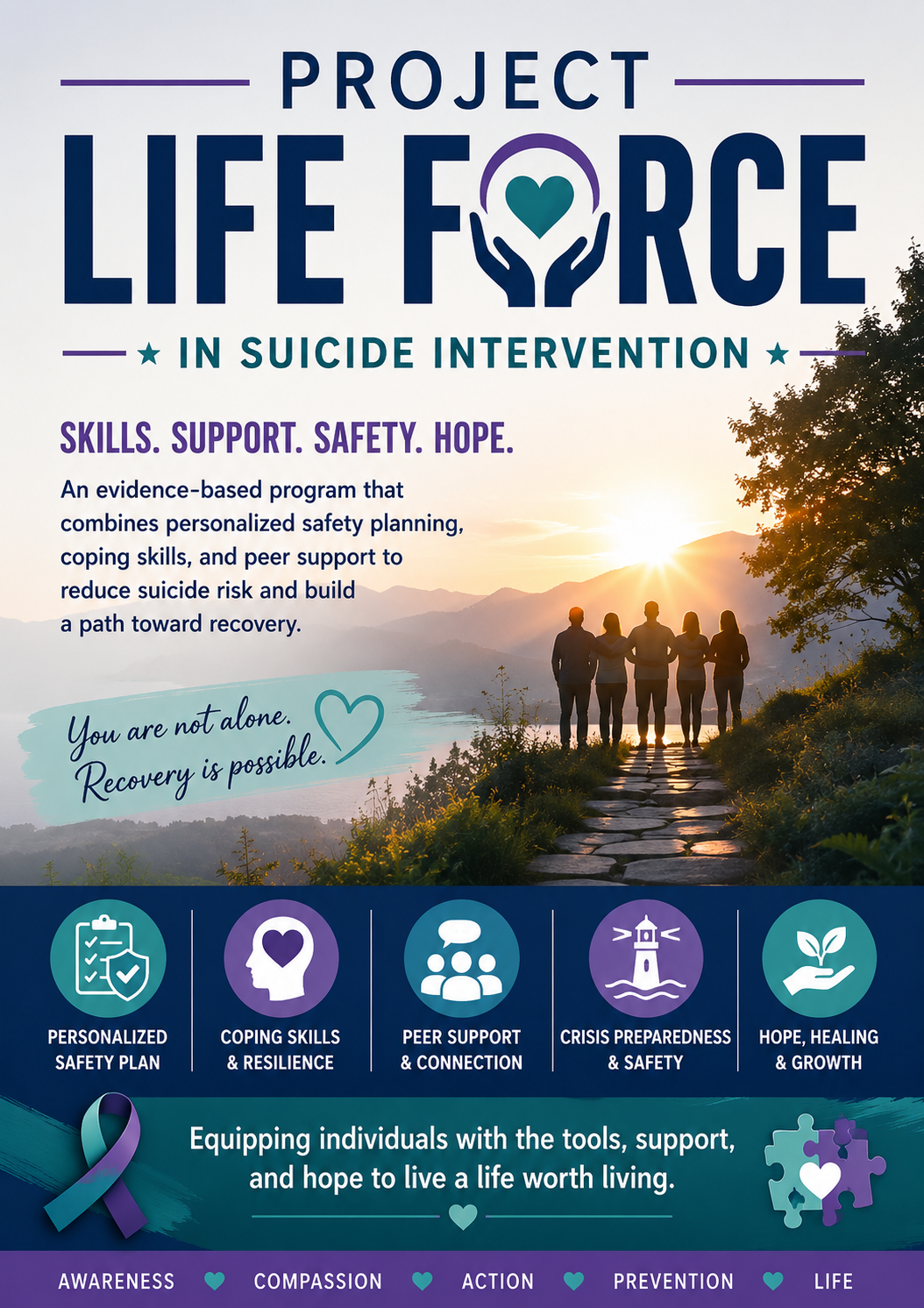
Suicide is a major public health concern that affects individuals, families, and communities across the world. While immediate crisis intervention is essential, long-term recovery often requires practical skills, ongoing support, and meaningful connections with others. Project Life Force (PLF) is an evidence-based, group-based suicide prevention program that builds upon the use of individualized suicide safety plans by teaching participants effective coping strategies, emotional regulation, problem-solving skills, and ways to strengthen social support. Originally developed for veterans at high risk for suicide, Project Life Force has demonstrated promise as a structured intervention that helps individuals recognize warning signs, respond to emotional crises more effectively, and develop resilience. By combining peer support with evidence-based therapeutic techniques, PLF empowers participants to move beyond crisis management and work toward sustained recovery and improved quality of life.
Project Life Force (PLF): A Group-Based Suicide Intervention Program
Project Life Force (PLF) is an evidence-based, manualized suicide prevention program designed to reduce suicidal thoughts and behaviors by combining individualized suicide safety planning with group skills training and peer support. Originally developed by psychiatrist Marianne Goodman and colleagues within the U.S. Department of Veterans Affairs, PLF was initially created for veterans at high risk for suicide but has broader applications for adults experiencing suicidal crises.
Purpose of Project Life Force
Traditional suicide prevention often focuses on creating an individual safety plan. While safety plans are highly effective, many individuals struggle to use them during periods of intense emotional distress. Project Life Force enhances the effectiveness of safety planning by teaching participants practical coping skills, emotional regulation techniques, problem-solving skills, and ways to build supportive social connections in a structured group environment.
Core Components
Project Life Force typically consists of approximately 10 structured group sessions led by trained mental health professionals. Each session reinforces participants’ personalized suicide safety plans while teaching skills that can reduce future suicide risk.
Major components include:
- Developing and updating an individualized Suicide Safety Plan
- Identifying personal warning signs
- Recognizing emotional and environmental triggers
- Learning healthy coping strategies
- Building emotional regulation skills adapted from Dialectical Behavior Therapy
- Strengthening communication skills
- Increasing problem-solving abilities
- Practicing crisis response strategies
- Reducing access to lethal means during periods of crisis
- Increasing connectedness and peer support
The Suicide Safety Plan
A personalized safety plan serves as the foundation of Project Life Force. Participants learn to use the plan before suicidal thoughts become overwhelming.
The safety plan generally includes:
- Personal warning signs
- Internal coping strategies
- People and places that provide distraction
- Trusted family members or friends for support
- Mental health professionals and crisis resources
- Strategies to make the environment safer by limiting access to lethal means
Skills Taught During PLF
Participants practice evidence-based coping skills such as:
- Mindfulness
- Distress tolerance
- Emotion regulation
- Cognitive restructuring
- Behavioral activation
- Healthy communication
- Goal setting
- Building resilience
- Relapse prevention for suicidal crises
- Identifying reasons for living
Why the Group Format Matters
Unlike individual safety planning alone, Project Life Force allows participants to:
- Learn from others with similar experiences
- Reduce feelings of isolation
- Increase hope through peer support
- Practice coping skills in a supportive environment
- Build accountability
- Develop stronger social connectedness, which is an important protective factor against suicide.
Research Findings
Early pilot studies demonstrated that Project Life Force is feasible, acceptable to participants, and associated with improvements in:
- Suicide coping skills
- Hopefulness
- Treatment engagement
- Quality of safety plans
- Social connectedness
- Emotional regulation
More recent randomized clinical trial findings published in 2026 reported that adding Project Life Force to usual care reduced suicide attempts and improved suicide-specific coping skills compared with usual care alone among high-risk veterans.
Advantages of Project Life Force
Benefits include:
- Evidence-informed intervention
- Combines individual planning with group support
- Structured, manualized curriculum
- Practical skills that can be applied immediately
- Adaptable for telehealth delivery
- Encourages long-term recovery and resilience
- Can complement other suicide-specific treatments and medications when indicated.
Limitations
Project Life Force is not designed to replace emergency psychiatric care. Individuals experiencing imminent suicide risk may require hospitalization or intensive crisis services before participating in a group intervention. Additionally, while PLF has strong evidence in veteran populations, research is ongoing to determine its effectiveness in broader civilian populations.
Conclusion
Project Life Force represents an innovative approach to suicide prevention by combining personalized safety planning, evidence-based coping skills, and the healing power of peer support. Rather than relying solely on crisis intervention, PLF equips participants with practical tools to recognize warning signs, manage emotional distress, strengthen relationships, and navigate future crises safely. Emerging research suggests that this comprehensive approach can reduce suicide attempts while improving coping abilities and engagement in ongoing mental health treatment, making Project Life Force a promising addition to modern suicide prevention programs.
If this topic is personally relevant to you or someone you’re concerned about and there is an immediate risk of self-harm, contact your local emergency services or a suicide crisis service right away. In the U.S. and Canada, calling or texting 988 connects you to trained crisis counselors.
Self-Management Strategies to Understand Project Life Force in Suicide Intervention
Project Life Force (PLF) emphasizes that recovery from suicidal thoughts is an ongoing process that involves preparation, self-awareness, and the development of practical coping skills. Individuals participating in Project Life Force can strengthen their ability to manage emotional crises by actively engaging in daily self-management strategies that reinforce their personalized suicide safety plan and build resilience over time.
1. Learn Your Personal Warning Signs
One of the first self-management skills taught in Project Life Force is recognizing the early warning signs that suicidal thoughts may be increasing. These warning signs may include changes in mood, social withdrawal, hopelessness, increased substance use, sleep disturbances, or persistent negative thinking. Becoming aware of these signals allows individuals to respond early before emotions become overwhelming.
2. Keep Your Suicide Safety Plan Updated
A suicide safety plan should remain easily accessible and be reviewed regularly. Update emergency contacts, coping strategies, reasons for living, and crisis resources whenever circumstances change. Practicing the safety plan during periods of emotional stability makes it easier to use during times of crisis.
3. Practice Healthy Coping Skills Every Day
Project Life Force teaches that coping skills become more effective through regular practice rather than only during emergencies. Helpful coping techniques include deep breathing, mindfulness meditation, journaling, listening to calming music, exercising, engaging in hobbies, prayer or spiritual practices if meaningful, and spending time in nature. These healthy habits strengthen emotional resilience and reduce vulnerability to suicidal crises.
4. Identify Emotional Triggers
Keeping a journal can help identify situations, thoughts, relationships, or life events that increase emotional distress. Understanding personal triggers allows individuals to prepare coping strategies in advance and avoid situations that may intensify suicidal thoughts whenever possible.
5. Build Emotional Regulation Skills
Strong emotions can make it difficult to think clearly. Learning emotional regulation skills such as accepting emotions without judgment, practicing grounding exercises, and using relaxation techniques can reduce emotional intensity and improve decision-making during stressful moments.
6. Strengthen Problem-Solving Abilities
Many suicidal crises occur when problems feel unsolvable. Break overwhelming situations into smaller, manageable steps. Focus on addressing one problem at a time rather than trying to solve everything at once. Seeking guidance from trusted individuals can also improve problem-solving abilities.
7. Stay Connected with Supportive People
Social isolation increases suicide risk. Maintain regular contact with family members, trusted friends, peer support groups, therapists, or recovery communities. Even brief conversations can reduce feelings of loneliness and provide encouragement during difficult times.
8. Reduce Access to Lethal Means
One of the most effective suicide prevention strategies is creating a safer environment. Store medications securely, limit access to firearms or other lethal means when experiencing suicidal thoughts, and ask trusted individuals to assist with safety planning if needed.
9. Maintain Consistent Mental Health Treatment
Attend counseling appointments, participate actively in therapy, take prescribed medications as directed, and communicate honestly with healthcare providers about changes in mood or suicidal thoughts. Consistency in treatment greatly improves long-term recovery outcomes.
10. Develop a Daily Wellness Routine
Healthy daily habits improve both physical and emotional well-being. Prioritize adequate sleep, balanced nutrition, regular physical activity, hydration, stress management, and avoiding alcohol or recreational drugs that may worsen depression or impulsivity.
11. Focus on Personal Reasons for Living
Project Life Force encourages individuals to identify meaningful reasons to continue living. These may include loved ones, personal goals, pets, faith, hobbies, future dreams, or opportunities to help others. Reviewing these reasons regularly can strengthen hope during difficult moments.
12. Know When to Seek Immediate Help
Self-management does not mean managing suicidal thoughts alone. If suicidal thoughts become overwhelming, the safety plan cannot be followed, or there is concern about acting on suicidal thoughts, seek immediate help by contacting a mental health professional, calling emergency services, or reaching out to a crisis hotline such as 988 in the United States and Canada. Prompt intervention can save lives.
Conclusion
Project Life Force teaches that suicide prevention is more than responding to a crisis—it is about building lifelong skills that strengthen resilience, emotional regulation, problem-solving, and social connectedness. Through regular practice of personalized safety planning, healthy coping strategies, supportive relationships, and ongoing mental health care, individuals can become better prepared to recognize warning signs early, manage emotional distress effectively, and reduce the risk of future suicidal crises. Self-management empowers people to take an active role in their recovery while recognizing that seeking help is a sign of strength, not weakness.
Family Support Strategies to Understand Project Life Force in Suicide Intervention
Family members play a vital role in supporting someone participating in Project Life Force (PLF). While PLF emphasizes that individuals develop personalized suicide safety plans and coping skills, family involvement can strengthen these efforts by providing encouragement, emotional support, and a safe environment. Families do not need to have all the answers; rather, they can learn how to recognize warning signs, respond compassionately, and support treatment while respecting the individual’s autonomy.
1. Learn About Project Life Force
Family members should become familiar with the goals and structure of Project Life Force. Understanding that PLF combines a personalized suicide safety plan, coping skills training, and group support helps families appreciate how the program promotes long-term recovery rather than focusing only on crisis intervention.
2. Encourage Open and Nonjudgmental Communication
Create an environment where your loved one feels safe discussing difficult emotions without fear of criticism or shame. Listen more than you speak, validate their feelings, and avoid minimizing statements such as “You’ll be fine” or “Just think positively.” Honest conversations can strengthen trust and encourage early help-seeking.
3. Become Familiar with the Safety Plan
With your loved one’s permission, review their personalized suicide safety plan together. Understand their warning signs, preferred coping strategies, emergency contacts, and crisis resources. Knowing the plan enables family members to provide effective support if emotional distress increases.
4. Learn to Recognize Warning Signs
Families should understand common warning signs of suicidal crises, including withdrawal from others, increased hopelessness, sudden mood changes, talking about death, giving away possessions, changes in sleep or appetite, increased substance use, or loss of interest in daily activities. Recognizing these changes early allows timely intervention.
5. Support Healthy Coping Skills
Encourage your loved one to practice the coping strategies learned in Project Life Force. Invite them to participate in healthy activities such as walking, exercising, cooking, creative hobbies, relaxation exercises, spiritual practices, or spending time outdoors. Participating together can strengthen both emotional well-being and family relationships.
6. Help Create a Safe Environment
One important aspect of suicide prevention is reducing access to lethal means during periods of crisis. Families can assist by safely storing medications, securing firearms when applicable, and removing other potentially dangerous items, while respecting the individual’s dignity and collaborating whenever possible.
7. Encourage Consistent Treatment Participation
Support attendance at therapy sessions, Project Life Force group meetings, medication appointments, and follow-up care. Offer transportation, help with scheduling, or childcare if needed. Consistent participation increases the likelihood that individuals will continue to build effective coping skills.
8. Promote Social Connection
Isolation increases suicide risk. Encourage healthy relationships with trusted friends, peer support groups, recovery communities, faith communities, or volunteer opportunities. Positive social connections reinforce one of the primary protective factors emphasized in Project Life Force.
9. Develop a Family Crisis Response Plan
Families should know exactly what to do if suicidal thoughts intensify. Keep emergency phone numbers readily available, identify the nearest emergency department, understand when to contact a mental health provider, and know how to access crisis services such as the 988 Suicide & Crisis Lifeline. Practicing the response plan ahead of time can reduce panic during an emergency.
10. Take Care of Your Own Mental Health
Supporting someone at risk for suicide can be emotionally challenging. Family members should seek their own counseling, support groups, education, or respite when needed. Caring for yourself helps prevent burnout and enables you to provide more consistent support to your loved one.
11. Celebrate Progress and Recovery
Recovery is built through many small successes. Acknowledge improvements such as attending treatment, using coping skills, reaching out for help, or completing personal goals. Positive reinforcement encourages continued participation in recovery and strengthens hope for the future.
12. Respond Calmly During Emotional Crises
If your loved one expresses suicidal thoughts, remain calm, listen carefully, and take their concerns seriously. Avoid arguments, criticism, or attempts to solve every problem immediately. Instead, encourage use of the safety plan, stay with the person if safety is a concern, and seek immediate professional or emergency assistance when needed.
Conclusion
Project Life Force recognizes that suicide prevention is strengthened when individuals are supported by informed, compassionate families. By understanding the program’s principles, encouraging open communication, reinforcing safety planning, supporting healthy coping skills, and responding calmly during times of distress, family members become valuable partners in recovery. Although families cannot eliminate every risk, their consistent presence, understanding, and willingness to work alongside mental health professionals can foster hope, resilience, and long-term healing while helping their loved one navigate life’s challenges more safely.
Community Resource Strategies to Understand Project Life Force in Suicide Intervention
Suicide prevention is most effective when individuals, families, healthcare professionals, and community organizations work together. Project Life Force (PLF) demonstrates that recovery extends beyond therapy sessions by combining personalized suicide safety planning with peer support and evidence-based coping skills. Community resources reinforce these goals by providing ongoing support, education, crisis services, and opportunities for meaningful social connection. Building a strong community support network helps reduce isolation, increases access to care, and promotes long-term recovery.
1. Connect with Mental Health Professionals
Community mental health centers, behavioral health clinics, psychologists, psychiatrists, licensed counselors, and social workers provide ongoing assessment, therapy, medication management, and crisis intervention. These professionals can reinforce the coping skills and safety planning principles taught in Project Life Force while tailoring treatment to individual needs.
2. Participate in Suicide Prevention Support Groups
Peer-led and professionally facilitated support groups offer individuals an opportunity to share experiences, learn coping strategies, and reduce feelings of isolation. Support groups complement Project Life Force by strengthening social connectedness, one of the most important protective factors against suicide.
3. Utilize Crisis Resources
Every community should promote awareness of available crisis services. Individuals and families should know how to access local mobile crisis teams, emergency psychiatric services, hospital emergency departments, and the 988 Suicide & Crisis Lifeline in the United States and Canada. Early use of crisis resources can prevent emotional distress from escalating into a life-threatening emergency.
4. Attend Community Suicide Prevention Education Programs
Many hospitals, universities, nonprofit organizations, and public health agencies offer workshops on suicide prevention, mental health awareness, and crisis response. Educational programs help community members recognize warning signs, reduce stigma, and understand how programs like Project Life Force support recovery.
5. Encourage Collaboration Between Healthcare Providers
Primary care providers, emergency departments, behavioral health specialists, addiction treatment programs, and community agencies should communicate and coordinate care whenever possible. Integrated care improves continuity of treatment, strengthens safety planning, and reduces gaps in follow-up after a suicidal crisis.
6. Promote Peer Recovery and Community Mentorship
Certified peer specialists and recovery coaches who have lived experience with mental health challenges can provide hope, encouragement, and practical guidance. Their personal understanding of recovery often helps individuals remain engaged in treatment and reinforces the message that recovery is possible.
7. Strengthen School and Workplace Mental Health Programs
Schools, colleges, and employers can contribute by implementing mental health education, employee assistance programs, counseling services, stress management initiatives, and suicide prevention training. Supportive educational and work environments encourage early intervention before emotional distress becomes severe.
8. Partner with Faith-Based and Community Organizations
Churches, synagogues, mosques, community centers, libraries, and civic organizations often provide social support, educational programs, volunteer opportunities, and compassionate outreach. For individuals who value spirituality or community involvement, these organizations can strengthen resilience and reduce social isolation.
9. Support Safe Environments Through Community Initiatives
Communities can reduce suicide risk by promoting safe firearm storage campaigns, medication disposal programs, mental health awareness events, and public education on reducing access to lethal means during times of crisis. These initiatives align closely with the safety planning principles emphasized in Project Life Force.
10. Advocate for Accessible Mental Health Services
Community leaders and organizations can improve suicide prevention by supporting policies that increase access to affordable behavioral health care, crisis stabilization services, telehealth programs, and evidence-based suicide prevention interventions. Reducing financial and geographic barriers allows more individuals to receive timely care.
11. Encourage Ongoing Follow-Up After a Crisis
Recovery continues long after an acute suicidal crisis has resolved. Community programs should encourage follow-up appointments, outreach calls, peer check-ins, support groups, and continued participation in therapy. Regular follow-up reduces feelings of abandonment and promotes long-term engagement in recovery.
12. Reduce Mental Health Stigma
Community education campaigns that normalize discussions about mental health and suicide encourage individuals to seek help earlier. Reducing stigma helps people recognize that suicidal thoughts are a serious health concern requiring compassionate treatment rather than judgment or shame.
Conclusion
Project Life Force demonstrates that suicide prevention is most successful when individuals are supported by a strong network of healthcare providers, peer groups, families, and community organizations. Community resources reinforce personalized safety planning, strengthen coping skills, promote connectedness, and ensure access to crisis intervention when needed. By investing in education, collaborative care, peer support, crisis services, and stigma reduction, communities can create environments where individuals experiencing suicidal thoughts feel supported, understood, and empowered to seek help. Together, these community-based strategies strengthen the protective factors that foster hope, resilience, and long-term recovery while reducing the risk of future suicidal crises.
Frequently Asked Questions
Here are some common questions:
1. What is Project Life Force (PLF)?
Project Life Force is an evidence-based, group-based suicide prevention program that combines an individualized suicide safety plan with coping skills training, emotional regulation techniques, peer support, and problem-solving strategies. The program helps participants reduce suicide risk while building resilience and hope for long-term recovery.
2. Who can benefit from Project Life Force?
PLF was originally developed for military veterans at high risk for suicide, but its principles may also benefit adults experiencing suicidal thoughts or behaviors. Mental health professionals can determine whether PLF is appropriate based on an individual’s needs, level of risk, and treatment plan.
3. How does Project Life Force differ from traditional suicide prevention?
Traditional suicide prevention often focuses on crisis intervention and creating a safety plan. Project Life Force expands on these approaches by teaching practical coping skills, improving emotional regulation, strengthening social support, and providing structured group sessions that reinforce recovery over time.
4. What is a suicide safety plan?
A suicide safety plan is a personalized, written plan that helps individuals recognize warning signs, use healthy coping strategies, contact supportive people, reach professional resources, and reduce access to lethal means during periods of emotional crisis. It serves as a step-by-step guide for managing suicidal thoughts safely.
5. What skills are taught in Project Life Force?
Participants learn emotional regulation, distress tolerance, mindfulness, communication skills, problem-solving, cognitive coping strategies, stress management, crisis planning, and techniques for building supportive relationships and identifying personal reasons for living.
6. Why is peer support an important part of the program?
Peer support helps reduce feelings of loneliness and isolation, which are significant risk factors for suicide. Sharing experiences with others who understand similar struggles can increase hope, encourage participation in treatment, and reinforce healthy coping strategies.
7. How can families support someone participating in Project Life Force?
Families can learn about suicide warning signs, become familiar with the individual’s safety plan (with permission), encourage treatment participation, provide compassionate listening, support healthy coping skills, help create a safer environment, and respond calmly during emotional crises.
8. Does Project Life Force replace emergency psychiatric care?
No. Project Life Force is not designed to replace emergency psychiatric treatment. Individuals experiencing imminent suicide risk require immediate evaluation through emergency services, crisis stabilization programs, or psychiatric hospitalization. PLF is intended to complement ongoing mental health treatment once the individual is medically and psychiatrically stable.
9. How do community resources strengthen Project Life Force?
Community mental health centers, peer support groups, crisis services, recovery organizations, faith communities, schools, workplaces, and healthcare providers all reinforce the skills learned in PLF. These resources provide ongoing support, education, and opportunities for social connection that help maintain recovery.
10. What research supports Project Life Force?
Research has shown that Project Life Force is a feasible and acceptable intervention that improves suicide-specific coping skills, hope, emotional regulation, treatment engagement, and social connectedness. Clinical studies also suggest that adding PLF to standard mental health care may reduce suicide attempts among individuals at high risk.
11. How long does Project Life Force typically last?
Project Life Force is generally delivered over approximately 10 structured group sessions, although the exact schedule may vary depending on the treatment setting. Each session builds upon the participant’s individualized safety plan while introducing new coping and recovery skills.
12. What should someone do if suicidal thoughts become overwhelming?
If suicidal thoughts become intense or immediate safety is at risk, individuals should use their personalized safety plan, contact a trusted family member or friend, notify their mental health provider, or seek immediate emergency assistance. In the United States and Canada, calling or texting 988 connects individuals with trained crisis counselors who can provide immediate support. Seeking help early is a sign of strength and can be life-saving.
Conclusion
Project Life Force represents an innovative and comprehensive approach to suicide intervention by integrating personalized safety planning, evidence-based coping skills, and the healing benefits of peer support. Rather than focusing solely on responding to suicidal crises, the program equips individuals with lifelong strategies to recognize warning signs early, regulate emotions, solve problems, and strengthen supportive relationships. Families, healthcare professionals, and community organizations all play important roles in reinforcing the skills learned through Project Life Force and creating environments that promote hope, resilience, and recovery. Although no single intervention can eliminate suicide risk, combining Project Life Force with ongoing mental health treatment, compassionate support, and timely access to crisis resources provides a strong foundation for reducing suicide attempts and improving long-term emotional well-being. Through education, collaboration, and evidence-based care, Project Life Force offers a hopeful pathway toward healing and helps individuals build safer, healthier, and more connected lives.
Video: When Crisis Hits, This Plan Saves Lives #MentalHealth #SuicidePrevention