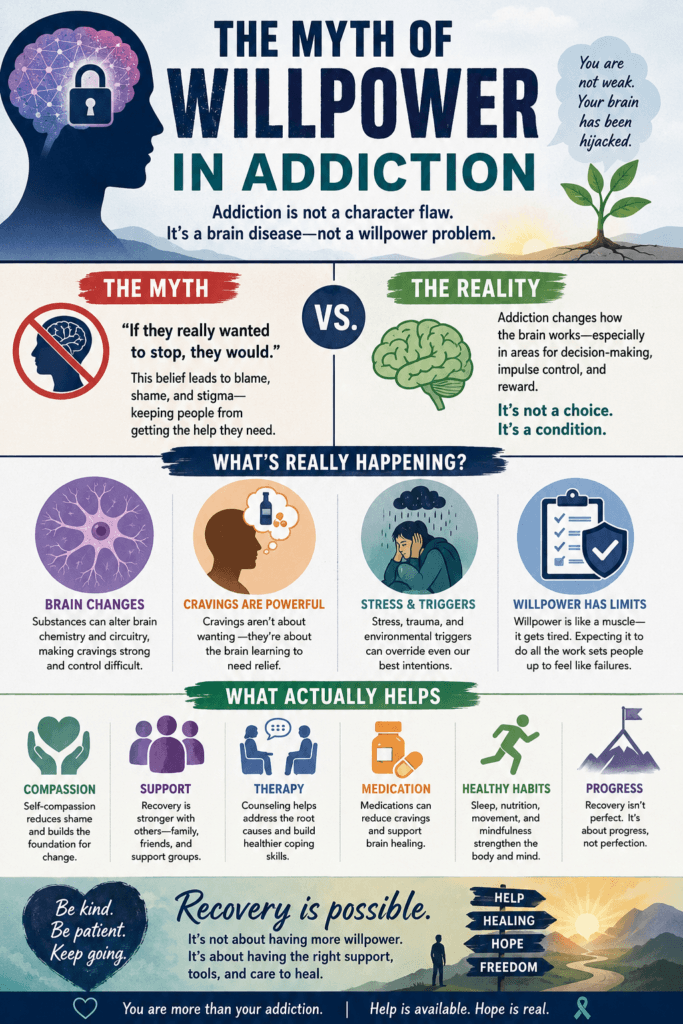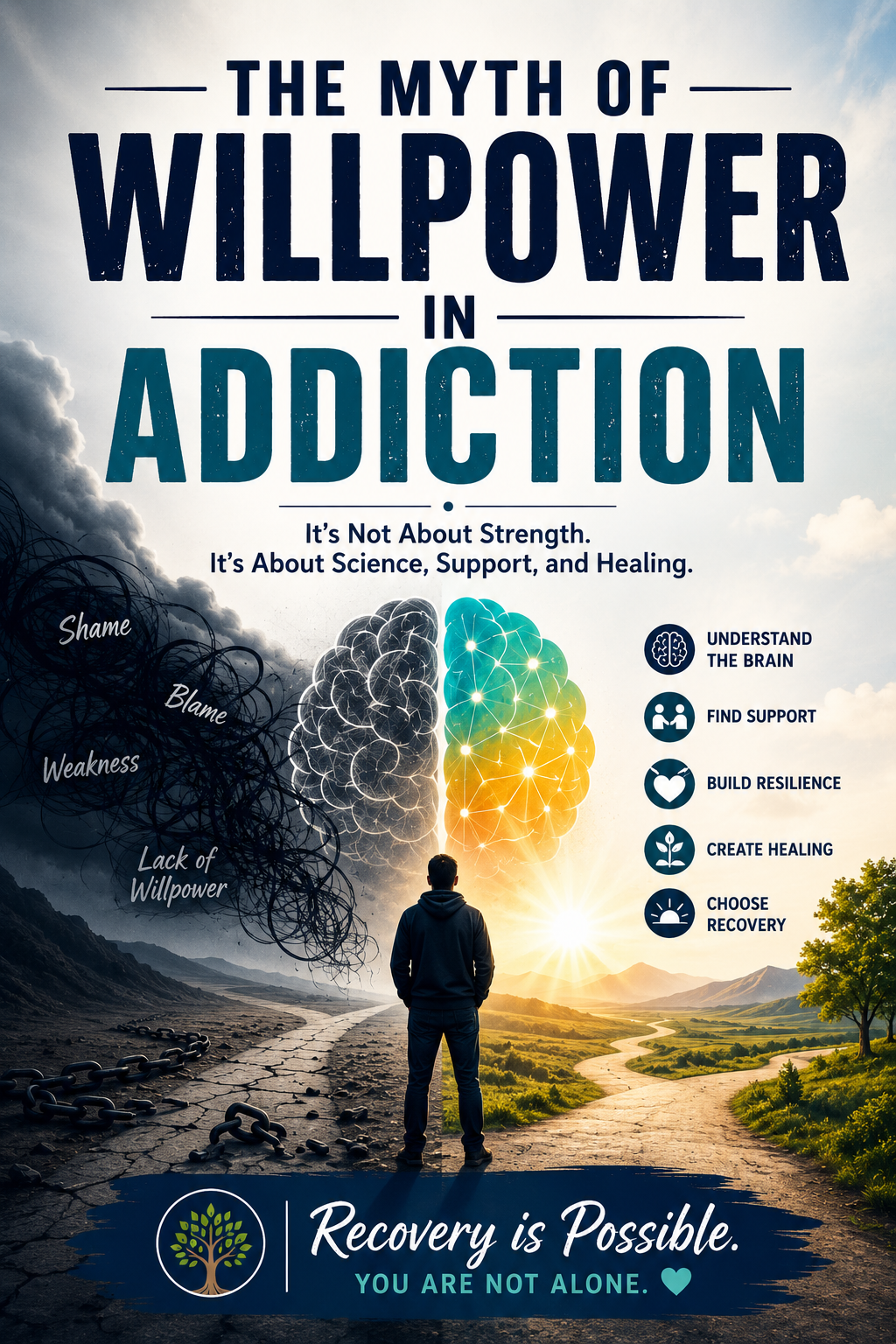
If you’ve ever heard someone say addiction is just a lack of willpower, you’re not alone. This idea crops up everywhere, from casual conversations to social media to some movies and shows. The truth about addiction is far more complex. Understanding that can make a huge difference for anyone affected, whether it’s you, a friend, or a family member. I’m here to break down the myth of willpower in addiction and share some real-world insights that can genuinely help.
The Problem with the Willpower Myth
The willpower myth claims that overcoming addiction is just about being strong or making better choices. According to this idea, people could quit drinking, smoking, gambling, or using drugs if only they “tried harder.” It might sound simple, but it overlooks much of what makes addiction such a real struggle for so many.
Plenty of research (like this piece from the National Institute on Drug Abuse) shows that addiction changes the brain, affecting areas responsible for judgment, decision-making, and self-control. For someone with an addiction, the same coping strategies or self-discipline that work elsewhere might not work at all for substance use. That’s not due to weakness; it’s because their brain really is working differently now.
Understanding What Addiction Actually Is
Addiction is a chronic condition that affects both the brain and behavior. It’s not about a character flaw or poor judgment; it’s about changes in brain chemistry. When drugs, alcohol, or certain behaviors (like gambling) are involved, the brain’s reward system releases dopamine, creating good feelings. Over time, the brain starts to rely on those substances or actions just to feel “normal.”
This rewiring leads to cravings and compulsive behavior, making it tough to quit even when someone genuinely wants to stop. Recovery isn’t simply about “saying no.” It’s about healing the brain, making changes, and learning new ways to cope with life’s pressures and stresses.
Why the Willpower Story Sticks Around
Even with all the scientific knowledge available, the willpower myth still has a lot of staying power. There are several reasons for this:
- Simplicity: Saying someone “just needs more willpower” is easy to understand and repeat. It leaves out all the complicated details.
- Stigma: Blaming people for their addiction can make others feel safer or less at risk. It’s almost like saying, “It can’t happen to me.”
- Lack of Awareness: Not everyone gets exposed to the medical side of addiction or knows about the brain science behind it.
When I first started to learn about addiction, I noticed people often went quiet if I brought up the medical side. Most hadn’t heard it explained that way before. Spreading the updated science is one way to nudge the conversation in a more compassionate direction.
How Addiction Changes the Brain
The brain is always adapting and changing. In addition, certain pathways are rewired. Substances like alcohol, nicotine, or opioids boost signals in the brain’s reward system so much that, over time, regular pleasures (like food, socializing, and hobbies) don’t measure up anymore. The brain “learns” to focus on the substance or behavior instead.
Key changes include:
- Dopamine Surges: Drugs create massive dopamine spikes, making them hard to resist even when the person wants to quit.
- Impaired Judgment: Brain regions tied to self-control and decision-making become less active, so healthy choices get much more challenging.
- Tolerance Builds: More and more of the substance is needed just to feel okay, often leading to risky behavior and health issues.
The result is a powerful and exhausting cycle that’s genuinely difficult to break without support—even with plenty of willpower.
Recovery: More Than Just Willpower
If willpower isn’t the answer to recovery, what steps can actually help someone move forward?
Most successful recovery stories involve a mix of support, therapy, lifestyle changes, and sometimes medication. This all-in-one treatment approach, rather than relying solely on grit, offers real-life strategies and consistent support systems.
- Therapy: Counseling, group therapy, and behavioral therapy give people practical tools and a space to work through triggers and learn to cope with life substance-free.
- Medication-Assisted Treatment (MAT): Medications like methadone or buprenorphine can help with cravings and withdrawal for some substance use disorders. Studies by the Substance Abuse and Mental Health Services Administration show these options can give a boost to long-term recovery.
- Peer Support: Support groups (such as AA, NA, or SMART Recovery) are popular for offering a sense of belonging and connection. It helps to know you’re not alone in what you’re facing.
- Lifestyle Changes: Good sleep, healthy nutrition, routines, and exercise aren’t cures on their own, but they all boost brain function and mental health during recovery.
Some folks I’ve met believed willpower alone could do the trick and tried quitting “cold turkey.” When it didn’t work, they felt defeated. Learning about resources like MAT and therapy convinced them to try again, this time with real results.
Obstacles People Face When Seeking Help
Stumbling on support isn’t always easy. Beyond the willpower myth, other barriers make it tough:
- Fear of Judgment: Worries about blame or being seen as weak hold many back.
- Access: Quality treatment can be tough to find in some areas, especially on a tight budget or without insurance. The SAMHSA Treatment Locator is a good starting point for tracking down resources.
- Denial: Many downplay their substance use because it’s uncomfortable admitting there’s an issue, particularly when so many still say it’s just about making better choices.
Seeing addiction as medical—rather than moral—can help more people reach out for the help they need.
Common Questions About Willpower and Addiction
Here are some answers to questions I often get from people just getting into this topic:
Q: Doesn’t personal responsibility count at all?
A: Everyone’s choices play a part. But with addiction, brain changes narrow those choices quite a bit. Support, medical care, and therapy are vital to helping folks regain their options.
Q: I quit my bad habits using willpower, so why can’t others?
A: Habits like biting your nails or skipping the gym are tough, but generally aren’t as deep or physical as addiction. Comparing everyday self-control to recovery from addiction just doesn’t really line up.
Q: Are there people who just don’t want to recover?
A: Sometimes that might be how it looks, but often fear, shame, or deep hopelessness are playing a big role. Reaching out, listening without judgment, and sharing resources can encourage someone to take a step toward help.
Moving Forward: Switching Up How We Think About Addiction
Seeing addiction as a health matter—not a moral failing—is a game-changer for everyone. It opens the door to better treatment, real empathy, and more open conversation. Changing the narrative gives people a chance to reach out before things get out of control.
- Talk about addiction as a health condition whenever you can. Sharing facts or gently asking questions can start a new way of thinking, even with small steps.
- Track down resources that offer respectful, science-based insight, like books by medical experts, recovery podcasts, or professional treatment options.
- Practice patience if someone you know is struggling. Recovery takes time, and setbacks are part of the process. Reminding them (and yourself) that this isn’t just a willpower issue can help lighten the burden.
There’s hope for people living with addiction. Every story is unique, but the main thing is this: The path out isn’t about willpower alone. It calls for using every available resource, making connections, and knowing that with the right support, positive change is possible.
Video: Why Addicted Brains Reject Willpower #SubstanceUseDisorder #Science