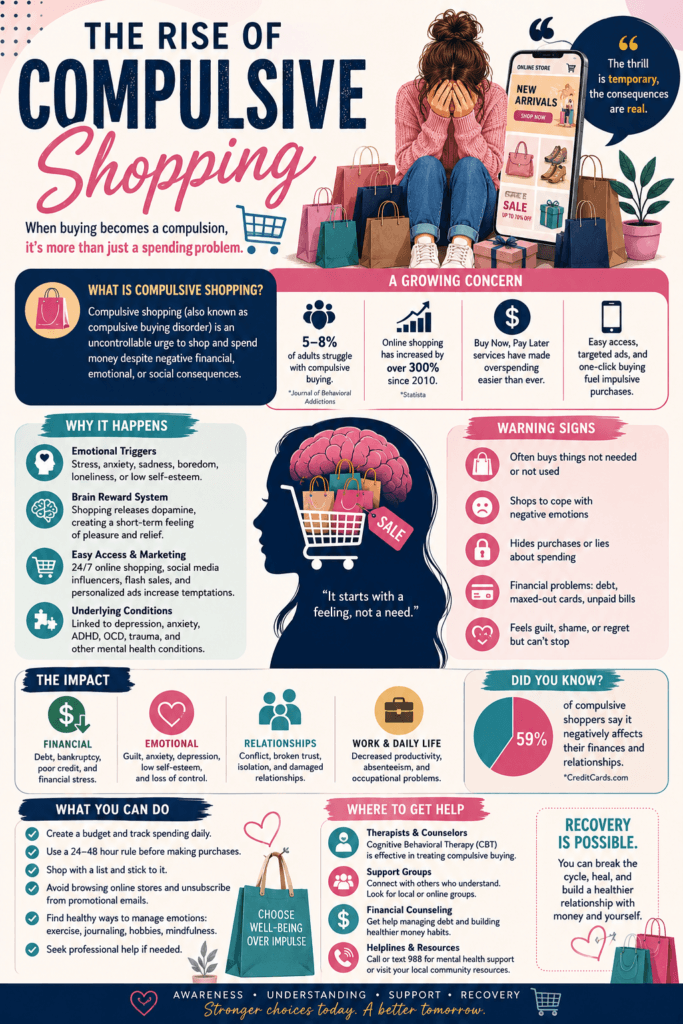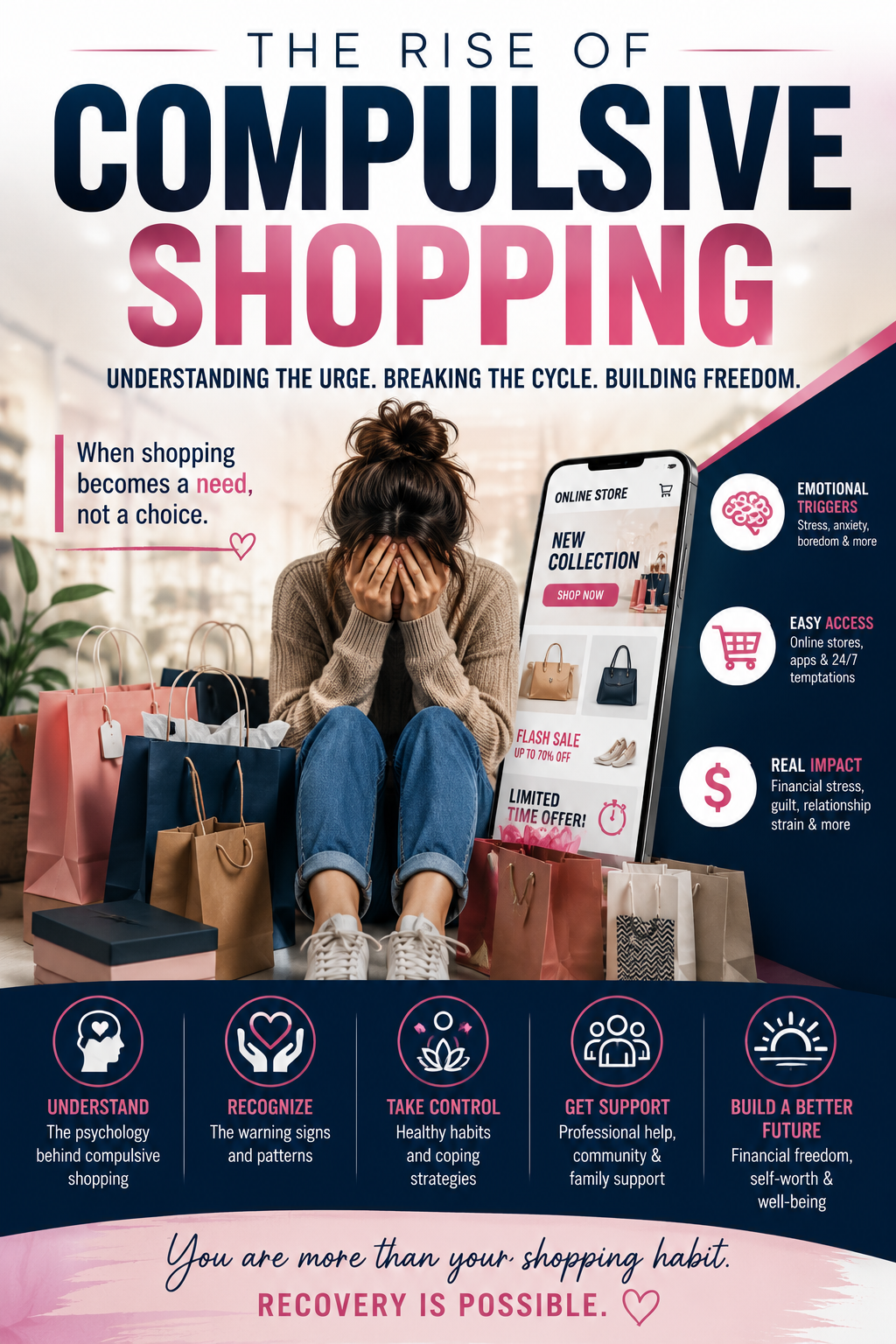
The rise of compulsive shopping has become an increasing concern in today’s digital and consumer-driven society. With online stores available around the clock, personalized advertising, social media influencers, and convenient payment options such as one-click purchasing and “buy now, pay later” services, shopping has become easier and more accessible than ever before. While shopping is a normal part of everyday life, some individuals develop an uncontrollable urge to buy items as a way to cope with stress, anxiety, depression, boredom, or other difficult emotions. Over time, compulsive shopping can lead to significant financial problems, relationship conflicts, emotional distress, and reduced quality of life. Understanding the causes, warning signs, and available treatment options is essential for promoting healthier spending habits, reducing stigma, and supporting individuals on the path to recovery.
What Is Compulsive Shopping?
Compulsive shopping, also known as compulsive buying disorder (CBD) or shopping addiction, is a behavioral condition in which an individual experiences an overwhelming urge to shop and spend money despite negative financial, emotional, or social consequences. Unlike occasional impulse buying, compulsive shopping is repetitive, difficult to control, and is often used as a way to cope with uncomfortable emotions such as stress, anxiety, loneliness, boredom, or depression.
As online shopping, mobile payment systems, and targeted advertising have expanded, compulsive shopping has become an increasingly recognized behavioral health concern. Although not currently listed as a separate diagnosis in the Diagnostic and Statistical Manual of Mental Disorders (DSM-5), many researchers view it as a behavioral addiction because it shares characteristics with gambling disorder and other compulsive behaviors.
Why Is Compulsive Shopping Increasing?
Several changes in modern society have made shopping more convenient and more tempting than ever before.
Contributing factors include:
- 24-hour online shopping
- One-click purchasing
- Personalized advertisements
- Social media influencers
- “Buy now, pay later” financing
- Flash sales and limited-time promotions
- Increased stress and emotional distress
- Greater reliance on digital devices
These factors make it easier for individuals to make impulsive purchases without taking time to evaluate whether they truly need the item.
How the Brain Is Involved
Compulsive shopping activates the brain’s reward system. Anticipating or making a purchase increases dopamine activity, creating temporary feelings of excitement, pleasure, or relief. Over time, the brain begins to associate shopping with emotional comfort, strengthening the urge to repeat the behavior.
Eventually:
- Shopping becomes an emotional coping strategy.
- Cravings may occur during stressful situations.
- Shopping more frequently may be needed to achieve the same emotional effect.
- The cycle becomes increasingly automatic.
Risk Factors
Certain biological, psychological, and environmental factors increase the likelihood of compulsive shopping.
Common risk factors include:
- Anxiety disorders
- Depression
- ADHD
- Bipolar disorder
- Obsessive-compulsive symptoms
- Childhood trauma
- Chronic stress
- Low self-esteem
- Family history of addiction
- Easy access to credit cards
- Heavy social media use
Not everyone with these risk factors develops compulsive shopping, but they may increase vulnerability.
Warning Signs
Compulsive shopping often develops gradually and may be difficult to recognize at first.
Common warning signs include:
- Frequently buying unnecessary items
- Shopping to relieve stress or sadness
- Hiding purchases from family members
- Feeling unable to resist sales or promotions
- Spending beyond one’s budget
- Accumulating excessive credit card debt
- Feeling guilty or ashamed after shopping
- Continuing to shop despite financial or relationship problems
Recognizing these signs early allows individuals to seek help before problems become more severe.
Consequences
Although shopping may provide temporary emotional relief, the long-term consequences can be significant.
Financial consequences:
- Credit card debt
- Missed bill payments
- Reduced savings
- Bankruptcy
- Poor credit scores
Emotional consequences:
- Guilt
- Shame
- Anxiety
- Depression
- Low self-esteem
- Increased stress
Relationship consequences:
- Financial conflict
- Broken trust
- Secrecy
- Social isolation
- Family tension
Treatment Options
Compulsive shopping is treatable, especially when recognized early. Effective treatment addresses both the behavior and the emotional factors contributing to it.
Evidence-based treatments include:
- Cognitive Behavioral Therapy (CBT)
- Individual counseling
- Group therapy
- Financial counseling
- Treatment for anxiety or depression when appropriate
- Mindfulness-based interventions
- Stress management training
Treatment plans should be individualized based on each person’s needs.
Healthy Coping Strategies
Recovery involves replacing compulsive shopping with healthier ways of managing emotions and stress.
Helpful strategies include:
- Following a realistic budget
- Waiting 24–48 hours before making purchases
- Shopping with a written list
- Removing saved payment information from shopping websites
- Limiting exposure to online advertisements
- Exercising regularly
- Practicing mindfulness
- Journaling
- Developing creative hobbies
- Spending time with supportive family and friends
These habits help reduce impulsive spending while improving emotional well-being.
Family and Community Support
Recovery is often more successful when individuals receive support from others.
Families can help by:
- Learning about compulsive shopping
- Encouraging honest communication
- Avoiding judgment or shame
- Supporting treatment participation
- Helping establish healthy financial boundaries
Communities can help by:
- Providing financial literacy education
- Expanding access to mental health services
- Offering support groups
- Promoting responsible digital habits
- Reducing stigma surrounding behavioral addictions
Prevention
Preventing compulsive shopping begins with increasing awareness and building healthy financial and emotional habits.
Effective prevention strategies include:
- Teaching financial literacy early in life
- Encouraging responsible use of credit
- Recognizing emotional triggers
- Developing healthy stress-management skills
- Limiting unnecessary exposure to shopping promotions
- Seeking help early when warning signs appear
Early intervention can prevent financial hardship and improve long-term emotional health.
Conclusion
The rise of compulsive shopping reflects the interaction between modern technology, consumer culture, emotional health, and the brain’s reward system. While shopping is a normal part of everyday life, it can become harmful when it is used repeatedly to manage stress or emotional discomfort. Recognizing the warning signs, understanding the underlying causes, and seeking appropriate support are essential steps toward recovery. Through education, healthy coping strategies, professional treatment, and support from families and communities, individuals can regain control of their spending, strengthen their emotional well-being, and build a healthier relationship with money.
Self-Management Strategies to Understand the Rise of Compulsive Shopping
Compulsive shopping is more than occasional impulse buying or enjoying a sale. For some individuals, shopping becomes a way to cope with difficult emotions, stress, boredom, or low self-esteem. Over time, this behavior can lead to financial hardship, relationship conflict, and emotional distress. Understanding the condition and developing healthy self-management strategies can help individuals regain control over spending habits and improve overall well-being.
1. Learn About Compulsive Shopping
Educate yourself about compulsive shopping and recognize that it is a behavioral health condition involving emotional regulation and the brain’s reward system. Understanding why shopping becomes difficult to control reduces self-blame and encourages healthier decision-making.
2. Identify Your Emotional Triggers
Pay attention to the emotions or situations that increase the urge to shop, such as:
- Stress
- Anxiety
- Depression
- Loneliness
- Boredom
- Anger
- Celebrations
- Social pressure
Recognizing triggers allows you to prepare healthier responses before shopping becomes a coping mechanism.
3. Track Your Spending Habits
Keep a daily record of:
- What you purchased
- How much you spent
- Why you made the purchase
- How you felt before and after shopping
Tracking spending patterns increases awareness and helps identify behaviors that need to change.
4. Create a Realistic Budget
Develop a monthly budget that includes essential expenses, savings, and discretionary spending. Following a spending plan helps reduce impulsive purchases and supports long-term financial stability.
5. Delay Purchases
When you feel the urge to buy something, wait 24 to 48 hours before making the purchase. This “cooling-off” period allows emotional impulses to fade and encourages more thoughtful decisions.
6. Shop with a List
Before shopping, make a list of only the items you truly need. Commit to purchasing only those items and avoid browsing for unnecessary products.
7. Limit Exposure to Shopping Triggers
Reduce temptations by:
- Unsubscribing from promotional emails
- Turning off shopping app notifications
- Limiting time on online shopping websites
- Avoiding recreational browsing
- Reducing exposure to social media influencers who encourage excessive spending
Creating a healthier digital environment can reduce impulsive buying.
8. Remove Easy Payment Options
Delete saved credit card information from online retailers and avoid storing payment methods in shopping apps. Adding extra steps before purchasing creates time to reconsider spending decisions.
9. Find Healthy Alternatives
Replace shopping with activities that improve mood without financial consequences, such as:
- Walking or exercising
- Reading
- Gardening
- Journaling
- Meditation
- Creative hobbies
- Cooking
- Volunteering
- Spending time with supportive family and friends
Healthy alternatives help satisfy emotional needs without relying on shopping.
10. Practice Mindfulness
Mindfulness techniques can help you pause before making purchases. Ask yourself:
- Do I truly need this item?
- Am I shopping because of an emotion?
- Can this purchase wait?
- Will I still want this tomorrow?
Mindful decision-making reduces impulsive behavior.
11. Strengthen Emotional Coping Skills
Develop healthier ways to manage stress by practicing:
- Deep breathing
- Progressive muscle relaxation
- Yoga
- Meditation
- Time management
- Healthy sleep habits
- Regular physical activity
Improved emotional regulation decreases the need to use shopping as a coping strategy.
12. Address Mental Health Concerns
Compulsive shopping often occurs alongside anxiety, depression, ADHD, trauma, or other mental health conditions. Seeking treatment for these concerns can reduce emotional triggers and improve recovery.
13. Set Financial Goals
Establish meaningful financial objectives such as:
- Paying off debt
- Building an emergency fund
- Saving for a vacation
- Purchasing a home
- Preparing for retirement
Keeping long-term goals visible can increase motivation to make healthier spending decisions.
14. Seek Professional Support
If compulsive shopping is causing significant financial, emotional, or relationship problems, seek help from a healthcare professional. Treatment may include cognitive behavioral therapy (CBT), financial counseling, support groups, and treatment for co-occurring mental health conditions.
15. Practice Self-Compassion
Recovery from compulsive shopping takes time. Occasional setbacks do not mean failure. Instead of focusing on guilt or shame, view each setback as an opportunity to learn, strengthen coping skills, and continue making progress toward healthier financial and emotional habits.
Conclusion
Understanding the rise of compulsive shopping begins with recognizing that emotional well-being, brain reward pathways, and modern consumer environments all influence spending behavior. By identifying triggers, creating a realistic budget, delaying purchases, practicing mindfulness, strengthening healthy coping skills, and seeking professional support when needed, individuals can regain control over their finances and improve their emotional health. With consistent self-management and a commitment to healthier habits, it is possible to build a balanced relationship with money, reduce compulsive buying behaviors, and achieve lasting financial and personal well-being.
Family Support Strategies to Understand the Rise of Compulsive Shopping
Compulsive shopping, also known as compulsive buying disorder or shopping addiction, affects more than an individual’s finances. It can strain relationships, create family conflict, increase debt, and contribute to emotional distress. Families are often the first to notice changes in spending habits and can play an important role in encouraging healthy behaviors and supporting recovery. Understanding compulsive shopping as a behavioral health concern rather than simply poor money management helps families respond with empathy while promoting accountability.
1. Learn About Compulsive Shopping
Educate yourself about compulsive shopping and its connection to the brain’s reward system, emotional regulation, and mental health. Understanding that compulsive buying is often driven by stress, anxiety, depression, or low self-esteem helps reduce blame and encourages supportive conversations.
2. Recognize the Warning Signs
Family members should be aware of behaviors that may indicate compulsive shopping, including:
- Frequent unnecessary purchases
- Packages arriving regularly without explanation
- Hidden purchases or secretive spending
- Increasing credit card balances
- Financial stress despite a stable income
- Shopping to cope with negative emotions
- Feelings of guilt or regret after buying items
- Relationship conflicts about money
Early recognition allows families to encourage help before financial or emotional problems worsen.
3. Encourage Open and Honest Communication
Create a safe, nonjudgmental environment where your loved one feels comfortable discussing financial concerns and emotional struggles. Listen with empathy, avoid criticism, and focus on understanding the underlying reasons for compulsive shopping rather than simply the spending itself.
4. Avoid Shame and Blame
Criticism, anger, or humiliation may increase feelings of guilt, anxiety, and low self-worth, which can worsen compulsive shopping. Instead, use respectful language that encourages problem-solving and emphasizes that recovery is possible.
5. Encourage Professional Help
If compulsive shopping is causing significant financial, emotional, or relationship problems, encourage evaluation by a healthcare professional. Treatment may include cognitive behavioral therapy (CBT), financial counseling, support groups, and treatment for co-occurring mental health conditions such as anxiety or depression.
6. Support Healthy Financial Habits
Families can encourage responsible money management by:
- Creating a household budget together
- Discussing financial goals
- Reviewing expenses regularly
- Encouraging savings plans
- Celebrating progress toward financial stability
These conversations should focus on teamwork rather than punishment.
7. Promote Healthy Coping Strategies
Help your loved one replace shopping with healthier activities that reduce stress and improve emotional well-being, such as:
- Walking or exercising together
- Cooking healthy meals
- Gardening
- Playing games
- Volunteering
- Practicing mindfulness
- Engaging in creative hobbies
- Spending quality family time
Healthy alternatives reduce reliance on shopping for emotional relief.
8. Set Healthy Financial Boundaries
Families should support recovery while maintaining appropriate financial boundaries. This may include:
- Avoiding repeated financial bailouts
- Encouraging personal responsibility
- Setting shared spending expectations
- Limiting access to joint credit accounts when appropriate
- Working together on debt repayment plans
Healthy boundaries protect both the individual and the family’s financial well-being.
9. Address Mental Health Together
Compulsive shopping frequently occurs alongside depression, anxiety, ADHD, trauma, bipolar disorder, or substance use disorders. Encourage comprehensive treatment that addresses both compulsive buying behaviors and any underlying mental health conditions.
10. Reduce Exposure to Shopping Triggers
Support healthier habits by:
- Limiting recreational shopping trips
- Unsubscribing from promotional emails
- Reducing exposure to shopping-focused social media
- Planning alcohol-free and shopping-free family activities
- Encouraging mindful use of online shopping apps
Reducing environmental triggers can help decrease impulsive spending.
11. Celebrate Progress
Recognize improvements such as:
- Following a budget
- Paying down debt
- Delaying unnecessary purchases
- Attending therapy
- Meeting financial goals
- Practicing healthier coping skills
Positive reinforcement strengthens motivation and builds confidence during recovery.
12. Encourage Long-Term Recovery
Recovery from compulsive shopping takes time and requires ongoing effort. Encourage continued participation in therapy, financial education, stress management, and healthy lifestyle habits while understanding that occasional setbacks may occur.
13. Protect Family Relationships
Financial problems can create tension and mistrust. Prioritize respectful communication, shared decision-making, forgiveness, and teamwork to rebuild trust and strengthen family relationships throughout the recovery process.
14. Seek Family Counseling if Needed
If compulsive shopping has significantly affected family relationships or finances, family counseling can improve communication, resolve conflicts, rebuild trust, and help everyone develop healthier coping and financial management skills.
15. Practice Self-Care as a Family Member
Supporting someone with compulsive shopping can be emotionally challenging. Family members should also care for their own well-being by maintaining healthy boundaries, seeking support when needed, managing stress, and recognizing that they cannot control another person’s behavior. Taking care of yourself allows you to provide more effective and sustainable support.
Conclusion
Families play an essential role in understanding and addressing the rise of compulsive shopping. Through education, compassionate communication, healthy financial boundaries, encouragement of professional treatment, and emotional support, families can help loved ones develop healthier relationships with money and shopping. By working together to promote accountability, emotional well-being, and responsible financial habits, families can strengthen recovery, reduce conflict, and build a more secure and supportive home environment.
Community Resource Strategies to Understand the Rise of Compulsive Shopping
Compulsive shopping, also known as compulsive buying disorder or shopping addiction, is becoming an increasingly recognized behavioral health concern. Easy access to online shopping, social media marketing, personalized advertising, and “buy now, pay later” payment options have made impulsive purchasing more common than ever. Communities can play an important role in preventing compulsive shopping, increasing public awareness, improving access to treatment, and supporting individuals and families affected by this condition. A coordinated community response helps reduce financial hardship, emotional distress, and the long-term consequences of compulsive buying.
1. Increase Public Education
Communities should provide evidence-based education about compulsive shopping through public health campaigns, workshops, libraries, schools, and community centers. Educational efforts should explain:
- What compulsive shopping is
- Risk factors and warning signs
- Emotional and financial consequences
- Healthy spending habits
- Available treatment and support resources
Greater awareness reduces stigma and encourages early intervention.
2. Promote Financial Literacy
Financial education can help individuals develop lifelong money management skills. Community programs should offer instruction on:
- Budgeting
- Saving money
- Responsible credit card use
- Debt management
- Understanding interest rates
- Building emergency savings
- Long-term financial planning
Financial literacy helps reduce impulsive spending and supports healthier financial decisions.
3. Improve Access to Mental Health Services
Compulsive shopping often occurs alongside depression, anxiety, ADHD, trauma, bipolar disorder, or substance use disorders. Communities should expand access to affordable behavioral health services, including counseling, psychological evaluations, and integrated treatment for co-occurring conditions.
4. Support Early Screening and Referral
Healthcare providers, financial counselors, social workers, and behavioral health professionals can help identify compulsive shopping behaviors early. Routine screening and timely referrals increase the likelihood of successful treatment before severe financial or emotional consequences develop.
5. Expand Access to Evidence-Based Treatment
Communities should ensure that individuals have access to treatment options such as:
- Cognitive behavioral therapy (CBT)
- Individual counseling
- Group therapy
- Financial counseling
- Stress management programs
- Treatment for co-occurring mental health disorders
Comprehensive treatment addresses both the emotional and financial aspects of compulsive shopping.
6. Develop Peer Support Programs
Peer support groups allow individuals to connect with others who have experienced similar challenges. These groups provide encouragement, accountability, practical coping strategies, and hope while reducing feelings of shame and isolation.
7. Partner With Financial Counseling Services
Community organizations can collaborate with nonprofit credit counseling agencies and financial educators to help individuals:
- Create realistic budgets
- Reduce debt
- Improve credit management
- Establish financial goals
- Develop long-term financial recovery plans
Combining financial education with mental health support strengthens recovery.
8. Educate Youth and Young Adults
Schools, colleges, and youth organizations should teach responsible consumer behavior, digital literacy, advertising awareness, and healthy financial decision-making. Helping young people recognize marketing tactics and social media influences can reduce impulsive spending habits later in life.
9. Encourage Healthy Community Activities
Communities can offer affordable or free recreational opportunities that reduce boredom and social isolation, including:
- Fitness programs
- Walking groups
- Community gardens
- Volunteer opportunities
- Arts and crafts classes
- Educational workshops
- Cultural events
- Family recreation programs
Meaningful social engagement provides healthy alternatives to shopping for emotional satisfaction.
10. Promote Responsible Digital Habits
Public education should encourage mindful use of online shopping platforms by teaching individuals to:
- Limit exposure to targeted advertisements
- Disable shopping app notifications
- Be cautious with “buy now, pay later” financing
- Avoid impulse purchases during emotional distress
- Practice delayed purchasing decisions
These strategies can reduce the influence of digital marketing on spending behavior.
11. Support Families
Community organizations should provide resources for families affected by compulsive shopping, including:
- Family counseling
- Financial education workshops
- Caregiver support groups
- Communication skills training
- Educational seminars about behavioral addictions
Supporting families improves recovery outcomes and strengthens relationships.
12. Reduce Stigma
Community leaders, healthcare providers, educators, and media organizations can help reduce stigma by presenting compulsive shopping as a treatable behavioral health condition rather than a sign of laziness or poor character. Encouraging compassionate conversations increases the likelihood that individuals will seek help.
13. Encourage Workplace Financial Wellness
Employers can support financial and emotional well-being by offering:
- Employee Assistance Programs (EAPs)
- Financial wellness education
- Mental health resources
- Stress management programs
- Confidential counseling referrals
Healthy workplaces can reduce stress-related spending and improve overall employee well-being.
14. Foster Community Collaboration
An effective response requires cooperation among:
- Healthcare providers
- Mental health professionals
- Financial counselors
- Schools and universities
- Faith-based organizations
- Community nonprofits
- Employers
- Public health agencies
Working together allows communities to address the emotional, financial, and social factors contributing to compulsive shopping.
15. Encourage Long-Term Recovery
Recovery extends beyond reducing unnecessary purchases. Communities should promote long-term support through continued counseling, financial coaching, peer support groups, educational programs, and opportunities for healthy social engagement. Ongoing support helps individuals maintain financial stability, improve emotional well-being, and prevent relapse into compulsive buying behaviors.
Conclusion
The rise of compulsive shopping reflects the combined influence of modern technology, consumer culture, emotional stress, and mental health. Communities are uniquely positioned to reduce its impact by promoting financial literacy, expanding access to behavioral healthcare, supporting families, encouraging responsible digital habits, and increasing public awareness. Through collaboration among healthcare providers, educators, financial professionals, employers, and community organizations, individuals can receive the education, treatment, and support needed to build healthier relationships with money, strengthen emotional resilience, and achieve lasting financial and personal well-being.
Frequently Asked Questions
Here are some common questions:
1. What is compulsive shopping?
Compulsive shopping, also called compulsive buying disorder or shopping addiction, is a behavioral condition in which a person feels an uncontrollable urge to shop and spend money despite experiencing negative financial, emotional, or social consequences.
2. Is compulsive shopping considered an addiction?
Although it is not officially recognized as a substance use disorder, many experts consider compulsive shopping a behavioral addiction because it involves cravings, loss of control, and continued behavior despite harmful consequences.
3. Why is compulsive shopping becoming more common?
Several factors contribute to its rise, including online shopping, social media advertising, personalized marketing, one-click purchasing, “buy now, pay later” services, and increased stress, anxiety, and financial pressures.
4. What causes compulsive shopping?
Compulsive shopping often results from a combination of emotional, psychological, biological, and environmental factors. It may be used to cope with stress, sadness, loneliness, boredom, or low self-esteem.
5. Who is at risk for compulsive shopping?
Anyone can develop compulsive shopping behaviors, but people with anxiety, depression, ADHD, bipolar disorder, obsessive-compulsive symptoms, trauma histories, or substance use disorders may have a higher risk.
6. What are the warning signs?
Common warning signs include:
- Frequent impulse purchases
- Buying unnecessary items
- Hiding purchases
- Increasing debt
- Feeling guilty after shopping
- Shopping to improve mood
- Difficulty controlling spending
7. How does online shopping contribute to compulsive buying?
Online shopping provides 24/7 access, personalized advertisements, flash sales, and instant purchasing, making it easier for individuals to buy impulsively without leaving home.
8. What role does social media play?
Social media influencers, targeted advertisements, and constant exposure to new products can increase the desire to shop and encourage comparison with others, leading to impulsive spending.
9. Can shopping temporarily improve mood?
Yes. Shopping can briefly increase dopamine release in the brain, creating feelings of excitement and pleasure. However, these feelings are usually short-lived and are often followed by guilt, regret, or financial stress.
10. What are the financial consequences?
Compulsive shopping can lead to:
- Credit card debt
- Missed bill payments
- Bankruptcy
- Poor credit scores
- Reduced savings
- Long-term financial instability
11. How does compulsive shopping affect mental health?
It can increase anxiety, depression, guilt, shame, stress, low self-esteem, and emotional distress, especially when financial problems accumulate.
12. Can compulsive shopping affect relationships?
Yes. Hidden purchases, financial dishonesty, debt, and conflicts over money can damage trust and strain relationships with partners, family members, and friends.
13. Is compulsive shopping the same as enjoying shopping?
No. Most people enjoy shopping occasionally and stay within their financial limits. Compulsive shopping involves losing control, shopping despite harmful consequences, and feeling unable to stop.
14. How is compulsive shopping diagnosed?
There is no single laboratory test. Mental health professionals diagnose compulsive shopping by evaluating spending behaviors, emotional triggers, financial consequences, and overall impact on daily functioning.
15. What treatments are available?
Treatment may include:
- Cognitive behavioral therapy (CBT)
- Individual counseling
- Group therapy
- Financial counseling
- Stress management
- Treatment of co-occurring mental health disorders
16. Can medications help?
There are no medications specifically approved for compulsive shopping. However, medications may help treat underlying conditions such as depression, anxiety, ADHD, or bipolar disorder when appropriate.
17. What self-help strategies can reduce compulsive shopping?
Helpful strategies include:
- Following a budget
- Waiting 24–48 hours before making purchases
- Avoiding shopping when emotional
- Removing saved payment information
- Limiting exposure to shopping websites
- Finding healthier coping activities
18. How can families help?
Families can support recovery by communicating without judgment, encouraging treatment, helping with budgeting, setting healthy financial boundaries, and providing emotional support.
19. Can recovery take time?
Yes. Recovery is a gradual process that involves developing healthier coping skills, improving financial habits, addressing emotional triggers, and maintaining long-term support.
20. Is recovery from compulsive shopping possible?
Absolutely. With education, professional treatment, financial planning, healthy coping strategies, and support from family and community, many people successfully regain control of their spending, improve their emotional well-being, and build a healthier relationship with money.
Conclusion
Compulsive shopping is more than simply overspending—it is a behavioral health concern that can have lasting effects on an individual’s financial security, emotional well-being, and personal relationships. As technology continues to reshape the way people shop, awareness of the risks associated with compulsive buying becomes increasingly important. Early recognition, financial education, healthy coping strategies, professional treatment, and strong support from families and communities can help individuals regain control of their spending behaviors and improve their overall quality of life. By promoting responsible consumer habits, reducing stigma, and expanding access to mental health and financial resources, society can better address the growing challenge of compulsive shopping while helping individuals build healthier, more balanced relationships with money and consumption.
Video: How to Stop Buying Things You Don’t Need #shorts #impulsecontrol