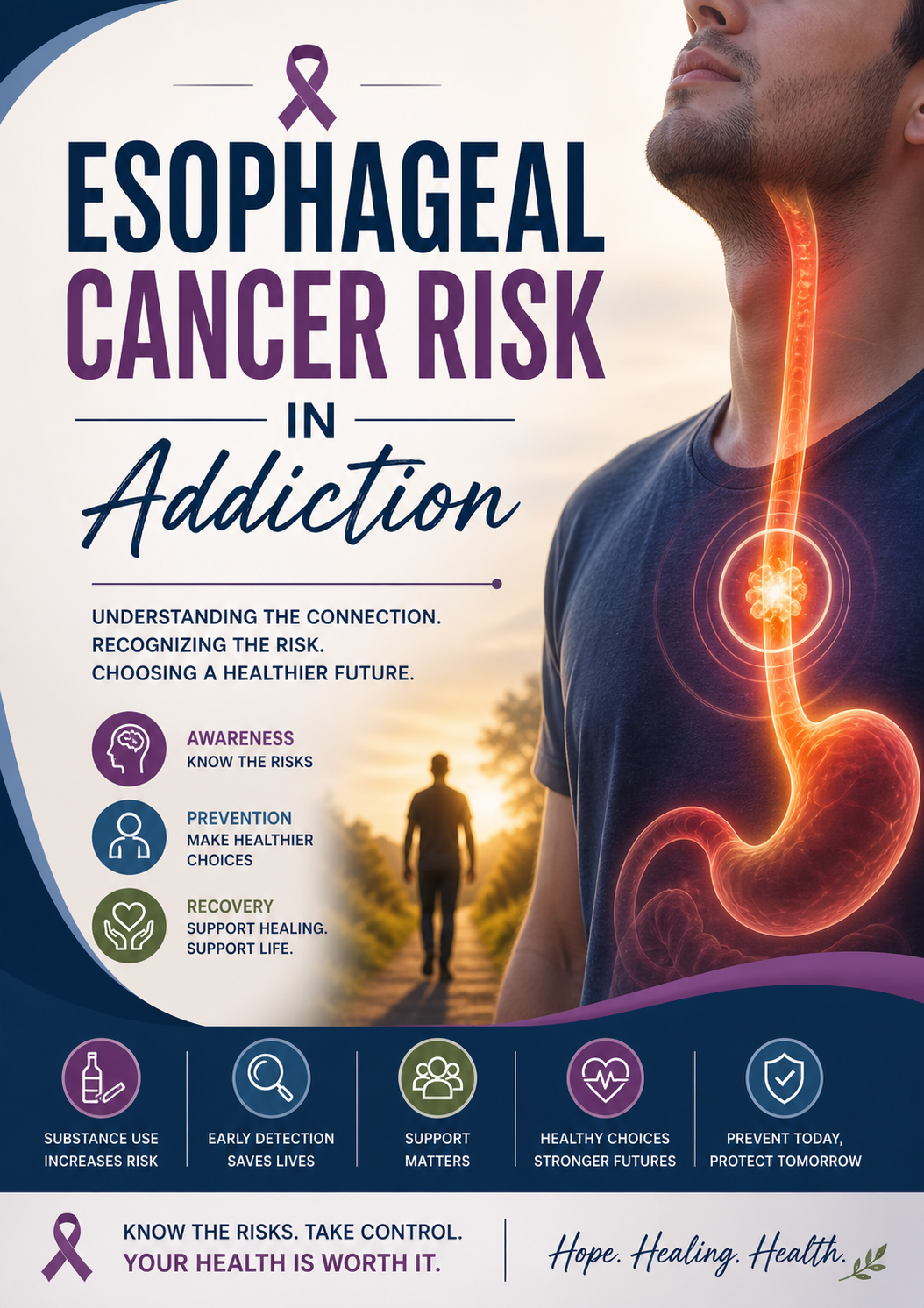
Addiction to substances such as alcohol and tobacco is widely recognized for its impact on mental and behavioral health, but its physical consequences are equally serious. One of the most significant risks associated with long-term substance use is the development of Esophageal Cancer. Repeated exposure to harmful substances can damage the lining of the esophagus, leading to chronic irritation, cellular changes, and an increased likelihood of cancer over time. Understanding the relationship between addiction and esophageal cancer risk is essential for promoting prevention, encouraging healthier choices, and supporting early detection efforts.
Esophageal Cancer Risk in Addiction: Understanding the Hidden Connection
Addiction, particularly to substances like alcohol and tobacco, has long been associated with serious health consequences. One of the most concerning—and often overlooked—is the increased risk of Esophageal Cancer. This type of cancer affects the esophagus, the tube that carries food from the mouth to the stomach, and is strongly linked to long-term exposure to harmful substances. Understanding how addictive behaviors contribute to this disease is essential for prevention, early detection, and healthier lifestyle choices.
Substance use does not just impact the brain; it can also cause chronic irritation and damage to bodily tissues. Over time, repeated exposure to alcohol, tobacco, and other harmful substances can lead to cellular changes in the esophagus, increasing the likelihood of cancer development.
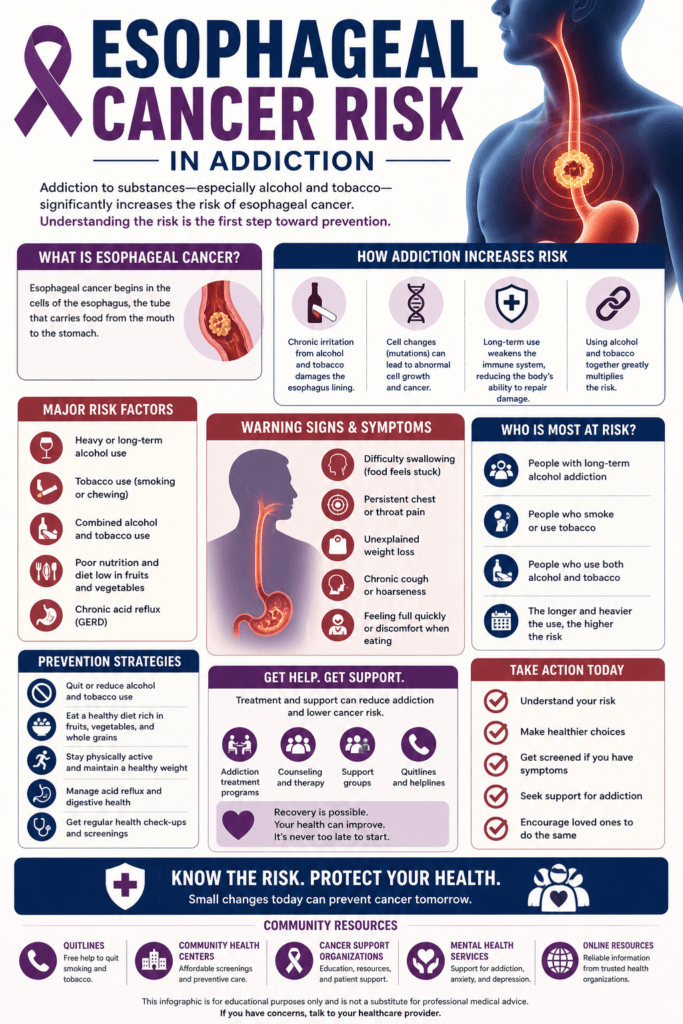
How Addiction Increases Esophageal Cancer Risk
Addictive substances can directly damage the lining of the esophagus and alter normal cell function.
Key mechanisms include:
- Chronic irritation: Alcohol and smoking repeatedly damage esophageal tissue
- Cellular mutations: Long-term exposure increases abnormal cell growth
- Weakened immune response: Reduces the body’s ability to repair damage
- Synergistic effects: Combined alcohol and tobacco use greatly increases risk
These factors create an environment where cancer is more likely to develop over time.
Major Risk Factors Linked to Addiction
Certain addictive behaviors significantly elevate the risk of esophageal cancer.
Common risk factors:
- Heavy alcohol consumption
- Long-term tobacco use (smoking or chewing)
- Combined use of alcohol and tobacco
- Poor nutrition often associated with substance misuse
- Chronic acid reflux worsened by alcohol use
The longer and more intense the exposure, the greater the risk.
Warning Signs and Symptoms
Early detection is critical, but symptoms often appear later in the disease.
Symptoms to watch for:
- Difficulty swallowing (dysphagia)
- Persistent chest or throat pain
- Unexplained weight loss
- Chronic cough or hoarseness
- Feeling of food getting stuck in the throat
Recognizing these signs early can lead to better outcomes.
Prevention Strategies
Reducing addiction-related behaviors can significantly lower cancer risk.
Protective steps include:
- Limiting or eliminating alcohol consumption
- Quitting smoking or tobacco use
- Maintaining a balanced, nutritious diet
- Managing acid reflux and digestive health
- Attending regular medical check-ups
Prevention focuses on reducing exposure to known carcinogens.
The Role of Recovery in Reducing Risk
Recovery from addiction not only improves mental health but also reduces long-term physical risks, including cancer.
Benefits of recovery include:
- Decreased exposure to harmful substances
- Improved immune system function
- Better nutrition and overall health
- Increased likelihood of early medical screening
Seeking help for addiction can be a life-saving step beyond immediate recovery.
Final Thoughts
The link between addiction and Esophageal Cancer highlights the broader impact of substance use on overall health. While addiction is often viewed through a psychological or behavioral lens, its physical consequences can be severe and long-lasting. By understanding these risks and taking proactive steps toward prevention and recovery, individuals can protect their health and reduce the likelihood of serious diseases like esophageal cancer.
Self-Management Strategies for Understanding Esophageal Cancer Risk in Addiction
Addiction to substances such as alcohol and tobacco significantly increases the risk of developing Esophageal Cancer. While this connection is often discussed in medical settings, individuals can take an active role in understanding and reducing their own risk. Self-management strategies empower people to become more aware of how their behaviors impact long-term health and to make informed decisions that support both recovery and disease prevention.
By focusing on awareness, behavior change, and proactive health practices, individuals can better understand the link between addiction and cancer risk—and take meaningful steps toward protecting their well-being.
Building Awareness of Personal Risk
Understanding how addiction affects your body is the first step toward change.
Strategies to increase awareness:
- Learn how alcohol and tobacco damage the esophagus over time
- Reflect on personal substance use patterns and frequency
- Identify additional risk factors (e.g., poor diet, acid reflux)
- Stay informed about early signs and symptoms of esophageal cancer
Awareness helps shift behavior from automatic habits to intentional choices.
Monitoring Substance Use and Triggers
Tracking behavior can reveal patterns that increase health risks.
Helpful practices include:
- Keeping a journal of substance use and situations that trigger it
- Noting emotional or environmental factors linked to use
- Identifying high-risk times (stress, social settings, isolation)
- Setting personal limits or reduction goals
This approach supports both addiction recovery and cancer risk reduction.
Adopting Healthier Lifestyle Habits
Lifestyle changes can significantly lower cancer risk.
Protective habits include:
- Reducing or eliminating alcohol and tobacco use
- Eating a balanced diet rich in fruits and vegetables
- Staying physically active
- Maintaining a healthy weight
- Managing acid reflux through diet and medical care
These habits strengthen the body’s ability to repair and protect itself.
Recognizing Early Warning Signs
Early detection improves outcomes, making symptom awareness critical.
Symptoms to watch for:
- Difficulty swallowing
- Persistent throat or chest discomfort
- Unexplained weight loss
- Chronic cough or hoarseness
If these symptoms appear, seeking medical evaluation promptly is essential.
Engaging in Preventive Healthcare
Regular medical care supports early detection and risk management.
Key steps include:
- Scheduling routine check-ups with a healthcare provider
- Discussing personal risk factors openly
- Following recommendations for screenings or referrals
- Seeking help for managing addiction or related conditions
Proactive care can prevent complications and detect issues early.
Strengthening Recovery and Coping Skills
Managing addiction is central to reducing cancer risk.
Effective self-management strategies:
- Practicing stress management (mindfulness, relaxation techniques)
- Participating in counseling or therapy
- Building a strong support network
- Setting realistic recovery and health goals
Recovery not only improves mental health but also reduces long-term physical risks.
Final Thoughts
Self-management strategies are essential for understanding and reducing the risk of Esophageal Cancer in the context of addiction. By increasing awareness, monitoring behaviors, adopting healthier habits, and engaging in preventive care, individuals can take control of their health. While professional guidance is important, personal responsibility and daily choices play a powerful role in lowering risk and promoting long-term well-being.
Family Support Strategies for Understanding Esophageal Cancer Risk in Addiction
Addiction to substances such as alcohol and tobacco does not only affect mental and emotional health—it also significantly increases the risk of serious physical conditions like Esophageal Cancer. Families play a vital role in helping individuals understand these risks and make healthier choices. Through education, support, and proactive involvement, family members can encourage both addiction recovery and long-term disease prevention.
Family support is especially important because individuals struggling with addiction may not always recognize or prioritize long-term health risks. A supportive and informed family can help bridge that gap by promoting awareness and encouraging healthier behaviors.
Educating the Family About Health Risks
Understanding the connection between addiction and cancer is the foundation of effective support.
Key strategies include:
- Learning how alcohol and tobacco damage the esophagus
- Understanding how long-term substance use increases cancer risk
- Staying informed about early symptoms and warning signs
- Attending educational programs or speaking with healthcare professionals
When families are informed, they can communicate concerns more effectively and support prevention efforts.
Encouraging Healthy Lifestyle Changes
Families can influence daily habits that reduce cancer risk.
Supportive actions include:
- Promoting reduced or eliminated alcohol and tobacco use
- Encouraging balanced, nutritious meals
- Supporting regular physical activity
- Helping manage conditions like acid reflux through diet and care
Positive lifestyle changes not only reduce cancer risk but also support recovery from addiction.
Supporting Addiction Recovery Efforts
Reducing substance use is one of the most important ways to lower cancer risk.
Ways families can help:
- Encouraging participation in treatment or counseling
- Supporting attendance at recovery meetings or programs
- Providing emotional encouragement during difficult moments
- Celebrating progress and milestones
Recovery-focused support directly contributes to lowering long-term health risks.
Promoting Open and Supportive Communication
Honest conversations can help individuals better understand the seriousness of their health risks.
Effective communication strategies:
- Use calm, nonjudgmental language
- Express concern using “I” statements
- Avoid blame or criticism
- Encourage questions and discussions about health
Open communication builds trust and increases the likelihood of positive change.
Recognizing Early Warning Signs
Families can help identify symptoms that may require medical attention.
Symptoms to watch for:
- Difficulty swallowing
- Persistent chest or throat discomfort
- Unexplained weight loss
- Chronic cough or hoarseness
Early recognition can lead to earlier diagnosis and better outcomes.
Encouraging Preventive Healthcare
Families can play a role in promoting regular medical care and early detection.
Helpful strategies include:
- Encouraging routine check-ups and screenings
- Supporting medical appointments (e.g., transportation, reminders)
- Helping track symptoms or health concerns
- Promoting open communication with healthcare providers
Preventive care is key to reducing long-term health risks.
Supporting Family Well-Being
Caring for someone with addiction and health risks can be challenging, so families must also care for themselves.
Self-care strategies include:
- Seeking counseling or support groups
- Managing stress through healthy activities
- Setting emotional and physical boundaries
- Sharing responsibilities among family members
Healthy families are better equipped to provide consistent and effective support.
Final Thoughts
Family support strategies are essential in understanding and addressing the risk of Esophageal Cancer in the context of addiction. Through education, encouragement of healthy lifestyles, open communication, and support for recovery, families can play a powerful role in reducing risk and promoting long-term health. By working together, families can help their loved ones make informed choices and move toward a healthier, more stable future.
Community Resource Strategies for Understanding Esophageal Cancer Risk in Addiction
Addiction to substances such as alcohol and tobacco is closely linked to an increased risk of serious health conditions, including Esophageal Cancer. While individual and family efforts are essential, community resources play a critical role in expanding awareness, providing education, and supporting prevention and recovery. These resources help individuals and families better understand the long-term health consequences of addiction and offer tools to reduce risks and promote healthier lifestyles.
Communities serve as a bridge between knowledge and action. Through accessible programs, healthcare services, and public initiatives, they create opportunities for early intervention, informed decision-making, and ongoing support.
Accessing Community Healthcare Services
Healthcare systems within the community are key to identifying risks and promoting early detection.
Important resources include:
- Primary care providers for routine screenings and health assessments
- Specialists for gastrointestinal health and cancer evaluation
- Addiction treatment centers addressing substance use
- Community clinics offering low-cost or accessible care
These services help individuals monitor their health and manage both addiction and cancer risk factors.
Educational Programs and Public Awareness Campaigns
Education is one of the most effective tools for prevention.
Community initiatives may include:
- Public health campaigns linking addiction to cancer risks
- Workshops on the dangers of alcohol and tobacco use
- School and college education programs
- Informational seminars hosted by healthcare organizations
These efforts increase awareness and encourage healthier choices at a population level.
Support Groups and Recovery Networks
Peer support helps individuals reduce substance use and lower long-term health risks.
Examples of community support:
- Alcohol and tobacco cessation programs
- Addiction recovery groups (12-step and non-12-step)
- Peer counseling and mentorship programs
- Online support communities for broader access
Reducing substance use is one of the most effective ways to decrease cancer risk.
Prevention and Screening Initiatives
Early detection and prevention strategies can significantly improve outcomes.
Key community-based efforts include:
- Free or low-cost screening programs
- Health fairs offering risk assessments
- Smoking cessation clinics and resources
- Nutritional counseling programs
These initiatives empower individuals to take proactive steps toward better health.
Crisis and Counseling Services
Immediate support can help individuals address both addiction and health concerns.
Available services may include:
- Mental health and substance use hotlines
- Counseling services for addiction and stress management
- Crisis intervention programs
- Referral services to specialized care
These resources provide guidance during critical moments and connect individuals to ongoing care.
Reducing Stigma Through Community Engagement
Stigma often prevents individuals from seeking help for addiction and related health risks.
Strategies to reduce stigma include:
- Promoting addiction as a treatable health condition
- Encouraging open discussions about substance use and cancer
- Sharing survivor and recovery stories
- Supporting inclusive, nonjudgmental language
A supportive community environment increases the likelihood of early intervention and treatment.
Encouraging Collaboration Between Community and Families
Strong partnerships enhance prevention and recovery efforts.
Ways to collaborate:
- Involving families in educational programs
- Connecting families to local support services
- Encouraging participation in health and recovery events
- Sharing resources between healthcare providers and community organizations
Collaboration ensures consistent support across all areas of an individual’s life.
Final Thoughts
Community resource strategies are essential for understanding and reducing the risk of Esophageal Cancer in the context of addiction. By providing education, access to healthcare, prevention programs, and recovery support, communities create a network that empowers individuals to make healthier choices. When communities, families, and individuals work together, they can significantly reduce risk and promote long-term health and well-being.
Frequently Asked Questions
Here are some common questions:
1. What is Esophageal Cancer?
Esophageal cancer is a disease in which malignant (cancerous) cells form in the tissues of the esophagus—the tube that carries food from the mouth to the stomach.
2. How is addiction linked to esophageal cancer?
Addiction—especially to alcohol and tobacco—can damage the lining of the esophagus over time. This repeated irritation increases the risk of abnormal cell growth and cancer development.
3. Which substances increase the risk the most?
- Alcohol (especially heavy or long-term use)
- Tobacco (smoking or chewing)
- Combined use of alcohol and tobacco (significantly higher risk)
4. Why does alcohol increase cancer risk?
Alcohol can irritate and inflame the esophagus. It also breaks down into acetaldehyde, a toxic chemical that can damage DNA and contribute to cancer formation.
5. How does smoking affect the esophagus?
Tobacco smoke contains carcinogens (cancer-causing substances) that directly damage esophageal cells and increase mutation risk over time.
6. What are the early signs of esophageal cancer?
Symptoms may not appear early, but common signs include:
- Difficulty swallowing
- Chest or throat pain
- Unexplained weight loss
- Persistent cough or hoarseness
7. Can someone reduce their risk if they have a history of addiction?
Yes. Risk can be reduced by:
- Quitting smoking
- Limiting or eliminating alcohol use
- Maintaining a healthy diet
- Managing acid reflux
- Attending regular medical check-ups
8. Is the risk reversible after quitting substances?
Risk decreases over time after quitting alcohol and tobacco, but it may not return completely to baseline. However, quitting significantly improves overall health and lowers cancer risk.
9. Are there other risk factors besides addiction?
Yes, including:
- Chronic acid reflux (GERD)
- Obesity
- Poor nutrition
- Age and genetic factors
10. How can addiction recovery help prevent esophageal cancer?
Recovery reduces exposure to harmful substances, improves overall health, and increases the likelihood of early screening and medical care.
11. When should someone see a doctor?
You should seek medical attention if you experience:
- Ongoing difficulty swallowing
- Persistent chest discomfort
- Unexplained weight loss
- Symptoms that do not improve over time
12. Can esophageal cancer be prevented?
While not all cases are preventable, risk can be significantly lowered by avoiding tobacco, reducing alcohol use, eating a healthy diet, and managing underlying health conditions.
13. Why is early detection important?
Early detection improves treatment options and survival rates. When caught early, esophageal cancer is more treatable.
Conclusion
The connection between addiction and Esophageal Cancer highlights the broader impact of substance use on long-term health. While addiction is often viewed through a psychological lens, its physical consequences can be severe and life-threatening. By increasing awareness, reducing substance use, and engaging in preventive healthcare, individuals can significantly lower their risk. Addressing addiction not only supports recovery but also plays a critical role in preventing serious diseases, ultimately leading to improved overall health and well-being.
Video: Why Alcohol + Tobacco Is a Deadly Combo #cancer #addiction #health