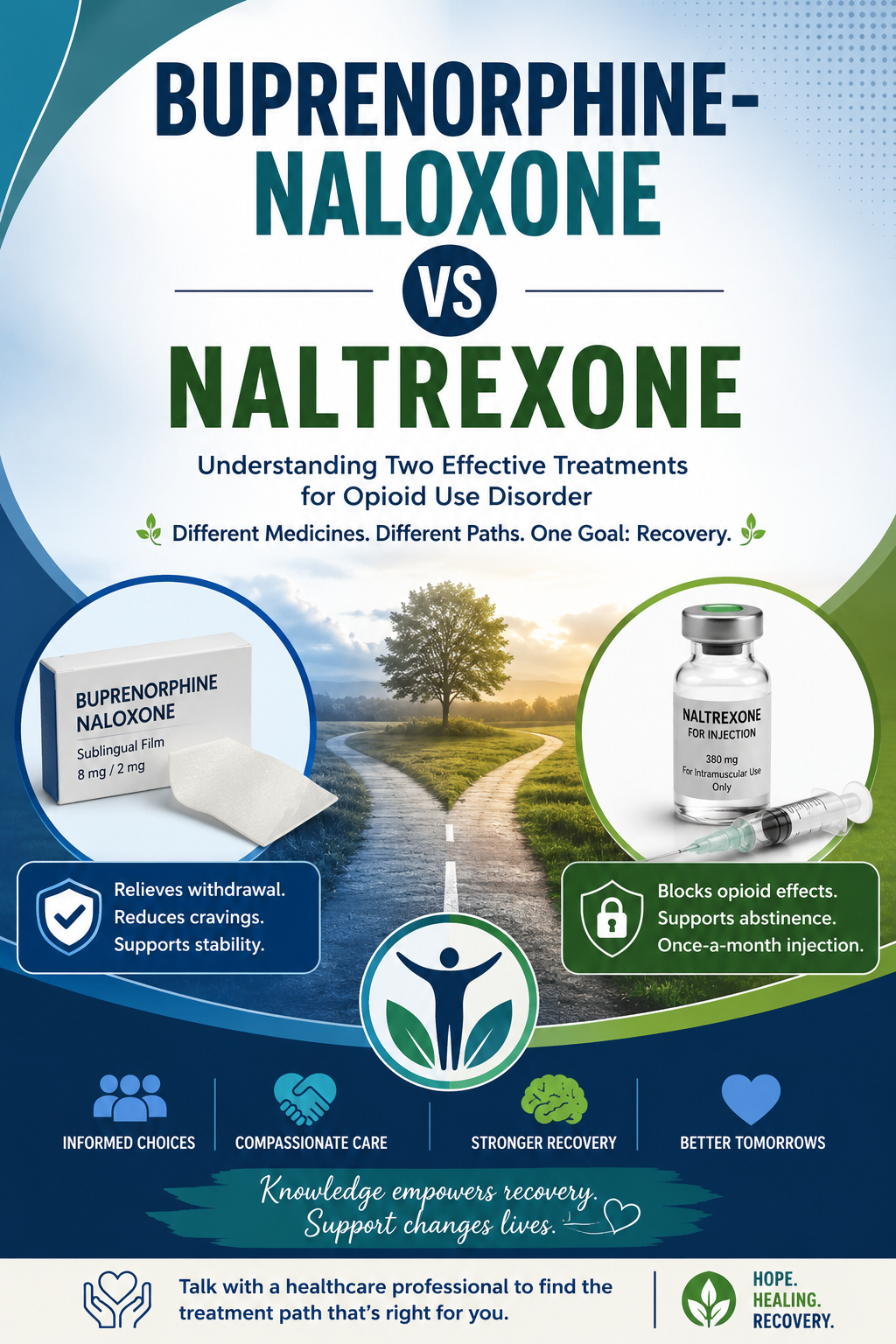
Opioid use disorder (OUD) is a chronic but treatable medical condition that affects brain function, behavior, and overall health. Medications for opioid use disorder (MOUD) are among the most effective treatments for reducing opioid use, preventing relapse, and lowering the risk of overdose. Two commonly used FDA-approved medications are buprenorphine-naloxone and extended-release naltrexone. Although both support recovery, they work in different ways and are appropriate for different individuals and stages of treatment. Buprenorphine-naloxone is a partial opioid agonist that reduces withdrawal symptoms and cravings, while extended-release naltrexone is a monthly opioid antagonist injection that blocks the effects of opioids after a person has completed detoxification. Understanding the similarities, differences, benefits, and limitations of each medication helps individuals, families, and healthcare providers make informed decisions and develop personalized treatment plans that support long-term recovery.
Buprenorphine-Naloxone vs. Extended-Release Naltrexone
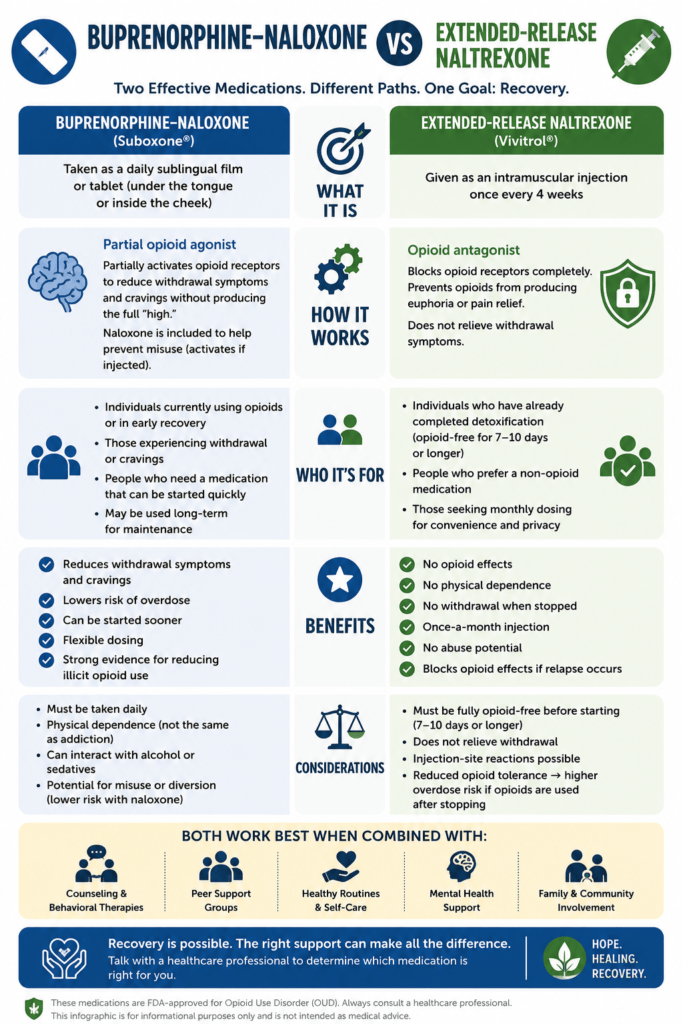
Both buprenorphine-naloxone and extended-release naltrexone (XR-NTX) are FDA-approved medications for the treatment of opioid use disorder (OUD). They reduce the risk of relapse and overdose when used as part of a comprehensive treatment plan that includes counseling, behavioral therapies, and recovery support. Although both medications are effective, they work in very different ways and are appropriate for different patients and stages of recovery.
What Is Buprenorphine-Naloxone?
Buprenorphine-naloxone is a combination medication commonly known by the brand name Suboxone. It contains:
- Buprenorphine: A partial opioid agonist that partially activates opioid receptors. It relieves withdrawal symptoms and cravings without producing the intense euphoria associated with full opioid agonists.
- Naloxone: An opioid antagonist added to discourage misuse by injection. When taken under the tongue or inside the cheek as prescribed, naloxone has minimal effect. If injected, it can precipitate withdrawal in someone dependent on opioids.
Buprenorphine has a ceiling effect, meaning its opioid effects level off at higher doses, making it safer than full opioid agonists and reducing the risk of respiratory depression.
What Is Extended-Release Naltrexone?
Extended-release naltrexone is a long-acting opioid antagonist administered as an intramuscular injection once every four weeks. It completely blocks opioid receptors, preventing opioids from producing euphoric or pain-relieving effects.
Unlike buprenorphine, naltrexone is not an opioid and has no abuse potential or physical dependence. Because it blocks opioid receptors, patients must be completely opioid-free for approximately 7–10 days (sometimes longer depending on the opioid used) before starting treatment to avoid precipitated withdrawal.
How They Work
Buprenorphine-Naloxone
- Partially stimulates opioid receptors
- Reduces withdrawal symptoms
- Decreases opioid cravings
- Lowers overdose risk
- Helps normalize brain function during recovery
Extended-Release Naltrexone
- Completely blocks opioid receptors
- Prevents opioid intoxication
- Does not relieve withdrawal symptoms
- Reduces relapse by eliminating opioid reward
- Has no opioid effects
Advantages of Buprenorphine-Naloxone
- Can be started soon after mild-to-moderate withdrawal begins.
- Strong evidence for reducing illicit opioid use.
- Significantly decreases overdose deaths.
- Controls cravings and withdrawal effectively.
- Allows patients to function normally at work and home.
- Flexible dosing options.
Limitations of Buprenorphine-Naloxone
- Physical dependence develops, although this differs from addiction.
- Abrupt discontinuation causes withdrawal symptoms.
- Daily or frequent dosing requires adherence.
- Diversion and misuse can occur, although risk is reduced by naloxone.
- Drug interactions require careful monitoring.
Advantages of Extended-Release Naltrexone
- No opioid effects.
- No physical dependence.
- No withdrawal when discontinued.
- Monthly injection improves adherence.
- No abuse potential.
- Useful for individuals leaving incarceration, residential treatment, or detoxification who have already completed withdrawal.
Limitations of Extended-Release Naltrexone
- Requires complete detoxification before initiation.
- Detoxification can be difficult for many patients.
- Does not reduce withdrawal symptoms.
- Reduced opioid tolerance increases overdose risk if someone returns to opioid use after stopping treatment.
- Injection-site reactions may occur.
Who May Benefit Most?
Buprenorphine-Naloxone may be ideal for:
- Individuals currently dependent on opioids
- Patients experiencing cravings or withdrawal
- Those with repeated relapses
- People needing rapid treatment initiation
- Patients seeking long-term maintenance therapy
Extended-Release Naltrexone may be ideal for:
- Individuals who have already completed detoxification
- People who prefer a non-opioid medication
- Patients with occupations that limit opioid agonist treatment
- Individuals concerned about medication misuse
- Highly motivated patients committed to maintaining abstinence
Effectiveness
Research shows both medications reduce opioid relapse when patients remain engaged in treatment. However:
- Buprenorphine is generally easier to initiate because patients do not need prolonged detoxification.
- More patients successfully begin buprenorphine treatment than extended-release naltrexone due to the detox requirement.
- Once treatment has been successfully initiated, both medications can provide comparable protection against relapse in many patients.
Side Effects
Buprenorphine-Naloxone
Common side effects include:
- Constipation
- Headache
- Nausea
- Sweating
- Insomnia
- Drowsiness
Extended-Release Naltrexone
Common side effects include:
- Injection-site pain
- Nausea
- Fatigue
- Headache
- Muscle aches
- Anxiety
Counseling and Recovery Support
Medication alone is often not enough. Comprehensive treatment may include:
- Individual counseling
- Cognitive behavioral therapy (CBT)
- Motivational interviewing
- Peer recovery support
- Family therapy
- Mental health treatment for co-occurring disorders
- Relapse prevention planning
- Recovery coaching
Safety Considerations
Both medications should be prescribed and monitored by qualified healthcare professionals.
Patients receiving extended-release naltrexone should be educated that attempting to overcome the opioid blockade by taking large amounts of opioids can be dangerous. After discontinuing naltrexone, opioid tolerance is reduced, increasing the risk of overdose if opioid use resumes.
Patients taking buprenorphine should avoid combining it with alcohol or other sedatives unless supervised by a healthcare provider because the combination can increase the risk of respiratory depression.
Conclusion
Buprenorphine-naloxone and extended-release naltrexone are both highly effective treatments for opioid use disorder, but they serve different clinical needs. Buprenorphine-naloxone is often preferred for individuals who are actively experiencing opioid dependence because it relieves withdrawal symptoms and cravings while lowering overdose risk. Extended-release naltrexone is a valuable non-opioid option for individuals who have already completed detoxification and want monthly protection against opioid relapse. The best medication depends on a person’s medical history, recovery goals, ability to complete detoxification, and preferences. Working closely with a healthcare provider helps ensure the safest and most effective treatment plan for long-term recovery.
Self-Management Strategies to Understand Buprenorphine-Naloxone vs. Extended-Release Naltrexone
Successfully managing opioid use disorder involves more than choosing a medication. Understanding how buprenorphine-naloxone and extended-release naltrexone work can help individuals actively participate in their treatment and make informed decisions with their healthcare providers. The following self-management strategies support recovery regardless of which medication is prescribed.
Learn How Your Medication Works
Take time to understand whether your medication reduces cravings and withdrawal symptoms (buprenorphine-naloxone) or blocks the effects of opioids (extended-release naltrexone). Knowing how your medication works can improve confidence, adherence, and treatment success.
Be Honest About Your Recovery Goals
Discuss your goals with your healthcare provider. If you are currently experiencing withdrawal or cravings, buprenorphine-naloxone may be appropriate. If you have completed detoxification and prefer a non-opioid medication, extended-release naltrexone may be an option. Honest communication helps ensure treatment matches your needs.
Take Medication Exactly as Prescribed
Never change your dose or stop treatment without consulting your healthcare provider. Consistent use improves effectiveness, reduces relapse risk, and supports long-term recovery.
Attend All Medical Appointments
Regular follow-up visits allow your healthcare provider to monitor progress, adjust treatment if needed, address side effects, and provide ongoing support. If you receive extended-release naltrexone, schedule your monthly injection before leaving each appointment.
Monitor Cravings and Triggers
Keep a journal to identify situations, emotions, or environments that increase cravings. Recognizing patterns allows you to develop healthier coping strategies and avoid high-risk situations.
Develop Healthy Coping Skills
Medication works best when combined with healthy stress-management techniques. Regular exercise, mindfulness, meditation, deep breathing, journaling, hobbies, and structured daily routines can reduce stress and support emotional well-being.
Participate in Counseling
Behavioral therapies help address the emotional, psychological, and social aspects of addiction. Individual counseling, cognitive behavioral therapy (CBT), motivational interviewing, and relapse prevention training strengthen long-term recovery.
Build a Strong Support System
Stay connected with supportive family members, friends, peer recovery groups, sponsors, or recovery coaches. Social support reduces isolation and provides encouragement during difficult periods.
Prepare for High-Risk Situations
Create a relapse prevention plan that identifies warning signs, coping strategies, emergency contacts, and steps to take if cravings become overwhelming. Planning ahead increases confidence and resilience.
Understand Overdose Risk
Individuals taking extended-release naltrexone should understand that opioid tolerance decreases during treatment. If opioid use resumes after stopping medication, even previously tolerated doses may cause a fatal overdose. Those taking buprenorphine-naloxone should avoid combining it with alcohol or sedatives unless specifically directed by a healthcare provider.
Maintain Overall Physical Health
Healthy nutrition, adequate sleep, hydration, and regular physical activity improve mood, reduce stress, and support brain healing during recovery.
Treat Co-Occurring Mental Health Conditions
Depression, anxiety, post-traumatic stress disorder, and other mental health conditions can increase relapse risk. Follow treatment recommendations for both substance use and mental health disorders to improve recovery outcomes.
Avoid Comparing Your Recovery to Others
Every person’s recovery journey is unique. Some individuals benefit from long-term buprenorphine-naloxone treatment, while others do well with extended-release naltrexone. Focus on your own progress rather than comparing treatment choices with others.
Stay Informed
Recovery research continues to evolve. Ask questions during appointments, learn about your treatment options, and stay informed through reliable medical sources. Understanding your medication empowers you to participate actively in your recovery.
Celebrate Progress
Recovery is built through consistent daily efforts. Recognize milestones such as attending appointments, taking medication consistently, managing cravings, completing counseling sessions, and maintaining sobriety. Celebrating progress reinforces motivation and supports long-term success.
Remember That Recovery Is Individualized
There is no single medication that is best for everyone. Buprenorphine-naloxone and extended-release naltrexone are both evidence-based treatments that can significantly reduce relapse and improve quality of life when combined with counseling, healthy lifestyle changes, and ongoing medical care. Staying engaged in treatment, communicating openly with your healthcare team, and practicing healthy self-management strategies provide a strong foundation for lasting recovery.
Family Support Strategies to Understand Buprenorphine-Naloxone vs. Extended-Release Naltrexone
Family support can play a significant role in the recovery process for individuals receiving medication treatment for opioid use disorder (OUD). Whether a loved one is taking buprenorphine-naloxone or extended-release naltrexone, informed and compassionate family involvement can improve treatment engagement, reduce stigma, and promote long-term recovery. Understanding the differences between these medications helps families provide meaningful support while respecting the individual’s treatment plan.
Learn About Both Medications
Take time to understand how each medication works. Buprenorphine-naloxone reduces withdrawal symptoms and cravings by partially activating opioid receptors, while extended-release naltrexone blocks opioid receptors and prevents opioids from producing their effects. Learning these differences helps families better understand why one medication may be recommended over another.
Support the Individual’s Treatment Plan
Recovery is not one-size-fits-all. Avoid suggesting that one medication is “better” than another based on personal opinions or misinformation. Trust the healthcare provider’s recommendations and encourage your loved one to remain engaged in treatment.
Reduce Stigma Around Medication
Medication for opioid use disorder is an evidence-based medical treatment, not a substitute for addiction. Avoid comments such as “You’re still using drugs” or “You should quit medication.” Instead, recognize that these medications help stabilize brain function, reduce the risk of relapse, and save lives.
Encourage Medication Adherence
Support your loved one in taking medication exactly as prescribed. Gentle reminders about daily buprenorphine-naloxone doses or monthly extended-release naltrexone appointments can improve treatment consistency without becoming controlling.
Attend Medical Appointments When Invited
If your loved one is comfortable with your involvement, attend healthcare visits or family counseling sessions. These appointments provide opportunities to ask questions, better understand treatment, and learn how to support recovery effectively.
Recognize That Recovery Extends Beyond Medication
Medication addresses the biological aspects of addiction, but emotional healing, behavioral change, and healthy coping skills also require attention. Encourage participation in counseling, peer support groups, recovery coaching, or other recommended services.
Learn to Recognize Relapse Warning Signs
Become familiar with behaviors that may indicate increasing relapse risk, such as:
- Increased isolation
- Missing appointments
- Mood changes
- Returning to unhealthy relationships
- Secretive behavior
- Increased stress without healthy coping
Recognizing these warning signs early allows families to encourage professional support before a crisis develops.
Support Healthy Daily Routines
Encourage habits that promote overall well-being, including:
- Regular sleep
- Balanced nutrition
- Physical activity
- Stress management
- Structured daily schedules
- Meaningful hobbies
Healthy routines strengthen recovery and improve emotional resilience.
Communicate Without Judgment
Practice active listening and express concern with empathy rather than criticism. Replace blame with supportive statements such as:
- “How can I help?”
- “I’m proud of the progress you’re making.”
- “Let’s work through this together.”
Respectful communication strengthens trust and encourages openness.
Prepare for Emergencies
Families should learn to recognize the signs of opioid overdose and know how to respond. Keeping naloxone readily available and knowing how to administer it can save a life in the event of an opioid overdose. Even individuals in recovery may be at risk if relapse occurs.
Understand the Unique Considerations of Each Medication
Families should know that individuals receiving extended-release naltrexone must complete detoxification before starting treatment. They should also understand that opioid tolerance decreases during treatment, increasing the risk of overdose if opioid use resumes after stopping medication.
For individuals taking buprenorphine-naloxone, families should understand that physical dependence is an expected medical effect of treatment and should not be confused with addiction. They should also encourage avoiding alcohol or sedating medications unless approved by a healthcare provider.
Respect Privacy and Independence
Offer support without attempting to control every aspect of recovery. Adults benefit from encouragement, accountability, and respect for their autonomy. Recovery is strongest when individuals actively participate in making their own treatment decisions.
Take Care of Your Own Well-Being
Supporting someone with opioid use disorder can be emotionally challenging. Family members should prioritize their own mental and physical health by:
- Attending family support groups
- Seeking counseling if needed
- Practicing stress management
- Maintaining healthy boundaries
- Staying connected with supportive friends and relatives
Caring for yourself helps you provide more effective support to your loved one.
Celebrate Progress
Recovery often occurs through small, consistent achievements. Celebrate milestones such as attending appointments, taking medication consistently, completing counseling, maintaining employment, rebuilding relationships, and reaching sobriety goals. Positive reinforcement encourages continued engagement in treatment.
Remember That Recovery Is a Long-Term Process
Both buprenorphine-naloxone and extended-release naltrexone are evidence-based treatments that can help individuals achieve lasting recovery when combined with counseling, healthy lifestyle changes, and ongoing medical care. Families who educate themselves, communicate with compassion, reduce stigma, and provide steady encouragement create an environment where recovery can flourish. Patience, understanding, and consistent support can make a lasting difference in a loved one’s journey toward improved health and long-term recovery.
Community Resource Strategies to Understand Buprenorphine-Naloxone vs. Extended-Release Naltrexone
Recovery from opioid use disorder (OUD) is strengthened when individuals have access to supportive community resources in addition to medication. Whether a person is treated with buprenorphine-naloxone or extended-release naltrexone, community services can provide education, healthcare access, counseling, peer support, housing assistance, employment resources, and long-term recovery support. Understanding and using these resources helps individuals remain engaged in treatment and build a stable foundation for recovery.
Connect with Medication for Opioid Use Disorder (MOUD) Providers
Seek treatment through healthcare providers who specialize in opioid use disorder. These professionals can explain the differences between buprenorphine-naloxone and extended-release naltrexone, monitor treatment progress, manage side effects, and adjust care plans as recovery needs change.
Utilize Addiction Treatment Programs
Outpatient clinics, intensive outpatient programs (IOPs), residential treatment centers, and comprehensive addiction recovery programs often provide medication management alongside counseling, relapse prevention education, and behavioral therapies. These services help address both the physical and psychological aspects of addiction.
Participate in Peer Recovery Support
Peer recovery specialists and recovery coaches provide encouragement from individuals with lived experience in recovery. They can help navigate treatment, maintain motivation, connect individuals with local resources, and offer practical guidance during challenging periods.
Attend Recovery Support Groups
Community recovery groups provide opportunities to build supportive relationships with others facing similar challenges. Mutual support can reduce isolation, increase accountability, and reinforce healthy recovery behaviors. Individuals should choose groups that align with their personal beliefs, goals, and treatment plans, including those that support medication-assisted recovery.
Access Mental Health Services
Many individuals with opioid use disorder also experience depression, anxiety, post-traumatic stress disorder, or other mental health conditions. Community mental health clinics, licensed therapists, psychologists, and psychiatrists provide comprehensive care that addresses both substance use and mental health simultaneously.
Utilize Case Management Services
Case managers help coordinate healthcare appointments, insurance coverage, transportation, housing assistance, employment resources, legal services, and social support programs. Coordinated care reduces barriers that may interfere with successful recovery.
Take Advantage of Community Health Centers
Federally qualified health centers and community clinics often provide affordable primary care, behavioral health services, medication management, preventive care, and referrals to addiction specialists regardless of insurance status.
Participate in Educational Programs
Community organizations, hospitals, universities, and public health departments frequently offer educational workshops about opioid use disorder, medications for addiction treatment, overdose prevention, and relapse prevention. Accurate education helps reduce stigma and empowers informed decision-making.
Learn About Overdose Prevention Resources
Community organizations often provide overdose education and distribute naloxone. Individuals and families should learn how to recognize an opioid overdose, administer naloxone, and contact emergency medical services. Even people in recovery should understand overdose risks, particularly after periods of abstinence when opioid tolerance has decreased.
Utilize Employment and Vocational Services
Stable employment supports recovery by improving financial security, self-esteem, and daily structure. Workforce development agencies, vocational rehabilitation programs, and job training organizations help individuals rebuild careers and gain meaningful employment.
Seek Housing Assistance
Safe, stable housing contributes significantly to long-term recovery. Community organizations may offer recovery housing, transitional living programs, supportive housing, and assistance locating affordable housing for individuals rebuilding their lives.
Involve Family Education Programs
Many community organizations provide family education classes that explain opioid use disorder, medication treatment, communication skills, healthy boundaries, and relapse prevention. Educated family members are often better equipped to provide effective support.
Use Transportation Assistance
Transportation barriers can interfere with medical appointments and counseling sessions. Community transportation programs, Medicaid transportation benefits, rideshare assistance, or nonprofit organizations may help individuals attend treatment consistently.
Build a Recovery-Friendly Social Network
Community centers, volunteer organizations, faith communities, recreational programs, and sober social events provide opportunities to develop healthy relationships and participate in meaningful activities that support recovery.
Stay Connected with Ongoing Care
Recovery is a long-term process that benefits from continuous support. Continue attending medical appointments, counseling sessions, recovery meetings, and wellness activities even after significant progress has been made. Ongoing engagement reduces relapse risk and promotes lasting stability.
Advocate for Yourself
Learn about your treatment options, ask questions, understand your insurance benefits, and communicate openly with healthcare providers. Individuals who actively participate in their care are better prepared to make informed decisions about whether buprenorphine-naloxone or extended-release naltrexone best fits their recovery needs.
Conclusion
Community resources provide essential support for individuals receiving either buprenorphine-naloxone or extended-release naltrexone for opioid use disorder. Access to qualified healthcare providers, counseling, peer support, mental health services, housing assistance, employment programs, family education, and overdose prevention resources strengthens recovery and improves long-term outcomes. By combining evidence-based medication with comprehensive community support, individuals can reduce the risk of relapse, improve overall health, rebuild meaningful relationships, and create a strong foundation for lasting recovery.
Frequently Asked Questions
Here are some common questions:
1. What is the difference between buprenorphine-naloxone and naltrexone?
Buprenorphine-naloxone is a medication that partially activates opioid receptors to reduce withdrawal symptoms and cravings. Naltrexone is an opioid antagonist that completely blocks opioid receptors, preventing opioids from producing euphoric effects. They work differently but are both FDA-approved treatments for opioid use disorder.
2. Which medication is more effective?
Both medications are effective when used appropriately. Buprenorphine-naloxone is generally easier to start because it can be initiated once mild to moderate withdrawal begins. Extended-release naltrexone requires complete detoxification before treatment can begin. Once patients successfully start treatment, both medications can help reduce relapse.
3. Is buprenorphine-naloxone an opioid?
Yes. Buprenorphine is a partial opioid agonist, meaning it activates opioid receptors to a limited degree. Naloxone is added to reduce the risk of misuse. When taken as prescribed, the medication helps stabilize brain chemistry without producing the intense euphoria of full opioid agonists.
4. Is naltrexone an opioid?
No. Naltrexone is not an opioid. It blocks opioid receptors and has no opioid effects or abuse potential.
5. Why must someone detox before starting naltrexone?
Naltrexone can cause sudden, severe withdrawal if opioids are still present in the body. Most people need to be opioid-free for approximately 7–10 days, and sometimes longer depending on the opioid used, before receiving the medication.
6. Does buprenorphine-naloxone stop cravings?
Yes. One of its primary benefits is reducing opioid cravings while also relieving withdrawal symptoms, making it easier to focus on recovery.
7. Does naltrexone reduce cravings?
For many individuals, naltrexone helps reduce cravings by blocking the rewarding effects of opioids. However, unlike buprenorphine, it does not relieve withdrawal symptoms.
8. How often are these medications taken?
Buprenorphine-naloxone is usually taken daily as a sublingual tablet or film, although some long-acting buprenorphine formulations are available. Extended-release naltrexone is administered as an intramuscular injection approximately once every four weeks.
9. Can either medication produce a “high”?
When taken as prescribed, neither medication is intended to produce a euphoric high. Buprenorphine has a ceiling effect that limits its opioid activity, while naltrexone blocks opioid effects entirely.
10. Can someone become dependent on buprenorphine-naloxone?
Yes. Physical dependence can occur with buprenorphine, but this is different from addiction. Physical dependence is an expected response to certain medications and should not be confused with compulsive drug use.
11. Does naltrexone cause physical dependence?
No. Naltrexone does not cause physical dependence, and stopping it does not produce opioid withdrawal.
12. Which medication is better for preventing relapse?
Both medications reduce relapse risk. Buprenorphine-naloxone helps by controlling withdrawal symptoms and cravings, while naltrexone helps by blocking the effects of opioids if a person attempts to use them.
13. Can either medication be used during pregnancy?
Treatment decisions during pregnancy should always be made with an experienced healthcare provider. Buprenorphine without naloxone is commonly used during pregnancy, while naltrexone may be considered in selected cases based on an individualized risk-benefit assessment.
14. What happens if someone uses opioids while taking naltrexone?
The opioid effects are largely blocked. However, attempting to overcome the blockade by taking large amounts of opioids can be extremely dangerous and may increase the risk of overdose or other serious complications.
15. Is overdose still possible after stopping naltrexone?
Yes. After discontinuing naltrexone, opioid tolerance is reduced. Returning to previously tolerated opioid doses can significantly increase the risk of a fatal overdose.
16. Do these medications replace counseling?
No. Medication works best when combined with counseling, behavioral therapy, peer support, relapse prevention planning, and treatment of co-occurring mental health conditions.
17. Can people work, drive, and live normal lives while taking these medications?
Yes. Most individuals can continue working, attending school, caring for their families, and participating in normal daily activities once stabilized on treatment, although they should follow their healthcare provider’s guidance regarding any side effects.
18. How long should someone stay on medication?
There is no standard treatment length. Some people benefit from months of treatment, while others remain on medication for years. The duration should be individualized and determined with a healthcare provider based on recovery progress, relapse risk, and personal goals.
19. Who is a good candidate for buprenorphine-naloxone?
Individuals who are currently experiencing opioid withdrawal or cravings, have ongoing opioid dependence, or need a medication that can be started quickly often benefit from buprenorphine-naloxone.
20. Who is a good candidate for extended-release naltrexone?
Individuals who have completed detoxification, prefer a non-opioid medication, can attend monthly injection appointments, and want protection against opioid effects may be good candidates for extended-release naltrexone.
21. Can treatment plans change over time?
Yes. Recovery needs may change throughout treatment. Some individuals transition between medications based on changes in their health, recovery goals, side effects, or life circumstances. Healthcare providers regularly reassess treatment plans to ensure they remain safe, effective, and aligned with the individual’s long-term recovery needs.
22. What is the most important factor in choosing between buprenorphine-naloxone and naltrexone?
The best medication is the one that safely fits the individual’s medical history, stage of recovery, treatment goals, ability to complete detoxification, and personal preferences. Decisions should always be made collaboratively with a qualified healthcare provider. Both medications are evidence-based treatments that can significantly improve recovery outcomes when combined with comprehensive medical care, counseling, and ongoing recovery support.
Conclusion
Both buprenorphine-naloxone and extended-release naltrexone are evidence-based, FDA-approved medications that can significantly improve outcomes for people living with opioid use disorder. Rather than one medication being universally better than the other, the most appropriate choice depends on factors such as the individual’s medical history, stage of recovery, ability to complete detoxification, treatment goals, personal preferences, and access to ongoing care. When combined with counseling, behavioral therapies, peer support, and healthy lifestyle changes, either medication can reduce cravings or prevent opioid use, decrease the risk of relapse and overdose, and improve overall quality of life. Recovery is a lifelong journey, and working closely with a qualified healthcare provider to choose and maintain the most appropriate treatment plan provides the best opportunity for lasting health, stability, and sustained recovery.
Video: Buprenorphine vs Naltrexone: Which one is right for you? #recovery #shorts