If you’ve ever felt unwell after eating certain foods, you know how much food sensitivities and food allergies can affect your health and potentially interfere with recovery from illness, injury, or surgery. Although they are often confused, these conditions are quite different and require different approaches. Understanding whether you’re experiencing a food sensitivity or a true food allergy is an important step in protecting your health and supporting the healing process. Recognizing the signs, identifying trigger foods, and working with a healthcare professional can help reduce symptoms, improve overall well-being, and create a smoother path to recovery.
Understanding Food Sensitivities and Allergies
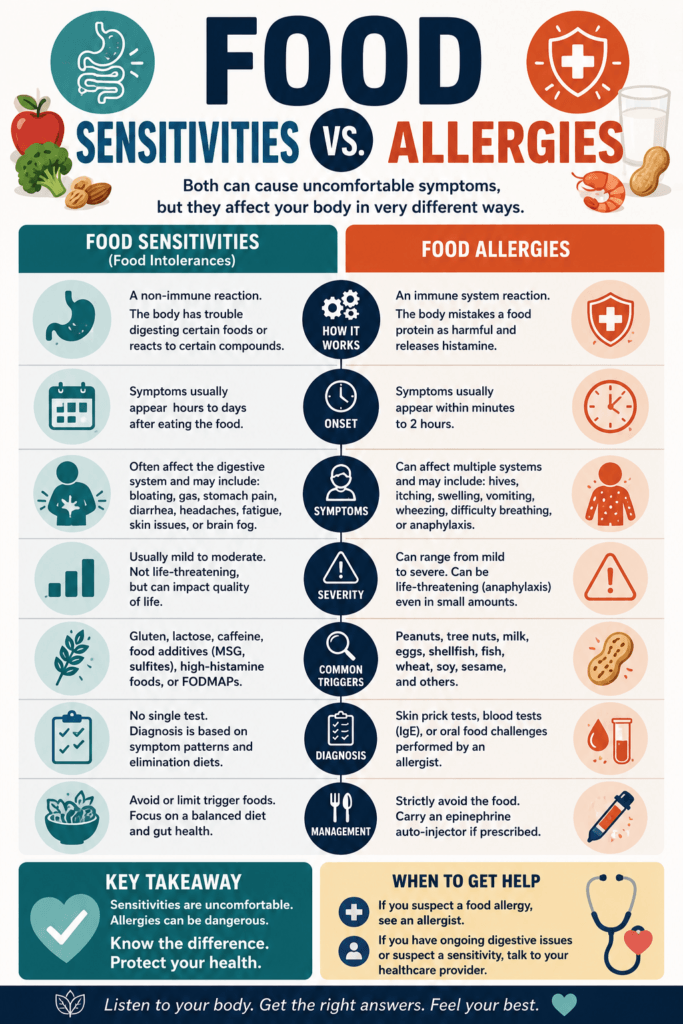
It’s easy to get mixed up between food sensitivities and allergies because both can produce uncomfortable or even scary symptoms. But what’s happening inside your body is pretty different.
Food allergies trigger your immune system. This means your body thinks something harmless (like peanuts or shellfish) is a real threat, so it launches an all-out defense that can bring on hives, swelling, trouble breathing, or even a sudden drop in blood pressure (anaphylaxis). Allergies can be serious and usually show up almost right after you eat the food.
Food sensitivities (sometimes called food intolerances) don’t involve the immune system the same way. Instead, they usually come from problems digesting certain foods. Symptoms might include bloating, stomach cramps, headaches, or feeling tired, and these reactions are usually milder, show up more slowly, and can depend on how much you ate.
Beyond the basics, it’s worth knowing that allergies are classified as immediate hypersensitivity reactions. This means your body’s immune system is involved, releasing chemicals like histamine that cause symptoms. Sensitivities or intolerances, on the other hand, are more about your digestive tract not coping well with certain ingredients, like lactose in milk or fructose in certain fruits. They don’t involve the same immune response, which is why their effects are less dramatic but can still disrupt your quality of life.
How Food Reactions Affect Your Recovery
When you’re trying to heal, whether from surgery, a sports injury, or just everyday wear and tear, your body needs to focus on healing itself. Any extra stress from a food reaction can really slow things down or complicate recovery. Here’s how:
- Allergic Reactions: Severe allergic reactions pull your immune system away from healing and can even send you to the ER. Even less serious reactions, such as itchiness, swelling, or mild breathing problems, put extra strain on your system and can trigger inflammation throughout your body.
- Sensitivities: Ongoing symptoms like stomach upset, headaches, or fatigue are distracting and make it harder to stick with rehab, eat well, or just feel strong. Plus, sensitivities can cause low-level inflammation, which isn’t great for tissue repair or pain management.
If your body is busy fighting off an allergen or struggling with a food sensitivity, it’s just got less energy left over for healing. That’s a big deal if you’re looking to speed things up and get back to doing what you love.
Common Triggers and How to Spot Them
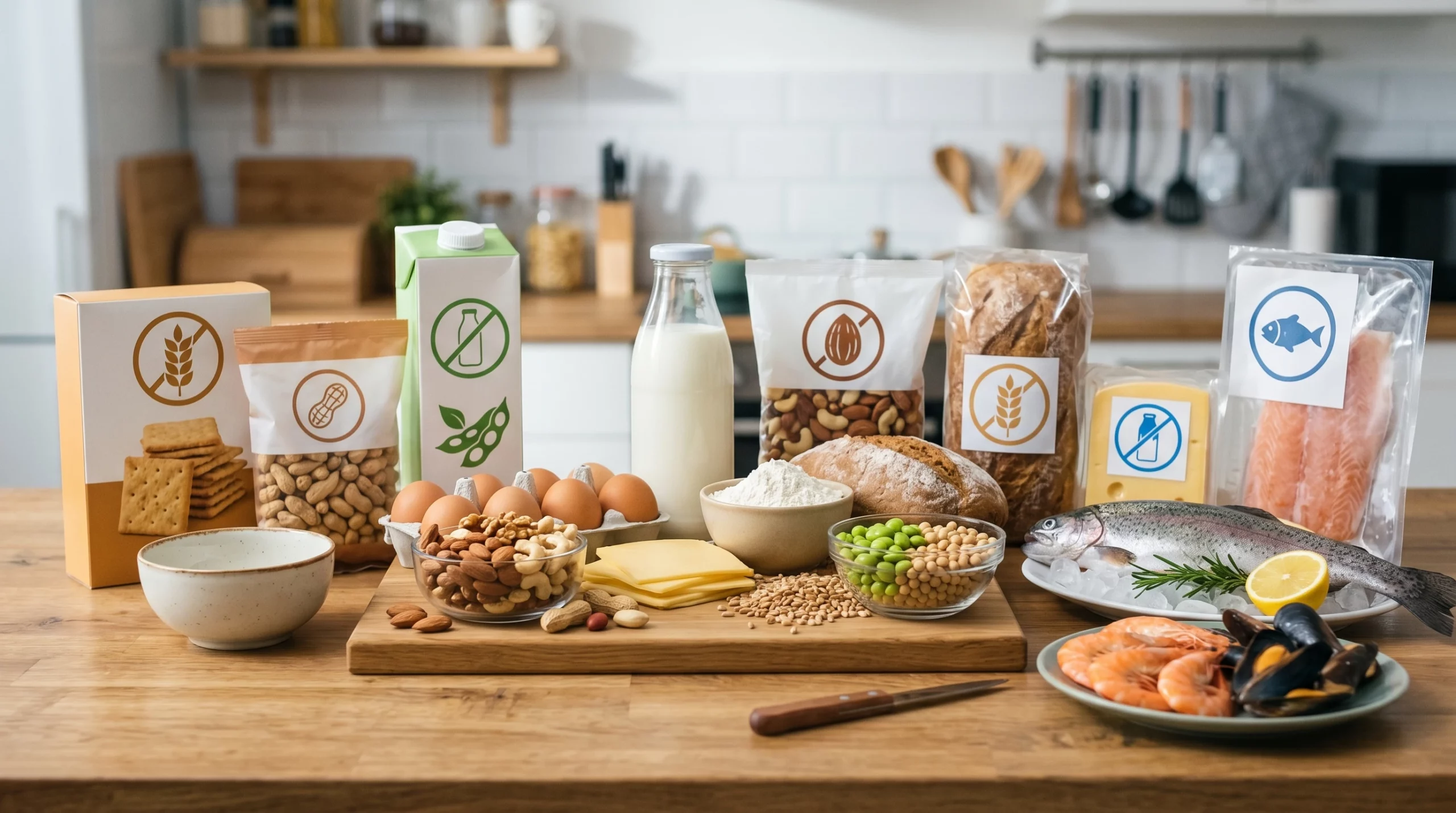
The most common food allergies are peanuts, tree nuts, milk, eggs, wheat, soy, fish, and shellfish. Food sensitivities, on the other hand, are often linked to things like lactose (the sugar in milk), gluten (a protein in wheat and some other grains), food additives like MSG or sulfites, and even naturally occurring chemicals in foods such as histamines.
Spotting the difference can sometimes be tricky, but there are a couple of clues:
- Allergy symptoms usually start fast, appearing minutes to two hours after eating.
- Sensitivity symptoms might show up several hours later and are often tied to how much you ate.
- Allergies often stick with the same symptoms each time, while sensitivities can be unpredictable and vary with stress, hormones, or other foods you’re eating.
How Are Food Allergies and Sensitivities Diagnosed?
Doctors usually diagnose food allergies using history, skin or blood tests, and sometimes clinical observation, such as a food challenge done in a medical setting. Food sensitivities aren’t always as straightforward. There aren’t super reliable tests, so tracking symptoms in a food journal is one of the best ways to start. Some people work with a dietitian to try an elimination diet, cutting out suspected triggers and then adding them back one by one to track down which foods cause trouble.
Making Smart Food Choices During Recovery
Eating right makes a really big difference in how quickly you heal and how good you feel along the way. Here’s what I found works:
- Know Your Triggers: If you already know you react to something, skip it. If you’re not sure, try a food diary to spot connections.
- Prioritize Whole Foods: Fresh fruits, veggies, lean proteins, and whole grains are less likely to contain hidden triggers than processed foods.
- Read Labels Closely: Packaged foods can be sneaky and often hide common allergens or sensitivity triggers under confusing names.
- Work With a Pro: A registered dietitian or certified nutritionist can walk you through creating a plan that avoids your triggers while still providing all the nutrients your body needs to heal.
Including anti-inflammatory foods like leafy greens, berries, and omega-3-rich fish can help your recovery, too. These foods aren’t typically linked to allergies or sensitivities, and they can help reduce inflammation and boost your healing process. Adding plenty of water and avoiding extra sugar or processed oils also makes recovery smoother.
Real-Life Examples and Tips
On my recovery adventure, I noticed certain foods made my joint pain spike and my energy crash. After some careful tracking, cheese and processed wheat were big culprits. They didn’t cause hives or swelling, just uncomfortable bloating and sluggishness. When I swapped these for simple, unprocessed alternatives, I bounced back faster after workouts, and daily aches felt easier to handle.
- Lactose Intolerance: Not getting enough calcium and protein after cutting dairy? There are plenty of fortified nut milks and yogurts out there that do the trick without triggering symptoms.
- Gluten Sensitivity: Many gluten-free products are just as tasty and filling as the regular stuff. Just make sure they aren’t loaded with sugar or processed ingredients.
- Allergies: If you have a known allergy, always carry an epinephrine autoinjector if your doctor recommends it. Let your friends, family, or team know what foods aren’t safe for you, especially during recovery meetups or group meals.
Some people also find that their reactions to food worsen or occur more often when they’re under stress or not sleeping well. Staying on top of stress management and getting enough rest go hand in hand with avoiding troublesome foods.
Challenges and How to Handle Them
Steering through food allergies and sensitivities isn’t always easy. Social events, eating out, and even travel can be stressful. Here are a few things that have made it easier for me:
- Call ahead to restaurants and ask about menu options.
- Keep safe snacks with you so you’re never stuck hungry.
- Don’t be shy about asking about ingredients, even at a friend’s house.
Being open about your needs helps friends and family support your recovery. Plus, sharing what you’re going through helps others feel less alone if they’re dealing with something similar. Technology, such as food-tracking apps and community forums, can also make it easy to find safe foods or support groups for advice.
FAQs About Food Sensitivities, Allergies, and Recovery
What’s the difference between an intolerance and a sensitivity?
These terms are often used interchangeably, but intolerance is usually a digestive issue, such as not producing enough enzyme to digest lactose, while sensitivity can involve a broader range of symptoms and may not have a clearly defined cause.
How quickly should I see improvement after cutting out a trigger food?
Some symptoms, like headaches or tiredness from sensitivities, can get better within days, but others, such as gut inflammation, might take a few weeks. Allergic reactions usually improve as soon as the allergen is gone from your system.
Can food sensitivities become allergies?
Current research suggests it’s pretty rare for a sensitivity to turn into a true allergy. However, repeated exposure to an allergen can make allergic reactions worse, so if you have a diagnosed allergy, avoidance is super important.
Extra Tips for Supporting Recovery
Along with managing food reactions, here are some ways to support your body’s healing process:
- Add gentle movement, like stretching or walking, as your body allows.
- Get enough rest every night. Sleep is when a lot of healing happens.
- Include probiotics, if tolerated, to help gut health (important for immune function and reducing inflammation).
- Stay connected with supportive friends or groups. It helps emotionally and keeps you motivated.
Practical Takeaways for Managing Food Reactions During Recovery
Figuring out what foods your body likes and dislikes is super important when you’re trying to recover and feel your best. Understanding the difference between allergies and sensitivities helps you avoid uncomfortable symptoms, reduce inflammation, and let your body focus on healing.
- Keep a food diary to track symptoms and spot patterns.
- Read food labels and learn the code words for your triggers.
- Prioritize open communication with your healthcare team.
- Celebrate small wins, like better sleep, less pain, or clearer skin. They all add up over time.
Everybody is different, so what works for someone else may not work for you. Careful research and a bit of trial and error help you craft a recovery plan that fits your needs, preferences, and goals. If you’re ever unsure whether you’re dealing with an allergy or a sensitivity, talking with your healthcare provider can clear up confusion and keep your recovery adventure moving in the right direction. Remember, small daily choices can make a big difference in how fast and comfortably you get back to feeling your best.
Video: Food Sensitivities vs Allergies: Know the Difference