Alcohol misuse remains one of the leading preventable causes of illness, injury, and death in the United States, affecting millions of individuals, families, and communities each year. Excessive alcohol use—including binge drinking, heavy drinking, and alcohol use disorder (AUD)—contributes to chronic diseases, mental health disorders, motor vehicle crashes, violence, lost productivity, and significant healthcare costs. Although alcohol is legal and widely accepted in many social settings, its misuse can have devastating consequences that extend far beyond the individual, impacting families, workplaces, and the nation’s economy. Understanding the scope of the U.S. alcohol epidemic, its contributing factors, and the evidence-based strategies used for prevention, treatment, and recovery is essential for reducing alcohol-related harm and improving public health.
The U.S. Alcohol Epidemic
Alcohol remains one of the most widely used psychoactive substances in the United States and is a leading preventable cause of illness, injury, and premature death. While moderate alcohol use is common among many adults, excessive drinking—including binge drinking, heavy drinking, underage drinking, and alcohol use during pregnancy—has become a major public health concern. Alcohol affects nearly every organ in the body and contributes to chronic diseases, mental health disorders, accidents, violence, family disruption, and high economic costs. Despite its legal status and social acceptance, alcohol misuse continues to place a substantial burden on individuals, families, healthcare systems, and communities.
What Is Excessive Alcohol Use?
The Centers for Disease Control and Prevention (CDC) defines excessive alcohol use as:
- Binge drinking: Four or more drinks on one occasion for women or five or more drinks for men.
- Heavy drinking: Eight or more drinks per week for women or 15 or more drinks per week for men.
- Any alcohol use by people younger than 21 years of age.
- Any alcohol use during pregnancy.
Binge drinking is the most common form of excessive alcohol use in the United States and accounts for the majority of alcohol-related harms.
Scope of the Epidemic
Alcohol misuse affects millions of Americans every year. According to the CDC:
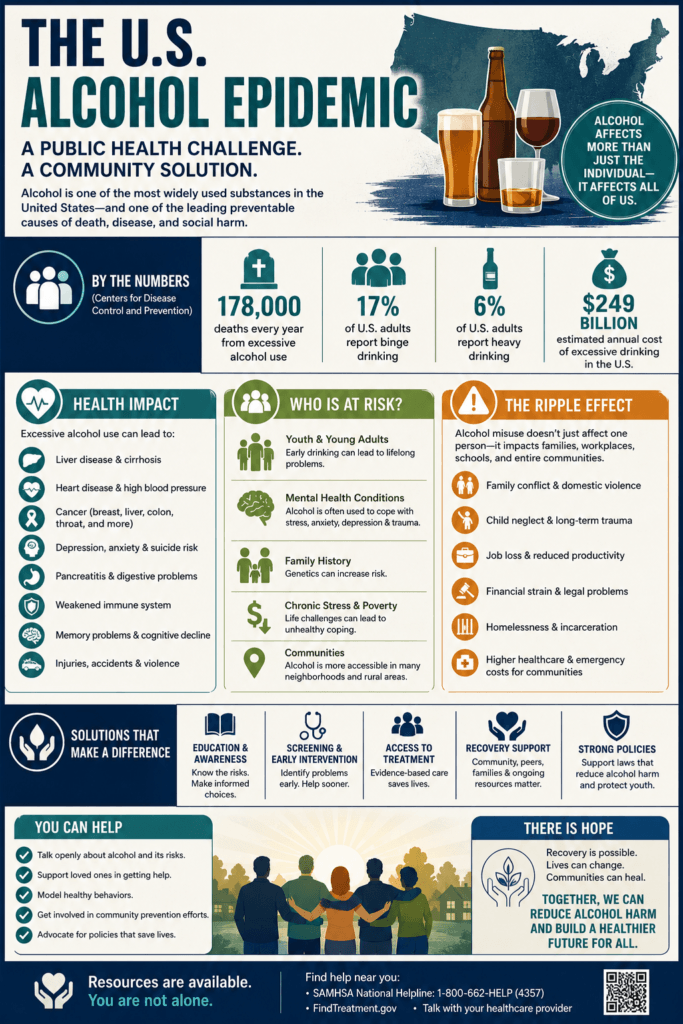
- About 178,000 deaths occur annually from excessive alcohol use.
- Approximately 17% of U.S. adults report binge drinking.
- Around 6% of adults meet the definition of heavy drinking.
- More than half of U.S. adults consume alcohol.
- Excessive alcohol use contributes to about 488 deaths every day in the United States.
Health Consequences
Excessive alcohol consumption increases the risk of numerous medical conditions, including:
- Alcohol use disorder (AUD)
- Liver disease and cirrhosis
- Pancreatitis
- High blood pressure
- Heart disease and stroke
- Several types of cancer, including breast, liver, colorectal, esophageal, mouth, throat, and laryngeal cancers
- Depression and anxiety
- Memory impairment and cognitive decline
- Weakened immune function
- Poor sleep quality
- Malnutrition and vitamin deficiencies
Mental Health and Addiction
Alcohol misuse frequently occurs alongside mental health conditions such as:
- Depression
- Anxiety disorders
- Bipolar disorder
- Post-traumatic stress disorder (PTSD)
- Increased suicide risk
Many individuals initially use alcohol to cope with emotional distress, trauma, or chronic stress. Over time, alcohol can worsen these conditions, creating a cycle in which mental illness and alcohol dependence reinforce one another.
Social and Family Impact
The alcohol epidemic extends beyond the individual, affecting families and communities through:
- Domestic violence
- Child neglect and abuse
- Divorce and relationship conflict
- Financial hardship
- Job loss and reduced productivity
- Criminal justice involvement
- Homelessness
- Social isolation
Children raised in households affected by alcohol misuse may face emotional trauma, academic challenges, and an increased risk of developing substance use disorders later in life.
Alcohol and Injury
Alcohol is a major contributor to preventable injuries, including:
- Motor vehicle crashes
- Falls
- Drowning
- Fires
- Violence and assault
- Workplace injuries
- Recreational accidents
Alcohol impairs judgment, reaction time, coordination, and decision-making, increasing the likelihood of accidents and risky behaviors.
Economic Burden
Excessive alcohol use imposes enormous costs on society. The CDC estimates that excessive drinking costs the United States approximately $249 billion annually (based on the most recent comprehensive cost analysis), with losses driven by reduced workplace productivity, healthcare expenses, criminal justice costs, and motor vehicle crashes.
Who Is at Higher Risk?
Risk factors for unhealthy alcohol use include:
- Family history of alcohol use disorder
- Early initiation of drinking
- Mental health disorders
- Trauma or adverse childhood experiences
- Chronic stress
- Peer pressure and social norms
- Easy access to alcohol
- Co-occurring substance use disorders
While alcohol misuse can affect anyone, recognizing these risk factors allows for earlier intervention and prevention.
Prevention Strategies
Reducing alcohol-related harm requires coordinated efforts that include:
- Public education about alcohol risks
- Routine screening in healthcare settings
- Early intervention for hazardous drinking
- Access to evidence-based treatment
- Community prevention programs
- Enforcement of impaired-driving laws
- Policies that reduce excessive alcohol use and improve public safety
Treatment Options
Alcohol use disorder is a treatable medical condition. Effective treatment may include:
- Medically supervised detoxification when appropriate
- Individual and group counseling
- Cognitive behavioral therapy (CBT)
- Motivational interviewing
- Family therapy
- Peer recovery support
- Mutual-help groups
- FDA-approved medications, such as naltrexone, acamprosate, and disulfiram, for selected patients
- Treatment for co-occurring mental health conditions
Recovery is individualized, and many people benefit from combining medication, behavioral therapies, and long-term recovery support.
Hope for Recovery
Although the U.S. alcohol epidemic remains a significant public health challenge, recovery is possible. Early recognition, compassionate care, evidence-based treatment, and strong family and community support can help individuals reduce or stop harmful alcohol use and improve their overall health. By addressing alcohol misuse as a chronic but treatable medical condition rather than a moral failing, healthcare professionals, families, and communities can reduce stigma, expand access to care, and support lasting recovery.
How the U.S. Government Is Managing the Alcohol Epidemic
The U.S. government addresses the alcohol epidemic through a combination of public health initiatives, healthcare services, education, research, regulation, and law enforcement. Rather than relying on a single program, multiple federal, state, tribal, and local agencies work together to reduce excessive alcohol use, prevent alcohol-related harm, and improve access to treatment for alcohol use disorder (AUD). While progress has been made in many areas, alcohol-related deaths remain high, and experts continue to recommend expanding prevention and treatment efforts.
Public Health Education
Federal agencies educate the public about the health risks associated with excessive alcohol use. The Centers for Disease Control and Prevention (CDC) provides information on binge drinking, heavy drinking, alcohol-related diseases, cancer risk, impaired driving, and strategies to reduce alcohol consumption. National awareness campaigns encourage individuals to evaluate their drinking habits, understand standard drink sizes, and make healthier choices.
Screening and Early Intervention
The U.S. Preventive Services Task Force recommends routine alcohol screening for adults in primary care. Healthcare providers use validated screening tools to identify unhealthy alcohol use early and provide brief counseling or referrals to treatment when needed. Early intervention can prevent progression to alcohol use disorder and reduce long-term health complications.
Expanding Treatment Services
The federal government supports treatment through the Substance Abuse and Mental Health Services Administration (SAMHSA), Medicaid, Medicare, the Department of Veterans Affairs, and community health centers. Funding helps expand access to:
- Outpatient and inpatient treatment
- Counseling and behavioral therapies
- Medically supervised withdrawal management
- Recovery support services
- Treatment for co-occurring mental health disorders
Treatment is increasingly viewed as ongoing management of a chronic medical condition rather than a short-term intervention.
Supporting Medication-Assisted Treatment
Although there is no medication that completely eliminates alcohol addiction, the U.S. Food and Drug Administration (FDA) has approved several medications to help treat alcohol use disorder:
- Naltrexone
- Acamprosate
- Disulfiram
Federal agencies encourage clinicians to consider these medications when appropriate as part of a comprehensive treatment plan that includes counseling and recovery support.
Preventing Underage Drinking
Federal and state governments enforce laws prohibiting alcohol sales to individuals under 21 years of age. Prevention efforts include:
- Compliance checks at alcohol retailers
- School-based education
- Community prevention programs
- Parent education initiatives
- Enforcement of minimum legal drinking age laws
Research has shown that reducing early alcohol exposure lowers the risk of developing alcohol use disorder later in life.
Reducing Impaired Driving
Alcohol-impaired driving remains a major focus of public safety efforts. Government strategies include:
- Sobriety checkpoints
- DUI enforcement campaigns
- Blood alcohol concentration (BAC) laws
- Driver education
- Ignition interlock programs for certain offenders
- Public awareness campaigns about impaired driving
These measures have contributed to reductions in alcohol-related traffic fatalities over time.
Funding Research
Federal agencies, including the National Institute on Alcohol Abuse and Alcoholism (NIAAA) and the National Institutes of Health (NIH), fund research on:
- Brain effects of alcohol
- Genetics of alcohol use disorder
- Prevention strategies
- New medications
- Behavioral therapies
- Long-term recovery outcomes
Research findings guide future public health recommendations and treatment practices.
Supporting Evidence-Based Alcohol Policies
The CDC recommends community-level strategies shown to reduce excessive drinking and alcohol-related harms, including:
- Regulating the number and density of alcohol outlets
- Limiting the days and hours alcohol can be sold
- Increasing alcohol taxes
- Strengthening enforcement of laws prohibiting sales to people younger than 21
- Supporting alcohol screening and brief intervention in healthcare settings
Evidence suggests these approaches can reduce excessive drinking, injuries, and alcohol-related deaths.
Addressing Mental Health Together with Alcohol Use
Government-supported treatment increasingly integrates care for individuals with both alcohol use disorder and mental health conditions such as depression, anxiety, and post-traumatic stress disorder. Integrated care improves treatment outcomes and lowers relapse risk.
Community Partnerships
Federal agencies provide grants and technical assistance to states, tribal nations, territories, local governments, healthcare systems, schools, and nonprofit organizations to implement prevention programs and improve access to treatment. These partnerships allow communities to tailor interventions to local needs while following evidence-based practices.
Current Challenges
Despite ongoing efforts, several challenges remain:
- Rising alcohol-related deaths in recent years
- Limited access to treatment in some rural and underserved areas
- Persistent stigma surrounding alcohol use disorder
- Shortages of addiction medicine and behavioral health professionals
- Differences in state alcohol policies and resources
- Ongoing debate about alcohol warning labels and national drinking guidelines
In addition, federal alcohol policy continues to evolve. Recent changes to dietary guidance and discussions about alcohol-related cancer warnings have generated debate among public health experts, policymakers, and industry groups.
Future Directions
Many public health experts recommend strengthening the national response by:
- Expanding access to evidence-based treatment
- Increasing routine alcohol screening in healthcare
- Improving public education about alcohol-related health risks
- Reducing stigma surrounding alcohol use disorder
- Supporting prevention programs for youth and families
- Expanding recovery support services
- Continuing research into more effective prevention and treatment strategies
Conclusion
The U.S. government manages the alcohol epidemic through a comprehensive approach that combines prevention, education, research, regulation, healthcare, treatment, and community partnerships. Agencies such as the CDC, SAMHSA, NIH, FDA, and state public health departments work together to reduce excessive alcohol use, improve access to care, and decrease alcohol-related injuries and deaths. While important progress has been made, alcohol misuse remains a major public health challenge. Continued investment in evidence-based prevention, accessible treatment, early intervention, and recovery support will be essential to reducing the burden of alcohol-related disease and improving the health and well-being of individuals and communities across the United States.
How State Governments Are Managing the U.S. Alcohol Epidemic
While the federal government establishes national policies and provides funding, state governments play the primary role in regulating alcohol sales, preventing excessive alcohol use, enforcing alcohol-related laws, and providing treatment services. Each state develops its own alcohol control policies based on its public health priorities, legal framework, and population needs. Although approaches differ across states, the overall goal is to reduce alcohol-related illness, injury, addiction, and death through prevention, regulation, enforcement, and access to treatment.
Regulating Alcohol Sales
One of the most important responsibilities of state governments is regulating the sale and distribution of alcohol. States determine:
- Legal hours and days of alcohol sales
- Licensing requirements for retailers, restaurants, and bars
- Age verification requirements
- Rules governing online and home alcohol delivery
- The number and location of alcohol outlets
Some states operate government-controlled alcohol retail systems (often called “control states”), while others license private businesses to sell alcoholic beverages. Research suggests that limiting alcohol availability can reduce excessive drinking and alcohol-related harms.
Enforcing Minimum Legal Drinking Age Laws
All states enforce the national minimum legal drinking age of 21 years by:
- Conducting compliance checks at alcohol retailers
- Penalizing businesses that sell alcohol to minors
- Requiring employee training for responsible alcohol sales
- Supporting underage drinking prevention programs
- Working with schools and community organizations to educate youth
These efforts aim to delay alcohol initiation and reduce alcohol-related injuries among adolescents and young adults.
Preventing Impaired Driving
State governments implement numerous strategies to reduce alcohol-impaired driving, including:
- Strict driving under the influence (DUI) laws
- Sobriety checkpoints where permitted
- Administrative driver’s license suspension
- Ignition interlock requirements for many DUI offenders
- Blood alcohol concentration (BAC) limits
- Public awareness campaigns about impaired driving
State law enforcement agencies work closely with local police and highway safety offices to reduce alcohol-related crashes and fatalities.
Supporting Prevention Programs
State health departments fund prevention initiatives that promote healthier behaviors before alcohol misuse develops. These programs often include:
- School-based prevention education
- College campus alcohol prevention programs
- Community coalitions
- Parent education
- Workplace wellness initiatives
- Public awareness campaigns on binge drinking and alcohol-related health risks
Many states focus on reducing binge drinking because it is responsible for a large proportion of alcohol-related injuries and deaths.
Expanding Access to Treatment
States administer Medicaid programs and oversee behavioral health systems that provide treatment for alcohol use disorder. State-supported services often include:
- Outpatient counseling
- Intensive outpatient programs
- Residential treatment
- Medically supervised withdrawal management
- Recovery housing
- Peer recovery support
- Integrated treatment for co-occurring mental health disorders
Many states have expanded access to treatment through Medicaid and partnerships with community behavioral health providers.
Funding Recovery Services
Beyond clinical treatment, many states invest in recovery-oriented systems of care by supporting:
- Certified peer recovery specialists
- Recovery community organizations
- Recovery high schools
- Employment assistance
- Housing support
- Family education programs
- Long-term recovery coaching
These services help individuals maintain recovery after completing formal treatment.
Monitoring Alcohol-Related Data
State health departments collect and analyze data on:
- Alcohol-related emergency department visits
- Hospitalizations
- Alcohol-related deaths
- DUI arrests
- Youth alcohol use
- Binge drinking rates
- Alcohol use disorder treatment admissions
This information helps policymakers identify trends, allocate resources, and evaluate the effectiveness of prevention and treatment programs.
Supporting Healthcare Providers
Many states encourage healthcare systems to implement evidence-based practices such as:
- Routine alcohol screening
- Screening, Brief Intervention, and Referral to Treatment (SBIRT)
- Medication treatment for alcohol use disorder
- Integrated behavioral health services
- Continuing education for healthcare professionals
Early identification allows healthcare providers to intervene before alcohol misuse progresses to severe alcohol use disorder.
Implementing Alcohol Control Policies
State governments may adopt additional policies to reduce excessive alcohol use, including:
- Alcohol excise taxes
- Restrictions on alcohol advertising in certain settings
- Open container laws
- Social host liability laws
- Responsible beverage service training
- Policies limiting alcohol outlet density in high-risk communities
The combination of these strategies varies widely from state to state based on local laws and public health priorities.
Collaborating with Community Organizations
States frequently partner with:
- Local health departments
- Hospitals
- Schools and universities
- Tribal governments
- Faith-based organizations
- Nonprofit organizations
- Law enforcement agencies
- Recovery advocacy groups
These partnerships strengthen prevention efforts and improve access to treatment and recovery resources throughout communities.
Ongoing Challenges
Despite substantial efforts, state governments continue to face significant challenges, including:
- Rising alcohol-related deaths in many regions
- Behavioral health workforce shortages
- Limited treatment availability in rural communities
- Persistent stigma surrounding alcohol use disorder
- High rates of co-occurring mental health disorders
- Increased alcohol use among some populations following the COVID-19 pandemic
- Budget constraints that affect prevention and treatment services
Because alcohol policies differ among states, access to prevention programs, treatment services, and regulatory measures can vary considerably across the country.
Future Directions
Many states are expanding their public health response by:
- Increasing access to evidence-based treatment
- Improving behavioral health workforce capacity
- Expanding peer recovery services
- Strengthening prevention efforts for youth and young adults
- Integrating mental health and substance use treatment
- Using public health data to guide policy decisions
- Improving collaboration among healthcare, education, law enforcement, and community organizations
Conclusion
State governments are central to managing the U.S. alcohol epidemic through regulation, prevention, enforcement, healthcare, and recovery support. By controlling alcohol sales, enforcing drinking laws, funding treatment programs, expanding recovery services, and partnering with local communities, states work to reduce alcohol-related illness, injury, and death. Although approaches differ across states, continued investment in evidence-based prevention, accessible treatment, integrated mental health care, and long-term recovery support remains essential to addressing alcohol use disorder and improving public health outcomes.
Self-Management Strategies to Understand the U.S. Alcohol Epidemic
Managing alcohol-related risks begins with understanding how alcohol affects physical health, mental well-being, relationships, and daily functioning. Whether an individual drinks occasionally, drinks heavily, or is in recovery from alcohol use disorder (AUD), practicing healthy self-management strategies can reduce harm, support informed decision-making, and promote long-term wellness.
1. Learn About Alcohol Use Disorder
Understand that alcohol use disorder is a chronic medical condition involving changes in brain function, not simply a lack of willpower. Learning about the disease helps reduce stigma and encourages early intervention when problems arise.
2. Know the Signs of Unhealthy Drinking
Recognize warning signs such as:
- Drinking more than intended
- Difficulty cutting back
- Strong cravings for alcohol
- Continuing to drink despite health, work, or relationship problems
- Developing tolerance
- Experiencing withdrawal symptoms when not drinking
Early recognition can prevent alcohol misuse from becoming more severe.
3. Understand Standard Drink Sizes
Many people underestimate how much alcohol they consume. Learn what counts as one standard drink:
- 12 ounces of regular beer (about 5% alcohol)
- 5 ounces of wine (about 12% alcohol)
- 1.5 ounces of distilled spirits (about 40% alcohol)
Knowing standard drink sizes helps individuals better monitor their alcohol intake.
4. Monitor Your Drinking Habits
Keep a record of:
- How often you drink
- How much you drink
- Situations that trigger drinking
- Emotional reasons for drinking
Tracking these patterns increases self-awareness and helps identify opportunities for change.
5. Identify Personal Triggers
Common triggers include:
- Stress
- Anxiety
- Depression
- Loneliness
- Social pressure
- Celebrations
- Financial problems
- Relationship conflict
Recognizing triggers allows you to develop healthier coping strategies before drinking becomes a habit.
6. Develop Healthy Coping Skills
Instead of using alcohol to manage emotions, practice healthier alternatives such as:
- Regular physical activity
- Deep breathing exercises
- Meditation or mindfulness
- Journaling
- Spending time outdoors
- Talking with trusted friends or family
- Creative hobbies
- Relaxation techniques
Healthy coping skills improve resilience and reduce reliance on alcohol.
7. Set Personal Drinking Goals
If you choose to drink, establish clear limits before social events. If alcohol is negatively affecting your life, consider reducing or eliminating alcohol use with support from a healthcare professional.
8. Prioritize Physical Health
Maintaining good overall health can reduce stress and support recovery by:
- Eating balanced meals
- Staying hydrated
- Getting adequate sleep
- Exercising regularly
- Managing chronic medical conditions
- Attending routine healthcare visits
Physical wellness contributes to better emotional regulation and decision-making.
9. Strengthen Mental Health
Depression, anxiety, trauma, and chronic stress often contribute to unhealthy alcohol use. Seeking counseling, practicing stress management, and treating mental health conditions early can reduce the risk of alcohol misuse.
10. Build a Strong Support Network
Surround yourself with people who encourage healthy behaviors. Positive support from family, friends, peer recovery groups, or faith communities can improve motivation and accountability.
11. Avoid High-Risk Situations
If reducing or stopping alcohol use, avoid environments that encourage excessive drinking, especially during the early stages of behavior change or recovery. Plan alternative activities that support your goals.
12. Seek Professional Help Early
If alcohol is interfering with your health, relationships, work, or daily responsibilities, speak with a healthcare provider. Early treatment may include counseling, behavioral therapies, medications for alcohol use disorder, or referral to specialized treatment programs.
13. Prepare for Social Situations
Practice ways to decline alcohol confidently and have nonalcoholic beverages available. Planning ahead can make it easier to stay on track with your goals and reduce social pressure.
14. Stay Informed
Alcohol research and public health recommendations continue to evolve. Learn from trusted sources, understand current guidelines, and discuss any concerns with qualified healthcare professionals.
15. Practice Self-Compassion
Behavior change takes time. If setbacks occur, avoid self-criticism. Instead, view them as opportunities to learn, strengthen coping skills, and recommit to healthier choices. Recovery and healthier drinking habits are built through consistent effort rather than perfection.
Conclusion
Understanding the U.S. alcohol epidemic begins with recognizing how alcohol affects both individuals and society. By learning about alcohol use disorder, monitoring drinking habits, identifying personal triggers, developing healthy coping strategies, caring for physical and mental health, and seeking help when needed, individuals can reduce their risk of alcohol-related harm. Self-management empowers people to make informed decisions, support long-term well-being, and contribute to healthier families and communities.
Family Support Strategies to Understand the U.S. Alcohol Epidemic
Families play a critical role in preventing alcohol misuse, recognizing alcohol-related problems early, and supporting recovery from alcohol use disorder (AUD). Because excessive alcohol use affects not only the individual but also spouses, children, parents, siblings, and close friends, family involvement can improve treatment engagement, reduce relapse risk, and strengthen long-term recovery. Understanding alcohol addiction as a chronic medical condition rather than a personal failure helps families respond with compassion while maintaining healthy boundaries.
1. Learn About Alcohol Use Disorder
Educate yourself about alcohol use disorder, including its causes, symptoms, treatment options, and recovery process. Understanding that addiction is influenced by genetics, brain chemistry, mental health, and environmental factors helps reduce blame and stigma.
2. Recognize Early Warning Signs
Family members should be aware of signs that may indicate unhealthy alcohol use, including:
- Drinking more frequently or in larger amounts
- Mood swings or irritability
- Secretive behavior about drinking
- Declining work or school performance
- Financial difficulties
- Neglect of family responsibilities
- Memory problems or blackouts
- Repeated alcohol-related accidents or legal problems
Recognizing these signs early allows families to encourage timely intervention.
3. Encourage Open Communication
Create a safe environment where family members can discuss concerns without fear of criticism or shame. Use calm, respectful language, listen actively, and focus on expressing concern rather than assigning blame.
4. Avoid Enabling Behaviors
Supporting a loved one does not mean protecting them from the consequences of unhealthy alcohol use. Families should avoid:
- Making excuses for drinking behaviors
- Providing money that may be used to purchase alcohol
- Covering up alcohol-related problems
- Taking over responsibilities that encourage continued drinking
Healthy boundaries promote accountability while still offering emotional support.
5. Encourage Professional Treatment
If alcohol use is causing health, relationship, legal, or occupational problems, encourage evaluation by a healthcare professional. Effective treatment may include counseling, behavioral therapies, medications for alcohol use disorder, peer recovery support, and treatment for co-occurring mental health conditions.
6. Support Recovery Without Judgment
Recovery often involves setbacks and requires ongoing effort. Celebrate progress, encourage treatment participation, and recognize that relapse may indicate the need for adjustments in the treatment plan rather than a lack of commitment.
7. Promote Healthy Family Activities
Strengthen relationships by planning activities that do not center around alcohol, such as:
- Family meals
- Outdoor recreation
- Exercise
- Game nights
- Volunteering
- Community events
- Creative hobbies
Alcohol-free activities encourage healthier lifestyles and strengthen family connections.
8. Address Mental Health Together
Depression, anxiety, trauma, and chronic stress frequently occur alongside alcohol use disorder. Encourage loved ones to seek treatment for both mental health and substance use concerns, as addressing both conditions together often improves recovery outcomes.
9. Learn Healthy Boundaries
Families should balance compassion with self-protection by:
- Clearly communicating expectations
- Avoiding arguments during intoxication
- Refusing to tolerate abusive behavior
- Encouraging responsibility for recovery
- Seeking professional guidance when needed
Healthy boundaries support both the individual in recovery and the well-being of the entire family.
10. Prepare for Emergencies
Know the signs of alcohol poisoning and severe withdrawal. Seek immediate medical attention if a person experiences:
- Difficulty waking up
- Slow or irregular breathing
- Seizures
- Loss of consciousness
- Persistent vomiting while unconscious
- Blue or pale skin
- Confusion or hallucinations during alcohol withdrawal
Prompt medical care can be lifesaving.
11. Seek Family Support
Families often experience stress, anxiety, and emotional exhaustion when supporting someone with alcohol use disorder. Participating in family counseling, caregiver education, or support groups can provide coping strategies, reduce isolation, and improve communication.
12. Model Healthy Behaviors
Parents and caregivers influence attitudes toward alcohol through their own behavior. Demonstrating responsible decision-making, healthy stress management, and open conversations about alcohol helps children and adolescents develop healthier perspectives and reduces the likelihood of risky drinking behaviors.
13. Reduce Stigma
Treat alcohol use disorder as a medical condition deserving of care and support. Avoid labels or judgmental language, and encourage conversations that emphasize hope, recovery, and evidence-based treatment.
14. Encourage Long-Term Recovery
Recovery continues long after formal treatment ends. Families can support long-term success by encouraging:
- Regular healthcare visits
- Counseling appointments
- Peer recovery meetings
- Healthy daily routines
- Physical activity
- Balanced nutrition
- Stress management
- Ongoing relapse prevention planning
15. Take Care of Yourself
Supporting someone with alcohol use disorder can be emotionally demanding. Family members should also prioritize their own well-being by maintaining healthy relationships, practicing self-care, seeking counseling when needed, and recognizing that they cannot control another person’s drinking. Caring for yourself enables you to provide healthier, more sustainable support.
Conclusion
Families are essential partners in addressing the U.S. alcohol epidemic. Through education, open communication, healthy boundaries, early recognition of alcohol-related problems, encouragement of professional treatment, and ongoing emotional support, families can help reduce the impact of alcohol misuse while promoting recovery and resilience. At the same time, protecting their own physical and emotional well-being allows family members to remain strong, supportive advocates throughout the recovery journey.
Community Resource Strategies to Understand the U.S. Alcohol Epidemic
Communities play a vital role in preventing excessive alcohol use, supporting individuals with alcohol use disorder (AUD), and promoting long-term recovery. Community resources provide education, prevention programs, treatment services, recovery support, and opportunities for healthy living. By strengthening partnerships among healthcare providers, schools, employers, faith organizations, law enforcement, and community agencies, communities can reduce alcohol-related harm and improve overall public health.
1. Increase Public Education
Community organizations should provide accurate, evidence-based information about:
- Alcohol use disorder as a chronic medical condition
- The health risks of excessive alcohol use
- Signs and symptoms of alcohol misuse
- Safe drinking guidelines
- Available treatment and recovery resources
Public education helps reduce stigma and encourages early help-seeking.
2. Expand Prevention Programs
Local prevention initiatives can reduce alcohol misuse before it begins by offering:
- School-based alcohol education
- Youth leadership programs
- Community awareness campaigns
- Parenting education
- College prevention initiatives
- Workplace wellness programs
Early prevention helps reduce underage drinking and future alcohol-related problems.
3. Improve Access to Treatment
Communities should support accessible, affordable treatment services, including:
- Primary care screening
- Outpatient counseling
- Intensive outpatient programs
- Residential treatment
- Medically supervised withdrawal management
- Medication-assisted treatment when appropriate for alcohol use disorder
- Integrated mental health and addiction services
Removing financial, transportation, and geographic barriers improves access to care.
4. Strengthen Recovery Support Services
Long-term recovery often requires continued support beyond formal treatment. Communities can expand:
- Peer recovery coaching
- Recovery community centers
- Sober living environments
- Recovery-friendly workplaces
- Family education programs
- Vocational rehabilitation
- Housing assistance
These services help individuals maintain recovery and successfully reintegrate into their communities.
5. Promote Mental Health Services
Because alcohol misuse frequently occurs alongside depression, anxiety, trauma, and other mental health conditions, communities should encourage integrated behavioral health services that address both mental health and substance use disorders simultaneously.
6. Support Healthcare Screening
Healthcare organizations should routinely screen patients for unhealthy alcohol use during primary care visits, emergency department visits, and behavioral health appointments. Early identification allows healthcare professionals to provide education, brief interventions, and referrals before alcohol misuse becomes more severe.
7. Encourage Recovery-Friendly Workplaces
Employers can contribute by:
- Offering Employee Assistance Programs (EAPs)
- Providing confidential access to behavioral healthcare
- Promoting mental wellness
- Supporting employees returning from treatment
- Reducing workplace stigma surrounding addiction
Supportive workplaces improve recovery outcomes while maintaining productivity.
8. Build Community Partnerships
Successful alcohol prevention requires collaboration among:
- Healthcare systems
- Schools and universities
- Public health departments
- Law enforcement agencies
- Faith-based organizations
- Nonprofit organizations
- Recovery advocacy groups
- Local businesses
Working together allows communities to coordinate prevention, treatment, and recovery efforts more effectively.
9. Promote Safe Social Environments
Communities can reduce alcohol-related harm by encouraging alcohol-free recreational opportunities such as:
- Family festivals
- Sporting events
- Community fitness programs
- Arts and cultural activities
- Youth recreation programs
- Volunteer opportunities
Providing healthy alternatives supports positive social engagement without relying on alcohol.
10. Support Families
Community organizations should provide education and support for families affected by alcohol use disorder through:
- Family counseling
- Caregiver support groups
- Parenting education
- Crisis intervention services
- Educational workshops on addiction and recovery
Educated families are better prepared to support recovery while maintaining healthy boundaries.
11. Improve Crisis Response
Communities should ensure rapid access to crisis intervention services for individuals experiencing severe alcohol intoxication, withdrawal, suicidal thoughts, or co-occurring mental health crises. Coordination among emergency medical services, hospitals, behavioral health providers, and crisis response teams improves safety and continuity of care.
12. Reduce Stigma
Community leaders, educators, healthcare professionals, and local organizations can reduce stigma by promoting respectful language, sharing recovery success stories, and emphasizing that alcohol use disorder is a treatable medical condition rather than a moral failing.
13. Support Policy and Public Health Initiatives
Community members can participate in local efforts that promote public health by supporting:
- Responsible alcohol retail practices
- Underage drinking prevention
- Impaired driving prevention
- Community education campaigns
- Evidence-based alcohol policies
- Funding for prevention and treatment services
Public involvement helps create healthier environments and reduce alcohol-related harm.
14. Encourage Lifelong Recovery
Recovery is an ongoing process. Communities should continue supporting individuals through:
- Continuing care programs
- Peer support meetings
- Health promotion activities
- Educational opportunities
- Employment assistance
- Social connection
- Recovery celebrations and community events
Long-term support strengthens recovery and reduces the risk of relapse.
Conclusion
Addressing the U.S. alcohol epidemic requires strong community involvement alongside individual, family, healthcare, and government efforts. By expanding prevention programs, improving access to treatment, strengthening recovery support services, promoting mental health care, reducing stigma, and fostering collaboration among community partners, communities can help reduce alcohol-related illness, injury, and death. A comprehensive, compassionate, and evidence-based community response creates healthier environments where individuals and families affected by alcohol use disorder can achieve lasting recovery and improved quality of life.
Frequently Asked Questions
Here are some common questions:
1. What is the U.S. alcohol epidemic?
The U.S. alcohol epidemic refers to the widespread health, social, and economic problems caused by excessive alcohol use. It includes binge drinking, heavy drinking, alcohol use disorder (AUD), alcohol-related injuries, chronic diseases, and deaths affecting millions of Americans each year.
2. What is alcohol use disorder (AUD)?
Alcohol use disorder is a chronic medical condition in which a person has difficulty controlling or stopping alcohol use despite experiencing negative consequences. It ranges from mild to severe and is treatable with evidence-based care.
3. How common is excessive alcohol use in the United States?
Excessive alcohol use remains a major public health concern. Millions of adults report binge drinking or heavy drinking each year, contributing to preventable illness, injury, and death.
4. What is the difference between binge drinking and heavy drinking?
Binge drinking is consuming enough alcohol during a short period to significantly raise blood alcohol concentration, while heavy drinking refers to consistently consuming alcohol above recommended limits over time.
5. What health problems can excessive alcohol use cause?
Excessive alcohol use can contribute to:
- Liver disease and cirrhosis
- Heart disease and high blood pressure
- Several types of cancer
- Pancreatitis
- Depression and anxiety
- Memory problems
- Weakened immune system
- Stroke
- Alcohol poisoning
6. How does alcohol affect the brain?
Alcohol slows communication between brain cells, affecting judgment, coordination, memory, learning, and emotional regulation. Long-term excessive drinking can cause lasting changes in brain structure and function.
7. Is alcohol addiction caused by a lack of willpower?
No. Alcohol use disorder is a complex medical condition influenced by genetics, brain chemistry, mental health, trauma, environment, and social factors. Recovery often requires professional treatment and ongoing support.
8. Who is at greater risk for developing alcohol use disorder?
Risk factors include:
- Family history of addiction
- Early alcohol use
- Mental health disorders
- Trauma or adverse childhood experiences
- Chronic stress
- Peer influence
- Heavy or frequent drinking
9. Can young people develop alcohol use disorder?
Yes. Adolescents and young adults who begin drinking at an early age have an increased risk of developing alcohol use disorder later in life because their brains are still developing.
10. How does alcohol affect families?
Alcohol misuse can lead to relationship conflict, domestic violence, financial problems, child neglect, emotional distress, and increased stress for family members. Families often benefit from education and support services.
11. What are the warning signs of alcohol use disorder?
Common warning signs include:
- Drinking more than intended
- Strong cravings for alcohol
- Difficulty cutting back
- Increased tolerance
- Withdrawal symptoms
- Neglecting responsibilities
- Continuing to drink despite health or relationship problems
12. Can alcohol and mental health problems occur together?
Yes. Alcohol use disorder frequently occurs alongside depression, anxiety, post-traumatic stress disorder (PTSD), bipolar disorder, and other mental health conditions. Integrated treatment addresses both conditions simultaneously.
13. Is alcohol withdrawal dangerous?
Yes. Severe alcohol withdrawal can cause seizures, hallucinations, delirium tremens (DTs), and other life-threatening complications. Anyone who drinks heavily and wants to stop should seek medical advice before quitting abruptly.
14. How is alcohol use disorder treated?
Treatment may include:
- Medical evaluation
- Behavioral therapies
- Individual or group counseling
- Family therapy
- Peer support programs
- Recovery coaching
- FDA-approved medications for alcohol use disorder
- Treatment for co-occurring mental health disorders
15. Are medications available for alcohol use disorder?
Yes. Several FDA-approved medications can help reduce cravings, decrease alcohol consumption, or support abstinence when combined with counseling and behavioral treatment.
16. Can someone recover from alcohol use disorder?
Absolutely. Recovery is possible with appropriate treatment, ongoing support, healthy lifestyle changes, and relapse prevention strategies. Many people successfully achieve long-term recovery.
17. What role do communities play in addressing the alcohol epidemic?
Communities support prevention through education, youth programs, healthcare screening, recovery services, mental health resources, responsible alcohol policies, and collaboration among schools, healthcare providers, employers, and community organizations.
18. How do state and federal governments help address the alcohol epidemic?
Government agencies support prevention through public education, alcohol regulations, impaired driving laws, research, treatment funding, behavioral health programs, and public health surveillance to reduce alcohol-related harm.
19. How can families help someone with alcohol use disorder?
Families can:
- Learn about addiction
- Encourage professional treatment
- Practice healthy communication
- Set appropriate boundaries
- Avoid enabling behaviors
- Participate in family counseling or support groups
- Offer encouragement throughout recovery
20. What can individuals do to reduce alcohol-related harm?
Individuals can reduce risk by understanding standard drink sizes, limiting alcohol intake, avoiding drinking and driving, managing stress through healthy coping skills, seeking help early for alcohol-related concerns, and supporting others in accessing treatment when needed.
Conclusion
The U.S. alcohol epidemic continues to present a significant public health challenge that requires coordinated efforts from individuals, families, healthcare professionals, communities, and all levels of government. Prevention through education, early screening, responsible alcohol policies, and increased public awareness can reduce the risk of harmful drinking, while evidence-based treatment and long-term recovery support help individuals achieve lasting recovery from alcohol use disorder. Reducing stigma, improving access to behavioral healthcare, and strengthening community partnerships are essential components of an effective response. By combining prevention, compassionate care, and ongoing recovery resources, the United States can continue making progress toward reducing alcohol-related illness, injury, and death while promoting healthier individuals, stronger families, and safer communities.
Video: Why America’s Alcohol Problem is Deadlier Than You Think #shorts #alcohol