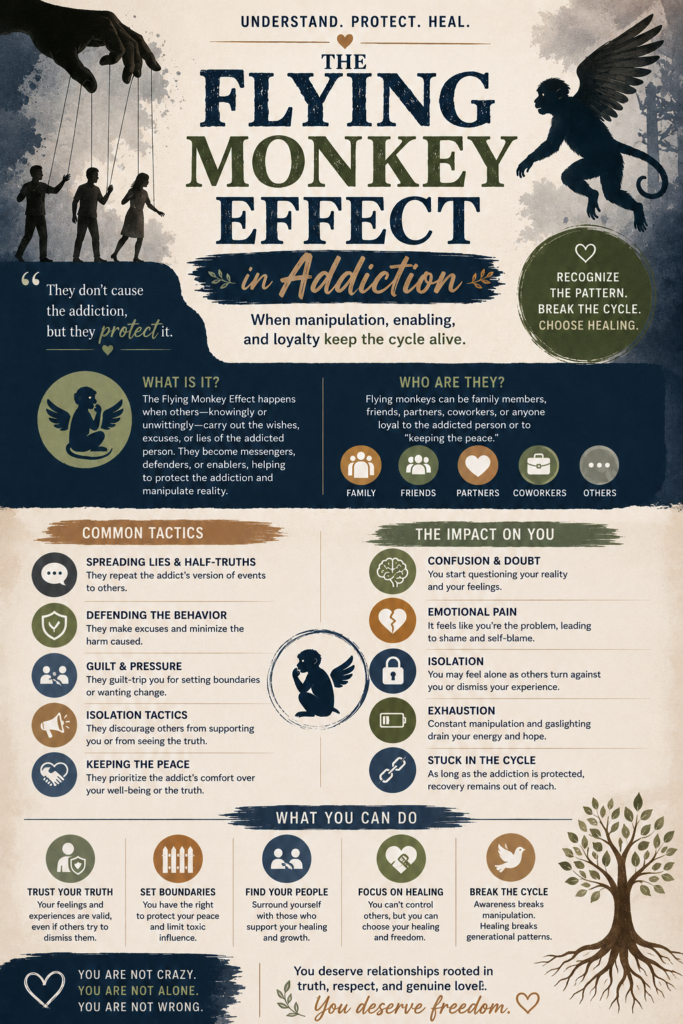
Addiction and dysfunctional families often come with patterns that can feel confusing or even overwhelming. One concept that comes up often when discussing these environments is the “Flying Monkey Effect.” If you haven’t heard this term before, it basically describes how some family members or friends get pulled into enabling the harmful behaviors of someone with an addiction or toxic traits. They’re called “flying monkeys,” a nickname borrowed from The Wizard of Oz, because they follow the commands of a more dominant, manipulative person, usually without realizing the true impact of their actions. I’m going to check out what the Flying Monkey Effect really looks like, why it happens, and what you can do if you find yourself stuck in one of these unhealthy relationship patterns.
The Flying Monkey Effect: Where It Comes From
The term “flying monkey” started off in pop culture but has made its way into discussions about family systems and addiction for good reason. In dysfunctional families, especially where addiction is involved, one person (sometimes a parent, sometimes a partner, or sibling) might manipulate other members into acting as their helpers or enforcers. These helpers often carry out the manipulator’s wishes, sometimes even blaming, shaming, or targeting someone else in the family, all to keep the main person’s secrets or enable their behavior.
This pattern isn’t about bad people doing bad things. Most flying monkeys are just searching for peace or trying to avoid conflict. Things can get messy fast when one member is struggling with substance abuse or unhealthy coping habits. The family, intent on protecting themselves or the group, gets swept into roles that keep the dysfunction locked in place.
Spotting Flying Monkeys in Dysfunctional Families
A flying monkey in a family can look like the sibling who always covers for a parent’s drinking, or an aunt who spreads rumors about a family member to “protect” someone else. Sometimes they act as the go-between, relaying information or emotional attacks from the person causing harm. Others might actively join in blaming the family’s problems on one “scapegoat,” such as another child or a spouse.
Common signs someone is acting as a flying monkey include:
- Taking sides blindly: They support the more domineering person’s version of events, no questions asked.
- Gaslighting: They deny or minimize someone’s real pain, saying things like “It wasn’t that bad,” or “You’re too sensitive.”
- Triangulation: They play messenger, stirring drama by telling stories that spark division.
- Protecting secrets: They cover up or excuse the unhealthy behaviors, keeping the group from getting support or facing reality.
It’s really important to remember that most flying monkeys don’t know there’s a name for what they’re doing. They’re reacting to family pressure or old patterns, not plotting harm.
Why Families Create Flying Monkeys
These patterns don’t turn up overnight. Dysfunctional families and those facing addiction often run on fear, secrecy, and unpredictable emotional swings. Everyone adapts their roles to avoid triggers or outbursts from the main person with addictive or harmful behaviors.
Here’s why flying monkeys show up so often:
- Desire to keep the peace: Going along with the dominant person feels easier than standing up to them, especially if conflict brings emotional blowback.
- Confusion and loyalty: Family members may truly believe the manipulator’s story or feel torn by their love and a sense of duty.
- Fear of being the next target: Some join in, blaming or isolating another member to avoid being singled out themselves.
- Lack of healthy boundaries: Dysfunctional families sometimes teach that personal boundaries are selfish or “disloyal.”
Sometimes the family culture is set up so everyone’s expected to sweep problems under the rug, pretend everything is fine, and go after anyone who breaks the unwritten rules of silence. The flying monkey effect arises from survival, not malice, and often remains hidden beneath the surface. In these situations, individuals might not even realize their behavior keeps harmful cycles going. It’s this lack of awareness and the pressure to maintain family unity that trap members in unhelpful patterns.
How the Flying Monkey Effect Fuels Addiction
The flying monkeys don’t just enable the main person’s addiction; sometimes, their actions make it harder for anyone to get help or break free. Here’s how:
- Covering up: By helping the addict hide their behavior, flying monkeys keep outsiders from spotting danger signs early or offering real help.
- Punishing the whistleblower: Family members who try to speak up are often shamed, isolated, or guilt-tripped by the flying monkeys. This leaves them unsupported and can even make them doubt their own experiences.
- Creating confusion: By twisting the facts or ganging up on one person, flying monkeys muddy the waters, making it hard for anyone to see the reality, including the addict.
- Blocking recovery: Even if the addict wants to get help, flying monkeys may sabotage efforts by denying the problem, dismissing therapy, or making recovery seem unnecessary.
This is where things get really tough. Kids growing up in these systems often take on flying-monkey roles to survive, and those roles can follow them into adulthood, shaping their relationships and even their own future families. Over time, these learned roles get reinforced, making it challenging for individuals to break out of long-standing routines that support dysfunction. Recognizing these cycles is crucial for true healing and opening the door for new, healthier ways of relating.
Tips for Breaking Free from Flying Monkey Dynamics
Breaking free from these patterns can be tricky, but it’s doable. I’ve seen people make big changes, even in families where things seemed hopeless. The first step is to spot the cycle for what it is and decide not to play the same role anymore.
- Recognize the behavior: Start by noticing any situations where you (or someone else) feel pressured to go along with, excuse, or help cover up addiction or abuse.
- Set personal boundaries: Getting clear about what you’re willing and not willing to do is super important. This might mean not helping to cover up someone’s use or refusing to repeat rumors.
- Reach out for support: It can help to talk to people outside the system, like therapists, support groups (think Al-Anon, Nar-Anon, or Adult Children of Alcoholics), or trusted friends. Hearing from others who’ve been there can really switch up your perspective.
- Stop blaming yourself: It’s pretty common to feel guilty for stepping back or saying no. Remember that standing up for your own well-being and truth isn’t selfish.
- Encourage change gently: If you feel safe, you can gently suggest healthy changes without getting into arguments. But focus on your actions rather than trying to control other people.
Sometimes, the only real option for self-protection is emotional distance, especially when other family members aren’t ready for change. This doesn’t mean you don’t care; it means taking care of yourself. Changing these patterns often requires patience and steady practice, but over time, healthier dynamics can take root.
What If You Realize You’re a Flying Monkey?
A lot of people are surprised (and maybe a little ashamed) to recognize themselves in this description. The reality is, there’s no shame in surviving the best way you knew how. Once you notice the pattern, you can make adjustments and choose healthier ways forward. Apologizing, refraining from badmouthing others, and supporting an honest, open environment are great steps. If the addiction is ongoing and the manipulator won’t change, your new choices might be met with resistance at first, but over time, it often brings relief and clarity. Remember, this is about growing and learning healthier relationship skills.
Flying Monkey Roles Outside the Family
Flying monkey behaviors don’t just show up at home. They can pop up in friend groups, the workplace, or even support communities when people group together around someone else’s unhealthy patterns, gossip, or take sides in conflicts. Recognizing these patterns wherever they show up helps you avoid getting caught in them, no matter where you are. Staying aware of group dynamics and your own boundaries can help make your interactions healthier in all kinds of environments.
Common Questions About the Flying Monkey Effect
Here are some questions I get asked a lot when talking about this topic:
Question: Can someone be a flying monkey and not realize it?
Answer: Absolutely. Most people acting as flying monkeys are just doing what seems normal in their family. Reflecting and getting outside support often uncovers the role.
Question: How do I protect myself from flying monkeys?
Answer: Strong boundaries and seeking support outside the family system are helpful. It’s okay to limit or cut communication with people who continue to manipulate or target you.
Question: Is it possible for families to recover from these patterns?
Answer: Yes, but it takes time and usually requires outside help. Family therapy and support groups can make a big difference.
Finding Health and Healing
Dysfunctional family patterns, especially the flying monkey effect, aren’t easy to spot when you’re in the middle of them. Recovery is about more than breaking bad habits; it means learning to set limits, trust yourself, and build healthy, honest connections. It may take time, but every step toward awareness and better boundaries counts. If you’re dealing with flying monkeys, addiction, or just complicated family drama, reaching out is a strong move. Real change is possible, even if it’s slow and bumpy at first. By getting support and staying aware, you can start to make healthier choices that lead to greater well-being for everyone involved.
Video: Who’s Actually Protecting Your Addiction #Psychology #Recovery