The idea of an “addictive personality” comes up a lot in conversations about addiction, but it’s something that actually has way more myth than fact behind it. I’ve seen people toss around this label in all sorts of situations—from someone being super into sweets to others who get a bit too caught up in video games or social media. It sounds like a tidy explanation for why some folks face addiction, but the truth is a lot more complex. I’m here to break down the addictive personality myth, where it came from, and what actually shapes addiction in real life.
Where the Idea of an “Addictive Personality” Came From
People have probably noticed that some personalities seem more intense, impulsive, or inclined to take risks than others. It’s easy to jump to the idea that maybe certain personality types are just “wired” for addiction. Psychologists and researchers have studied personality traits for decades, and while some traits like impulsivity or sensation-seeking can contribute to risky behaviors, pinning addiction on a certain personality is far too simple.
The “addictive personality” label spread in the 1980s and 1990s, mostly through pop psychology books and talk shows. It sounded appealing because it made addiction sound predictable. Just spot the personality, and you’ll know who’s at risk. But research doesn’t back up a single “addictive personality” type that explains how people develop addictions to things like drugs, alcohol, gambling, or even certain habits.
What Modern Science Says About Addiction
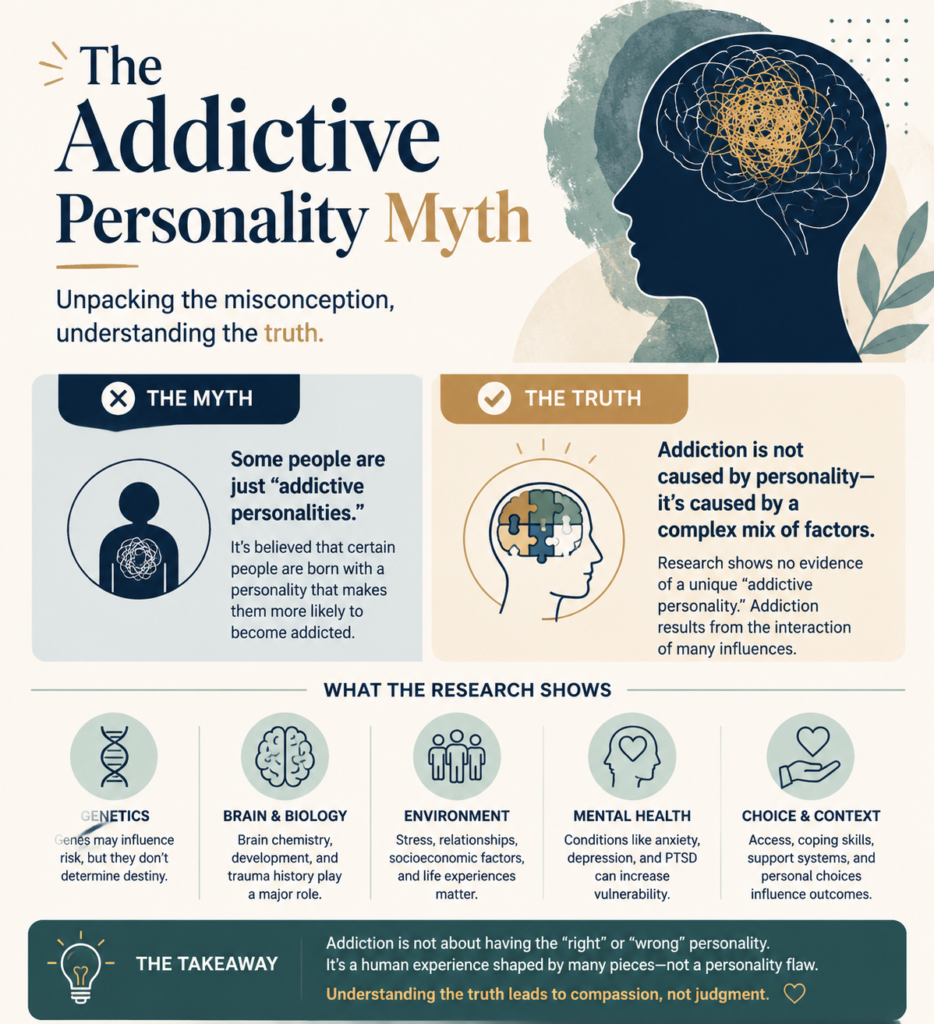
The science of addiction points much more toward a combination of genes, environment, upbringing, and mental health rather than just a personality style. Sure, some recurring traits do show up in studies of people with addiction, but the connection isn’t consistent enough to pin everything on personality alone.
- Genetics: Family history plays a big role in addiction risk. Certain genes can make people more sensitive to the effects of substances or behaviors.
- Environment: Growing up around substance use, having a lot of stress, or dealing with trauma can increase the chances of developing an addiction.
- Mental Health: Anxiety, depression, and other mental health issues often occur alongside addiction and can influence how someone copes or seeks relief.
- Personality: Traits like impulsivity or sensationseeking matter, but they’re just a piece of the overall puzzle, not the whole story.
No reputable medical or psychiatric organization recognizes “addictive personality disorder” as a real diagnosis. Instead, professionals focus on substance use disorders and process addictions, each with specific criteria and a wide range of causes.
Breaking Down the Biggest Myths
You’ll hear people say things like, “He just has an addictive personality,” or “Once an addict, always an addict.” It’s worth taking a closer look at these ideas and why they don’t really hold up.
- Myth #1: Some people are born addicts. No one has found an “addiction gene” or a personality that dooms someone to lifelong addiction. It is a mix of factors, and many people who face addiction recover and live substance-free lives.
- Myth #2: Addictive personalities make people weak-willed. Sensation Seeking: People who seek new or intense experiences may be more likely to engage in. Addiction is not about being lazy or lacking character. Stress, biology, and mental health all play much larger roles than pure willpower.
- Myth #3: If you get hooked on one thing, you’ll get addicted to everything. Most people who struggle with one addiction don’t just bounce from one to another, and plenty of people can enjoy things like caffeine or social media without it turning into a problem.
Common Traits That Get Confused With “Addictive Personality”
There isn’t a single addictive personality, but some traits do pop up more often among people who struggle with addictions. Here’s what I’ve noticed and what the research says:
- Impulsivity: Acting without thinking things through can make it easier to slip into habits that become addictions.
- SensationSeeking: risky behaviors.
- Compulsiveness: Doing things over and over, even when they have negative consequences, can sometimes overlap with addiction.
- Difficulty Handling Stress: Some people turn to substances or habits to escape or cope when things get tough.
While these traits matter, having any of them does not mean someone is destined to struggle with addiction. Lots of folks have high impulsivity but never develop an addiction, and others who are cautious still find themselves drawn into substance use or other compulsive habits.
What Actually Shapes Addiction?
Real-life addiction is way more than just a personality label. The risk is shaped by a tangle of factors:
- Experiences Growing Up: Childhood trauma or neglect can raise the risk. A strong, safe environment makes a big difference.
- Social Circle: Being around people who use substances or gamble a lot makes it more likely that someone will do the same.
- Access: Easy access to alcohol, drugs, or gambling can increase the odds that someone gets caught up in those behaviors.
- Coping Strategies: People who learn healthy ways to deal with stress, sadness, or anger are less likely to develop habits that turn into addictions.
It’s important to recognize that many people who face obstacles in one area, like difficult family backgrounds, may never develop an addiction. On the other hand, some people with supportive environments might still struggle due to mental health issues or life stressors. No single factor should be taken as the only predictor. Instead, it’s the mix of life circumstances, immediate support, coping tools, and even genetics that shapes someone’s experience.
Why the Addictive Personality Myth Sticks Around
As much as I wish this myth would fade, it’s easy to see why it sticks. It simplifies a tough problem and gives people a feeling of control over something that can feel scary or random. TV shows and movies love simple explanations, and they often repeat the stereotype. But clinging to this outdated idea can actually do more harm than good. It can make people feel hopeless about changing and adds a lot of stigma to something that already comes with enough challenges.
If you’re looking for more reliable info, groups like SAMHSA or the CDC offer clear, jargon-free guides based on real science.
What To Focus On Instead
Instead of looking for a so-called “addictive personality,” it’s actually more helpful to pay attention to what’s really going on for someone. Here are the things I look out for if I’m concerned about myself or someone else:
- Behavior Changes: Sudden changes in habits, friends, or mood can be signs that people are struggling. These usually say way more than a personality type.
- Mental Health Check: Addressing anxiety, depression, or trauma can reduce addiction risk way better than worrying about a label.
- Healthy Coping Tools: Building healthier ways to handle stress makes a much bigger impact than trying to change a personality.
- Community Support: Encouragement and understanding from friends or family can help people avoid falling into patterns they’re trying to break.
Resources like NAMI and the American Psychiatric Association offer practical support for mental health and recovery. They are worth checking out, no matter where you’re starting from, and they bring together insightful guidance on both prevention and moving forward after addiction.
Real-World Examples of Breaking the Cycle
I’ve met a lot of people who worry that they’re “doomed” to addiction because it runs in the family or because they’ve gotten hooked on something in the past. But I’ve also seen recovery stories that show people are way more than their personality traits. Folks who once felt “addicted” to gambling, drinking, or other habits made big changes by focusing on therapy, new coping strategies, and support systems. If you know someone who’s struggling, sharing these kinds of stories can be really encouraging.
- A person who grew up around heavy drinking but found support through a community group and changed course.
- Someone who struggled with compulsive gaming but turned things around with therapy and new hobbies. No personality “fix” required.
- Many people find that learning stress management or building better boundaries does more for their recovery than any personality overhaul ever could.
In fact, sharing positive examples and showing how people can step up with the right support can reduce stigma and motivate practical change. A healthy environment, a supportive network, and positive coping skills often give people the biggest boost in finding a new start.
Frequently Asked Questions
Question: Can personality traits contribute to addiction risk?
Answer: Some traits like impulsivity or risk-taking can play a role, but they are just one factor among many, and having these traits does not guarantee that addiction will develop.
Question: Is there a real “addictive personality” diagnosis?
Answer: No official diagnosis or medical condition called “addictive personality” exists. Addiction is influenced by a mix of genetics, environment, and mental health—not just personality type.
Question: Can addiction happen to anyone?
Answer: Yes, addiction can affect people from all backgrounds and personality types. No one is immune, and no one is destined for it solely because of who they are.
Key Takeaways for Moving Forward
Ditching the addictive personality myth opens up more helpful ways of seeing addiction and recovery. Focusing on support, mental health, and real-life challenges gives people a better shot at avoiding or managing addiction and makes it easier to show real compassion. If you’re worried about yourself or someone else, look at behaviors, environments, and support resources rather than personality labels. Recovery comes from practical steps, not just personality changes. Everyone deserves a chance at a new chapter, personality aside.
Video: You Don’t Have an Addictive Personality #psychology #shorts