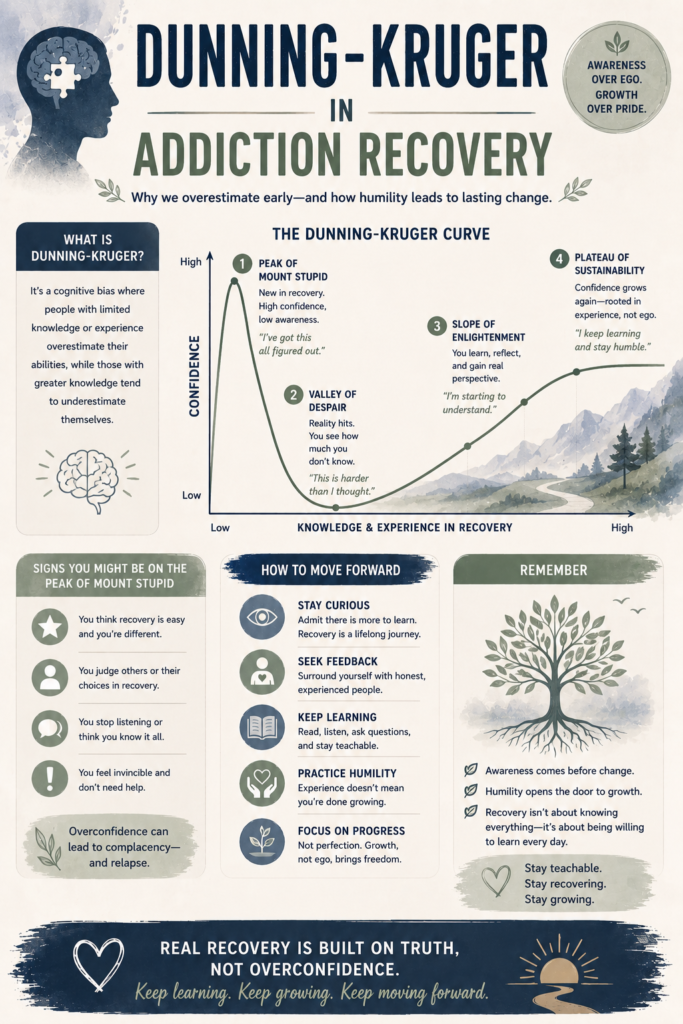
Dunning-Kruger in addiction recovery is a topic that a lot of people don’t know much about, but it can really affect the way someone approaches their own healing. The Dunning-Kruger effect basically means that folks with little knowledge or experience in a subject sometimes think they know a whole lot more than they actually do. In recovery, this can lead to all sorts of unexpected challenges. I want to walk you through what this effect looks like in addiction recovery, why it happens, and how to work through it mindfully.
What is the Dunning-Kruger Effect?
The Dunning-Kruger effect shows up when someone overestimates their skills or understanding because they just don’t know what they don’t know. Psychologists David Dunning and Justin Kruger first described the effect after running a number of studies, and the findings apply to all sorts of situations, from driving to math ability, and yes, even recovery from addiction.
In a nutshell, if you’re new to something, you may feel super confident about how well you’re doing, even though you may actually have a lot left to learn. The reason is that when you don’t have much experience, you’re not always able to spot your own mistakes or blind spots. Sometimes, you can even mistake beginner’s luck for real progress, which makes it tricky to recognize where more work is needed.
How Dunning-Kruger Shows Up in Addiction Recovery
Addiction recovery often feels like learning an entirely new way of living. At times, the Dunning-Kruger effect can pop up pretty early in this process. For example, someone might attend a few support group meetings or stay sober for a few weeks and suddenly feel like they’ve got things under control for good. That sense of confidence isn’t always a bad thing; it can feel amazing to make progress, but it can sometimes lead to risky choices or ignoring important advice just when caution is needed most.
You might hear phrases from someone in early recovery like “I’m not like those other people” or “I’ve figured it out now; I don’t need help anymore.” These are often subtle clues that the Dunning-Kruger effect is kicking in. Overconfidence mixed with inexperience can make it really tough to stay on track, especially when cravings or life stress pop up unexpectedly.
It’s worth noting that recovery programs are typically designed to gently counteract this exact phenomenon. By checking in with others often and following steps consistently, people can spot their own overconfidence before it gets too big.
Why the Dunning-Kruger Effect Happens in Recovery
Addiction rewires the brain to chase quick fixes, so it’s totally normal to look for simple answers. Recovery, on the other hand, is a long-term, winding road. In the early days, people can feel a wave of relief as symptoms ease or routines settle down, which feels a whole lot like success. That immediate sense of progress can make it easy to think that the hardest work is already over.
Lack of awareness about what recovery actually involves, like ongoing triggers, emotional ups and downs, and how easily old habits can return, leaves some people thinking there’s not much left to learn. It’s pretty common, and it happens across different types of addictive behaviors, from alcohol to gambling.
Often, family or friends might encourage the belief that things are “fixed” after a few positive changes, too. This can reinforce the idea that recovery is simple, rather than something that requires regular work and awareness. Social media can also paint unrealistically quick versions of recovery, adding to confusion.
Recognizing Signs of Overconfidence in Recovery
Spotting the Dunning-Kruger effect in yourself or others isn’t always straightforward, but a few signs come up pretty regularly:
- Quitting treatment too soon: Deciding to stop therapy, support groups, or medical care after just a short period (“I’m good on my own now!”).
- Resisting advice: Brushing off the recommendations of counselors, sponsors, or peers in recovery.
- Avoiding self-reflection: Skipping journaling, step work, or other practices that help deepen self-awareness.
- Comparing to others: Thinking that your experience will be totally different or easier than those around you.
Sometimes overconfidence comes with a dose of denial or minimization, like downplaying the risk of relapse or pretending certain triggers aren’t a problem.
Regular check-ins, structured routines, and honest talks with those you trust help make these signs clearer. Encouraging yourself and others to talk about doubts and worries creates space to notice and address these patterns.
Strategies for Managing the Dunning-Kruger Effect in Recovery
Awareness is the first real step to keeping the Dunning-Kruger effect in check. I find it’s easier to handle if you know what to expect and put a few simple habits in place.
- Stay Curious: Approaching recovery with genuine curiosity, not assuming you’ve got everything figured out, helps you spot blind spots before they become big problems.
- Ask for Feedback: Trusted peers, sponsors, or counselors can offer honest, outside perspectives. Sometimes a simple question like “What do you think I could work on?” will open up new insight.
- Keep Showing Up: Consistent attendance at meetings, therapy sessions, or sober events keeps new ideas and reminders coming your way. Even when you feel solid, there’s always something to learn or a way to lend a hand to someone else.
- Be Honest, Even When It’s Uncomfortable: Openly acknowledging challenges or doubts, rather than pretending everything’s fine, is what sets lasting recovery apart from short-lived success.
- Check Your Ego: Regularly remind yourself that setbacks and learning opportunities are natural parts of change. Humility is a powerful tool; allow yourself to be a learner, not just an expert, at all stages.
By sticking with these habits, people in recovery avoid old patterns and maintain steady progress. Sometimes just one honest conversation can redirect an entire recovery path.
Common Challenges Linked to Overconfidence in Recovery
The Dunning-Kruger effect isn’t just about being a little too sure of yourself; it can make recovery a tougher road than necessary if it goes unchecked. Some issues that come up include:
- Slipping into Relapse: Overestimating your readiness may lead to taking risks, like going to bars or seeing old using friends, before you’ve really built up the skills to handle those triggers.
- Lack of Relapse Prevention Plans: Thinking a plan isn’t needed or “just for others” can leave you unprepared for high-risk situations.
- Slow Progress: When learning stalls out due to a lack of openness, the deeper emotional reasons behind addiction might never get addressed.
- Feeling Alone Later: If you leave your support system too soon, the tough days can feel lonelier or more confusing than they need to be.
- Missed Opportunities: Overconfidence may lead you to overlook new resources, workshops, or techniques that could boost your recovery.
These challenges aren’t the end of the road. Many people who go through these phases come back stronger if they return to basics and reconnect with their support system. Each setback is a chance to pick up new skills and widen your self-understanding.
Building Self-Awareness During Recovery
Putting in a little extra work to grow self-awareness can really make a difference. I always suggest keeping a recovery journal where you note good days, tough moments, and any patterns you spot. Honest reflection helps turn down the volume on overconfidence by making space for reality, both the wins and the places that still need work.
Check-ins with your recovery group or counselor help too. Sometimes, even just hearing a story from someone who’s been working toward sobriety for a long time can remind you that learning never stops. Meditation, mindfulness, and guided self-reflection practices are helpful for listening to your honest thoughts and feelings.
Remember, asking for help is a sign of strength, not weakness. The more you check in with others, the more you grow your understanding of yourself and your recovery path.
Recovery Is a Lifelong Skillset
It’s easy to want quick fixes or fast answers, but recovery takes patience and a willingness to learn over time. Even folks who have stayed sober for years sometimes talk about falling into the Dunning-Kruger effect when facing new challenges, like grief, illness, or major life changes.
I try to think of recovery like learning a new language or skill. First, everything feels awkward, but after a while, confidence grows. The trick is to keep learning, stay open to feedback, and know that everyone still has something to track down, no matter how long they’ve been at it.
Longterm success is fueled by consistent effort, humility, and a network of support. There’s no graduation from recovery, only new stages and continued growth. Each day gives a new opportunity to make healthier choices.
Frequently Asked Questions
Plenty of people ask about the Dunning-Kruger effect in recovery, especially in early sobriety when uncertainty runs high. Here are a few questions that I get all the time:
How can I tell if I’m experiencing the Dunning-Kruger effect?
Answer: If you feel like you “don’t need help,” that you already understand everything, or that you want to quit support groups early, it’s worth pausing to check in with a trusted mentor or peer. Honest outside feedback helps a lot.
Is it bad to feel confident in recovery?
Answer: Confidence is awesome, as long as it comes from healthy progress and self-awareness. Problems usually arise when confidence completely overrides honesty and openness, making it hard to accept guidance or recognize personal blind spots.
How do I stay open to learning in recovery?
Answer: Keep in touch with people who challenge you, show up for groups regularly, and stay curious about different approaches. Reading books, listening to other people’s stories, and asking questions all help keep your mind in learning mode.
Key Takeaways for Staying Grounded in Recovery
Dunning-Kruger can sneak up on anyone, no matter how smart or motivated. Recovery works best when you keep an open mind, build habits to get honest feedback, and remember that there’s always more to learn. This mindset helps protect against risky shortcuts and makes the recovery adventure more stable and rewarding in the long run.
If you recognize the signs of overconfidence, don’t panic. It usually just means you’re still learning. Stay connected, ask questions, and keep exploring new ways to grow. Over time, that mix of humility and curiosity tends to lead to stronger, longer-lasting recovery.
Video: The Dunning-Kruger Effect That Nearly Broke Recovery #Sobriety #MentalHealthMatters #Recovery