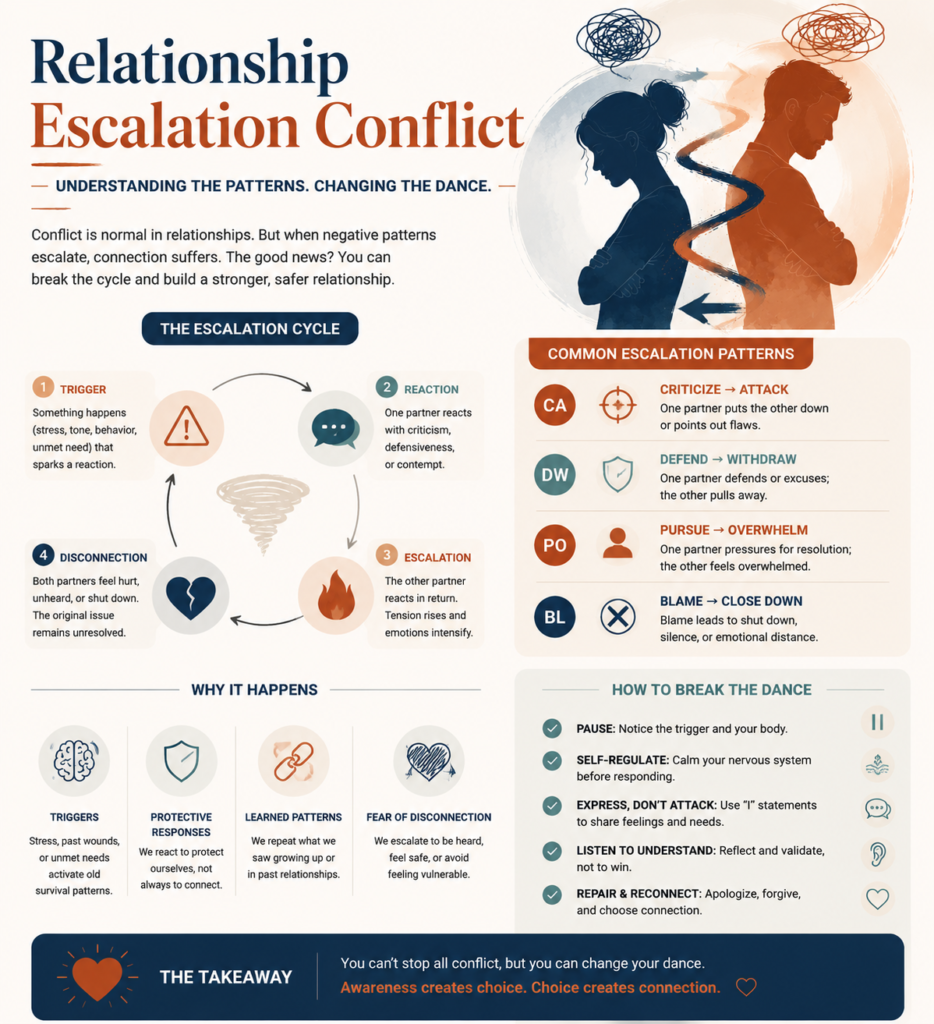
If you’ve ever found yourself in a repetitive argument with your partner, sometimes about something small turning suddenly big, you’re not alone. What’s really going on here is something I like to call the couple’s escalation dance. This pattern of rising tension and back-and-forth can leave both people feeling disconnected, misunderstood, and completely wiped out. Today, I’m breaking down how conflict in relationships often escalates, why it happens, and how you can switch up the rhythm to create healthier communication instead.
Understanding the Escalation Cycle in Relationships
The escalation dance is a common pattern where a disagreement between two people grows in intensity, even if it began over something pretty basic. One person might raise their voice; the other withdraws or cracks a sarcastic comment, and soon it feels like you’re both stuck on an emotional treadmill. Recognizing how this cycle works is one of the most helpful steps toward changing how you handle tough moments with your partner.
Arguments tend to escalate for a few main reasons:
- Emotional Triggers: Past experiences, insecurities, or stress can make some topics feel extra sensitive.
- Poor Timing: Trying to solve big issues when you’re tired, distracted, or hungry rarely ends well.
- Unclear Communication: Assumptions, raised voices, and interrupted sentences often pile on confusion and frustration.
This escalation dance isn’t a sign that something’s wrong with your relationship. In fact, it’s actually a pretty typical part of being close to someone. Understanding the reasons behind it helps you pause and make new choices when you spot those familiar patterns emerging. Even couples who have been together for decades bump into the escalation cycle now and then; it’s not about perfection but progress. Building awareness is the first step to keeping minor issues from turning into exhausting debates.
What Escalation Looks and Feels Like
Most couples have their own spin on this dance, but a few recognizable steps show up all the time. Here’s what I often notice in my own relationships and when chatting with friends, clients, or reading up on relationship science:
- Defensiveness: Jumping in to explain or justify your actions; feeling blamed or attacked.
- Criticism: Focusing on what your partner does wrong, sometimes losing sight of the issue that started it all.
- Stonewalling: One or both people shutting down, zoning out, or physically leaving the room to escape the tension.
- Escalating Language: Conversations spiral into hurtful words or threats, leaving lasting emotional bruises.
This isn’t just about talking louder or slamming a door. The escalation dance often involves physical sensations. Maybe your heart races, your face gets hot, or your hands shake. Once your body is on high alert, logical thinking takes a back seat, and arguments can quickly spiral out of control. You might even feel disconnected from your own thoughts, or that nothing productive can be said until tensions cool. Recognizing these signals helps you know when it’s time to pause.
Practical Ways to Pause the Escalation
Changing the pattern doesn’t usually happen overnight, but small changes can really add up. These are moves that I’ve found super useful for breaking the tension, or at least not making it worse:
- Notice the Warning Signs: Practice catching your body’s reactions early—a racing heart or clenched jaw means it’s probably time to slow things down.
- Call a Timeout: There’s no rule that every argument needs to be finished right then. Stepping away for a short break helps you both reset before jumping back in.
- Use “I” Statements: Switching from “You always…” to “I feel…” makes it easier for your partner to hear what you’re saying without instantly raising their own shields.
- Stay Present-Focused: Try to keep the argument focused on the current issue, not everything from last month or five years ago.
- Check Your Tone: Sometimes it’s less about what you say and more about how you say it. A softer tone often gets a better response.
These steps won’t fix everything, but they’re a solid start for turning the cycle around. If you’re curious, the classic book “The Seven Principles for Making Marriage Work” by Dr. John Gottman is packed with similar research-based tips worth checking out (Gottman Institute). Setting specific intentions with your partner before difficult conversations can also lay the groundwork for more understanding and fewer flare-ups.
Common Situations That Trigger the Dance
Tension doesn’t just spring up out of nowhere. Some issues tend to set off the escalation dance for lots of couples:
- Money Worries: Bills, spending, and saving habits can bring up lots of old worries and spark heated debates.
- Parenting Differences: Disagreements about schedules, discipline, or big decisions can trigger long, emotional standoffs.
- In-law Challenges: Even a quick comment about how holidays or family get-togethers should go can launch you into a pattern of arguing.
- Everyday Stress: Long days at work, lack of sleep, or noisy neighbors can reduce patience in both people.
Talking about these common stressors ahead of time and setting some ground rules for addressing them can really reduce the risk of jumping straight into an argument. Proactively sharing daily frustrations, openly and calmly, often prevents them from building into larger disputes down the line.
When Your Coping Styles Clash
Sometimes the escalation dance happens because each person deals with stress differently. Maybe you want to talk things out immediately, but your partner needs space to process. This mismatch is pretty common and can make resolving arguments trickier than they need to be.
Here’s how I try to handle it in my life (and what relationship counselors often suggest):
- Ask for What You Need: It’s okay to say, “I need a few minutes to calm down, but I promise I’ll come back.”
- Respect Each Other’s Style: Giving space or offering comfort makes it easier for both people to get what they need in the moment.
Finding a rhythm where both people feel safe makes it so much less likely that small disagreements will blow up into major conflicts. Remember, some breathing room can allow everyone to return to the conversation with a clearer head. Prioritizing respect for each other’s emotional needs can turn potential confrontations into moments of support.
Addressing Conflict: Real World Strategies
Knowing what to do during a tough argument can feel overwhelming, especially with emotions running high. These are strategies I’ve found helpful for managing real-life conflict in my own relationships and in my work with couples:
- Write it Down: Sometimes jotting notes to sort out your feelings brings way more clarity than a late-night confrontation.
- Pick the Right Time: Discussing a big issue while running late or multitasking is almost guaranteed to go sideways.
- Practice Repair Attempts: Even a gentle joke or a simple “Hey, this is getting tough; want to take a breather?” can shift the vibe toward connection rather than division.
- Focus on Solutions: It can help to move from blame toward “What can we do next time to avoid getting stuck like this?”
Choosing Compassion Over Winning
Trying to “win” an argument often leaves both people feeling like losers. Focusing on compassion, listening with an open mind, and admitting mistakes not only cools things down but also builds long-term trust. Sometimes, just pausing to acknowledge your partner’s perspective—even when you don’t fully agree—helps build a foundation for better communication over time. Creating a sense of partnership, rather than competition, is the key to working through tough moments together.
Useful Tools for Resilient Communication
- Active Listening: This means listening without planning your response, just to really hear what your partner is saying. Reflecting back on what you’ve heard helps clear up misunderstandings.
- Nonviolent Communication: Using language focused on observations, feelings, needs, and requests makes challenging topics easier to tackle together. There are also great online guides at the Center for Nonviolent Communication.
- Mindfulness Techniques: Even a few slow, deep breaths during an argument can shift both your mood and your response.
You can practice these techniques alone or together; over time, they can help both partners feel better equipped to stay grounded during disagreements. There’s no shame in having to try these skills a few times before they feel like second nature. Relationships are a work in progress, not a test you have to ace on the first try.
Frequently Asked Questions
Here are some quick answers to things people are often curious about when it comes to handling escalation in relationships:
What if only one person wants to improve how arguments go?
Answer: Small changes by one person still make a difference, even if your partner isn’t on board just yet. Over time, new habits often rub off or open the door for bigger conversations.
How can I tell the difference between a normal conflict and a more serious issue?
Answer: Arguments are normal. If things ever get abusive, physically or emotionally, reaching out to a trusted friend or professional is really important.
When is it a good idea to ask a counselor for help?
Answer: If conflicts leave you feeling stuck, hopeless, or unsafe, it’s a good time to talk to a qualified therapist. Sometimes, just a few sessions can bring huge relief and clarity. Seeking support isn’t a sign of failure—it’s a move toward health for yourself and your relationship.
Key Reminders for Couples Facing Conflict
Arguing doesn’t have to be a sign of a broken relationship; it’s just part of being close to someone. Learning to spot your own escalation dance, calling out patterns, and finding new moves together can turn tough moments into real chances for growth and connection. Every couple slips into this pattern sometimes. What matters is how you find your way back. Repairing after conflict, expressing appreciation, and celebrating small communication wins help keep relationships strong even when disagreements arise.
Trying out even one or two strategies from this article can help cool things down the next time tempers start to rise. With greater awareness and a few new habits, it really is possible to break the old cycle and build a relationship in which healthy conflict brings you closer. Remember, partnership is about practice, patience, and kindness—qualities anyone can grow, one step at a time.
Video: The escalation trap most couples fall into #relationshipadvice #conflict #psychology