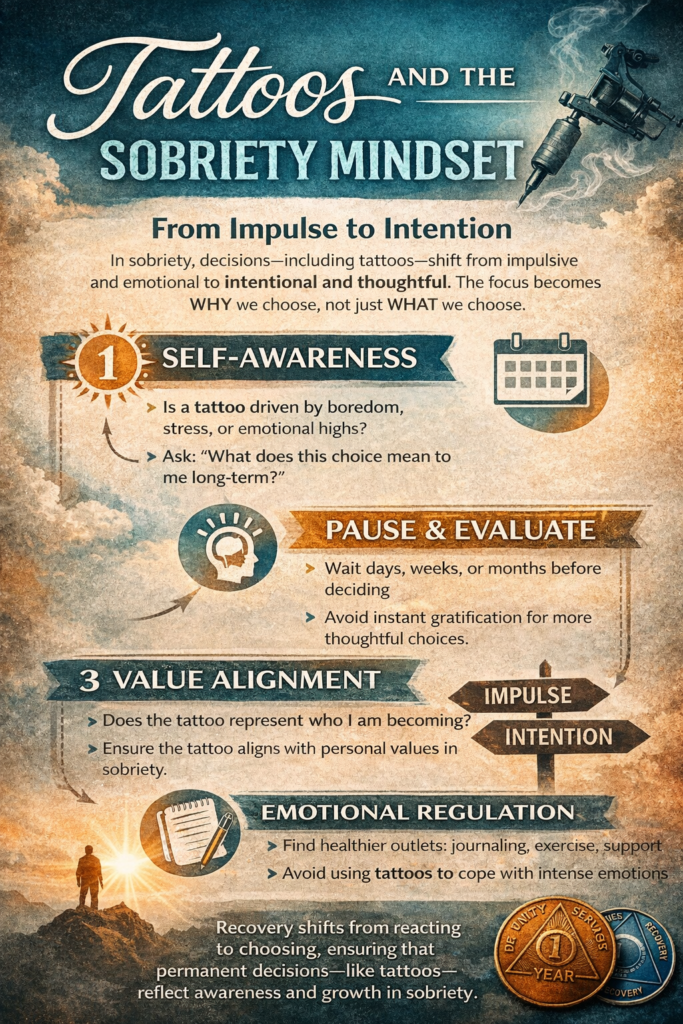
Tattoos and the sobriety mindset intersect in a way that highlights one of the most important transformations in recovery: the shift from impulsive behavior to intentional living. In active addiction, decisions are often driven by immediate emotion, urgency, or the need for relief. In contrast, sobriety fosters self-awareness, emotional regulation, and the ability to pause before acting. This change influences not only major life choices but also personal forms of expression, such as tattoos. What was once spontaneous becomes reflective, as individuals begin to consider meaning, identity, and long-term alignment before making permanent decisions.
“Ink with Intention: Understanding Tattoos Through the Sobriety Mindset”
Tattoos are often seen as powerful forms of self-expression, marking moments, identities, or emotions. However, within the context of recovery, the meaning behind tattoos can shift significantly. The sobriety mindset—characterized by self-awareness, emotional regulation, and intentional decision-making—transforms how individuals approach permanent choices like tattoos. What may have once been impulsive becomes thoughtful, reflective, and aligned with long-term identity.
In active addiction, decisions are frequently driven by immediate emotions or the need for quick relief. In this state, tattoos can sometimes represent spontaneity or attempts to externalize internal experiences. In contrast, sobriety introduces a pause. Individuals begin to evaluate not just what they want, but why they want it. This shift reflects improved executive functioning and a growing ability to tolerate discomfort without acting on impulse.
Another important aspect is identity reconstruction. Recovery often involves redefining oneself beyond substance use. During this phase, individuals may hesitate to get tattoos—not out of fear, but out of a desire to ensure that any permanent mark reflects a stable and authentic sense of self. This period of reflection allows for deeper alignment between internal values and external expression.
Tattoos can still play a meaningful role in recovery. For many, they become symbols of resilience, milestones, or personal transformation. The difference lies in intention. A tattoo chosen with clarity and purpose can serve as a lasting reminder of growth, while one chosen impulsively may not hold the same long-term significance.
Ultimately, the relationship between tattoos and sobriety highlights a broader psychological shift—from reacting to choosing, from urgency to patience, and from impulse to intention. Recovery is not about limiting self-expression, but about ensuring that expression is grounded in awareness and authenticity.
Key Insights
- From temporary relief → long-term meaning
Impulse vs. Intention
- Addiction often drives quick, emotionally-based decisions
- Sobriety encourages pausing, reflecting, and choosing deliberately
Delayed Gratification
- Waiting before making permanent decisions strengthens self-control
- Time helps determine if the tattoo holds lasting meaning
Identity Reconstruction
- Recovery involves redefining who you are
- Tattoos are evaluated based on alignment with this evolving identity
Emotional Awareness
- Recognizing feelings reduces impulsive actions
- Tattoos are less likely to be used as emotional outlets
Healthy Decision-Making
- Decisions are guided by values rather than temporary states
- External input (friends, therapists) can support clarity
Positive Role of Tattoos in Recovery
- Can symbolize milestones, resilience, or transformation
- Become intentional markers rather than impulsive choices
Core Sobriety Mindset Shift
- From reacting → reflecting
- From impulse → intention
“From Urge to Awareness: Self-Management Strategies for Tattoos in the Sobriety Mindset”
In recovery, the way decisions are made often matters more than the decisions themselves. Tattoos—permanent and deeply personal—become a meaningful example of how the sobriety mindset transforms behavior. Instead of acting on impulse, individuals learn to apply self-management strategies that promote awareness, patience, and alignment with long-term values.
Self-management begins with self-awareness—the ability to recognize internal states before acting on them. In the context of tattoos, this means asking not just “Do I want this?” but “Why do I want this right now?” Emotions such as stress, boredom, or the desire for control can influence decision-making, especially in early recovery. By identifying these emotional drivers, individuals create space to respond thoughtfully rather than react automatically.
A key strategy is delayed decision-making. The sobriety mindset encourages individuals to sit with the idea of a tattoo for a while rather than act immediately. This process strengthens cognitive control and reduces the likelihood of regret. If the meaning behind the tattoo remains consistent after weeks or months, it is more likely to reflect a stable sense of identity rather than a temporary emotional state.
Another important component is value-based decision-making. Recovery often involves redefining personal values—such as health, authenticity, and growth. Self-management requires evaluating whether a tattoo aligns with these values. This shifts the focus from short-term satisfaction to long-term meaning, reinforcing a more intentional lifestyle.
Emotional regulation is also central. In the past, actions like getting a tattoo may have served as a coping mechanism for distress. In sobriety, individuals develop healthier ways to process emotions—such as journaling, mindfulness, or seeking support. This reduces the tendency to use permanent decisions as temporary relief.
Additionally, seeking external feedback can enhance self-management. Talking through the idea with a trusted person—such as a sponsor, therapist, or supportive friend—provides perspective and helps identify whether the decision is grounded or impulsive. This collaborative reflection supports clearer thinking and accountability.
Ultimately, self-management in the sobriety mindset is about building the capacity to pause, reflect, and choose with intention. Tattoos are not avoided—they are approached differently. When decisions are guided by awareness rather than urgency, they become expressions of growth rather than reactions to momentary states.
Key Self-Management Strategies
- Ensure choices are deliberate and personally meaningful
Self-Awareness
- Identify emotional triggers (stress, boredom, excitement)
- Ask: “Why do I want this right now?”
Pause and Delay
- Wait before making permanent decisions
- Revisit the idea over time to test its consistency
Value Alignment
- Evaluate if the tattoo reflects current values and identity
- Focus on long-term meaning rather than short-term desire
Emotional Regulation
- Use healthy coping strategies instead of acting impulsively
- Practice mindfulness, journaling, or talking things through
External Perspective
- Seek input from trusted, supportive individuals
- Use feedback to challenge or confirm your thinking
Timing Awareness
- Recognize that early recovery involves rapid change
- Consider waiting for greater emotional stability
Intentional Decision-Making
- Shift from reacting → reflecting
“Support Without Control: Family Strategies for Tattoos in the Sobriety Mindset”
In recovery, growth is often reflected in small, everyday decisions—including how someone approaches something as permanent as a tattoo. The sobriety mindset emphasizes awareness, patience, and intentionality, and families play a key role in supporting this shift. However, support in this context requires balance. Families must learn to encourage thoughtful decision-making without becoming controlling or reactive, especially if past behaviors during addiction created concern around impulsive choices.
One of the most important strategies is understanding the change in decision-making. In active addiction, choices may have been quick and emotionally driven. In sobriety, hesitation or delay is often a sign of progress, not avoidance. When someone takes time to think through a tattoo, it reflects improved self-regulation and a stronger connection to long-term identity. Families who recognize and validate this shift help reinforce positive cognitive and behavioral changes.
Communication style also plays a critical role. Judgmental or dismissive reactions can shut down openness and push decisions underground. Instead, supportive communication invites reflection. Asking questions like “What does this mean to you?” or “How long have you been thinking about it?” encourages deeper thinking without imposing control. This approach strengthens trust and allows the individual to process their decision more clearly.
Another key factor is respecting autonomy while offering guidance. Recovery involves learning to make independent, responsible decisions. Families can provide perspective, but ultimately, the individual must own their choices. Over-controlling behaviors—even if well-intentioned—can undermine confidence and create tension. Support works best when it is collaborative rather than directive.
Families can also support by reinforcing patience and timing. Early recovery is often a period of rapid emotional and identity shifts. Encouraging someone to sit with a decision before acting helps ensure that it reflects a stable sense of self. This is not about restriction—it’s about creating space for clarity and long-term alignment.
Equally important is focusing on the process, not just the outcome. Whether a person decides to get a tattoo is less important than how they arrive at that decision. Are they thinking it through? Are they managing emotions effectively? Are they considering long-term meaning? When families highlight these behaviors, they support the broader goals of recovery.
Families should also practice self-awareness of their own reactions. Concerns about tattoos may sometimes reflect deeper fears—such as relapse, loss of control, or past experiences. Recognizing these emotions allows family members to respond thoughtfully rather than reactively, reducing unnecessary conflict.
Ultimately, supporting someone in recovery means recognizing that growth often shows up in the decisions they make. Tattoos, in this context, are not just about appearance—they are about intention, identity, and self-management. When families provide steady, respectful support, they help create an environment where thoughtful, meaningful choices can emerge.
Family Support Strategies
- Encourage choices that align with long-term values
Recognize Growth in Decision-Making
- Understand that hesitation reflects self-control
- Validate thoughtful, slower decision processes
Use Supportive Communication
- Ask open-ended questions instead of judging
- Encourage reflection rather than defensiveness
Respect Autonomy
- Allow the individual to make their own choices
- Offer guidance without trying to control outcomes
Encourage Patience
- Support waiting before making permanent decisions
- Reinforce the value of long-term thinking
Focus on the Process
- Emphasize how decisions are made, not just the result
- Reinforce intentional and reflective behavior
Promote Emotional Awareness
- Encourage healthy coping strategies instead of impulsive action
- Support conversations about underlying feelings
Be Aware of Your Own Reactions
- Identify fears or assumptions influencing your response
- Respond thoughtfully rather than emotionally
Support Identity Growth
- Recognize that recovery involves redefining self
“Beyond the Individual: Community Resource Strategies for Tattoos in the Sobriety Mindset”
Recovery is not meant to happen in isolation. While the sobriety mindset emphasizes personal responsibility, awareness, and intentional decision-making, community resources play a critical role in strengthening these skills. Even decisions that seem personal—like getting a tattoo—can benefit from external support systems that provide perspective, structure, and accountability. In this way, community resources help individuals move from impulsive choices toward thoughtful, value-driven expression.
One of the most effective strategies is engaging with peer support networks, such as Alcoholics Anonymous or Narcotics Anonymous. These environments encourage reflection before action, often reinforcing principles like patience and intentionality. Discussing decisions—big or small—within a group setting can help individuals identify whether a choice is grounded in meaning or influenced by temporary emotions.
Another important resource is professional guidance, including therapeutic approaches such as Cognitive Behavioral Therapy. These frameworks help individuals recognize thought patterns, emotional triggers, and behavioral impulses. For example, someone considering a tattoo during a stressful period might learn to distinguish between an urge stemming from emotional regulation and genuine self-expression. This level of insight strengthens self-management and reduces impulsivity.
Community resources also provide education and structure, which are especially important in early recovery. Workshops, recovery programs, and sober communities often emphasize delayed gratification, identity development, and long-term thinking. These concepts directly influence how individuals approach permanent decisions. Understanding that identity is still evolving can encourage waiting until choices feel stable and aligned.
Another key strategy is accountability through connection. Having a sponsor, mentor, or trusted peer creates a space to process decisions before acting on them. This doesn’t mean asking for permission—it means gaining perspective. External input can highlight blind spots, challenge impulsive thinking, and reinforce intentional decision-making.
Additionally, creative and expressive community outlets—such as art groups, writing workshops, or recovery-based events—offer alternative ways to explore identity. These spaces allow individuals to experiment with self-expression without permanence, reducing the pressure to make immediate, lasting decisions such as getting a tattoo. Over time, this exploration can clarify what truly feels meaningful.
Community involvement also helps normalize the idea that waiting is a strength, not a limitation. In many recovery environments, taking time before making major decisions is encouraged as a sign of growth. This cultural reinforcement can counteract societal pressures for immediacy and help individuals feel confident in choosing patience.
Ultimately, community resources expand the decision-making process beyond the individual’s internal state. They introduce reflection, feedback, and support—key elements in the sobriety mindset. Tattoos, in this context, are no longer impulsive acts but become intentional expressions shaped by both personal insight and collective wisdom.
Community Resource Strategies
- Strengthen a sense of belonging and shared growth
Engage in Peer Support Groups
- Share thoughts and decisions in safe, understanding environments
- Gain insight from others with similar experiences
Utilize Professional Support
- Use therapy (e.g., Cognitive Behavioral Therapy) to identify triggers and thought patterns
- Develop healthier decision-making frameworks
Seek Accountability
- Talk through decisions with a sponsor, mentor, or trusted peer
- Use feedback to challenge impulsive thinking
Participate in Educational Programs
- Learn about identity development and delayed gratification
- Apply these concepts to permanent decisions
Explore Creative Outlets
- Use art, writing, or other forms of expression as alternatives
- Reduce the need for immediate, permanent choices
Leverage Structured Recovery Environments
- Follow routines and guidelines that promote intentional living
- Reinforce patience and long-term thinking
Normalize Waiting
- View delaying decisions as a sign of strength
- Allow identity and meaning to stabilize over time
Build Supportive Networks
- Surround yourself with people who encourage thoughtful choices
Frequently Asked Questions
Here are some common questions:
1. Why do people in recovery think differently about tattoos?
In recovery, decision-making shifts from impulsive to intentional. People become more aware of their thoughts, emotions, and long-term goals, so they tend to think more carefully before making permanent choices, such as getting a tattoo.
2. Are tattoos discouraged in sobriety?
No, tattoos are not inherently discouraged. The focus is not on whether you get a tattoo, but how you decide. Sobriety encourages thoughtful, value-based decisions rather than impulsive ones.
3. Why do some people avoid tattoos in early recovery?
Early recovery is a time of rapid emotional and identity changes. Many people choose to wait because they want to be sure their decisions reflect who they are becoming—not just how they feel in the moment.
4. Can getting a tattoo be a form of relapse?
No, getting a tattoo is not a relapse. However, if the decision is driven by impulsivity, emotional distress, or a need for quick relief, it may reflect old patterns that recovery is trying to change.
5. What does “impulse vs. intention” mean in this context?
- Impulse = acting quickly based on emotion or urge
- Intention = making a thoughtful decision based on meaning and values
Sobriety helps people move from impulse-driven choices to intentional ones.
6. How long should someone wait before getting a tattoo in recovery?
There’s no universal rule, but many people follow a “wait and revisit” approach—giving themselves weeks or months to reflect. If the idea still feels meaningful over time, it’s more likely to be a grounded decision.
7. Why is self-awareness important when deciding on a tattoo?
Self-awareness helps identify why you want the tattoo. If the motivation is emotional (stress, boredom, pain), it may be better to wait. If it’s meaningful and stable, it may align with recovery values.
8. Can tattoos have a positive role in recovery?
Yes. Tattoos can symbolize:
- Milestones (sobriety anniversaries)
- Personal growth
- Strength and resilience
When chosen intentionally, they can serve as meaningful reminders of progress.
9. What are the signs that a tattoo decision might be impulsive?
- Wanting it immediately without thinking it through
- Strong emotional trigger (anger, sadness, excitement)
- Not considering long-term meaning
- Difficulty explaining why it matters
10. How can someone make a healthier decision about tattoos in sobriety?
- Pause and give it time
- Reflect on personal values
- Talk it through with a trusted person
- Consider long-term meaning, not just short-term desire
11. Should others (family/friends) have input on the decision?
They can offer perspective, but the decision should ultimately belong to the individual. Recovery involves building confidence in making independent, responsible choices.
12. Is it normal to change your mind about tattoos in recovery?
Yes. As identity evolves in sobriety, preferences and meanings can change. This is why waiting and reflecting are often encouraged.
13. What is the biggest mindset shift in sobriety related to tattoos?
The shift is from:
- Reacting → Reflecting
- Urgency → Patience
- Temporary emotion → Lasting meaning
14. What’s the main takeaway about tattoos and sobriety?
It’s not about avoiding tattoos—it’s about making sure your choices reflect who you truly are, not just how you feel in the moment.
Conclusion
Ultimately, the relationship between tattoos and the sobriety mindset is less about the act itself and more about the process behind it. Recovery encourages individuals to move from reaction to reflection, allowing decisions to be guided by clarity rather than impulse. Whether someone chooses to get a tattoo or to wait, the significance lies in making that choice with awareness, patience, and intention. In this way, tattoos can become not just expressions of identity, but markers of growth—representing a deeper commitment to living thoughtfully and authentically in sobriety.
Video: Before Sobriety vs. After: How I Choose My Tattoos Now #IntentionalLiving #RecoveryJourney