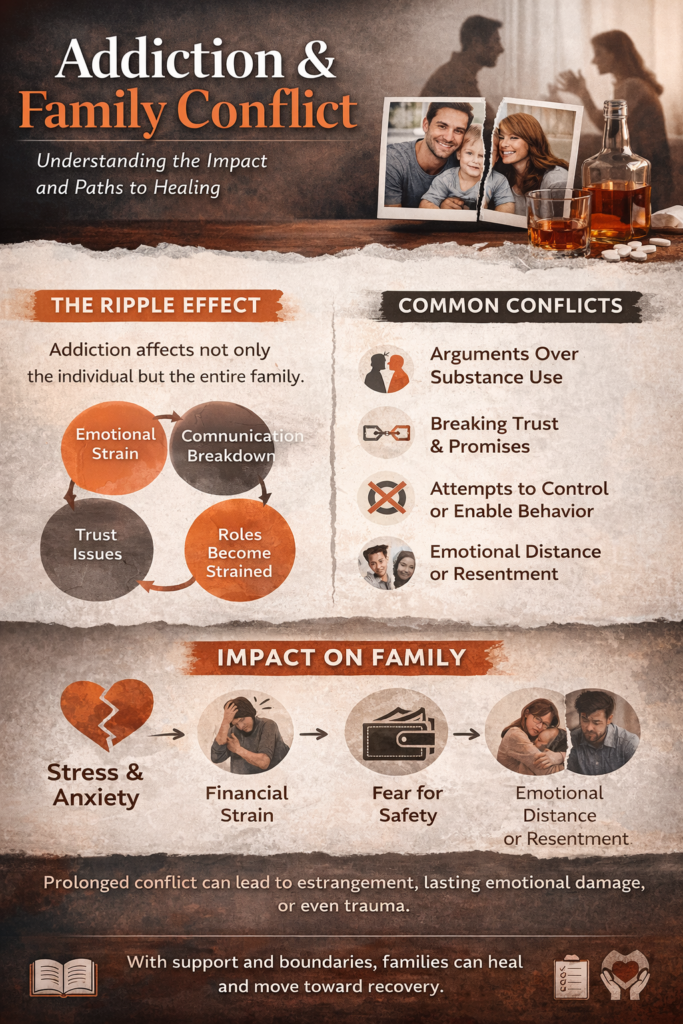
Addiction and family conflict are deeply interconnected, often creating a cycle in which each intensifies the other. While addiction may begin as an individual struggle, its effects quickly extend into the family system—disrupting communication, eroding trust, and reshaping roles and relationships. Family members may respond with concern, frustration, or attempts to control the situation, while the individual experiencing addiction may feel judged, misunderstood, or isolated. These reactions, though often well-intentioned, can escalate tension and reinforce patterns that are difficult to break. Understanding addiction through both a psychological and relational lens is essential for recognizing how conflict develops and why it persists within families.
“Breaking the Cycle: Understanding Addiction and Family Conflict”
Addiction and family conflict are deeply connected, often creating a cycle where each reinforces the other. While addiction may begin as an individual struggle, its effects extend into the entire family system—shaping communication, trust, and emotional stability. Over time, families may shift from support to frustration, while the individual struggling with addiction may feel judged, misunderstood, or isolated. These dynamics can escalate conflict and make resolution feel out of reach.
One of the primary reasons conflict intensifies is mistrust. Addiction can involve secrecy, broken promises, or unpredictable behavior, which erodes the foundation of relationships. Family members may become hypervigilant or controlling in response, while the individual may withdraw or become defensive. This creates a feedback loop in which both sides feel justified yet increasingly disconnected.
Another important factor is the development of family roles. In many families affected by addiction, members unconsciously take on roles such as the “rescuer,” “scapegoat,” or “hero.” While these roles may help the family cope in the short term, they often reinforce unhealthy patterns over time. The individual with addiction may feel defined by their behavior, while others feel burdened or resentful.
Conflict is also driven by differences in perception. The person struggling with addiction may view substance use as a coping mechanism, while family members see it as the central problem. This disconnect can lead to repeated arguments that feel unproductive, as each side is operating from a different understanding of the situation.
However, addiction is not just about behavior—it is often linked to underlying emotional pain, stress, or mental health challenges. When families focus only on stopping the behavior without addressing these deeper issues, the individual may feel invalidated. At the same time, families must balance understanding with accountability, ensuring that support does not become enabling.
Healing begins when both the individual and the family shift their approach. This includes improving communication, setting clear boundaries, and seeking external support when needed. By moving away from blame and toward understanding, families can begin to break the cycle of conflict and create a more stable environment for recovery.
Ultimately, addressing addiction and family conflict requires patience, awareness, and consistent effort. While the process can be difficult, it also offers an opportunity for growth, stronger relationships, and long-term healing.
Key Points
Addiction Affects the Whole Family
- Not just an individual issue—impacts relationships and dynamics
- Creates emotional, behavioral, and communication challenges
Mistrust Drives Conflict
- Secrecy and broken promises erode trust
- Leads to control, defensiveness, and emotional distance
Family Roles Develop
- Rescuer, scapegoat, hero, or withdrawn member
- Roles stabilize short-term but reinforce long-term dysfunction
Different Perspectives Cause Tension
- An individual may see use as coping
- Family sees it as the core problem
Emotional and Psychological Factors
- Addiction often linked to deeper issues (stress, trauma, mental health)
- Ignoring these can increase conflict
Boundaries Are Essential
- Protect emotional well-being
- Help prevent enabling behaviors
Communication Matters
- Use calm, clear, and non-blaming language
- Focus on behaviors rather than personal attacks
Support and Recovery
- External help (therapy, support groups) can improve outcomes
- Recovery involves both individual and family change
Mindset Shift
- From blame → understanding
- From control → support
“Staying Grounded: Self-Management Strategies for Navigating Addiction and Family Conflict”
Addiction and family conflict often create emotionally charged environments where reactions can feel automatic and overwhelming. In these situations, self-management strategies become essential tools—not for controlling others, but for regulating your own thoughts, emotions, and behaviors. When individuals learn to manage their internal responses, they can begin to break cycles of conflict and contribute to healthier family dynamics.
The first step in self-management is self-awareness. Family conflict related to addiction often triggers strong emotions such as anger, fear, guilt, or frustration. Without awareness, these emotions can lead to impulsive reactions—arguments escalate, boundaries blur, and communication breaks down. By learning to identify and label emotions in the moment, individuals create a pause between feeling and reacting, allowing for more thoughtful responses.
Another key strategy is emotional regulation. Addiction-related conflict can activate the body’s stress response, making it harder to think clearly. Techniques such as deep breathing, grounding exercises, or briefly stepping away from a heated situation can help calm the nervous system. This allows individuals to respond with intention rather than reacting out of heightened emotion.
Boundary setting is also central to effective self-management. In families affected by addiction, boundaries are often either too rigid or too flexible. Healthy boundaries focus on what you can control—your own actions and limits—rather than trying to control someone else’s behavior. For example, choosing not to engage in conversation when someone is under the influence protects emotional well-being and reduces the escalation of conflict.
Another important component is cognitive reframing. It’s common to interpret addiction-related behavior in personal terms, such as “They don’t care about us” or “This is my fault.” Reframing involves recognizing addiction as a complex condition influenced by multiple factors, rather than a personal attack or failure. This shift reduces emotional intensity and supports more balanced thinking.
Self-management also includes recognizing patterns and roles within the family system. Individuals may fall into habitual responses—such as rescuing, blaming, or withdrawing—that unintentionally maintain conflict. By identifying these patterns, it becomes possible to respond differently and disrupt the cycle.
Equally important is self-care and external support. Managing ongoing conflict can be exhausting, and without proper support, emotional burnout is likely. Engaging in activities that promote stability—such as maintaining routines, seeking therapy, or connecting with support groups—helps build resilience and sustain healthier responses over time.
Ultimately, self-management is about shifting from automatic reactions to intentional choices. While you may not be able to change another person’s behavior, you can change how you respond. Over time, these changes can influence the overall family dynamic, reducing conflict and creating space for more constructive interactions.
Key Self-Management Strategies
- Focus on long-term outcomes rather than immediate emotions
Self-Awareness
- Identify emotions (anger, fear, guilt, frustration)
- Pause before reacting
Emotional Regulation
- Use deep breathing or grounding techniques
- Step away from intense situations when needed
Healthy Boundaries
- Focus on what you can control (your actions)
- Avoid trying to control the other person
Cognitive Reframing
- Shift from personalizing behavior to understanding addiction
- Reduce blame-based thinking
Recognizing Family Patterns
- Identify roles (rescuer, scapegoat, etc.)
- Change habitual reactions to break cycles
Effective Communication
- Use calm, clear language
- Avoid accusations and absolute statements
Self-Care
- Maintain routines and personal well-being
- Seek emotional and social support
Intentional Response
- Move from reaction → reflection
“From Conflict to Connection: Family Support Strategies in Addiction”
Addiction can place immense strain on family relationships, often leading to cycles of tension, misunderstanding, and emotional exhaustion. While families naturally want to help, their responses can sometimes unintentionally contribute to ongoing conflict. Understanding how to provide effective, healthy support is essential—not only for the individual in recovery but for the well-being of the entire family system.
One of the most important strategies is shifting from control to support. Families often try to manage or fix the situation out of fear and concern, but controlling behaviors can lead to resistance and increased conflict. Instead, support involves offering encouragement, expressing concern without judgment, and allowing the individual to take responsibility for their recovery. This shift helps create a more collaborative and less adversarial dynamic.
Communication is another critical factor. In families affected by addiction, conversations can quickly become emotionally charged. Supportive communication focuses on clarity and respect rather than blame. Using “I” statements—such as “I feel worried when…”—helps express concern without triggering defensiveness. Timing also matters; discussions are more productive when both parties are calm and present.
A key element of family support is setting and maintaining healthy boundaries. Boundaries protect emotional well-being and clarify expectations. They are not about punishing the individual but about defining what behaviors are acceptable. For example, a boundary might involve not providing financial support that could enable substance use. Consistency in maintaining boundaries is essential for them to be effective.
Families also benefit from understanding addiction as a complex condition rather than a simple choice. Recognizing the psychological, emotional, and biological factors involved can reduce blame and foster empathy. This perspective allows families to respond more thoughtfully, while still holding the individual accountable for their actions.
Another important strategy is avoiding enabling behaviors. While it may feel helpful to shield a loved one from consequences, doing so can prolong the addiction cycle. Support means encouraging responsibility and growth, even when it is uncomfortable. This balance between compassion and accountability is central to effective family involvement.
Encouraging external support is equally important. Recovery often requires resources beyond the family, such as therapy, counseling, or peer support groups. Families can play a supportive role by encouraging participation in these resources while also seeking support for themselves. This reduces pressure on the family to “solve” the problem alone.
Families should also practice self-awareness and self-care. Emotional reactions—such as anger, fear, or guilt—are natural, but unmanaged emotions can intensify conflict. Taking care of one’s own mental and emotional health allows family members to respond more calmly and consistently. Support groups and counseling can be valuable tools in this process.
Ultimately, family support is not about perfection—it’s about progress. By focusing on communication, boundaries, understanding, and self-care, families can move away from cycles of conflict and toward healthier, more supportive relationships. Over time, these changes can create an environment that supports both recovery and long-term family stability.
Family Support Strategies
- Support gradual progress and growth
Shift from Control to Support
- Avoid trying to “fix” or control the individual
- Focus on encouragement and understanding
Use Healthy Communication
- Use “I” statements instead of blame
- Choose calm, appropriate moments for discussions
Set Clear Boundaries
- Define what behaviors are acceptable
- Stay consistent in maintaining limits
Avoid Enabling
- Do not remove natural consequences of behavior
- Support accountability and responsibility
Increase Understanding of Addiction
- View addiction as a complex condition
- Reduce blame while maintaining expectations
Encourage External Help
- Support therapy, counseling, or support groups
- Recognize that recovery requires more than family effort
Practice Self-Awareness
- Recognize your own emotional triggers
- Respond thoughtfully rather than reactively
Prioritize Self-Care
- Maintain personal well-being and boundaries
- Seek support for yourself when needed
Focus on Long-Term Change
- Emphasize consistency over quick fixes
“Stronger Together: Community Resource Strategies for Addiction and Family Conflict”
Addiction and family conflict can create a sense of isolation, where both the individual and their loved ones feel overwhelmed and unsure of where to turn. While families often try to manage these challenges on their own, long-term progress typically requires support beyond the household. Community resources provide structure, education, and guidance that help shift families from reactive patterns toward more stable and informed ways of coping.
One of the most valuable strategies is engaging with peer support groups, such as Alcoholics Anonymous and Al-Anon Family Groups. These groups offer a shared environment where individuals and families can connect with others who understand similar struggles. This reduces feelings of isolation and introduces new perspectives on managing addiction and conflict. Hearing others’ experiences can help families recognize patterns in their own dynamics and learn healthier responses.
Another important resource is professional counseling and therapy. Family therapy, in particular, focuses on improving communication, addressing unresolved conflict, and identifying unhealthy relational patterns. Approaches like Cognitive Behavioral Therapy can help individuals and families challenge negative thought patterns and develop more constructive ways of interacting. Therapy provides a neutral space where difficult conversations can happen safely and productively.
Community resources also include treatment programs and recovery services, such as outpatient programs, inpatient rehabilitation, and detox services. These structured environments not only support the individual’s recovery but also give families time to step out of crisis mode. During this time, families can focus on their own healing, education, and boundary-setting, rather than constantly reacting to immediate problems.
Educational workshops and public health programs are another key strategy. Many communities offer classes or seminars on addiction, communication skills, and family dynamics. Education helps families understand the psychological and biological aspects of addiction, reducing blame and increasing empathy. When families are informed, their responses tend to be more measured and effective.
Additionally, social services and community-based support systems—such as case management, housing assistance, and mental health services—can address external stressors that often contribute to both addiction and family conflict. Reducing financial, environmental, or social pressures can create a more stable foundation for recovery and improved relationships.
Faith-based organizations and community centers can also provide informal support networks. These environments often offer mentorship, routine, and a sense of belonging, which are important factors in both recovery and emotional well-being. While they may not replace clinical care, they can complement it by strengthening social connections.
Engaging with community resources shifts the dynamic from “handling it alone” to “shared support.” It introduces accountability, diverse perspectives, and structured guidance that families cannot always create internally. This external support can help break cycles of conflict, improve communication, and create a more balanced approach to recovery.
Ultimately, addiction and family conflict are not just personal issues—they are community-level challenges. By utilizing available resources, families and individuals gain access to tools and support systems that make lasting change more possible. Recovery becomes not just an individual effort, but a collective process supported by connection, knowledge, and shared experience.
Community Resource Strategies
- Recognize that recovery and family healing take time
Join Peer Support Groups
- Engage with Alcoholics Anonymous or Al-Anon Family Groups
- Share experiences and learn from others in similar situations
Seek Professional Therapy
- Use family or individual counseling
- Apply approaches like Cognitive Behavioral Therapy
Utilize Treatment Programs
- Consider outpatient, inpatient, or detox services
- Allow space for both individual and family healing
Participate in Educational Programs
- Attend workshops on addiction and communication
- Build knowledge to reduce misunderstanding and conflict
Access Social and Community Services
- Use case management, housing, or mental health resources
- Reduce external stressors affecting the family
Engage in Community Networks
- Connect with faith-based groups or local organizations
- Build a sense of belonging and support
Encourage Shared Responsibility
- Shift from handling addiction alone to using collective support
- Distribute emotional and practical burden
Focus on Long-Term Support
- Maintain ongoing involvement in resources
Frequently Asked Questions
Here are some common questions:
1. Why does addiction cause so much family conflict?
Addiction disrupts trust, communication, and stability within a family. Behaviors like secrecy, mood swings, or broken promises create emotional strain. Family members may respond with control, anger, or fear, which can escalate conflict rather than resolve it.
2. Is addiction just an individual problem?
No. Addiction is often understood as a family system issue. While one person may struggle with substance use, the entire family adapts to it—developing roles, patterns, and coping strategies that can unintentionally maintain conflict.
3. Why do family members try to control the person with addiction?
Control usually comes from fear and concern. Loved ones want to prevent harm, but attempts to control (monitoring, forcing change, ultimatums) can lead to resistance and more conflict because the individual may feel judged or powerless.
4. What is enabling, and why is it harmful?
Enabling happens when family members unintentionally support the addiction by reducing consequences (e.g., giving money, covering up mistakes). While it often comes from care, it can delay accountability and prolong the addiction cycle.
5. Why does the person with addiction deny or minimize the problem?
Denial is a psychological defense mechanism. It helps the person avoid guilt, shame, or fear. Neurobiological changes in addiction also impair judgment and self-awareness, making it harder to fully recognize the severity of the issue.
6. Can family conflict make addiction worse?
Yes. High levels of stress, criticism, or emotional tension can increase substance use as a coping mechanism. This creates a cycle where addiction fuels conflict, and conflict fuels further use.
7. What are common roles in families affected by addiction?
Families often fall into patterns such as:
- The Rescuer (tries to fix everything)
- The Scapegoat (blamed for problems)
- The Hero (overachieves to compensate)
- The Withdrawn Member (avoids conflict)
These roles stabilize the family in the short term but reinforce dysfunction in the long term.
8. How can families communicate more effectively?
- Use “I” statements instead of blame
- Choose calm moments for conversations
- Avoid absolute language (“always,” “never”)
- Focus on specific behaviors, not personal attacks
These strategies reduce defensiveness and improve understanding.
9. Should families set boundaries?
Yes. Healthy boundaries are essential. They clarify what behaviors are acceptable and protect emotional well-being. Boundaries are about managing your own actions, not controlling someone else.
10. Can families help with recovery?
Absolutely. Supportive, informed families can improve recovery outcomes. Encouragement, consistency, and understanding—combined with boundaries—create a more stable environment for change.
11. Is it normal to feel anger, guilt, or exhaustion?
Yes. These reactions are very common. Addiction affects emotional well-being, and family members often carry stress, confusion, and responsibility. Acknowledging these feelings is part of the healing process.
12. When should outside help be considered?
External support is recommended when:
- Conflict becomes constant or intense
- Communication breaks down completely
- There are safety concerns
- Emotional burnout is high
Resources like Al-Anon Family Groups or Alcoholics Anonymous, therapy, and counseling can provide structure and guidance.
13. Can relationships heal after addiction-related conflict?
Yes, but it takes time. Healing involves rebuilding trust, changing patterns, and consistent effort from both the individual and the family. Progress is often gradual, not immediate.
14. What is the most important mindset shift for families?
Moving from blame to understanding. This doesn’t mean excusing harmful behavior—it means recognizing addiction as a complex condition and responding in a more informed, constructive way.
Conclusion
Addressing addiction and family conflict requires more than focusing on one individual—it involves recognizing and reshaping the patterns that exist within the entire family system. Sustainable change emerges through increased awareness, healthier communication, and the establishment of clear, consistent boundaries. Both individuals and their families benefit from shifting from blame to understanding, while still maintaining accountability. Although the process can be complex and emotionally challenging, it also creates an opportunity for growth, resilience, and reconnection. With the right strategies and support, families can move beyond cycles of conflict and begin to build more stable, supportive relationships in the context of recovery.
Video: When Someone You Love Has an Addiction: What Families Don’t Talk About