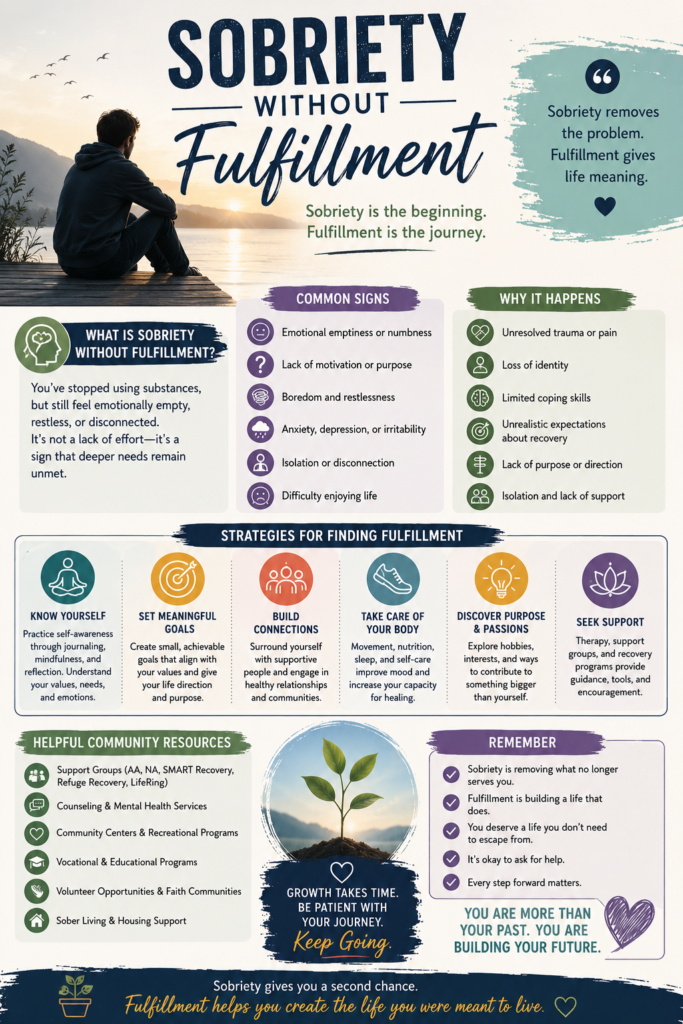
Sobriety is often viewed as the ultimate goal of addiction recovery, representing freedom from drugs or alcohol and the beginning of a healthier life. However, many individuals discover that becoming sober does not automatically create happiness, emotional peace, or fulfillment. Some people continue to experience feelings of emptiness, boredom, loneliness, anxiety, or lack of purpose even after achieving sobriety. This experience, often referred to as “sobriety without fulfillment,” highlights the reality that recovery involves more than abstaining from substances. Emotional healing, personal growth, healthy relationships, and meaningful life experiences are also important components of long-term wellbeing. Understanding the emotional challenges that may continue after sobriety can help individuals, families, and communities create more supportive recovery environments focused on both healing and fulfillment.
Sobriety Without Fulfillment: Understanding the Emotional Side of Recovery
Introduction
Achieving sobriety is often considered one of the most important milestones in addiction recovery. For many individuals, becoming free from drugs or alcohol represents survival, healing, and a chance for a healthier future. However, some people discover that sobriety alone does not automatically create happiness, purpose, or emotional fulfillment. After the initial relief of stopping substance use, individuals may still experience feelings of emptiness, loneliness, boredom, anxiety, or dissatisfaction. This experience is sometimes described as “sobriety without fulfillment,” where a person remains physically sober but struggles emotionally, mentally, or spiritually.
Recovery involves more than abstaining from substances; it also requires rebuilding identity, relationships, emotional wellbeing, and life purpose. During active addiction, substances may have been used to cope with pain, trauma, stress, or emotional emptiness. When substances are removed, unresolved emotional struggles can become more noticeable. Understanding the difference between sobriety and true emotional fulfillment is important because long-term recovery often depends on creating a meaningful and balanced life beyond addiction.
Understanding Sobriety Without Fulfillment
Sobriety refers to the absence of substance use, while fulfillment involves feelings of purpose, connection, satisfaction, and emotional wellbeing. A person may achieve sobriety but still feel emotionally disconnected or unhappy if deeper psychological, social, or spiritual needs remain unaddressed.
Common experiences associated with sobriety without fulfillment may include:
- Emotional numbness
- Lack of motivation or purpose
- Social isolation
- Depression or anxiety
- Difficulty enjoying life without substances
- Restlessness or boredom
- Unresolved trauma or grief
These feelings can create frustration because individuals may expect sobriety alone to solve all emotional difficulties. When fulfillment is missing, relapse risk may increase if substances are viewed as a way to escape emotional discomfort again.
Why Fulfillment Matters in Recovery
Long-term recovery is often stronger when individuals build meaningful and satisfying lives that support emotional and psychological wellbeing. Fulfillment helps individuals develop motivation to maintain sobriety because recovery becomes connected to positive life experiences rather than simply avoiding substances.
Emotional fulfillment may come from:
- Healthy relationships
- Personal growth and self-discovery
- Career or educational goals
- Spiritual development
- Community involvement
- Creative expression and hobbies
- Physical health and self-care
Recovery becomes more sustainable when individuals feel connected to something meaningful beyond addiction.
Common Causes of Emotional Emptiness After Sobriety
1. Loss of Identity
Many individuals struggling with addiction build routines, friendships, and identities around substance use. After becoming sober, they may feel uncertain about who they are or how to live without substances.
2. Unresolved Emotional Pain
Addiction often develops alongside trauma, anxiety, depression, grief, or emotional stress. Without substances to numb these feelings, emotional pain may become more noticeable during recovery.
3. Lack of Healthy Coping Skills
Some individuals enter recovery without learning healthy ways to manage stress, loneliness, or emotional discomfort. Sobriety without coping skills may feel emotionally overwhelming.
4. Social Isolation
Recovery sometimes involves distancing from unhealthy environments or friendships connected to substance use. Although necessary, this change may temporarily create loneliness and disconnection.
5. Unrealistic Expectations About Recovery
Some individuals expect sobriety to immediately create happiness and emotional peace. When life challenges continue after becoming sober, disappointment and frustration may occur.
Strategies for Building Fulfillment in Recovery
1. Developing Purpose and Goals
Creating meaningful goals helps individuals focus on growth and future possibilities. Goals may involve:
- Education or career development
- Volunteering and helping others
- Strengthening family relationships
- Personal or spiritual growth
- Pursuing hobbies and creative interests
Purpose-driven activities often improve motivation and emotional satisfaction.
2. Building Healthy Relationships
Supportive relationships are important for emotional wellbeing and long-term recovery. Positive social connections may include:
- Recovery support groups
- Trusted friends and family
- Mentors or sponsors
- Community organizations
Healthy relationships reduce isolation and provide encouragement during difficult times.
3. Addressing Mental Health and Trauma
Professional counseling and therapy can help individuals process unresolved emotional pain and develop healthier coping skills. Mental health support may involve:
- Individual therapy
- Trauma-informed counseling
- Cognitive-behavioral therapy (CBT)
- Stress management techniques
- Medication support when appropriate
Emotional healing is often necessary for creating deeper fulfillment in recovery.
4. Practicing Mindfulness and Self-Care
Mindfulness and self-care strategies can improve emotional awareness and overall wellbeing. Helpful practices may include:
- Meditation and relaxation exercises
- Journaling and reflection
- Exercise and healthy nutrition
- Adequate sleep and stress management
- Gratitude practices
These habits help individuals reconnect with themselves and experience greater emotional balance.
5. Finding Community and Connection
Many people find fulfillment through community involvement and helping others. Participation in recovery groups, volunteer work, faith communities, or wellness programs can foster a sense of belonging and purpose.
Organizations such as Alcoholics Anonymous and Narcotics Anonymous often emphasize connection, service, and personal growth as part of long-term recovery.
Conclusion
Sobriety is a major achievement, but true recovery often requires more than simply stopping substance use. Many individuals experience sobriety without fulfillment when emotional, psychological, social, or spiritual needs remain unaddressed. Feelings of emptiness, boredom, or lack of purpose can make recovery feel incomplete and may increase vulnerability to relapse.
Building fulfillment in recovery involves developing healthy relationships, emotional healing, personal goals, meaningful activities, and supportive communities. When individuals create lives filled with purpose, connection, and emotional wellbeing, sobriety becomes more than abstinence—it becomes an opportunity for personal transformation, growth, and lasting fulfillment.
Self-Management Strategies in Understanding Sobriety Without Fulfillment
Introduction
Recovery from substance use disorders is often viewed as a journey toward freedom, healing, and improved wellbeing. Achieving sobriety is a major accomplishment that requires courage, commitment, and support. However, some individuals discover that becoming sober does not automatically create happiness, emotional peace, or life satisfaction. Even after stopping substance use, feelings of emptiness, boredom, loneliness, anxiety, or lack of purpose may continue. This experience is often described as “sobriety without fulfillment,” where a person is physically sober but emotionally or mentally dissatisfied.
Because addiction frequently affects emotional health, identity, relationships, and coping abilities, recovery requires more than abstinence alone. Long-term wellbeing often depends on learning how to manage emotions, develop healthy routines, build meaningful goals, and create a balanced lifestyle. Self-management strategies help individuals take an active role in improving emotional health and finding greater purpose during recovery. Through self-awareness, emotional regulation, personal growth, and healthy daily habits, individuals can move beyond simple sobriety toward a more meaningful and fulfilling life.
Understanding Sobriety Without Fulfillment
Sobriety refers to living without drugs or alcohol, while fulfillment involves feelings of purpose, emotional connection, satisfaction, and overall wellbeing. A person may remain sober but still struggle emotionally if deeper needs remain unaddressed.
Common signs of sobriety without fulfillment may include:
- Feeling emotionally empty or disconnected
- Difficulty enjoying life without substances
- Loss of motivation or direction
- Social isolation
- Anxiety or depression
- Restlessness or boredom
- Lack of meaning or purpose
These feelings can create frustration and increase relapse risk if individuals begin believing that sobriety alone is not enough to improve life satisfaction.
The Importance of Self-Management in Recovery
Self-management refers to the ability to regulate thoughts, emotions, behaviors, and habits in ways that support long-term wellbeing and recovery. In addiction recovery, self-management helps individuals become active participants in building healthier lifestyles and emotional stability.
Effective self-management strategies may help individuals:
- Improve emotional awareness
- Develop healthy coping skills
- Build confidence and independence
- Reduce stress and relapse risk
- Create structure and stability
- Strengthen personal purpose and motivation
By practicing self-management, individuals can better address the emotional challenges that sometimes continue after achieving sobriety.
Key Self-Management Strategies for Building Fulfillment
1. Developing Self-Awareness and Emotional Reflection
Understanding emotions and personal triggers is an important step in creating fulfillment during recovery. Many individuals use substances to avoid emotional pain or stress, so recovery often requires learning how to process emotions in healthier ways.
Helpful self-awareness practices include:
- Journaling thoughts and feelings
- Practicing mindfulness or meditation
- Reflecting on personal values and goals
- Identifying emotional triggers and stressors
Greater emotional awareness can help individuals recognize unmet needs and make healthier choices during recovery.
2. Creating Healthy Daily Routines
Substance use often disrupts sleep patterns, eating habits, responsibilities, and overall structure. Building healthy routines can improve emotional stability and reduce feelings of chaos or boredom.
Healthy routines may include:
- Regular sleep schedules
- Nutritious eating habits
- Physical exercise
- Therapy or support group attendance
- Relaxation and self-care activities
- Time for hobbies or personal interests
Structured routines help individuals develop consistency, purpose, and healthier lifestyles during recovery.
3. Setting Meaningful Goals
Fulfillment often grows when individuals pursue goals that reflect personal growth and purpose. Recovery becomes more meaningful when individuals focus on building positive futures rather than simply avoiding substances.
Goals may involve:
- Education or career development
- Strengthening relationships
- Financial stability
- Volunteering or helping others
- Creative or spiritual growth
Goal-setting increases motivation and encourages individuals to recognize progress and achievement in recovery.
4. Practicing Stress Management and Healthy Coping Skills
Stress and emotional discomfort are common relapse triggers. Self-management strategies help individuals cope with challenges in healthier ways rather than returning to substance use.
Effective coping strategies may include:
- Deep breathing exercises
- Meditation and relaxation techniques
- Physical activity
- Talking with supportive people
- Engaging in creative activities
- Practicing gratitude and positive self-talk
Healthy coping skills strengthen emotional resilience and improve overall wellbeing.
5. Building Social Support and Connection
Isolation and loneliness often contribute to emotional dissatisfaction during recovery. Healthy relationships and supportive communities can improve emotional health and create stronger feelings of belonging.
Support systems may include:
- Recovery support groups
- Family and trusted friends
- Sponsors or mentors
- Faith or community organizations
- Counseling and therapy programs
Organizations such as Alcoholics Anonymous and Narcotics Anonymous encourage connection, accountability, and personal growth during recovery.
Challenges in Self-Management During Recovery
Although self-management strategies can strengthen recovery, individuals may still face challenges such as:
- Mental health disorders
- Trauma histories
- Difficulty adjusting to sober lifestyles
- Social pressures or isolation
- Low self-esteem or hopelessness
Recovery is often a gradual process, and emotional fulfillment may take time to develop. Continued professional support and community involvement are often important parts of long-term recovery success.
Conclusion
Sobriety without fulfillment highlights the reality that recovery involves more than abstaining from substances. Emotional wellbeing, purpose, healthy relationships, and personal growth are also essential parts of lasting recovery. Self-management strategies help individuals develop emotional awareness, healthy routines, meaningful goals, and coping skills that support both sobriety and fulfillment.
By actively participating in personal growth and emotional healing, individuals can move beyond simply surviving without substances and begin building lives filled with purpose, connection, stability, and long-term wellbeing. Through self-management and supportive recovery practices, sobriety can become an opportunity for meaningful transformation and a more fulfilling future.
Family Support Strategies in Understanding Sobriety Without Fulfillment
Introduction
Recovery from substance use disorders is often celebrated when an individual achieves sobriety. While becoming free from drugs or alcohol is a major accomplishment, many individuals discover that sobriety alone does not automatically create emotional happiness, purpose, or fulfillment. Some people continue to struggle with feelings of emptiness, loneliness, boredom, anxiety, or lack of direction even after they stop using substances. This experience, often called “sobriety without fulfillment,” can be confusing for both individuals in recovery and the families supporting them.
Families play an important role in helping loved ones move beyond physical sobriety toward emotional healing and personal growth. Supportive family relationships can provide encouragement, stability, accountability, and connection during recovery. However, families may also struggle to understand why a loved one still feels unhappy despite becoming sober. Family support strategies can help relatives respond with empathy, healthy communication, and emotional support while encouraging long-term healing and fulfillment. By creating supportive environments focused on growth and wellbeing, families can strengthen both recovery outcomes and healthier relationships.
Understanding Sobriety Without Fulfillment
Sobriety refers to abstaining from drugs or alcohol, while fulfillment involves emotional wellbeing, purpose, connection, and life satisfaction. A person may remain sober but still experience emotional struggles if deeper needs remain unresolved.
Common signs of sobriety without fulfillment may include:
- Emotional emptiness or numbness
- Lack of motivation or direction
- Difficulty enjoying life without substances
- Social withdrawal or isolation
- Anxiety or depression
- Boredom and restlessness
- Feelings of hopelessness or dissatisfaction
Families may misunderstand these struggles and assume sobriety alone should immediately create happiness. In reality, recovery often requires emotional, psychological, social, and spiritual healing beyond simply stopping substance use.
Why Family Support Matters in Recovery
Healthy family involvement can strengthen emotional stability and reduce feelings of isolation during recovery. Individuals who feel emotionally supported are often more motivated to continue healing and develop healthier lifestyles.
Family support can help individuals:
- Feel understood and encouraged
- Build confidence and self-worth
- Develop healthier coping skills
- Maintain accountability and structure
- Reduce stress and loneliness
- Strengthen motivation for long-term recovery
Supportive relationships can also help individuals rediscover purpose and emotional connection after addiction.
Key Family Support Strategies
1. Encouraging Open and Honest Communication
Addiction often damages communication within families. Honest and respectful conversations are important for rebuilding trust and emotional connection during recovery.
Healthy communication strategies include:
- Listening without judgment
- Encouraging emotional expression
- Avoiding criticism or blame
- Asking supportive questions
- Acknowledging emotional struggles during recovery
Open communication helps individuals feel emotionally safe and understood while reducing feelings of shame or isolation.
2. Understanding Emotional Recovery Beyond Sobriety
Families may focus heavily on sobriety while overlooking emotional wellbeing. Learning about the emotional side of recovery can improve empathy and reduce unrealistic expectations.
Families can educate themselves about:
- Depression and anxiety during recovery
- Trauma and unresolved emotional pain
- Identity changes after addiction
- Emotional adjustment to sober living
- The importance of purpose and personal growth
Understanding these challenges allows families to respond with patience and compassion rather than frustration or disappointment.
3. Encouraging Healthy Routines and Activities
Families can support fulfillment by encouraging healthy daily habits and meaningful activities that promote emotional wellbeing.
Helpful activities may include:
- Exercise and physical wellness
- Hobbies and creative interests
- Family outings and shared experiences
- Volunteering or community involvement
- Spiritual or mindfulness practices
Positive activities help individuals rediscover enjoyment and purpose beyond substance use.
4. Supporting Mental Health and Counseling
Many individuals recovering from addiction continue to struggle with emotional pain, trauma, anxiety, or depression. Professional counseling can help address these deeper issues and improve emotional fulfillment.
Families can support recovery by encouraging:
- Individual therapy
- Family counseling
- Trauma-informed care
- Support group participation
- Stress management and coping skills training
Therapy often helps individuals process emotions and develop healthier ways of coping with life challenges.
5. Promoting Healthy Boundaries and Independence
Families sometimes become overly focused on controlling or “fixing” recovery problems. Healthy support involves encouragement without removing personal responsibility or independence.
Healthy family boundaries may include:
- Encouraging accountability respectfully
- Allowing individuals to make their own choices
- Avoiding overprotection or rescuing behaviors
- Supporting growth and independence
Balanced support helps individuals build confidence and emotional maturity during recovery.
6. Encouraging Social Support and Connection
Isolation can increase emotional dissatisfaction during recovery. Families can encourage participation in supportive communities and healthy social relationships.
Supportive connections may include:
- Recovery support groups
- Faith or spiritual communities
- Volunteer opportunities
- Educational or recreational groups
- Trusted friendships and mentors
Organizations such as Alcoholics Anonymous and Narcotics Anonymous often provide emotional support, accountability, and opportunities for personal growth.
Challenges Families May Experience
Families supporting a loved one in recovery may struggle with:
- Fear of relapse
- Emotional exhaustion
- Frustration over ongoing unhappiness
- Difficulty rebuilding trust
- Uncertainty about how to help
Because recovery is often a gradual process, families may also benefit from counseling, education, and support groups that help them maintain emotional wellbeing while supporting their loved one.
Conclusion
Sobriety without fulfillment highlights the reality that recovery involves more than abstaining from substances. Emotional healing, purpose, connection, and personal growth are also essential parts of long-term wellbeing. Families play an important role in helping loved ones navigate these emotional challenges by providing empathy, encouragement, healthy communication, and supportive environments.
Through family support strategies such as emotional understanding, counseling support, healthy boundaries, and encouragement of meaningful activities, individuals in recovery can move beyond emotional emptiness toward lives filled with purpose, connection, and fulfillment. When families and individuals work together in healthy ways, recovery becomes not only about sobriety but also about healing, growth, and lasting emotional wellbeing.
Community Resource Strategies in Understanding Sobriety Without Fulfillment
Introduction
Achieving sobriety is an important milestone in addiction recovery, but many individuals discover that stopping substance use does not automatically create happiness, purpose, or emotional satisfaction. Some people continue to experience feelings of emptiness, loneliness, anxiety, boredom, or lack of direction even after becoming sober. This experience, often called “sobriety without fulfillment,” highlights the reality that recovery involves more than abstinence alone. Emotional healing, social connection, personal growth, and meaningful life experiences are also necessary for long-term wellbeing.
Community resources play an essential role in helping individuals move beyond physical sobriety toward emotional fulfillment and healthier lifestyles. Supportive communities provide opportunities for connection, counseling, education, employment, housing stability, and personal growth. Community resource strategies help individuals rebuild structure, strengthen coping skills, and develop a greater sense of belonging and purpose during recovery. By creating supportive and recovery-focused environments, communities can help individuals achieve not only sobriety but also emotional wellbeing and long-term life satisfaction.
Understanding Sobriety Without Fulfillment
Sobriety refers to living without drugs or alcohol, while fulfillment involves feelings of purpose, emotional balance, satisfaction, and meaningful connection. A person may remain sober but still struggle emotionally if deeper psychological, social, or spiritual needs remain unmet.
Common signs of sobriety without fulfillment may include:
- Emotional emptiness or numbness
- Anxiety or depression
- Lack of motivation or direction
- Social isolation
- Difficulty finding enjoyment in life
- Boredom and restlessness
- Low self-esteem or hopelessness
Without emotional fulfillment, recovery may feel incomplete, increasing the risk of relapse if substances are viewed as a way to escape emotional discomfort.
Why Community Resources Matter in Recovery
Recovery is often more successful when individuals feel connected, supported, and engaged in meaningful activities. Many individuals recovering from addiction also face challenges such as:
- Unemployment
- Housing instability
- Mental health disorders
- Trauma histories
- Financial stress
- Social isolation
Community resources help reduce these barriers while encouraging healthier lifestyles, emotional healing, and personal development. Supportive communities can also reduce stigma and create safer environments for individuals working toward long-term recovery.
Community support may help individuals:
- Build healthy social connections
- Improve emotional wellbeing
- Increase independence and confidence
- Develop life skills and coping abilities
- Discover purpose and personal growth opportunities
Key Community Resource Strategies
1. Peer Support and Recovery Groups
Peer support programs connect individuals with others who understand the challenges of addiction and recovery. Shared experiences often reduce feelings of isolation while encouraging accountability and emotional support.
Examples of peer support resources include:
- Alcoholics Anonymous
- Narcotics Anonymous
- Recovery community centers
- Peer mentorship programs
- Sober living communities
These groups often help individuals find connection, encouragement, and purpose through shared recovery experiences.
2. Mental Health and Counseling Services
Many individuals experiencing sobriety without fulfillment struggle with unresolved trauma, anxiety, depression, or emotional instability. Community mental health services can provide important emotional support and coping strategies.
Helpful services may include:
- Individual counseling
- Group therapy
- Trauma-informed care
- Stress management programs
- Psychiatric and medication support when appropriate
Professional support helps individuals address emotional pain and build healthier coping mechanisms during recovery.
3. Employment and Educational Programs
Meaningful work and educational opportunities can improve self-esteem, motivation, and personal fulfillment. Community programs can help individuals rebuild independence and future goals through:
- Job readiness training
- Vocational rehabilitation programs
- GED and adult education classes
- Career counseling services
- College or trade school support
Employment and education often provide structure, confidence, and a renewed sense of purpose during recovery.
4. Wellness and Recreational Programs
Healthy activities can improve emotional balance and help individuals rediscover enjoyment in sober living. Community wellness programs may include:
- Fitness and exercise classes
- Mindfulness and meditation workshops
- Art and music therapy programs
- Outdoor recreation and wellness activities
- Nutrition and healthy lifestyle education
These activities promote both physical and emotional wellbeing while reducing boredom and stress.
5. Housing and Stability Services
Safe and stable housing environments are important for emotional wellbeing and relapse prevention. Housing insecurity can increase stress and make recovery more difficult.
Community housing resources may include:
- Transitional housing programs
- Supportive housing services
- Sober living homes
- Emergency housing assistance
Stable housing helps individuals focus on recovery and long-term personal growth rather than survival needs.
6. Volunteer and Community Engagement Opportunities
Many individuals find emotional fulfillment through helping others and participating in community activities. Volunteering can strengthen confidence, purpose, and social connection.
Examples may include:
- Mentoring others in recovery
- Participating in community service projects
- Supporting nonprofit organizations
- Joining faith or spiritual groups
- Participating in local wellness programs
Helping others often strengthens self-worth and encourages continued commitment to recovery.
Challenges in Accessing Community Resources
Although community resources can greatly strengthen recovery, individuals may still face barriers such as:
- Limited funding for mental health services
- Transportation difficulties
- Social stigma surrounding addiction
- Long waiting lists for treatment programs
- Lack of affordable housing
Communities that invest in recovery support services and public education can help reduce these barriers and improve long-term recovery outcomes.
Conclusion
Sobriety without fulfillment demonstrates that recovery involves more than abstaining from substances. Emotional wellbeing, purpose, connection, and meaningful life experiences are also essential for long-term recovery success. Community resource strategies help individuals address emotional, social, and practical challenges while building healthier and more fulfilling lives.
Through peer support, counseling services, employment programs, wellness activities, and stable housing resources, communities can provide the support individuals need to move beyond emotional emptiness and toward personal growth and lasting fulfillment. When communities create compassionate and recovery-focused environments, recovery becomes not only about sobriety but also about healing, connection, purpose, and meaningful life transformation.
Frequently Asked Questions
Here are some common questions:
1. What does “sobriety without fulfillment” mean?
Sobriety without fulfillment refers to a situation where a person has stopped using drugs or alcohol but still feels emotionally empty, unhappy, disconnected, or lacking purpose in life.
2. Is it normal to feel unhappy after becoming sober?
Yes. Many individuals experience emotional challenges during recovery, especially after substances are no longer being used to cope with stress, trauma, anxiety, or emotional pain. Recovery involves emotional healing in addition to physical sobriety.
3. Why doesn’t sobriety automatically create happiness?
Substance use disorders often affect emotional health, relationships, identity, and coping skills. Although sobriety removes harmful substance use, unresolved emotional issues, trauma, loneliness, or lack of purpose may still remain.
4. What are common signs of sobriety without fulfillment?
Common signs may include:
- Emotional emptiness or numbness
- Boredom or restlessness
- Anxiety or depression
- Lack of motivation or direction
- Social isolation
- Difficulty enjoying life
- Feeling disconnected from others
5. Can sobriety without fulfillment increase relapse risk?
Yes. If individuals continue feeling emotionally dissatisfied or hopeless, they may become vulnerable to relapse if substances are viewed as a way to escape emotional discomfort again.
6. What causes emotional emptiness after addiction recovery?
Several factors may contribute, including:
- Unresolved trauma or grief
- Mental health conditions
- Loss of identity after addiction
- Social isolation
- Lack of healthy coping skills
- Unrealistic expectations about recovery
7. What is the difference between sobriety and fulfillment?
Sobriety means abstaining from drugs or alcohol, while fulfillment involves emotional wellbeing, purpose, connection, and satisfaction with life. A person can be sober but still struggle emotionally if deeper needs remain unmet.
8. How can therapy help with emotional fulfillment in recovery?
Therapy can help individuals:
- Process trauma and emotional pain
- Develop healthy coping strategies
- Improve self-awareness
- Address anxiety or depression
- Build healthier relationships
- Set meaningful life goals
Professional support can strengthen both emotional healing and long-term recovery.
9. Why is purpose important during recovery?
Purpose gives individuals motivation, direction, and a sense of meaning beyond addiction. Purpose-driven activities can increase emotional satisfaction and strengthen commitment to sobriety.
10. What activities can help build fulfillment in sobriety?
Helpful activities may include:
- Volunteering and helping others
- Pursuing education or career goals
- Exercising and practicing self-care
- Creative hobbies such as art or music
- Spiritual or mindfulness practices
- Building supportive relationships
11. Can mental health conditions affect fulfillment during recovery?
Yes. Conditions such as depression, anxiety, PTSD, or unresolved trauma can make it more difficult to feel emotionally fulfilled during sobriety. Integrated mental health treatment is often important for long-term recovery.
12. Why do some people feel bored after becoming sober?
Substances may have previously occupied a large part of daily routines, social interactions, and emotional coping. Recovery often requires individuals to rebuild healthy activities, interests, and relationships that provide enjoyment and meaning.
13. How important are social connections in recovery?
Healthy relationships and supportive communities are very important. Positive social support reduces isolation, encourages accountability, and improves emotional wellbeing during recovery.
Organizations such as Alcoholics Anonymous and Narcotics Anonymous provide peer support and recovery communities.
14. What role does self-care play in fulfillment?
Self-care supports emotional and physical wellbeing by helping individuals manage stress, improve mood, and develop healthier lifestyles. Self-care may include sleep, exercise, nutrition, mindfulness, and relaxation practices.
15. Can spirituality help with fulfillment during sobriety?
Yes. Many individuals find emotional healing, purpose, and hope through spirituality, meditation, mindfulness, prayer, or participation in faith communities. Spiritual growth can strengthen emotional resilience and motivation to recover.
16. How long does it take to feel fulfilled in recovery?
Recovery is different for every person. Emotional healing and fulfillment often develop gradually over time through personal growth, healthy relationships, counseling, and meaningful life experiences.
17. What are healthy coping strategies for emotional struggles in recovery?
Healthy coping strategies may include:
- Journaling and reflection
- Exercise and physical activity
- Meditation or mindfulness
- Counseling and support groups
- Talking with supportive people
- Engaging in hobbies and creative activities
18. What is the overall goal of recovery beyond sobriety?
The goal is not only to stop substance use but also to build a healthy, meaningful, emotionally balanced, and fulfilling life that supports long-term wellbeing and personal growth.
Conclusion
Sobriety without fulfillment demonstrates that recovery is a complex process that extends beyond simply stopping substance use. While sobriety is a major achievement, long-term recovery often requires emotional healing, meaningful relationships, healthy coping skills, and a renewed sense of purpose. Individuals who continue to experience emptiness or dissatisfaction during recovery may benefit from counseling, peer support, community involvement, and personal growth opportunities that strengthen emotional wellbeing. By addressing both the physical and emotional aspects of recovery, individuals can move beyond surviving without substances and begin building lives filled with connection, purpose, stability, and lasting fulfillment.
Video: That Hollow Feeling After Getting Clean #sobriety #recovery