Vaping has become a pretty hot topic among parents, schools, and communities. I hear about new rumors and stories every week, especially from concerned parents who aren’t sure what’s fact or fiction when it comes to e-cigarettes and vape pens. This whole area can feel confusing, so I’m going to clear up some of the biggest vaping lies parents really need to know about and share some practical advice for talking with your kids.
Understanding the Hype Around Vaping
Vaping was first marketed as a safer alternative to smoking, and that’s where a lot of confusion started. Companies pitched e-cigarettes as a way for adults to quit smoking. But as vape pens and e-liquids became flashier, with fruity flavors and colorful packaging, many more teens started trying them out. According to CDC research, almost 14% of high school students reported vaping in 2022.
The popularity of vaping among teens partly comes from how it’s advertised, looking cool or harmless. Add in the sneaky way vape devices can be used without being noticed, and you have a trend that’s growing quickly. Even with all the buzz, I see a ton of myths floating around about vaping safety and what these devices actually contain. Many of these myths make their way to parents—and even more so to teens—clouding judgment and making it harder to have open conversations at home.
Common Myths Parents Hear About Vaping
I’ve gathered some of the most common vaping myths, especially the ones kids hear and repeat. Getting the right information makes a difference when you’re having honest conversations at home, helping you and your child be more aware and better prepared to face challenges.
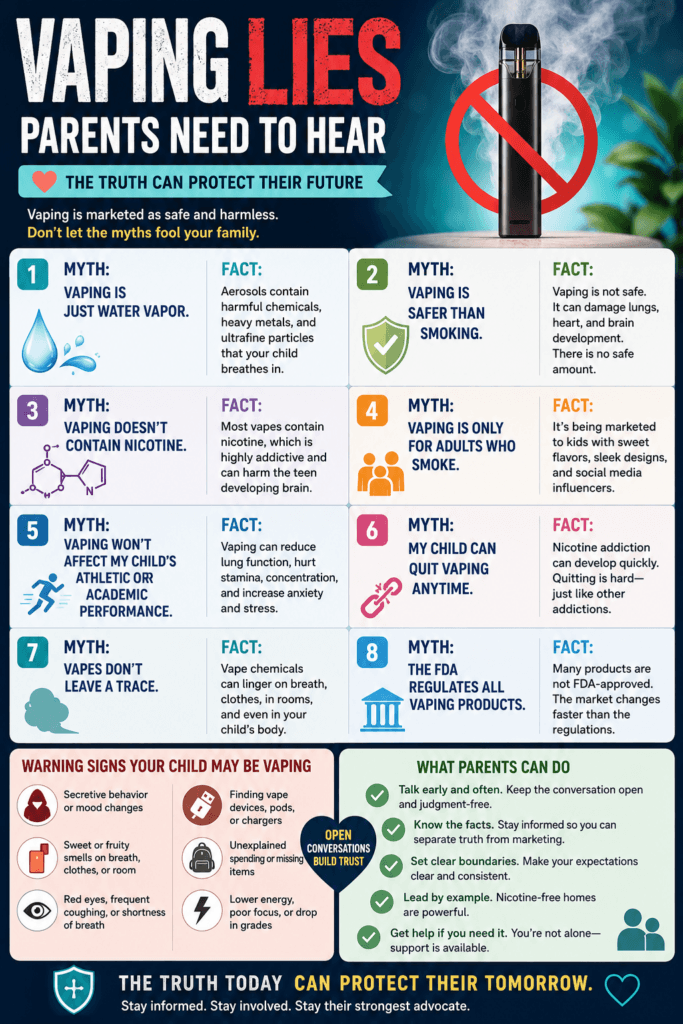
- “It’s just water vapor.” The name “vape” makes it sound like inhaling plain steam, but these devices heat up an e-liquid that includes nicotine, chemicals, and sometimes even metals. According to the American Lung Association, there are over 60 chemicals in many vape liquids. Some, like diacetyl, are linked to lung disease.
- “Vaping doesn’t have any nicotine.” It’s common for young people to think certain vapes are just for flavor. But most e-liquids, even many labeled “nicotine-free,” actually still contain drugs like nicotine or have been cross-contaminated during manufacturing. Teens might be inadvertently putting nicotine and other substances into their bodies without being told the full story about what’s inside.
- “It’s safer than smoking cigarettes.” While vaping usually carries fewer toxins compared to traditional cigarettes, nicotine addiction is still a big risk. The Truth Initiative notes that teens who vape are more likely to start smoking cigarettes later on, showing a clear link between initial vaping and later cigarette use, which can end up being an even larger health problem.
- “Everyone is doing it.” Stats can make it seem like vaping is everywhere, but the reality is that a majority of teens are still not vaping. Feeling pressured by exaggerations can make it seem more normal than it really is. Kids who aren’t vaping often feel alone in their choices, but the numbers show most teens actually steer clear of vapes.
What’s Actually Inside Vapes?
Parents are often surprised when they hear what vapes contain. While the vapor might seem harmless, here’s a look at some of what’s inside:
- Nicotine, the addictive chemical found in tobacco. It can affect teen brain development, memory, and focus, making it a real concern for younger users.
- Flavoring chemicals, with some approved to eat but possibly harmful when inhaled. For example, diacetyl is known to cause “popcorn lung,” a serious lung disease.
- Heavy metals like lead and nickel can leach from the device’s heating element and end up in what’s inhaled. Even tiny amounts can cause health issues in the long term.
Some vape cartridges and unregulated products can even be contaminated by substances not listed on the label, adding a layer of risk for anyone using them without knowing exactly what they’re putting into their bodies. The lack of quality control in some brands only adds to the uncertainty and danger.
Health Risks of Vaping for Teens
Nicotine can mess with a teenager’s developing brain, sometimes in ways that aren’t immediately obvious. This isn’t just about addiction; though cravings start up quickly, it’s about focus, attention, mood swings, and even depression. Some teens experience headaches, stomach aches, and rapid heart rates after using vapes. The effects on the lungs are still being studied, but coughing and shortness of breath are becoming common complaints among frequent users.
Another issue is that vaping devices can malfunction. There have actually been cases of vapes exploding or catching fire. The liquid can also leak, exposing skin to concentrated nicotine, which can be pretty dangerous. Chronic use might cause breathing issues or trigger asthma attacks in susceptible individuals, while secondhand exposure is also a concern for other children and family members at home.
Why Teens Start Vaping (and How They’re Targeted)
Sometimes, it’s just curiosity. Other times, it’s about fitting in or trying to cope with stress and anxiety. Marketing and peer influence are both strong factors. Social media has given vaping companies an easy way to advertise their products, and influencers often make vaping look like a normal thing to try out. Flavored vapes, like mango, cotton candy, or watermelon, are designed to appeal to younger buyers. The marketing looks fun and playful, nothing like traditional tobacco ads.
Schools have also seen an increase in vape-related discipline issues. Some vaping devices look exactly like flash drives or pens, making them hard for adults to spot. This sneaky aspect only adds another layer to the problem, with some parents being completely unaware that their child is vaping until a problem arises at school or health changes become noticeable.
How to Talk to Your Kids About Vaping Lies
Kicking off a conversation about vaping can feel awkward, but it’s important for your relationship and your child’s health. Here’s what I’ve found works best:
- Start early and keep it casual. Bring it up in everyday conversation. Kids tune out lectures, but they do pick up on genuine interest and straightforward talk. Mentioning something seen in the news or at school can help spark conversation.
- Listen more than you talk. Ask what your kid has seen or heard about vaping at school or online, and let them share their opinions—even if they’re wrong. This builds trust and helps them feel respected, making it more likely they’ll turn to you in the future.
- Share facts, not fear. Use clear info from trusted sources. Talk about addiction, ingredients, and how marketing targets teens. Avoid scary exaggerations, since kids often see right through them and might stop believing the rest.
- Ask open-ended questions. For example, “What do you think vaping does to your body?” or “Why do you think some people start?” These questions get kids thinking and show you’re genuinely interested in their thoughts.
- Keep the door open for future chats. Make it clear they can always come to you with questions, no matter what’s happened. A strong relationship over time gives your child a safe place to process choices and challenges.
What If You Catch Your Teen Vaping?
It can be super stressful to find out your child is vaping, but overreacting usually shuts down communication. Try to stay calm and make space for a real conversation about what happened. Ask questions like, “How did you get it?” “What made you want to try it?” and “How are you feeling about it now?” You may not get all the answers at once, but maintaining a supportive tone helps your teen be honest about any struggles moving forward.
If you’re worried about their health or feel like your teen is struggling with addiction, reach out to a healthcare provider. There are resources for both parents and teens, including helplines and counseling, designed specifically for youth nicotine addiction (Smokefree Teen is a good place to start). Professional support can make a difference, especially if quitting has been tough.
Challenges for Parents and What to Watch Out For
- Sneaky devices. Some vapes look like everyday items, such as USB drives, highlighters, or watch bands, making them tough to spot.
- Misinformation online. TikTok, Instagram, and YouTube are filled with stories that downplay risks. Not all the info your teen finds is reliable, and some of it is designed to lure young people in with half-truths or false reassurances.
- Peer pressure. Even if your child isn’t interested, friends and classmate groups can have a big influence. It helps to equip your child with ways to say “no” confidently and to talk through possible situations before they arise.
Practical Tips for Staying Informed
- Check out resources from reputable organizations such as the American Lung Association, the CDC, and the Truth Initiative. These sites have guides, videos, and even text support for parents and teens.
- Stay tuned in to school communications and news about vaping trends so you’re aware of any updates, policy changes, or new products being discussed in your child’s school district.
- Connect with other parents in your community to share tips and keep each other updated. Learning from others’ stories and experiences helps you spot trouble before it gets serious.
Real-Life Impact: Vaping and School Life
Most schools in the U.S. have rules against vaping, but enforcement is tricky. Vaping in school bathrooms and even classrooms is on the rise. Some districts are stepping up random checks or using vape detectors to address the problem more directly. A lot of teens underestimate getting caught or don’t realize vaping on campus could mean suspension or mandatory drug counseling.
I’ve heard stories of kids feeling pressured to buy vapes for classmates or getting involved in “vape rings” at school. Sometimes older kids or even adults sell vapes to minors, which is illegal in every state. Teens caught distributing or using vapes can face consequences that affect their academic record and future opportunities.
- Tip: Encourage your child to talk to a trusted adult at school, such as a counselor or nurse, if they feel pressured or need help dealing with vape-related situations. Knowing there’s support at school and at home makes it easier for teens to say “no” when it matters.
FAQs About Vaping for Parents
Question: How can I tell if my child has been vaping?
Answer: Look for things like sweet or unusual smells, constant thirst, nosebleeds, or devices and chargers you don’t recognize. Some kids also start showing changes in mood or have unexplained coughs. Being curious about unfamiliar objects your child has—rather than dismissing them—is a smart move.
Question: Are nicotine-free vapes safe?
Answer: “Nicotine-free” doesn’t always mean what you’d expect. Some products labeled this way do contain nicotine or other harmful ingredients. And even vapes without nicotine still have chemicals linked to lung problems and may contain unknown contaminants from manufacturing.
Question: What’s the law about teens buying vapes?
Answer: Across the U.S., it’s illegal to sell e-cigarettes and vapes of any kind to people under 21. Stores and online shops are required to verify age, but some get around this with fake IDs or online loopholes. Teens can still track down these devices through older friends or black-market sellers.
What I’ve Learned as a Parent on This Adventure
Sorting vaping fact from fiction isn’t simple, but staying in the know makes a big difference. Having open, ongoing conversations with your kids is one of the most effective ways to keep myths from taking hold. It’s not about one perfect talk; it’s about making sure your kid always knows you’re in their corner, with honest answers—even for tough topics like vaping. The more equipped you are with straight-up facts, the better you can help your child make choices that are right for them. Keep the lines of communication open and trust that your involvement does matter. By staying engaged, seeking accurate information, and being ready to talk, you’re helping your family navigate the challenges of vaping in today’s world.
Video: What Parents Need to Know About Vaping #vapingfacts #parenting