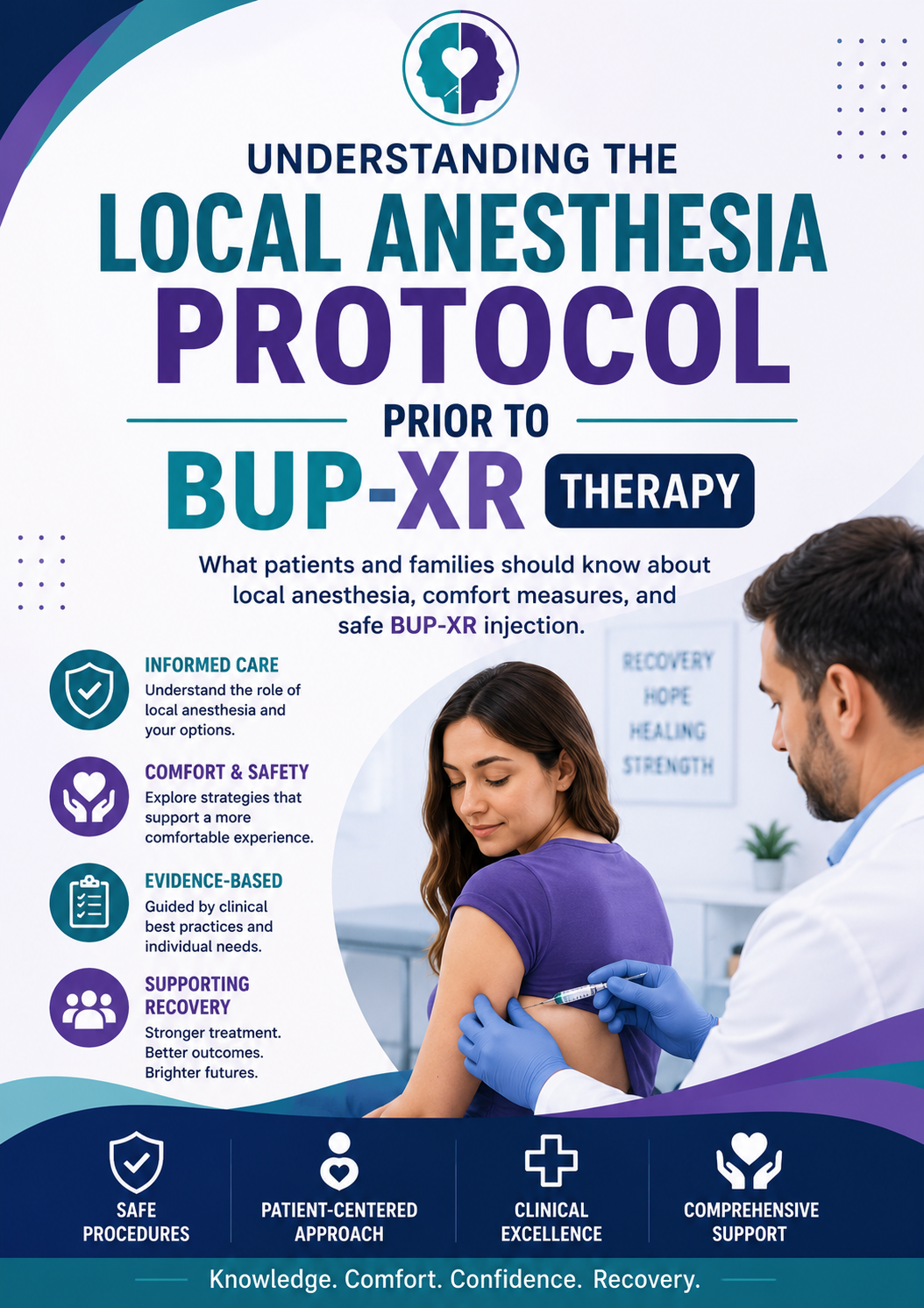
Extended-release buprenorphine (BUP-XR) therapy has become an important treatment option for individuals with opioid use disorder by providing long-lasting medication delivery that helps reduce cravings, prevent withdrawal symptoms, and support recovery. Because BUP-XR is administered as a subcutaneous injection by a healthcare professional, some patients may have concerns about injection-related discomfort and whether local anesthesia is needed before treatment. Although local anesthesia is not routinely included in standard BUP-XR administration protocols, understanding the purpose of the injection procedure, available comfort measures, and individualized patient considerations can help reduce anxiety and improve the overall treatment experience. Educating patients and families about the administration process promotes informed decision-making and strengthens engagement in recovery-focused care.
Use of Local Anesthesia Protocol Prior to BUP-XR Therapy
BUP-XR (extended-release buprenorphine injection) is a long-acting formulation used for the treatment of opioid use disorder (OUD). Products such as Sublocade are administered as a subcutaneous injection and provide sustained buprenorphine delivery over weeks to months. Because the medication is injected into subcutaneous tissue, some clinicians and patients have questioned whether local anesthesia should be used before administration.
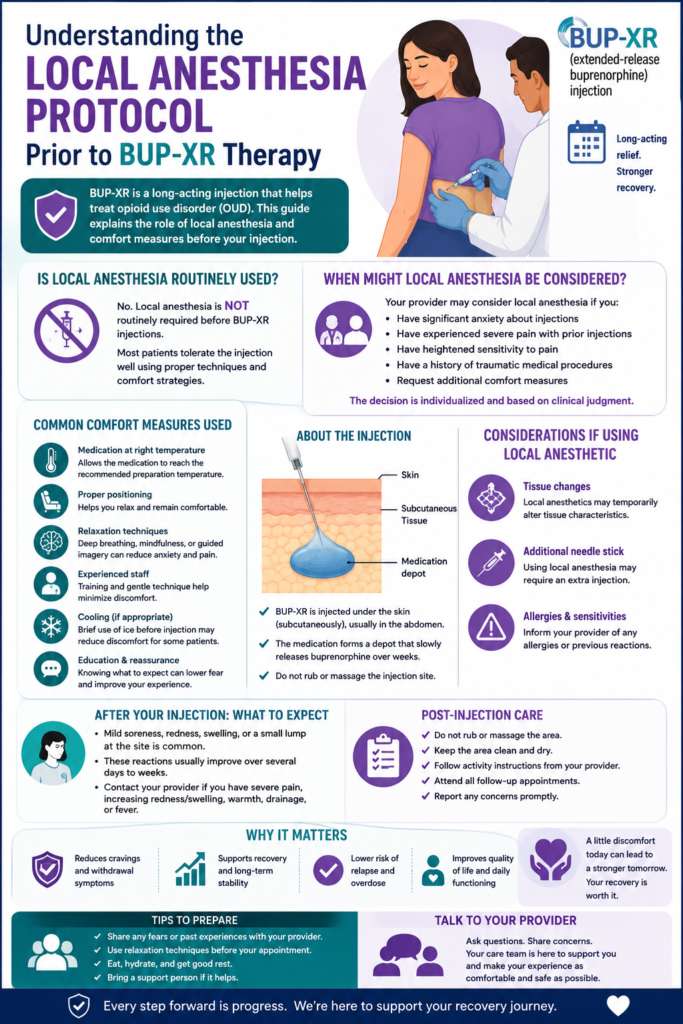
Is Local Anesthesia Routinely Required?
Local anesthesia is not routinely required before administration of BUP-XR. Most prescribing information and manufacturer guidelines do not recommend standard use of local anesthetics prior to injection. The procedure is generally well tolerated when performed by trained healthcare professionals using proper injection techniques.
However, injection-site discomfort can occur, and individual patient factors may influence pain perception.
Potential Reasons for Considering Local Anesthesia
In selected situations, a healthcare provider may consider local anesthesia if a patient:
- Has significant anxiety about injections
- Has experienced severe pain with previous injections
- Has heightened sensitivity to pain
- Has a history of traumatic medical procedures
- Requests additional comfort measures
The decision should be individualized and based on clinical judgment.
Common Comfort Measures Used Instead of Local Anesthesia
Many treatment programs focus on non-pharmacologic comfort strategies, including:
- Allowing the medication to reach recommended preparation temperature
- Proper patient positioning
- Relaxation and breathing techniques
- Educating patients about what to expect
- Using experienced injection personnel
- Applying brief cooling measures before injection when appropriate
These approaches often reduce discomfort without the need for anesthetic agents.
Considerations When Using Local Anesthetics
If local anesthesia is considered, providers should evaluate:
Potential Tissue Changes
Local anesthetics may temporarily alter tissue characteristics, which could theoretically affect injection technique or medication placement.
Additional Needle Sticks
Using local anesthesia often requires an additional injection, which may increase patient anxiety or procedural complexity.
Allergy and Sensitivity Concerns
Providers should review any history of allergic reactions or sensitivities to local anesthetic medications before administration.
Clinical Monitoring
After BUP-XR administration, patients should be monitored for:
- Injection-site pain
- Redness
- Swelling
- Induration or nodules
- Signs of infection
- Allergic reactions
Most injection-site reactions are mild to moderate and resolve over time.
Patient Education
Patients should be informed that:
- Mild discomfort during injection is common.
- Temporary soreness or tenderness may occur.
- The injection forms a depot beneath the skin that slowly releases medication.
- They should avoid manipulating or massaging the injection site.
- Any severe pain, increasing redness, or signs of infection should be reported promptly.
Conclusion
Routine local anesthesia is generally not part of standard BUP-XR administration protocols, as extended-release buprenorphine injections are usually well tolerated when proper injection techniques are used. However, for patients with significant anxiety, previous painful experiences, or heightened sensitivity, clinicians may consider individualized comfort measures, including local anesthesia when clinically appropriate. Careful patient assessment, education, and adherence to product-specific administration guidelines help maximize comfort, safety, and treatment success during BUP-XR therapy.
Self-Management Strategies to Understand the Local Anesthesia Protocol Prior to BUP-XR Therapy
Individuals receiving extended-release buprenorphine (BUP-XR) therapy for opioid use disorder may have questions or concerns about injection procedures, including the possible use of local anesthesia. While local anesthesia is not routinely required before BUP-XR administration, understanding the procedure and actively participating in treatment decisions can help reduce anxiety, improve comfort, and support recovery. The following self-management strategies can help patients better understand and prepare for BUP-XR therapy.
1. Learn About BUP-XR Treatment
Educate yourself about how BUP-XR works and why it is used in opioid use disorder treatment. Understanding that the medication forms a subcutaneous depot that slowly releases buprenorphine over time can help reduce uncertainty and build confidence in the treatment process.
2. Discuss Injection Concerns With Your Provider
If you have fears about needles, pain, or previous difficult injection experiences, discuss these concerns openly with your healthcare provider. Providers can explain the procedure, discuss comfort measures, and determine whether additional support strategies may be helpful.
3. Understand That Local Anesthesia Is Not Usually Required
Most patients tolerate BUP-XR injections without local anesthesia. Knowing that the procedure is typically brief and performed by trained healthcare professionals may help reduce anxiety before treatment.
4. Ask About Available Comfort Measures
If you are concerned about discomfort, ask your provider about comfort strategies such as:
- Relaxation techniques
- Deep breathing exercises
- Positioning adjustments
- Distraction methods
- Ice or cooling techniques if appropriate
- Individualized pain management approaches
5. Practice Anxiety-Reduction Techniques
Injection-related anxiety can increase the perception of pain. Helpful techniques include:
- Deep breathing exercises
- Mindfulness meditation
- Guided imagery
- Progressive muscle relaxation
- Positive self-talk
These strategies can help you remain calm before and during the injection.
6. Track Previous Injection Experiences
If you have received prior BUP-XR injections, keep a record of:
- Pain levels during and after injection
- Duration of soreness
- Injection site reactions
- Comfort measures that were helpful
This information can guide future treatment discussions with your provider.
7. Follow Post-Injection Instructions Carefully
After receiving BUP-XR:
- Do not rub or massage the injection site.
- Monitor for swelling, redness, or tenderness.
- Follow all provider instructions regarding activity restrictions.
- Report unusual symptoms promptly.
Proper aftercare can improve comfort and reduce complications.
8. Understand Normal Injection-Site Reactions
Mild discomfort, tenderness, or a small lump at the injection site is often expected. Learning what is considered normal versus when to seek medical attention can reduce unnecessary worry.
9. Maintain Open Communication With Your Treatment Team
If discomfort is greater than expected or anxiety increases over time, discuss these concerns with your healthcare team. Adjustments in communication, preparation, or comfort measures may improve future experiences.
10. Focus on Recovery Goals
Remember that the brief discomfort associated with an injection is often outweighed by the benefits of treatment, including:
- Reduced opioid cravings
- Lower risk of relapse
- Improved treatment adherence
- Greater recovery stability
- Reduced overdose risk
Keeping long-term recovery goals in mind can help patients remain motivated.
11. Build a Recovery Support System
Talk with counselors, peer recovery specialists, family members, or support groups about your treatment experience. Others who have received BUP-XR therapy may provide encouragement and practical advice.
12. Monitor Your Overall Progress
Keep a recovery journal that tracks:
- Cravings
- Mood
- Medication effectiveness
- Side effects
- Recovery milestones
Monitoring progress helps reinforce the benefits of treatment and encourages ongoing engagement.
Conclusion
Understanding the role of local anesthesia and the injection process prior to BUP-XR therapy can reduce anxiety and improve the treatment experience. Although local anesthesia is not typically required, patients can use self-management strategies, including education, open communication, relaxation techniques, symptom monitoring, and recovery-focused goal setting, to increase comfort and confidence. By actively participating in their care, individuals can better navigate treatment and strengthen their long-term recovery from opioid use disorder.
Family Support Strategies to Understand the Local Anesthesia Protocol Prior to BUP-XR Therapy
Family members can play an important role in supporting loved ones receiving BUP-XR (extended-release buprenorphine) therapy for opioid use disorder. Although local anesthesia is not routinely required before BUP-XR injections, some patients may experience anxiety about injections, discomfort, or concerns about the treatment process. By understanding the procedure and providing informed support, families can help reduce fear, improve treatment adherence, and strengthen recovery outcomes.
1. Learn About BUP-XR Treatment
Family members should educate themselves about how BUP-XR works, why it is prescribed, and what to expect during administration. Understanding that the medication is a long-acting injection designed to reduce cravings and support recovery can help families provide informed encouragement.
2. Understand the Purpose of Local Anesthesia
Families should know that local anesthesia is generally not part of routine BUP-XR administration. However, in some situations, healthcare providers may consider comfort measures for patients with significant anxiety, pain sensitivity, or previous negative injection experiences.
3. Encourage Open Conversations About Concerns
Many individuals feel nervous about injections. Family members can create a supportive environment by encouraging loved ones to discuss concerns openly without judgment. Listening carefully can reduce anxiety and improve confidence before treatment appointments.
4. Attend Educational Appointments When Appropriate
With patient permission, family members may attend medical appointments to learn about:
- The injection procedure
- Expected side effects
- Injection-site care
- Recovery goals
- Available comfort measures
Being informed helps families provide better support at home.
5. Reinforce Accurate Information
Families can help reduce fear by reinforcing information provided by healthcare professionals. Understanding that mild discomfort is often temporary and manageable can help reduce treatment-related anxiety.
6. Support Relaxation Techniques
Families can encourage anxiety-reduction strategies before appointments, including:
- Deep breathing exercises
- Meditation
- Positive visualization
- Mindfulness techniques
- Gentle physical activity
These approaches may help decrease stress and improve the overall treatment experience.
7. Assist With Transportation and Appointment Attendance
Reliable transportation and appointment support can reduce stress associated with treatment visits. Family members can help ensure appointments are attended consistently and on time.
8. Monitor Post-Injection Recovery
After the injection, family members can help observe for:
- Mild soreness
- Redness
- Swelling
- Tenderness at the injection site
They should also encourage their loved one to contact the healthcare provider if severe pain, significant swelling, fever, or signs of infection develop.
9. Encourage Adherence to Provider Instructions
Families can remind loved ones to follow post-injection recommendations, such as:
- Avoiding manipulation of the injection site
- Following activity guidelines
- Attending follow-up appointments
- Reporting unusual symptoms promptly
10. Focus on Recovery Benefits Rather Than Temporary Discomfort
The brief discomfort associated with an injection should be viewed within the context of the larger recovery journey. Families can help loved ones focus on benefits such as:
- Reduced opioid cravings
- Improved stability
- Lower overdose risk
- Greater treatment consistency
- Enhanced quality of life
11. Promote Positive Recovery Conversations
Avoid focusing excessively on fear of injections. Instead, encourage discussions about recovery achievements, treatment progress, personal goals, and future successes.
12. Learn About Opioid Use Disorder Treatment
Understanding the science behind opioid use disorder and medications such as extended-release buprenorphine can help reduce stigma and strengthen family support. Education often improves empathy and promotes a recovery-oriented home environment.
13. Participate in Family Recovery Programs
Family education groups, counseling programs, and recovery support organizations can provide valuable information about medication-assisted treatment, coping skills, communication techniques, and relapse prevention.
14. Encourage Self-Advocacy
Support your loved one in asking questions about:
- Injection procedures
- Pain management options
- Local anesthesia considerations
- Side effects
- Recovery expectations
Empowered patients are often more engaged in their treatment.
15. Practice Self-Care as a Caregiver
Supporting someone in recovery can be emotionally demanding. Family members should prioritize:
- Healthy boundaries
- Stress management
- Adequate sleep
- Exercise
- Support groups
- Counseling when needed
Maintaining personal wellness allows caregivers to provide more effective support.
Conclusion
Although local anesthesia is not typically required before BUP-XR therapy, understanding the injection process and available comfort measures can help families support their loved ones more effectively. Through education, open communication, emotional encouragement, appointment support, and recovery-focused involvement, families can reduce anxiety surrounding treatment and help foster successful long-term recovery. A knowledgeable and supportive family environment can significantly enhance treatment engagement, confidence, and overall well-being throughout the recovery journey.
Community Resource Strategies to Understand the Local Anesthesia Protocol Prior to BUP-XR Therapy
Community resources can play an important role in helping individuals and families understand how to administer BUP-XR (extended-release buprenorphine) therapy, including questions about local anesthesia, injection comfort, and treatment expectations. While local anesthesia is not routinely required before BUP-XR injections, education and support from community organizations can help reduce anxiety, improve treatment engagement, and strengthen recovery outcomes.
1. Utilize Community Addiction Treatment Programs
Community-based opioid treatment programs and addiction clinics often provide education about medication-assisted treatment (MAT), including what patients can expect during BUP-XR administration. These programs can explain injection procedures, common side effects, and available comfort measures.
2. Participate in Recovery Education Workshops
Many recovery organizations offer educational workshops that help patients and families understand medications used for opioid use disorder. These sessions often address concerns about injections, treatment expectations, and ways to improve comfort during treatment.
3. Connect With Peer Recovery Support Specialists
Peer recovery specialists who have personal experience with medication-assisted treatment can provide practical insights about receiving BUP-XR injections. Hearing firsthand experiences often reduces fear and helps patients feel more confident about treatment.
4. Attend Community Health Education Events
Health fairs, behavioral health awareness programs, and community education events frequently provide information about opioid use disorder treatment options. These events offer opportunities to ask questions about BUP-XR therapy and injection procedures.
5. Utilize Community Mental Health Centers
Community mental health centers often provide integrated behavioral health services and can educate patients about medication-assisted treatment. Staff can explain how injections are administered and help patients understand what level of discomfort is typically expected.
6. Access Patient Navigation Services
Patient navigators can help individuals understand treatment protocols, appointment requirements, insurance coverage, and available support services. They can also connect patients with educational materials regarding BUP-XR therapy.
7. Encourage Support Group Participation
Recovery support groups provide opportunities for individuals to discuss treatment experiences, including concerns about injections and medication administration. Group members often share practical coping strategies that reduce treatment-related anxiety.
8. Promote Telehealth Education Opportunities
Many healthcare organizations offer virtual educational sessions where patients can learn about BUP-XR therapy from addiction specialists. Telehealth programs may be particularly helpful for individuals living in rural or underserved areas.
9. Collaborate With Healthcare Providers
Community organizations can partner with addiction medicine providers to host informational sessions about:
- How BUP-XR works
- Injection procedures
- Common side effects
- Local anesthesia considerations
- Recovery expectations
These partnerships help ensure patients receive accurate information.
10. Reduce Stigma Through Community Awareness Campaigns
Public education campaigns can help communities understand that medication-assisted treatment is an evidence-based approach to opioid use disorder. Reducing stigma may encourage more individuals to seek treatment and ask questions about their care.
11. Develop Educational Resource Libraries
Community organizations can provide brochures, videos, webinars, and educational materials that explain:
- BUP-XR administration
- Injection-site care
- Comfort strategies
- Recovery benefits
- Frequently asked questions
Accessible information helps patients make informed decisions about treatment.
12. Support Family Education Programs
Family education initiatives help caregivers understand the injection process and how to support loved ones before and after treatment appointments. Informed families often contribute to better treatment adherence and recovery outcomes.
13. Establish Recovery-Friendly Community Networks
Recovery-oriented communities can create environments where individuals feel comfortable discussing treatment concerns without judgment. Supportive networks encourage treatment engagement and long-term recovery participation.
14. Advocate for Access to Evidence-Based Treatment
Community organizations can advocate for expanded access to medication-assisted treatment, provider education, and patient-centered care practices that improve treatment experiences and reduce barriers to recovery.
15. Promote Crisis and Recovery Support Services
Communities should ensure patients know how to access crisis support, counseling services, recovery coaching, and behavioral health resources if anxiety about treatment becomes overwhelming or interferes with recovery efforts.
Conclusion
Although local anesthesia is not routinely used before BUP-XR therapy, community resources can play a valuable role in helping patients and families understand the injection process and available comfort measures. Through education, peer support, community health programs, patient navigation services, and recovery-focused outreach, communities can reduce fear, improve treatment engagement, and support successful recovery from opioid use disorder. By fostering informed and supportive environments, community organizations help individuals approach BUP-XR therapy with greater confidence and understanding.
Frequently Asked Questions
Here are some common questions:
1. What is BUP-XR therapy?
Answer: BUP-XR (extended-release buprenorphine) therapy is a long-acting injectable medication used to treat opioid use disorder (OUD). It provides a steady release of buprenorphine over an extended period to help reduce cravings and withdrawal symptoms.
2. What does BUP-XR stand for?
Answer: BUP-XR stands for Buprenorphine Extended-Release, a formulation designed to provide continuous medication delivery through a subcutaneous injection administered by a healthcare professional.
3. Is local anesthesia routinely used before BUP-XR injections?
Answer: No. Local anesthesia is not routinely required or recommended in standard BUP-XR administration protocols. Most patients tolerate the injection well when proper techniques are used.
4. Why might a patient ask about local anesthesia before BUP-XR therapy?
Answer: Some patients have concerns about injection pain, needle anxiety, previous painful medical procedures, or heightened sensitivity to discomfort and may wonder if local anesthesia could make the procedure more comfortable.
5. Can local anesthesia be used before a BUP-XR injection?
Answer: In certain situations, a healthcare provider may consider individualized comfort measures, including local anesthesia. The decision is based on clinical judgment and patient-specific factors.
6. Who might benefit from discussing local anesthesia with their provider?
Answer: Patients who:
- Have significant needle anxiety
- Have experienced severe discomfort with previous injections
- Have heightened pain sensitivity
- Have a history of traumatic medical experiences
- Express concerns about the procedure
may wish to discuss comfort options with their healthcare provider.
7. Does using local anesthesia improve the effectiveness of BUP-XR?
Answer: No. Local anesthesia does not improve the effectiveness of BUP-XR. Its purpose, if used, would be to reduce discomfort during the injection process.
8. Why isn’t local anesthesia routinely used?
Answer: Most patients tolerate the injection well, and using local anesthesia may require an additional injection, increasing procedure time and complexity without significant benefit for many patients.
9. What comfort measures are commonly used instead of local anesthesia?
Answer: Common comfort strategies include:
- Patient education
- Relaxation techniques
- Deep breathing exercises
- Proper positioning
- Experienced injection administration
- Reassurance from healthcare staff
10. Where is BUP-XR injected?
Answer: BUP-XR is administered as a subcutaneous injection, typically into the abdominal area by a trained healthcare professional.
11. What is a medication depot?
Answer: After injection, BUP-XR forms a small depot beneath the skin that gradually releases buprenorphine into the body over time.
12. Will I feel pain during the injection?
Answer: Most patients report mild to moderate discomfort that is brief and manageable. Pain experiences vary from person to person.
13. What injection-site reactions are common?
Answer: Common reactions may include:
- Mild soreness
- Tenderness
- Redness
- Swelling
- Small lump at the injection site
These reactions are usually temporary.
14. How long does injection-site discomfort usually last?
Answer: Mild discomfort often improves within several days to a few weeks, depending on individual healing and sensitivity.
15. Should I massage the injection site afterward?
Answer: No. Patients should not rub or massage the injection site because doing so may affect the medication depot.
16. When should I contact my healthcare provider after the injection?
Answer: Contact your provider if you experience:
- Severe pain
- Increasing redness
- Significant swelling
- Warmth at the injection site
- Drainage
- Fever
- Signs of infection
17. Are there risks associated with local anesthesia?
Answer: Potential considerations include:
- Additional needle sticks
- Allergic reactions
- Temporary tissue changes
- Increased procedural complexity
Healthcare providers evaluate these factors before considering local anesthesia.
18. Can anxiety make injections feel more painful?
Answer: Yes. Anxiety can increase pain perception. Relaxation techniques and understanding the procedure often help reduce discomfort.
19. How can patients prepare for a BUP-XR injection?
Answer: Helpful preparation strategies include:
- Asking questions beforehand
- Practicing relaxation exercises
- Getting adequate rest
- Staying hydrated
- Arriving early for appointments
- Bringing a support person if desired
20. Can family members help during treatment?
Answer: Yes. Family members can provide transportation, emotional support, encouragement, and help patients understand what to expect before and after treatment.
21. Does local anesthesia affect recovery outcomes?
Answer: No. Recovery outcomes are primarily related to adherence to treatment, counseling, and support services, as well as ongoing recovery efforts, rather than to the use of local anesthesia.
22. What is the main goal of BUP-XR therapy?
Answer: The primary goal is to support recovery from opioid use disorder by reducing cravings, preventing withdrawal symptoms, improving treatment adherence, lowering relapse risk, and decreasing the likelihood of overdose.
23. Is it important to discuss concerns with my healthcare provider?
Answer: Absolutely. Open communication allows providers to address fears, explain procedures, discuss comfort measures, and create a treatment experience that supports both safety and recovery success.
24. What should patients remember most about local anesthesia and BUP-XR therapy?
Answer: Local anesthesia is generally not required before BUP-XR injections, but patient comfort remains important. Discussing concerns with healthcare providers, understanding the procedure, and focusing on recovery goals can help make the treatment experience more positive and effective.
Conclusion
The local anesthesia protocol prior to BUP-XR therapy is generally not a standard component of treatment because most patients tolerate the injection procedure well when proper administration techniques are used. However, healthcare providers may consider individualized comfort strategies for patients who experience significant anxiety, pain sensitivity, or previous negative injection experiences. Clear communication, patient education, and supportive care are essential for helping individuals feel comfortable and confident throughout the treatment process. By understanding the role of local anesthesia, expected injection-site reactions, and the long-term benefits of BUP-XR therapy, patients and families can focus on recovery goals while maintaining active participation in opioid use disorder treatment.
Video: How They Numb You Before BUP XR #injection #painrelief #medical