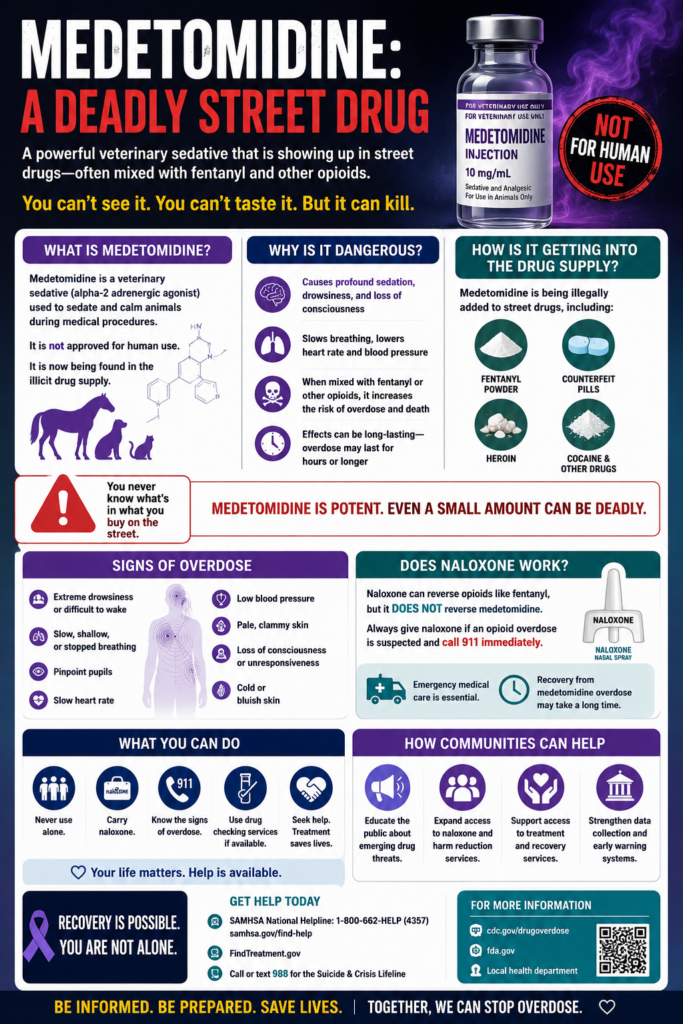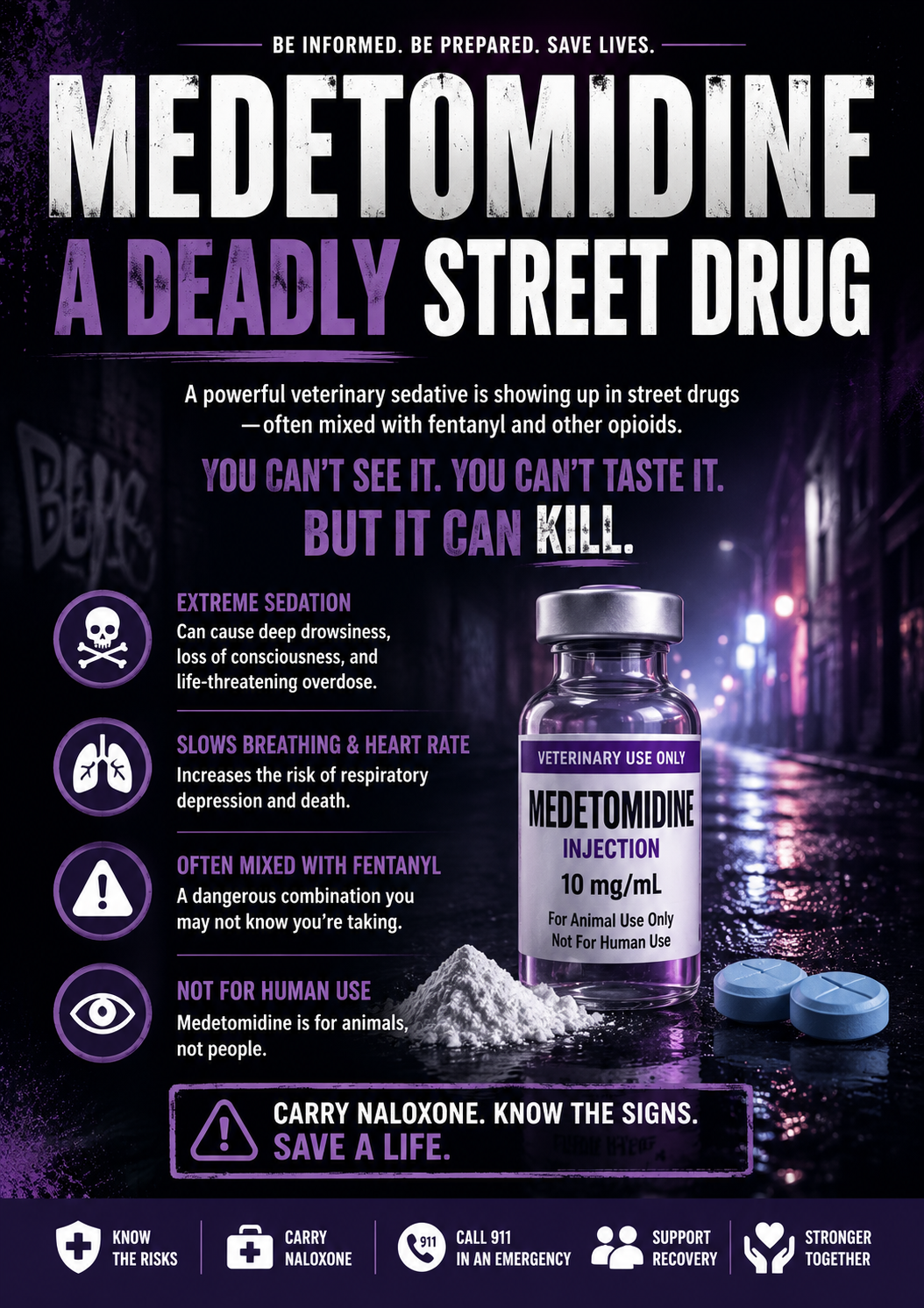
Medetomidine is an emerging and highly concerning substance that has recently been detected in the illicit drug supply, often mixed with fentanyl and other dangerous drugs. Originally developed as a veterinary sedative and anesthetic agent, medetomidine is not approved for human use. Its powerful sedative effects can cause extreme drowsiness, slowed breathing, low blood pressure, unconsciousness, and life-threatening overdose complications. Public health officials, healthcare providers, and first responders are increasingly concerned about its growing presence because many individuals are unaware that the drugs they purchase may contain medetomidine. Similar to previous concerns involving xylazine, the appearance of medetomidine highlights the ever-changing nature of the illicit drug market and the increasing risks faced by individuals who use street drugs.
Medetomidine: An Emerging and Dangerous Street Drug Threat
The illicit drug supply continues to evolve, creating new challenges for healthcare providers, first responders, and individuals affected by substance use disorders. One of the newest substances raising concern is medetomidine, a veterinary sedative that is increasingly being detected in the illegal drug market, often mixed with fentanyl and other illicit opioids. Similar to the emergence of xylazine (“tranq”), medetomidine is not approved for human use and can significantly increase the dangers associated with opioid use. Its presence in street drugs raises the risk of severe sedation, respiratory depression, overdose, prolonged unconsciousness, and complications that may not fully respond to standard overdose reversal strategies. Public health officials are closely monitoring its spread as reports of medetomidine-related overdoses continue to increase in some regions.
What Is Medetomidine?
Medetomidine is a veterinary medication classified as an alpha-2 adrenergic agonist. It is primarily used by veterinarians to provide:
- Sedation
- Pain control
- Anesthesia support
- Muscle relaxation in animals
It is chemically related to drugs such as Dexmedetomidine and xylazine, both of which produce significant sedation.
Why Is Medetomidine Dangerous?
1. Extreme Sedation
Medetomidine can cause profound drowsiness and loss of consciousness. When combined with fentanyl or other opioids, the sedative effects may become even more dangerous.
2. Increased Overdose Risk
Many people using street drugs are unaware that medetomidine has been added to the drug supply. This increases the risk of accidental overdose because users cannot accurately judge the potency of what they are taking.
3. Respiratory Depression
Although opioids remain the primary cause of respiratory depression in many overdoses, medetomidine may worsen breathing difficulties and contribute to life-threatening situations.
4. Prolonged Unconsciousness
Patients exposed to medetomidine may remain unconscious or heavily sedated for extended periods, increasing the risk of:
- Aspiration
- Injury
- Hypoxia
- Death
Relationship to Fentanyl
Public health agencies have reported medetomidine being detected alongside illicitly manufactured fentanyl. This combination is particularly dangerous because:
- Fentanyl can suppress breathing.
- Medetomidine causes profound sedation.
- Combined effects increase overdose severity.
- Recovery may be slower and more complicated.
Does Naloxone Work?
Naloxone remains essential during suspected overdoses because fentanyl or other opioids are often involved.
However, naloxone only reverses opioid effects. It does not reverse the sedative effects of medetomidine.
This means:
- Naloxone should still be administered.
- Multiple doses may be needed if opioids are present.
- Emergency medical care remains critical.
- Individuals may remain heavily sedated even after opioid reversal.
Warning Signs of Medetomidine Exposure
Possible symptoms include:
- Extreme drowsiness
- Unresponsiveness
- Slow heart rate
- Low blood pressure
- Confusion
- Slowed breathing
- Loss of consciousness
Because these symptoms overlap with opioid overdose, emergency treatment should never be delayed.
Public Health Concerns
Healthcare professionals are concerned because medetomidine represents another example of how the illicit drug market continually introduces new substances that increase overdose risks.
Challenges include:
- Limited public awareness
- Difficulty identifying exposure
- Lack of rapid testing
- Increased strain on emergency services
- Complex overdose management
Harm Reduction Strategies
Important harm reduction approaches include:
- Never using drugs alone
- Carrying naloxone
- Using drug checking services when available
- Seeking treatment for substance use disorders
- Calling emergency services immediately during suspected overdoses
- Educating communities about emerging drug threats
Treatment and Recovery
For individuals struggling with opioid use disorder, evidence-based treatments remain the safest and most effective option. These include:
- Buprenorphine
- Methadone
- Naltrexone
- Counseling and behavioral therapies
- Peer recovery support services
- Recovery support programs
Conclusion
Medetomidine is an emerging veterinary sedative increasingly detected in the illicit drug supply, often alongside fentanyl and other opioids. Its powerful sedative effects can increase the severity of overdoses, prolong unconsciousness, and complicate emergency treatment. Although naloxone remains a life-saving intervention when opioids are involved, it does not reverse the effects of medetomidine itself. As awareness grows, education, harm reduction efforts, early intervention, and access to evidence-based addiction treatment will be essential for reducing overdose deaths and protecting public health from this evolving drug threat.
Self-Management Strategies to Understand Medetomidine, a Deadly Street Drug
As medetomidine emerges in the illicit drug supply, individuals, families, and communities need to understand its dangers and how to reduce overdose risks. Medetomidine is a powerful veterinary sedative that is increasingly being found mixed with fentanyl and other illicit substances. Because it can cause profound sedation and may complicate overdose treatment, self-management strategies focused on education, awareness, safety planning, and recovery support are essential.
1. Educate Yourself About Emerging Drug Threats
Stay informed about new substances appearing in the illicit drug supply. Understanding what medetomidine is, how it affects the body, and why it is dangerous can help individuals make safer decisions and recognize potential overdose situations.
2. Understand That Street Drugs May Contain Unknown Substances
Many individuals are unaware that substances sold as heroin, fentanyl, cocaine, methamphetamine, or counterfeit pills may contain additional drugs such as medetomidine. Recognizing that the drug supply is unpredictable can help reduce false assumptions about safety.
3. Learn the Signs of Overdose
Become familiar with symptoms that may indicate opioid or sedative overdose, including:
- Extreme drowsiness
- Unresponsiveness
- Slow or absent breathing
- Blue or gray lips and fingernails
- Pinpoint pupils
- Slow heart rate
- Loss of consciousness
Recognizing these signs quickly can save lives.
4. Carry Naloxone
Although naloxone does not reverse medetomidine itself, it can reverse opioid-related respiratory depression when fentanyl or other opioids are involved. Individuals at risk of overdose and those around them should carry naloxone and know how to use it.
5. Always Call Emergency Services During an Overdose
Even if naloxone is administered, emergency medical care is still needed. Someone exposed to medetomidine may remain heavily sedated after opioid reversal and require professional monitoring and treatment.
6. Avoid Using Drugs Alone
Using alone increases the risk of a fatal overdose because no one is available to respond during an emergency. If someone chooses to use substances, having another person present who can call for help and administer naloxone may improve survival.
7. Utilize Drug Checking Services When Available
Some communities offer drug-checking programs that can identify substances present in drug samples. While these services cannot guarantee safety, they may provide important information about contamination or unexpected additives.
8. Monitor Personal Risk Factors
Individuals should be aware of factors that increase overdose risk, including:
- Reduced opioid tolerance
- Recent detoxification
- Mixing substances
- Previous overdoses
- Chronic medical conditions
- Mental health challenges
Understanding personal risk can encourage safer choices and earlier intervention.
9. Create an Emergency Response Plan
Have a plan that includes:
- Emergency contact numbers
- Naloxone availability
- Knowledge of overdose symptoms
- Access to local emergency services
- Trusted support persons
Preparation improves response times during emergencies.
10. Seek Reliable Information Sources
Obtain information from healthcare providers, public health agencies, addiction specialists, and evidence-based educational resources. Avoid relying solely on social media or unverified sources for information about emerging drug threats.
11. Engage in Recovery Support Services
Individuals struggling with substance use can benefit from:
- Counseling
- Peer recovery programs
- Support groups
- Recovery coaching
- Behavioral therapies
Recovery support helps reduce exposure to increasingly dangerous street drugs.
12. Consider Evidence-Based Treatment for Opioid Use Disorder
Effective treatment options include:
- Buprenorphine
- Methadone
- Naltrexone
These medications reduce cravings, improve treatment retention, and lower overdose risk.
13. Build a Strong Support Network
Supportive relationships with family members, healthcare providers, recovery peers, and community organizations can improve safety and encourage healthier decision-making.
14. Practice Stress Management and Healthy Coping Skills
Stress, trauma, anxiety, and depression can increase vulnerability to substance use. Healthy coping strategies include:
- Exercise
- Mindfulness
- Meditation
- Journaling
- Counseling
- Creative activities
- Social support
These skills support overall wellness and recovery.
15. Stay Engaged in Ongoing Recovery Planning
Recovery is an ongoing process. Regularly reviewing treatment goals, relapse prevention strategies, and support resources can help individuals remain focused on long-term health and safety.
Conclusion
Understanding the dangers of medetomidine is an important part of protecting yourself from today’s increasingly unpredictable drug supply. Through education, overdose awareness, naloxone access, emergency preparedness, harm reduction practices, and engagement in evidence-based treatment and recovery services, individuals can reduce their risk of overdose and make informed decisions about their health. Self-management empowers people to recognize emerging threats, seek help when needed, and build a safer path toward recovery and long-term wellness.
Family Support Strategies to Understand Medetomidine, a Deadly Street Drug
Families play a critical role in protecting loved ones from emerging drug threats such as medetomidine, a powerful veterinary sedative increasingly found in the illicit drug supply. Often mixed with fentanyl and other substances without the user’s knowledge, medetomidine can increase the risk of severe sedation, overdose, respiratory depression, and death. By becoming educated and actively involved, families can help reduce risks, recognize warning signs, and support prevention, treatment, and recovery efforts.
1. Educate Yourself About Medetomidine
Family members should learn what medetomidine is, how it is being found in street drugs, and why it is dangerous. Understanding that illicit drugs may contain unexpected substances can help families have informed conversations with loved ones.
2. Learn the Signs of Overdose
Recognizing overdose symptoms can save lives. Warning signs may include:
- Extreme drowsiness
- Difficulty waking the person
- Slow or absent breathing
- Blue or gray lips and fingernails
- Loss of consciousness
- Slow heart rate
- Unresponsiveness
Immediate emergency action is critical when these symptoms occur.
3. Understand the Role of Naloxone
Families should know that Naloxone can reverse opioid effects but does not reverse the sedative effects of medetomidine itself. Even after naloxone is administered, emergency medical care is still necessary.
4. Keep Naloxone Available
If a loved one is at risk for opioid exposure, families should:
- Obtain naloxone
- Learn how to administer it
- Keep it easily accessible
- Ensure multiple family members know how to use it
Preparation can significantly improve survival during an overdose emergency.
5. Encourage Honest Communication
Create a supportive environment where loved ones feel safe discussing substance use, cravings, relapse concerns, or exposure to dangerous drugs. Open communication often leads to earlier intervention and increased willingness to seek help.
6. Avoid Judgment and Stigmatizing Language
Fear of criticism can prevent individuals from seeking help. Families should focus on compassion, concern, and support rather than blame or shame when discussing substance use issues.
7. Stay Informed About Local Drug Trends
Community health departments, healthcare providers, and public health agencies often provide updates on emerging substances in the local drug supply. Staying informed helps families understand current risks and warning signs.
8. Develop an Emergency Response Plan
Families should have a clear plan that includes:
- Emergency phone numbers
- Naloxone locations
- Local hospital information
- Transportation options
- Designated emergency contacts
Having a plan can improve response times during a crisis.
9. Encourage Harm Reduction Practices
If a loved one continues to use substances, encourage safer practices such as:
- Never using alone
- Carrying naloxone
- Using drug-checking services when available
- Seeking medical attention after an overdose
While abstinence may be the ultimate goal, harm reduction can save lives.
10. Support Access to Treatment
Families can encourage engagement in evidence-based treatment programs, including:
- Counseling
- Behavioral therapies
- Recovery coaching
- Peer support services
- Medication-assisted treatment
Early treatment can reduce exposure to dangerous substances in the illicit drug market.
11. Learn About Medication-Assisted Treatment
Families should understand the benefits of medications such as:
- Buprenorphine
- Methadone
- Naltrexone
These treatments reduce cravings, improve recovery outcomes, and lower overdose risk.
12. Encourage Mental Health Support
Many individuals struggling with substance use also experience anxiety, depression, trauma, or other mental health conditions. Supporting access to mental health care can strengthen recovery and reduce relapse risk.
13. Connect With Family Support Groups
Support groups for families affected by addiction can provide:
- Education
- Emotional support
- Coping strategies
- Community resources
- Guidance from others with similar experiences
Families often benefit from learning they are not alone.
14. Promote Healthy Lifestyle Habits
Encourage healthy routines such as:
- Regular sleep
- Balanced nutrition
- Exercise
- Stress management
- Positive social connections
Healthy habits support both recovery and overall well-being.
15. Practice Self-Care as a Caregiver
Supporting someone with substance use challenges can be emotionally exhausting. Family members should prioritize:
- Personal wellness
- Healthy boundaries
- Counseling when needed
- Support groups
- Stress management techniques
Healthy caregivers are better able to provide effective and sustainable support.
Conclusion
Medetomidine represents a growing danger in the illicit drug supply, increasing the risk of overdose and complicating emergency treatment. Families can help protect their loved ones by learning about emerging drug threats, recognizing overdose signs, keeping naloxone available, encouraging treatment, and fostering open, nonjudgmental communication. Through education, preparedness, and compassionate support, families become powerful partners in overdose prevention, recovery, and long-term health.
Community Resource Strategies to Understand Medetomidine, a Deadly Street Drug
As medetomidine emerges as a dangerous contaminant in the illicit drug supply, communities play a critical role in educating the public, preventing overdoses, and connecting individuals to treatment and recovery services. Because many people are unaware that medetomidine may be mixed with fentanyl and other substances, community-based strategies are essential for increasing awareness, improving emergency preparedness, and reducing overdose-related deaths.
1. Develop Public Education Campaigns
Community organizations, health departments, and healthcare systems can provide educational campaigns that explain:
- What medetomidine is
- How it enters the illicit drug supply
- Its effects on the body
- Overdose risks
- Available prevention resources
Accurate information helps individuals make informed decisions and recognize emerging dangers.
2. Strengthen Community Health Department Outreach
Local health departments can distribute alerts, educational materials, and overdose prevention information when medetomidine is identified in the community. Early warning systems help healthcare providers, first responders, and residents stay informed about local drug trends.
3. Expand Naloxone Distribution Programs
Although Naloxone does not reverse medetomidine itself, it remains essential because opioids such as fentanyl are frequently involved. Communities can increase access by providing:
- Free naloxone kits
- Community training events
- Pharmacy-based distribution
- School and workplace education
4. Support Harm Reduction Programs
Harm reduction organizations can provide:
- Overdose prevention education
- Safer use information
- Drug-checking resources when available
- Naloxone distribution
- Referrals to treatment services
These programs help reduce overdose deaths while engaging individuals who may not yet be ready for treatment.
5. Promote Drug Checking Services
Where available, drug checking programs can help identify unexpected substances in street drugs. While no method guarantees safety, these services can increase awareness of contaminants such as medetomidine and other emerging substances.
6. Train First Responders and Healthcare Providers
Communities should support ongoing education for:
- Emergency medical personnel
- Law enforcement
- Emergency department staff
- Addiction specialists
- Community health workers
Training helps professionals recognize and manage complex overdoses involving multiple substances.
7. Establish Community Overdose Response Teams
Collaborative overdose response programs bring together healthcare providers, public health agencies, recovery specialists, and community organizations to coordinate prevention efforts and improve access to care following overdoses.
8. Expand Peer Recovery Support Services
Peer recovery specialists can educate individuals about the risks of medetomidine and other emerging substances while helping connect them to treatment, recovery resources, and support networks.
9. Increase Access to Substance Use Treatment
Communities should support access to evidence-based treatment programs, including:
- Outpatient treatment
- Intensive outpatient programs
- Residential treatment
- Counseling services
- Recovery support services
- Medication-assisted treatment
Reducing barriers to treatment decreases exposure to dangerous street drugs.
10. Promote Medication-Assisted Treatment (MAT)
Community education should highlight the effectiveness of:
- Buprenorphine
- Methadone
- Naltrexone
These medications reduce cravings, lower overdose risk, and improve recovery outcomes.
11. Utilize Schools and Educational Institutions
Schools, colleges, and universities can incorporate substance use education into health curricula and awareness programs. Early education helps young people understand the risks associated with emerging street drugs.
12. Engage Faith-Based and Community Organizations
Faith communities and local organizations often serve as trusted sources of support. They can host educational events, distribute resources, and connect individuals with treatment and recovery services.
13. Create Community Resource Directories
Comprehensive resource guides can help individuals quickly locate:
- Treatment programs
- Recovery support services
- Crisis intervention resources
- Naloxone distribution sites
- Mental health services
- Emergency contacts
Easy access to information improves community response.
14. Address Stigma Through Community Awareness
Reducing stigma encourages individuals to seek help earlier. Communities can promote messages that substance use disorders are medical conditions requiring treatment rather than moral failures deserving judgment.
15. Support Ongoing Research and Surveillance
Communities can collaborate with healthcare systems, universities, and public health agencies to monitor emerging drug threats and evaluate prevention strategies. Continued surveillance helps identify new substances and guides public health responses.
Conclusion
Medetomidine represents a growing public health concern due to its increasing presence in the illicit drug supply and its potential to worsen overdose outcomes. Community resources play a vital role in responding to this threat through education, harm reduction programs, naloxone distribution, treatment access, peer recovery support, and public awareness efforts. By working together, healthcare providers, public health agencies, schools, faith-based organizations, and community leaders can strengthen prevention efforts, reduce overdose deaths, and support healthier, safer communities.
Frequently Asked Questions
Here are some common questions:
1. What is medetomidine?
Answer: Medetomidine is a veterinary sedative and anesthetic medication used to calm animals and assist with medical procedures. It is not approved for human use but has recently been detected in the illicit drug supply.
2. Why is medetomidine considered dangerous?
Answer: Medetomidine can cause profound sedation, slowed breathing, low blood pressure, loss of consciousness, and life-threatening overdose complications, especially when combined with opioids such as fentanyl.
3. Is medetomidine intended for human use?
Answer: No. Medetomidine is designed for veterinary medicine and has not been approved for use in humans.
4. Why is medetomidine appearing in street drugs?
Answer: Drug manufacturers and dealers may add substances like medetomidine to increase sedative effects, alter potency, or extend the effects of illicit drugs. Users are often unaware it is present.
5. What drugs has medetomidine been found in?
Answer: Medetomidine has been detected in:
- Illicit fentanyl
- Heroin
- Counterfeit pills
- Other street drugs
The specific combinations can vary by region and over time.
6. How does medetomidine affect the body?
Answer: It acts on alpha-2 adrenergic receptors and can cause:
- Extreme drowsiness
- Sedation
- Slow heart rate
- Low blood pressure
- Reduced alertness
- Loss of consciousness
7. What are the signs of a medetomidine-related overdose?
Answer: Warning signs may include:
- Extreme sleepiness
- Unresponsiveness
- Slow or stopped breathing
- Slow heart rate
- Low blood pressure
- Blue or gray skin, lips, or fingernails
- Loss of consciousness
8. Why is medetomidine especially dangerous when mixed with fentanyl?
Answer: Fentanyl suppresses breathing, while medetomidine causes profound sedation. Together, they can significantly increase the risk of respiratory failure, overdose, and death.
9. Can someone tell if medetomidine is in a drug?
Answer: Usually not. Medetomidine is generally impossible to detect by appearance, taste, or smell, making accidental exposure a major concern.
10. Does naloxone work on medetomidine?
Answer: Naloxone does not reverse the sedative effects of medetomidine. However, naloxone should still be given during a suspected overdose because opioids such as fentanyl are often involved.
11. Should naloxone still be administered during a suspected overdose?
Answer: Yes. If opioid exposure is possible, naloxone should be administered immediately while emergency medical services are contacted.
12. Why might someone remain unconscious after receiving naloxone?
Answer: If medetomidine is present, naloxone may reverse the opioid effects but not the sedation caused by medetomidine. Emergency medical evaluation is still required.
13. Is medetomidine similar to xylazine?
Answer: Yes. Both are veterinary sedatives that act on alpha-2 receptors and are not approved for human use. Both have been identified as dangerous contaminants in the illicit drug supply.
14. Can medetomidine cause death?
Answer: Yes. Severe sedation, respiratory depression, lack of oxygen, aspiration, and complications from overdose can be fatal.
15. Are there specific antidotes for medetomidine overdose in humans?
Answer: Currently, there is no widely accepted, routinely used reversal medication specifically approved for medetomidine overdose in humans. Treatment is generally supportive and often requires emergency medical care.
16. Who is most at risk of exposure?
Answer: Individuals using illicit opioids, counterfeit pills, heroin, or other street drugs may unknowingly be exposed to medetomidine.
17. What should someone do if they suspect an overdose?
Answer: Immediately:
- Call 911 or emergency services.
- Administer naloxone if opioids may be involved.
- Monitor breathing.
- Provide rescue breathing if trained.
- Stay with the person until help arrives.
18. How can people reduce their risk of overdose?
Answer: Harm reduction strategies include:
- Never using drugs alone
- Carrying naloxone
- Using drug-checking services when available
- Seeking treatment for substance use disorders
- Being aware of local drug alerts
19. How are public health officials responding?
Answer: Public health agencies are increasing surveillance, issuing warnings, educating healthcare providers, expanding overdose prevention efforts, and monitoring the spread of medetomidine in communities.
20. What treatment options exist for opioid use disorder?
Answer: Evidence-based treatments include:
- Buprenorphine
- Methadone
- Naltrexone
- Counseling and behavioral therapies
- Peer recovery support services
21. Why is awareness of medetomidine important?
Answer: Many people do not realize that street drugs may contain unexpected and highly dangerous substances. Awareness can improve overdose prevention, encourage safer behaviors, and help communities respond more effectively.
22. What is the most important message about medetomidine?
Answer: Medetomidine is a powerful veterinary sedative that is increasingly appearing in the illicit drug supply. Because users often do not know it is present, it significantly increases overdose risk. Carrying naloxone, recognizing overdose signs, seeking emergency help, and accessing evidence-based treatment can save lives.
Conclusion
The emergence of medetomidine in the illicit drug supply represents a serious public health threat that can increase overdose severity and complicate emergency treatment efforts. Because it is often combined with fentanyl and other substances, users may unknowingly expose themselves to a highly dangerous combination of sedative and opioid effects. Although naloxone remains a critical tool for reversing opioid-related overdoses, it does not reverse the effects of medetomidine itself, making prompt medical intervention essential. Continued public education, harm reduction strategies, overdose prevention efforts, and expanded access to evidence-based addiction treatment are vital for reducing the risks associated with this deadly street drug. As communities work together to address emerging drug threats, awareness and early intervention remain key components in protecting lives and promoting recovery.
Video: Drug Checking Can’t Even Detect This #medetomidine #fentanyl #drugsafety