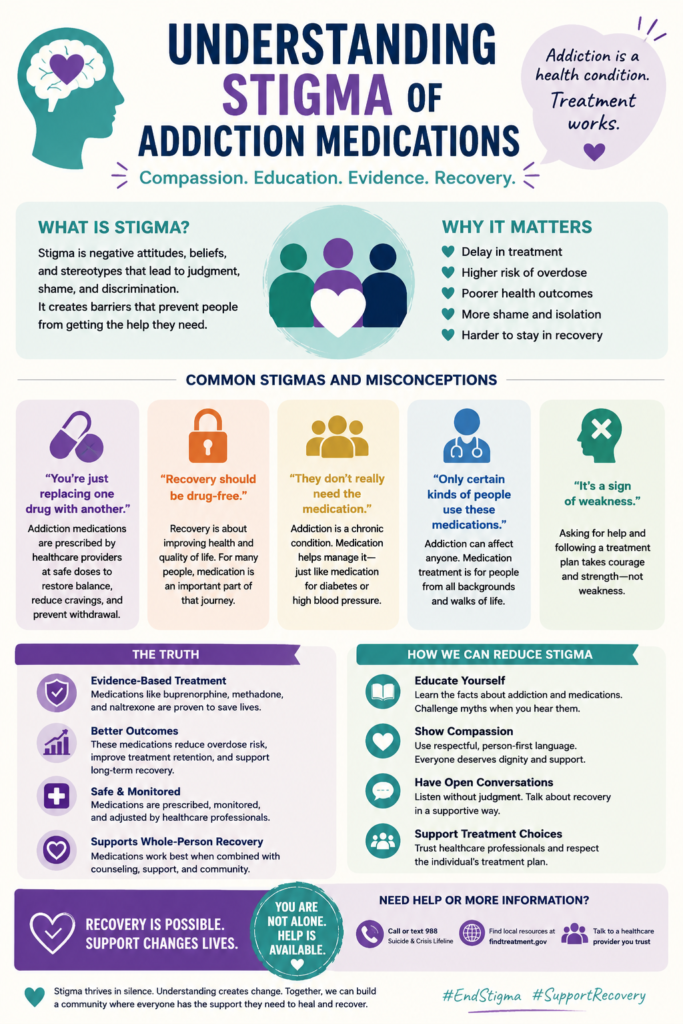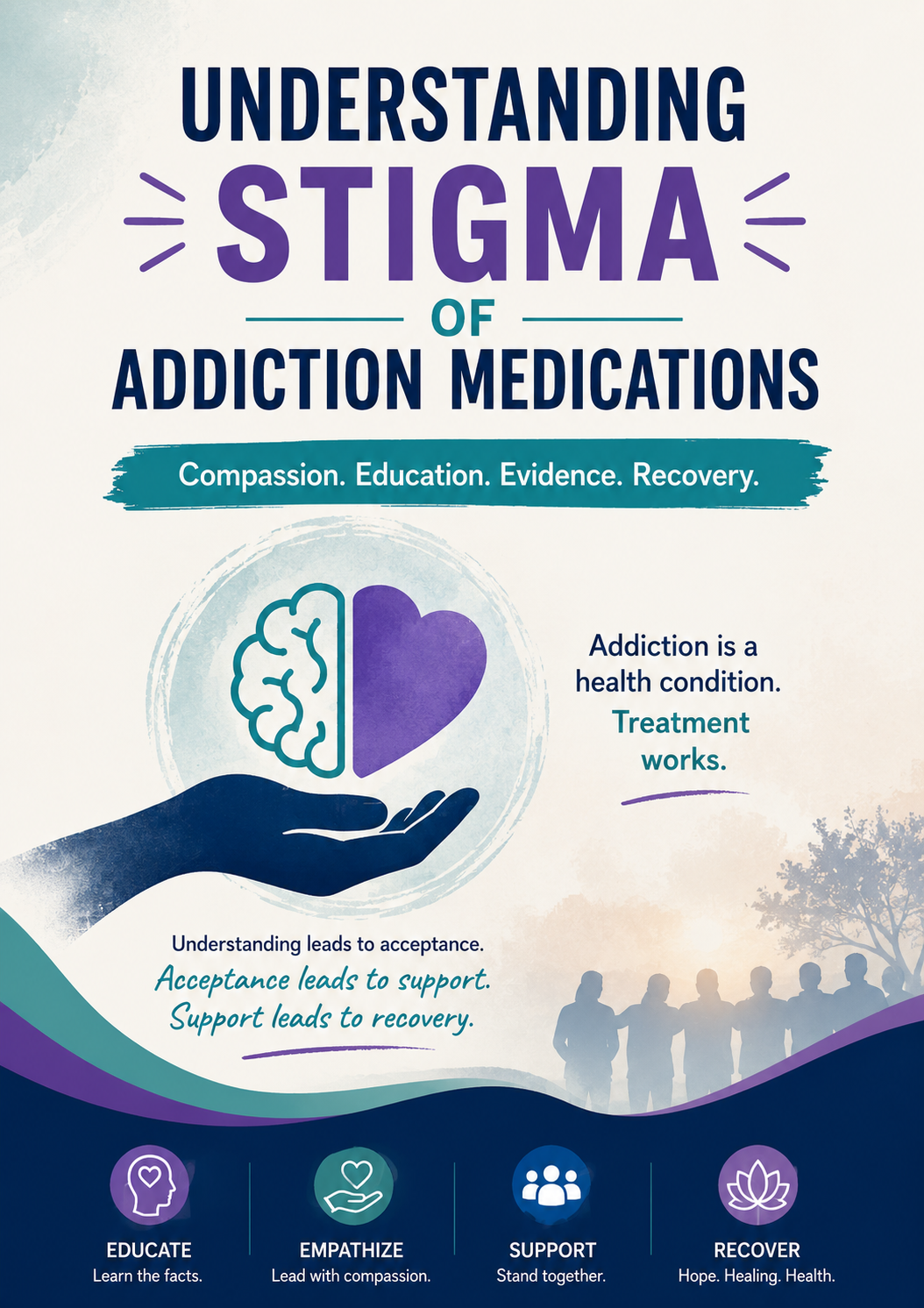
Stigma surrounding medications used to treat addiction remains one of the most significant barriers to recovery. Despite decades of research demonstrating the effectiveness of medications for opioid use disorder, many individuals continue to face judgment, misunderstanding, and discrimination when seeking treatment. Misconceptions such as “replacing one drug with another” or the belief that recovery must be completely medication-free can discourage people from accessing life-saving care. These negative attitudes may come from family members, friends, healthcare providers, employers, or even recovery communities. Understanding the origins and impact of stigma is essential for promoting evidence-based treatment, supporting individuals in recovery, and improving public health outcomes. By increasing education and awareness, communities can help create a more supportive environment where individuals feel empowered to pursue the treatment that best meets their needs.
Stigma About Medications for Treating Opioid Use Disorder (MOUD)
Introduction
Despite strong evidence that medications can help people recover from opioid addiction, stigma remains a major barrier to treatment. Many individuals who could benefit from medications such as Methadone, Buprenorphine, and Naltrexone avoid treatment because of negative attitudes from society, healthcare providers, family members, employers, and even some recovery communities. This stigma can prevent people from seeking care, remaining in treatment, and achieving long-term recovery.
Common Stigmas
“You’re Just Replacing One Drug With Another”
One of the most common misconceptions is that medications for opioid use disorder (MOUD) simply substitute one addiction for another. In reality, these medications are prescribed at controlled doses and are monitored by healthcare professionals. They help stabilize brain chemistry, reduce cravings, and prevent withdrawal symptoms without producing the intense highs associated with opioid misuse.
“Recovery Should Be Drug-Free”
Some people believe that true recovery requires complete abstinence from all medications. This belief can discourage individuals from using treatments that have been shown to reduce overdose deaths and improve recovery outcomes. Recovery is not defined by whether a person takes medication; it is defined by improved health, functioning, and quality of life.
Negative Perceptions Within Recovery Communities
Individuals taking methadone or buprenorphine may encounter judgment from peers who view medication-assisted treatment as inferior to abstinence-based recovery. This can create feelings of shame and isolation, making it harder for individuals to remain engaged in treatment.
Healthcare Provider Bias
Some healthcare professionals may hold outdated beliefs about addiction treatment or lack adequate training regarding MOUD. These biases can result in fewer referrals, delayed treatment, or inadequate support for patients seeking recovery.
Public Misunderstanding
Media portrayals and societal attitudes often frame addiction as a moral failure rather than a chronic medical condition. As a result, medications used to treat opioid use disorder may be viewed negatively, despite being supported by extensive scientific research.
Consequences of Stigma
Stigma can lead to:
- Delayed treatment seeking
- Increased risk of relapse
- Higher overdose risk
- Poor treatment retention
- Reduced self-esteem and self-worth
- Social isolation
- Discrimination in employment, housing, and healthcare
Reducing Stigma
Reducing stigma requires education and awareness. Addiction should be understood as a chronic medical condition similar to diabetes or hypertension. Medications are evidence-based treatments that help many people achieve and maintain recovery. Healthcare providers, families, communities, and recovery organizations can help by using person-first language, supporting treatment choices, and promoting accurate information about opioid use disorder.
Conclusion
Stigma surrounding medications for opioid addiction remains one of the greatest obstacles to effective treatment. Misconceptions about medication-assisted recovery can prevent people from accessing life-saving care. By increasing education, challenging stereotypes, and recognizing opioid use disorder as a treatable medical condition, society can help more individuals access treatment, remain in recovery, and rebuild healthy, meaningful lives.
Why Are Evidence-Based Medications for Addiction Underutilized?
Evidence-based medications for addiction, particularly for opioid use disorder (OUD), are among the most effective treatments available. Yet many people who could benefit from them never receive them. The underutilization of these medications is due to a combination of stigma, systemic barriers, workforce shortages, policy issues, and patient-related challenges.
1. Stigma and Misunderstanding
Stigma remains one of the largest barriers. Many people—including patients, family members, healthcare providers, employers, and some recovery groups—believe medications such as Buprenorphine and Methadone simply replace one addiction with another. This misconception discourages treatment seeking and can lead to feelings of shame among patients.
2. Limited Access to Providers
Many communities, especially rural areas, have few clinicians trained in addiction medicine. Patients may need to travel long distances for treatment or face long waiting lists before receiving care.
3. Healthcare System Barriers
Addiction treatment is often separated from primary care and mental health services. Patients may have to navigate multiple agencies, appointments, and providers, making treatment more difficult to access and maintain.
4. Insurance and Financial Challenges
Although coverage has improved, some patients still face high copays, prior authorization requirements, limited provider networks, or transportation costs. These barriers can delay or prevent treatment.
5. Lack of Education and Training
Many healthcare professionals receive limited training in addiction treatment during their education. As a result, some clinicians may feel uncomfortable prescribing medications or may underestimate their effectiveness.
6. Regulatory and Policy Obstacles
Historically, strict regulations surrounding opioid treatment programs limited access to medications such as methadone. Although some regulations have eased, administrative burdens and varying state policies can still create barriers.
7. Co-Occurring Mental Health Conditions
Many individuals with addiction also experience depression, anxiety, trauma, or other mental health disorders. When these conditions are not adequately addressed, engagement in addiction treatment may be more difficult.
8. Fear and Misinformation
Patients may worry about side effects, dependence, withdrawal, or long-term medication use. Misinformation from social media, friends, or community members can reinforce these fears.
9. Recovery Culture Conflicts
Some treatment programs and recovery communities emphasize abstinence-only approaches and may discourage medication use. Individuals may feel pressured to stop medications prematurely despite evidence supporting longer-term treatment for many patients.
10. Social Determinants of Health
Housing instability, unemployment, lack of transportation, legal issues, and limited social support can make it difficult for individuals to start or remain engaged in treatment.
Why This Matters
Research consistently shows that medications for opioid use disorder reduce overdose deaths, decrease illicit opioid use, improve treatment retention, reduce criminal justice involvement, and improve overall quality of life. Yet only a fraction of people with OUD receive these treatments.
Moving Forward
Improving utilization requires:
- Expanding provider training
- Reducing stigma
- Integrating addiction treatment into primary care
- Increasing insurance coverage
- Expanding telehealth services
- Improving public education
- Supporting patient-centered recovery approaches
- Addressing social and economic barriers
When evidence-based medications are readily available and supported, more individuals can access treatment, remain engaged in recovery, and significantly reduce their risk of overdose and death.
Self-Management Strategies to Understand and Overcome Stigma About Addiction Medications
Individuals taking medications for addiction treatment may face stigma from society, family members, friends, employers, healthcare providers, and even themselves. Learning to recognize and manage stigma can help people stay engaged in treatment and recovery.
1. Educate Yourself About Your Medication
Understanding how medications work can reduce self-doubt and increase confidence in treatment decisions. Learn about the benefits, risks, and evidence supporting medications such as Buprenorphine, Methadone, and Naltrexone. Knowing that these medications reduce overdose risk and improve recovery outcomes can help counter misinformation.
2. Challenge Internalized Stigma
Many people begin to believe negative messages about addiction or medication treatment. Remind yourself that addiction is a medical condition, not a moral failure. Taking prescribed medication to manage a health condition is a sign of responsibility and self-care, not weakness.
3. Practice Positive Self-Talk
Replace self-critical thoughts with realistic and supportive statements:
- “I am following a treatment plan that supports my recovery.”
- “Medication is helping me improve my health and quality of life.”
- “My recovery journey is valid, regardless of others’ opinions.”
4. Build a Supportive Network
Seek support from people who understand recovery and evidence-based treatment. This may include healthcare providers, counselors, peer recovery specialists, support groups, trusted friends, and family members who respect your treatment choices.
5. Learn to Respond to Misconceptions
Prepare simple responses when others question your treatment:
- “This medication is prescribed by my healthcare provider.”
- “Research shows it reduces overdose risk and helps people stay in recovery.”
- “Recovery looks different for everyone.”
Having prepared responses can reduce anxiety during difficult conversations.
6. Focus on Personal Recovery Goals
Rather than trying to meet others’ expectations, focus on your own progress. Track improvements in health, relationships, employment, education, and overall well-being. Recovery success is measured by positive life changes, not by others’ approval.
7. Connect With Others Using Medication-Assisted Recovery
Peer support can normalize experiences and reduce feelings of isolation. Hearing success stories from others using medication can strengthen confidence and resilience.
8. Develop Stress-Management Skills
Stigma can create emotional distress. Healthy coping strategies include:
- Mindfulness and meditation
- Physical activity
- Journaling
- Deep breathing exercises
- Counseling or therapy
- Engaging in meaningful hobbies
These practices can reduce stress and improve emotional well-being.
9. Set Boundaries With Unsupportive Individuals
Not everyone will understand addiction treatment. It is appropriate to limit discussions about your medical care with people who are judgmental, disrespectful, or repeatedly undermine your recovery efforts.
10. Celebrate Recovery Progress
Acknowledge achievements, both large and small. Remaining engaged in treatment, attending appointments, maintaining sobriety goals, improving relationships, or achieving personal milestones are all signs of success worth recognizing.
Conclusion
Managing stigma begins with understanding that evidence-based addiction medications are legitimate medical treatments. Through education, self-compassion, supportive relationships, healthy coping skills, and confidence in your recovery plan, individuals can reduce the impact of stigma and remain focused on long-term health and recovery. Recovery is not defined by how others view your treatment—it is defined by the positive changes you make in your life.
Family Support Strategies to Understand Stigma About Addiction Medications
Families play a critical role in helping loved ones overcome stigma related to medications for addiction treatment. When family members understand the science behind addiction and medication-assisted treatment, they can become powerful allies in recovery rather than unintentional sources of shame or judgment.
1. Learn About Addiction as a Medical Condition
Family members should educate themselves about addiction as a chronic brain disorder rather than a moral failing or lack of willpower. Understanding that addiction changes brain function can help reduce blame and increase compassion.
2. Learn How Addiction Medications Work
Educate yourself about medications such as Buprenorphine, Methadone, and Naltrexone. These medications are evidence-based treatments that reduce cravings, prevent withdrawal symptoms, lower overdose risk, and improve recovery outcomes.
3. Challenge Common Myths
Families can help combat stigma by recognizing and rejecting misconceptions such as:
- “They’re just replacing one drug with another.”
- “Recovery should be medication-free.”
- “If they really wanted recovery, they wouldn’t need medication.”
Understanding that medications are part of legitimate medical treatment can help replace judgment with support.
4. Use Person-First Language
Words matter. Avoid labels such as “addict,” “junkie,” or “drug abuser.” Instead, use respectful language such as:
- Person with opioid use disorder
- Person in recovery
- Individual receiving treatment
Person-first language reduces stigma and promotes dignity.
5. Support Treatment Decisions
Respect treatment plans developed by healthcare professionals. Family members do not need to fully understand every aspect of treatment to support a loved one’s efforts to improve their health.
6. Encourage Open Communication
Create a safe environment where loved ones can discuss fears, challenges, and treatment experiences without fear of criticism. Listening without judgment helps build trust and strengthens recovery.
7. Celebrate Progress Rather Than Focusing on Medication Use
Focus on positive outcomes such as:
- Reduced substance use
- Improved physical and mental health
- Better family relationships
- Employment or educational success
- Increased stability and functioning
Recovery progress is more important than whether medication is part of the treatment plan.
8. Participate in Family Education Programs
Family support groups, counseling, and educational workshops can help family members better understand addiction, recovery, and medication treatment. These programs also provide tools for effective communication and support.
9. Advocate Against Stigma
Families can challenge stigma when they hear inaccurate statements from friends, coworkers, or community members. Sharing factual information can help change attitudes and create a more supportive environment for recovery.
10. Practice Patience and Realistic Expectations
Recovery is often a long-term process. Some individuals may need medication for months or years, while others may require ongoing treatment. Families can support recovery by focusing on long-term health and safety rather than expecting quick fixes.
Conclusion
Family support can significantly reduce the impact of stigma surrounding addiction medications. Through education, respectful communication, acceptance of evidence-based treatment, and advocacy, families can help loved ones feel supported rather than judged. When families understand that medications are legitimate tools for recovery, they contribute to better treatment engagement, improved outcomes, and stronger long-term recovery.
Community Resource Strategies to Understand and Reduce Stigma About Addiction Medications
Communities play an essential role in shaping attitudes toward addiction treatment. When community organizations, healthcare systems, recovery groups, schools, employers, and faith-based organizations promote accurate information about addiction medications, they can help reduce stigma and improve access to life-saving care.
1. Increase Public Education
Community education campaigns can help people understand that addiction is a chronic medical condition and that medications are evidence-based treatments. Educational workshops, public forums, social media campaigns, and community health fairs can provide accurate information about medications such as Buprenorphine, Methadone, and Naltrexone.
2. Expand Access to Recovery Community Organizations
Recovery community organizations can provide peer support, education, advocacy, and resources for individuals receiving medication treatment. These organizations help normalize medication-assisted recovery and reduce feelings of isolation.
3. Promote Peer Recovery Support Services
Certified peer recovery specialists who have lived experience with addiction and recovery can share personal stories, provide encouragement, and help individuals navigate treatment systems. Peer support can challenge myths and demonstrate that recovery with medication is possible and effective.
4. Develop Community-Based Support Groups
Communities can offer support groups that welcome individuals using addiction medications. Inclusive groups help ensure that people receiving medication treatment are not excluded or judged because of their treatment choices.
5. Train Healthcare Providers
Hospitals, clinics, pharmacies, and healthcare organizations can provide continuing education on addiction medicine and stigma reduction. Better-informed providers are more likely to offer evidence-based treatment and support patients without judgment.
6. Engage Faith-Based Organizations
Faith communities can help reduce stigma by promoting compassion, education, and support rather than shame. Faith leaders who understand addiction treatment can provide valuable emotional and spiritual support while encouraging access to medical care.
7. Improve Workplace Education
Employers can provide educational programs about substance use disorders and recovery. Workplace policies that support treatment and recovery can reduce discrimination and help individuals remain employed while receiving care.
8. Utilize Local Health Departments
Public health departments can distribute educational materials, sponsor community events, and collaborate with healthcare organizations to increase awareness about the effectiveness of addiction medications and the dangers of untreated opioid use disorder.
9. Partner With Schools and Universities
Educational institutions can incorporate substance use disorder education into health programs and professional training curricula. Early education can help reduce stigma before misconceptions become deeply rooted.
10. Share Recovery Success Stories
Community events, local media, recovery organizations, and social media campaigns can highlight individuals who have achieved recovery while using medication treatment. Personal stories often reduce prejudice more effectively than statistics alone.
11. Improve Access to Treatment Resources
Communities can support:
- Medication treatment programs
- Integrated behavioral health services
- Telehealth addiction services
- Transportation assistance
- Recovery housing
- Case management services
Increasing access helps normalize treatment and demonstrates community support for recovery.
12. Advocate for Evidence-Based Policies
Community leaders and organizations can support policies that expand access to treatment, reduce barriers to care, improve insurance coverage, and promote public education about addiction medications.
Conclusion
Reducing stigma surrounding addiction medications requires a community-wide effort. Through public education, peer support services, healthcare provider training, inclusive recovery programs, faith-based involvement, workplace initiatives, and advocacy, communities can create environments where evidence-based treatment is understood, accepted, and supported. When communities embrace addiction medications as legitimate medical treatments, more individuals can access care, remain in recovery, and lead healthier, more productive lives.
Frequently Asked Questions
Here are some common questions:
1. What is stigma related to addiction medications?
Answer: Stigma refers to negative attitudes, stereotypes, and misconceptions about people who use medications to treat addiction. It often results in judgment, discrimination, and barriers to treatment.
2. What are addiction medications?
Answer: Addiction medications are evidence-based treatments used to help people recover from substance use disorders. For opioid use disorder, common medications include Buprenorphine, Methadone, and Naltrexone.
3. Why is there stigma surrounding addiction medications?
Answer: Many people misunderstand addiction and view it as a personal weakness rather than a medical condition. Misconceptions about addiction medications contribute to negative attitudes and judgment.
4. Are people just replacing one drug with another?
Answer: No. Addiction medications are prescribed and monitored by healthcare professionals. They stabilize brain function, reduce cravings, and help prevent relapse without producing the harmful effects associated with substance misuse.
5. Is recovery only successful if someone is medication-free?
Answer: No. Recovery is about improving health, functioning, and quality of life. For many individuals, medication is an important part of long-term recovery.
6. Do addiction medications really work?
Answer: Yes. Research consistently shows that addiction medications reduce overdose deaths, improve treatment retention, decrease illicit drug use, and support long-term recovery.
7. How does stigma affect people seeking treatment?
Answer: Stigma can discourage individuals from seeking help, remaining in treatment, or openly discussing their recovery. It may also contribute to shame, isolation, and reduced self-esteem.
8. Can stigma increase the risk of relapse?
Answer: Yes. When individuals feel judged or unsupported, they may avoid treatment, discontinue medication, or withdraw from recovery supports, increasing relapse risk.
9. Why do some recovery groups oppose medication use?
Answer: Some recovery communities emphasize abstinence-only approaches and may misunderstand the role of medications in recovery. However, many recovery organizations now recognize medication-assisted treatment as a valid recovery pathway.
10. Can healthcare providers contribute to stigma?
Answer: Unfortunately, yes. Some healthcare providers may have limited training in addiction medicine or hold outdated beliefs that affect how they view medication treatment.
11. How can families reduce stigma?
Answer: Families can educate themselves about addiction, learn how medications work, use supportive language, and encourage loved ones to follow their treatment plans.
12. What is internalized stigma?
Answer: Internalized stigma occurs when individuals begin believing negative stereotypes about themselves because of their addiction or treatment, leading to shame and self-doubt.
13. How can individuals overcome internalized stigma?
Answer: Education, counseling, peer support, self-compassion, and focusing on recovery achievements can help individuals challenge negative beliefs and build confidence.
14. What role does language play in stigma?
Answer: Language strongly influences attitudes. Using person-first language, such as “person with a substance use disorder,” instead of labels like “addict,” promotes dignity and respect.
15. How can communities reduce stigma?
Answer: Communities can provide education, support peer recovery services, promote public awareness campaigns, and increase access to evidence-based treatment.
16. Why is medication treatment considered evidence-based?
Answer: Evidence-based treatments have been extensively studied and shown to improve health outcomes and support recovery.
17. Are addiction medications safe?
Answer: When prescribed and monitored appropriately, addiction medications are generally safe and effective. Healthcare providers regularly assess patients to ensure treatment remains beneficial.
18. How long do people stay on addiction medications?
Answer: Treatment duration varies. Some individuals use medication for months, while others benefit from longer-term treatment. Decisions should be made with healthcare providers based on individual needs.
19. What should I say to someone who criticizes addiction medications?
Answer: You can explain that addiction is a medical condition and that medications are evidence-based treatments proven to save lives and improve recovery outcomes.
20. What is the most important thing to remember about addiction medication stigma?
Answer: Addiction medications are legitimate medical treatments. Reducing stigma through education, compassion, and understanding can help more people access life-saving care and achieve lasting recovery.
Conclusion
Understanding stigma surrounding addiction medications is critical to improving treatment access, recovery outcomes, and overall well-being for individuals with substance use disorders. Evidence-based medications have been proven to reduce cravings, prevent relapse, lower overdose risk, and support long-term recovery, yet misconceptions continue to prevent many people from receiving these effective treatments. Reducing stigma requires education, compassion, and a willingness to view addiction as a chronic medical condition rather than a moral failing. Families, healthcare providers, recovery organizations, employers, and communities all play important roles in challenging stereotypes and supporting individuals in treatment. When society embraces evidence-based approaches to addiction care, more people can access the resources they need to achieve lasting recovery and lead healthier, more productive lives.
Video: The Stigma Keeping Addicts From Getting Better #endthestigma #mentalhealthmatters