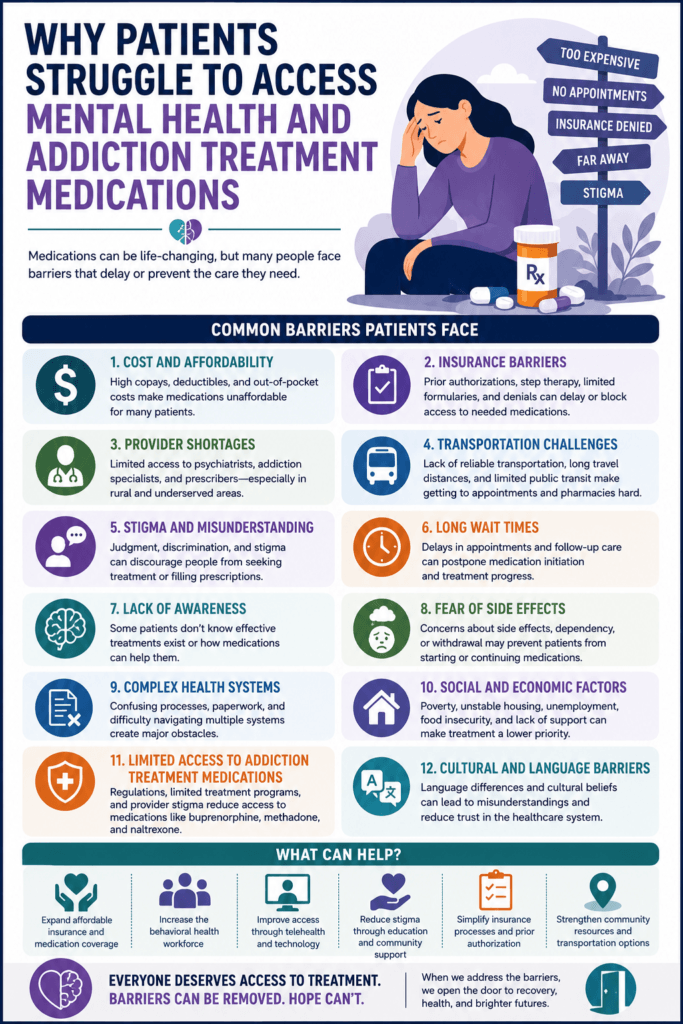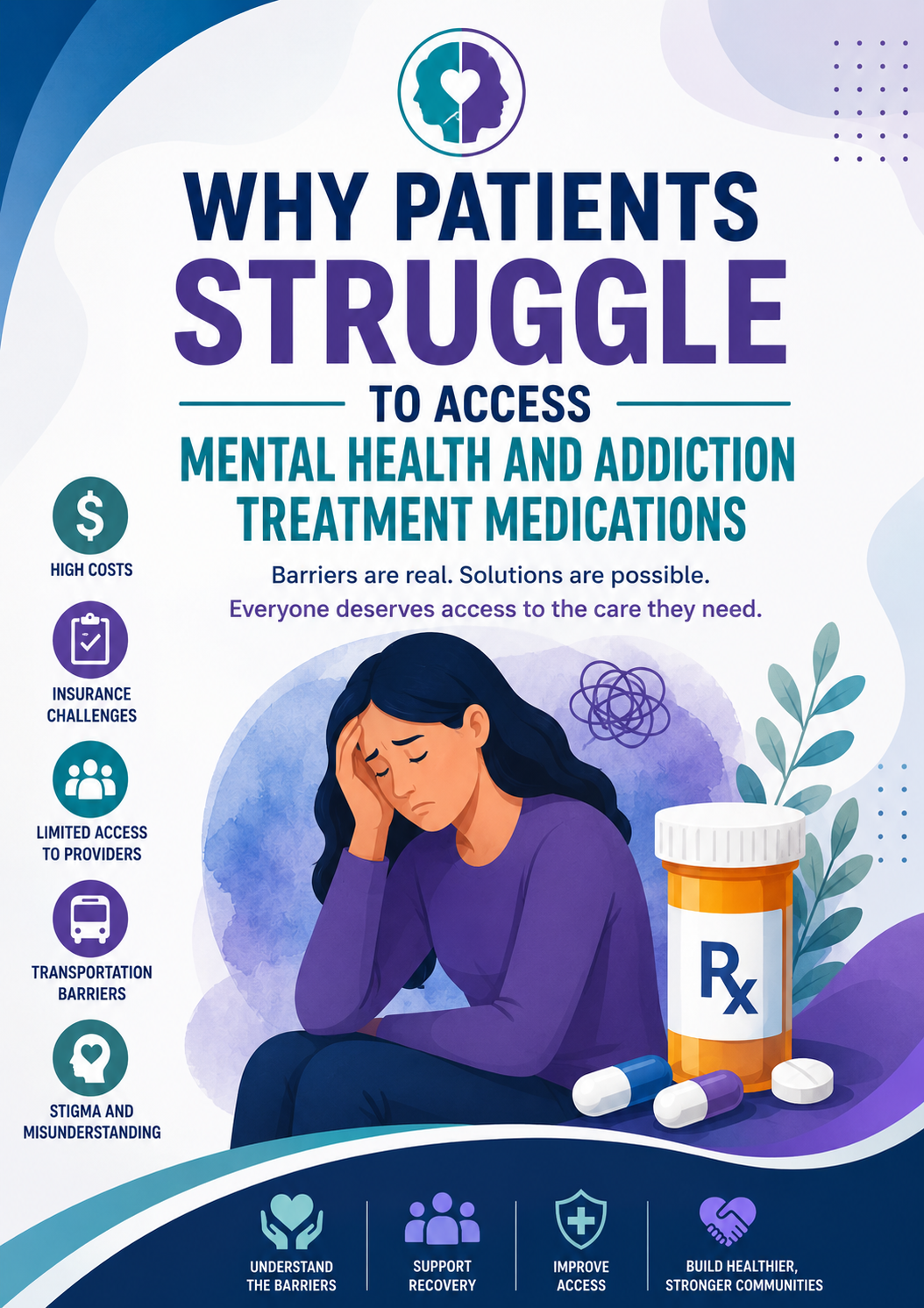
Mental health conditions and substance use disorders affect millions of people worldwide, yet many individuals struggle to obtain the medications that could significantly improve their health, stability, and quality of life. Effective treatments are available for conditions such as depression, anxiety, bipolar disorder, schizophrenia, alcohol use disorder, and opioid use disorder, but access is often limited by financial barriers, insurance restrictions, provider shortages, transportation challenges, and stigma. These obstacles can delay treatment, worsen symptoms, increase the risk of relapse or hospitalization, and contribute to poor long-term outcomes. Understanding why patients face difficulties accessing mental health and addiction treatment medications is essential for developing solutions that improve care and support recovery.
Why Patients Struggle to Access Mental Health and Addiction Treatment Medications
Mental health and substance use disorders affect millions of people, yet many patients continue to face significant barriers when trying to access treatment medications. Medications can play a critical role in managing conditions such as depression, anxiety, bipolar disorder, schizophrenia, alcohol use disorder, and opioid use disorder. Despite their effectiveness, many individuals encounter obstacles that delay treatment, reduce adherence, or prevent them from receiving medication altogether. Understanding these barriers is essential for improving healthcare access and supporting recovery.
1. Insurance and Financial Barriers
One of the most common challenges is the cost of treatment. Even when patients have insurance, medications may require high copayments, prior authorizations, or step therapy requirements before coverage is approved. Individuals without insurance may face even greater difficulties, as many psychiatric and addiction medications can be expensive. Financial strain often forces patients to delay treatment, skip doses, or discontinue medications altogether.
2. Provider Shortages
Many communities face shortages of psychiatrists, addiction medicine specialists, and behavioral health providers. Rural areas are particularly affected, often requiring patients to travel long distances for appointments. Limited provider availability can lead to lengthy wait times, delaying medication initiation and ongoing treatment management.
3. Stigma and Misunderstanding
Stigma remains a significant barrier to accessing mental health and addiction treatment. Some individuals fear being judged by family members, employers, healthcare providers, or their communities. Others may incorrectly believe that needing medication reflects personal weakness rather than a medical condition requiring treatment. This stigma can discourage people from seeking care or filling prescribed medications.
4. Prior Authorization and Administrative Requirements
Insurance companies frequently require prior authorization before approving certain medications. While intended to control costs and ensure appropriate use, these requirements can delay treatment for days or weeks. Patients experiencing mental health crises or active substance use disorders may be particularly vulnerable during these delays.
5. Transportation and Geographic Challenges
Many patients lack reliable transportation to healthcare appointments or pharmacies. Individuals living in rural areas may have limited access to behavioral health providers and pharmacies that stock specialized medications, creating additional obstacles to obtaining treatment.
6. Limited Access to Addiction Treatment Medications
Access to medications for substance use disorders can be especially difficult. Medications such as Buprenorphine, Methadone, and Naltrexone have strong evidence supporting their effectiveness, yet many patients still struggle to obtain them. Regulatory requirements, limited treatment programs, provider shortages, and stigma toward medication-assisted treatment often reduce availability.
7. Lack of Awareness and Education
Some patients are unaware that effective medications exist for mental health conditions and substance use disorders. Others may not understand how medications work, their potential benefits, or the importance of continuing treatment. Misinformation from social media, peers, or unreliable sources can further discourage treatment engagement.
8. Fear of Side Effects
Concerns about medication side effects can prevent patients from starting or continuing treatment. Some individuals worry about weight gain, sedation, dependency, emotional blunting, or withdrawal symptoms. Without proper education and support from healthcare providers, these concerns may lead patients to stop medications prematurely.
9. Complex Healthcare Systems
Navigating healthcare systems can be overwhelming. Patients may struggle to understand insurance benefits, referral requirements, provider networks, medication formularies, and treatment options. Individuals with severe mental illness or active addiction may face additional challenges managing these complex systems.
10. Social Determinants of Health
Factors such as poverty, unstable housing, unemployment, food insecurity, and lack of social support can significantly affect access to medications. When individuals are focused on meeting basic survival needs, obtaining and maintaining treatment may become a lower priority despite its importance.
11. Cultural and Language Barriers
Language differences, cultural beliefs about mental illness and addiction, and lack of culturally competent care can create misunderstandings between patients and providers. These barriers may reduce trust, limit treatment engagement, and contribute to lower medication adherence.
12. Potential Solutions
Improving access to mental health and addiction medications requires a multifaceted approach, including:
- Expanding insurance coverage and reducing financial barriers
- Increasing the behavioral health workforce
- Expanding telehealth services
- Reducing stigma through public education
- Simplifying prior authorization processes
- Improving transportation and pharmacy access
- Enhancing patient education about treatment options
- Expanding access to medication-assisted treatment programs
- Addressing social determinants of health
- Promoting culturally responsive healthcare services
Conclusion
Patients struggle to access mental health and addiction treatment medications for many reasons, including financial challenges, provider shortages, stigma, administrative barriers, transportation difficulties, and social inequities. These obstacles can delay care, worsen symptoms, and increase the risk of hospitalization, relapse, overdose, and other adverse outcomes. By addressing these barriers through policy changes, healthcare system improvements, and community support, healthcare providers and policymakers can help ensure that individuals receive timely access to the medications and treatments needed for recovery and long-term wellness.
Self-Management Strategies to Understand Why Patients Struggle to Access Mental Health and Addiction Treatment Medications
Accessing medications for mental health conditions and substance use disorders can be challenging due to financial barriers, healthcare system complexities, provider shortages, and stigma. While many obstacles exist, individuals can take proactive steps to better navigate these challenges and improve access to treatment. Self-management strategies empower patients to become informed participants in their healthcare and advocate for their treatment needs.
1. Learn About Your Condition and Treatment Options
Understanding your diagnosis and available treatment options is an important first step. Learn about the benefits, risks, and expected outcomes of prescribed medications. Reliable information helps patients make informed decisions and reduces fear or confusion about treatment.
2. Understand Your Insurance Coverage
Review your insurance benefits carefully, including medication formularies, copayments, deductibles, and prior authorization requirements. Knowing what medications are covered can help prevent unexpected costs and treatment delays.
3. Keep Organized Medical Records
Maintain a personal record of diagnoses, medications, prescriptions, insurance information, healthcare providers, and treatment history. Organized records can make it easier to address insurance issues, transfer care, or communicate with healthcare professionals.
4. Ask Questions During Appointments
Patients should feel comfortable discussing concerns with their healthcare providers. Questions may include:
- Why is this medication recommended?
- Are there lower-cost alternatives?
- What side effects should I expect?
- What should I do if insurance denies coverage?
- How long before I notice improvement?
Active participation helps patients become partners in their treatment.
5. Learn About Medication Assistance Programs
Many pharmaceutical companies, nonprofit organizations, and healthcare systems offer medication assistance programs for eligible individuals. These programs may reduce costs or provide medications at little to no charge for patients experiencing financial hardship.
6. Develop Strong Self-Advocacy Skills
Patients can advocate for themselves by:
- Following up on prescription approvals
- Contacting insurance companies when problems arise
- Requesting appeals for denied medications
- Seeking second opinions when appropriate
- Asking providers about alternative treatment options
Self-advocacy often helps overcome administrative barriers.
7. Utilize Telehealth Services
Telehealth appointments can improve access to mental health and addiction treatment providers, especially in rural or underserved areas. Virtual care may reduce transportation challenges and improve continuity of treatment.
8. Monitor Medication Adherence
Taking medications as prescribed improves treatment effectiveness. Patients can use:
- Pill organizers
- Smartphone reminders
- Medication tracking apps
- Calendars or journals
Consistency helps prevent relapse, symptom worsening, and treatment interruptions.
9. Address Concerns About Side Effects
If side effects occur, communicate with healthcare providers rather than stopping medications abruptly. Many side effects can be managed through dosage adjustments, medication changes, or supportive interventions.
10. Create a Transportation Plan
Transportation barriers can affect medication access and appointment attendance. Patients may benefit from:
- Public transportation programs
- Medicaid transportation services
- Ride-sharing programs
- Family and friend support
- Telehealth alternatives
Planning ahead can reduce missed appointments.
11. Build a Support Network
Trusted family members, friends, peer recovery specialists, therapists, and support groups can provide encouragement and practical assistance when navigating treatment challenges. Social support often improves treatment engagement and recovery outcomes.
12. Reduce the Impact of Stigma
Recognize that mental illnesses and substance use disorders are medical conditions, not personal failures. Educating yourself about these conditions can reduce self-stigma and increase willingness to seek treatment and remain engaged in care.
13. Develop a Recovery and Wellness Plan
A personalized recovery plan may include:
- Medication adherence goals
- Therapy participation
- Healthy lifestyle habits
- Stress management strategies
- Crisis response plans
- Relapse prevention techniques
Having a structured plan supports long-term success.
14. Stay Informed About Community Resources
Many communities offer behavioral health centers, peer support programs, recovery organizations, patient navigators, and advocacy groups. These resources can help patients overcome barriers to obtaining medications and treatment services.
15. Practice Healthy Lifestyle Habits
Medication effectiveness is often enhanced by:
- Regular exercise
- Healthy nutrition
- Adequate sleep
- Stress reduction techniques
- Mindfulness practices
- Avoiding alcohol and illicit substances
These habits support overall mental and physical well-being.
Conclusion
Patients face many barriers when trying to access mental health and addiction treatment medications, including cost, provider shortages, insurance requirements, stigma, and healthcare system complexities. Through self-management strategies such as education, self-advocacy, medication adherence, utilization of community resources, and active participation in treatment decisions, individuals can better navigate these challenges. Empowered patients are more likely to obtain needed medications, remain engaged in treatment, and achieve improved mental health, recovery, and quality of life.
Family Support Strategies to Understand Why Patients Struggle to Access Mental Health and Addiction Treatment Medications
Family members often play a crucial role in helping loved ones navigate the challenges of obtaining mental health and addiction treatment medications. Understanding the barriers patients face—including financial difficulties, insurance restrictions, provider shortages, stigma, and transportation issues—can help families provide effective support and advocacy. The following strategies can help families better understand these challenges and assist loved ones in accessing needed care.
1. Educate Yourself About Mental Health and Addiction Treatment
Family members should learn about mental health conditions, substance use disorders, and the medications commonly used to treat them. Understanding treatment options helps families provide informed support and reduces misconceptions about medication use and recovery.
2. Learn How Insurance Coverage Works
Insurance requirements can be confusing and often create treatment delays. Families can help by understanding:
- Medication formularies
- Prior authorization requirements
- Copayments and deductibles
- Network provider restrictions
- Appeal processes for denied medications
This knowledge allows families to assist loved ones in navigating insurance barriers.
3. Help Organize Medical and Insurance Information
Keeping records of prescriptions, insurance documents, healthcare providers, treatment plans, and medication histories can make it easier to resolve coverage issues and communicate with healthcare professionals.
4. Encourage Open Communication About Treatment
Some individuals hesitate to discuss medication concerns because of fear, embarrassment, or stigma. Families can create a supportive environment where loved ones feel comfortable discussing treatment challenges, side effects, and concerns about medication access.
5. Reduce Stigma Within the Family
Mental illness and addiction are medical conditions, not character flaws. Families can challenge misconceptions and promote understanding by recognizing that medications often play an important role in treatment and recovery.
6. Support Healthcare Appointments
Family members can assist by:
- Providing transportation
- Helping schedule appointments
- Attending appointments when appropriate and permitted
- Taking notes during visits
- Helping remember provider recommendations
This support can improve treatment continuity and reduce missed appointments.
7. Assist With Medication Access Challenges
Families can help monitor prescription refill dates, contact pharmacies, communicate with insurance companies, and follow up on prior authorization requests. Early action can prevent treatment interruptions.
8. Learn About Medication Assistance Programs
Many pharmaceutical companies and nonprofit organizations offer financial assistance programs. Family members can help with researching and applying for programs that reduce medication costs for eligible individuals.
9. Advocate for Needed Services
When barriers arise, families can serve as advocates by:
- Requesting insurance appeals
- Seeking provider referrals
- Contacting patient assistance programs
- Connecting with community resources
- Asking healthcare providers about alternative treatment options
Advocacy can help overcome obstacles that delay treatment.
10. Understand the Importance of Medication-Assisted Treatment
For substance use disorders, medications such as Buprenorphine, Methadone, and Naltrexone can significantly improve recovery outcomes. Families who understand the benefits of these medications are better equipped to support their participation in treatment.
11. Encourage Healthy Coping Skills
Access barriers can be frustrating and discouraging. Families can encourage healthy coping strategies such as:
- Exercise
- Mindfulness practices
- Counseling
- Support groups
- Stress management techniques
Healthy coping skills help reduce emotional distress while treatment issues are being resolved.
12. Build a Recovery-Oriented Home Environment
A supportive home environment can improve medication adherence and treatment engagement. Families can encourage healthy routines, celebrate recovery milestones, and provide emotional support during setbacks and challenges.
13. Connect With Peer and Family Support Groups
Support groups allow families to learn from others facing similar challenges. Organizations focused on mental health and addiction recovery often provide education, advocacy resources, and practical strategies for navigating treatment systems.
14. Prepare for Crises and Treatment Delays
Families should have plans in place if medication access is interrupted or symptoms worsen. This may include:
- Emergency contact information
- Crisis hotline numbers
- Local behavioral health resources
- Communication plans with healthcare providers
Preparation can improve safety and reduce stress during difficult situations.
15. Practice Caregiver Self-Care
Supporting someone with a mental health condition or substance use disorder can be emotionally demanding. Family members should prioritize:
- Healthy boundaries
- Stress management
- Counseling if needed
- Adequate rest and exercise
- Participation in support groups
Healthy caregivers are better able to provide effective support.
Conclusion
Patients often face numerous barriers to accessing mental health and addiction treatment medications, including financial challenges, insurance restrictions, stigma, provider shortages, and complex healthcare systems. Families can play a powerful role in helping loved ones overcome these obstacles through education, advocacy, emotional support, and practical assistance. By understanding the challenges patients face and actively participating in the treatment journey, families can improve access to care, strengthen recovery efforts, and contribute to better long-term health outcomes.
Community Resource Strategies to Understand Why Patients Struggle to Access Mental Health and Addiction Treatment Medications
Communities play a critical role in helping individuals overcome barriers to accessing mental health and addiction treatment medications. While many patients face challenges such as cost, provider shortages, insurance restrictions, transportation difficulties, stigma, and limited treatment availability, community resources can help bridge these gaps. Understanding and utilizing local resources can improve access to care, increase treatment engagement, and support long-term recovery.
1. Expand Community Mental Health Centers
Community mental health centers often provide affordable behavioral health services, medication management, counseling, case management, and psychiatric care. These centers help individuals access treatment regardless of financial circumstances and often assist with insurance and medication-related challenges.
2. Strengthen Community Health Centers
Federally qualified health centers and community clinics frequently offer integrated healthcare services, including primary care, mental health treatment, and substance use disorder treatment. These centers can help patients access medications and coordinate care across multiple providers.
3. Promote Medication Assistance Programs
Community organizations can educate patients about pharmaceutical assistance programs, nonprofit medication funds, and local financial assistance resources. These programs can reduce medication costs and improve treatment adherence for individuals with limited financial resources.
4. Support Patient Navigation Services
Patient navigators help individuals understand insurance coverage, complete paperwork, locate providers, schedule appointments, and access prescription assistance programs. Navigation services are especially valuable for individuals facing complex healthcare systems.
5. Expand Peer Recovery Support Programs
Peer recovery specialists who have lived experience with mental illness or addiction can help individuals understand treatment options, locate medication providers, and overcome fears related to treatment. Peer support often improves trust and engagement in care.
6. Increase Public Education and Awareness
Community education campaigns can help people understand:
- The importance of mental health treatment
- The effectiveness of addiction medications
- Available community resources
- Insurance coverage options
- How to seek help
Education reduces misinformation and empowers individuals to pursue treatment.
7. Address Stigma Through Community Outreach
Stigma remains a major barrier to accessing mental health and addiction medications. Community leaders, healthcare organizations, schools, and advocacy groups can promote understanding that mental illnesses and substance use disorders are medical conditions that deserve treatment and support.
8. Improve Transportation Resources
Many individuals struggle to attend appointments or obtain medications due to transportation challenges. Communities can support:
- Public transportation programs
- Medicaid transportation benefits
- Volunteer driver programs
- Ride-share partnerships
- Mobile healthcare services
Transportation support improves access to treatment and continuity of care.
9. Expand Telehealth Services
Telehealth can reduce barriers created by provider shortages and geographic distance. Communities can increase awareness of telehealth options for psychiatric evaluations, counseling, medication management, and recovery support services.
10. Support Addiction Treatment Programs
Communities can advocate for expanded access to evidence-based addiction treatment, including medications such as:
- Buprenorphine
- Methadone
- Naltrexone
Increasing the availability of these treatments helps reduce overdose risk and supports long-term recovery.
11. Collaborate With Schools and Universities
Schools and colleges can provide education about mental health, substance use disorders, treatment resources, and healthcare navigation. Early education helps individuals recognize symptoms and seek treatment before conditions worsen.
12. Utilize Faith-Based and Community Organizations
Faith communities and local organizations often serve as trusted sources of support. These groups can provide referrals, educational programs, support groups, and encouragement for individuals seeking treatment.
13. Advocate for Policy Improvements
Community advocacy organizations can work to:
- Expand insurance coverage
- Reduce prior authorization barriers
- Increase behavioral health funding
- Improve provider reimbursement
- Expand the mental health workforce
Policy changes can significantly improve medication access at the community level.
14. Address Social Determinants of Health
Many treatment barriers are connected to broader social issues. Communities can improve access by supporting:
- Affordable housing
- Employment assistance
- Food security programs
- Educational opportunities
- Social support services
Addressing these needs helps individuals focus on treatment and recovery.
15. Create Crisis and Resource Referral Networks
Communities can establish centralized resource directories, crisis response systems, and referral networks that connect individuals quickly to mental health providers, addiction treatment programs, pharmacies, and support services.
Conclusion
Patients often struggle to access mental health and addiction treatment medications due to financial barriers, provider shortages, insurance restrictions, transportation difficulties, stigma, and complex healthcare systems. Community resources play a vital role in helping individuals overcome these obstacles through education, advocacy, transportation support, patient navigation, peer recovery services, telehealth expansion, and integrated healthcare programs. By strengthening community-based support systems, communities can improve access to treatment, enhance recovery outcomes, and promote better mental health and well-being for all residents.
Frequently Asked Questions
Here are some common questions:
1. Why do many patients have difficulty accessing mental health and addiction medications?
Answer: Patients often face barriers such as high medication costs, insurance restrictions, provider shortages, transportation challenges, stigma, and complicated healthcare systems. These obstacles can delay or prevent access to treatment.
2. Are mental health and addiction medications effective?
Answer: Yes. Many medications have been proven effective in managing mental health conditions and substance use disorders when combined with appropriate medical care, counseling, and recovery support services.
3. How do financial barriers affect medication access?
Answer: High copayments, deductibles, uninsured status, and medication costs can make treatment unaffordable for many individuals, causing them to delay or discontinue treatment.
4. What is prior authorization?
Answer: Prior authorization is an insurance requirement that requires healthcare providers to obtain approval before certain medications are covered. This process can delay treatment and create additional administrative burdens.
5. Why are provider shortages a problem?
Answer: Many communities lack enough psychiatrists, addiction specialists, and behavioral health providers. This often results in long wait times and reduced access to medication management services.
6. How does stigma affect access to treatment?
Answer: Stigma can make individuals feel ashamed or fearful about seeking help. Concerns about being judged by family, employers, friends, or healthcare providers may discourage people from pursuing treatment.
7. What role does transportation play in medication access?
Answer: Individuals without reliable transportation may struggle to attend appointments, visit pharmacies, or travel to specialized treatment programs, especially in rural areas.
8. Why are addiction treatment medications sometimes difficult to obtain?
Answer: Regulatory requirements, limited treatment programs, provider shortages, insurance barriers, and stigma surrounding addiction treatment can restrict access to medications used for substance use disorders.
9. What medications are commonly used to treat opioid use disorder?
Answer: Common medications include Buprenorphine, Methadone, and Naltrexone. These medications can reduce cravings, decrease overdose risk, and improve recovery outcomes.
10. Why do some patients stop taking prescribed medications?
Answer: Common reasons include side effects, medication costs, insurance issues, transportation difficulties, lack of symptom improvement, stigma, and misunderstanding the importance of continued treatment.
11. How do insurance formularies affect medication access?
Answer: Formularies are lists of medications covered by insurance plans. If a prescribed medication is not on the formulary, patients may face higher costs or be required to try alternative medications first.
12. What is step therapy?
Answer: Step therapy requires patients to try lower-cost medications before insurance will approve coverage for more expensive treatments, even if a healthcare provider believes another medication may be more appropriate.
13. How does lack of awareness impact treatment?
Answer: Some individuals do not realize that effective treatments are available. Others may not understand how medications work or may believe myths that discourage them from seeking treatment.
14. Can telehealth improve medication access?
Answer: Yes. Telehealth allows patients to meet with providers remotely, reducing transportation barriers and increasing access to psychiatric and addiction treatment services.
15. How do social determinants of health affect access?
Answer: Factors such as poverty, unstable housing, unemployment, food insecurity, and limited social support can make it difficult for individuals to prioritize and maintain treatment.
16. Why do cultural and language barriers matter?
Answer: Language differences and cultural beliefs about mental illness and addiction can affect communication, trust, and understanding between patients and healthcare providers, reducing treatment engagement.
17. How can family members help overcome medication barriers?
Answer: Families can assist with scheduling appointments, providing transportation, understanding insurance requirements, encouraging treatment adherence, and advocating for needed services.
18. What community resources can help patients access medications?
Answer: Community mental health centers, federally qualified health centers, peer recovery programs, patient navigators, transportation services, medication assistance programs, and telehealth services can help improve access.
19. What are medication assistance programs?
Answer: These programs, often offered by pharmaceutical companies and nonprofit organizations, help eligible individuals obtain medications at reduced cost or free of charge.
20. What can be done to improve access to mental health and addiction medications?
Answer: Solutions include expanding insurance coverage, reducing prior authorization barriers, increasing the behavioral health workforce, expanding telehealth services, improving transportation options, reducing stigma, and strengthening community support systems.
21. Why is timely access to medications important?
Answer: Delays in treatment can worsen symptoms, increase the risk of hospitalization, relapse, overdose, suicide, and other serious health consequences. Early access to medications often improves recovery and long-term health outcomes.
22. Can patients advocate for themselves when facing treatment barriers?
Answer: Yes. Patients can contact insurance companies, request appeals for denied medications, seek assistance programs, ask providers about alternatives, and utilize patient advocacy resources to help overcome barriers to care.
Conclusion
Access to mental health and addiction treatment medications is a critical component of effective healthcare, yet many patients continue to face significant barriers that prevent them from receiving timely treatment. Financial challenges, complex insurance requirements, limited provider availability, stigma, transportation issues, and social inequities all contribute to gaps in care. Addressing these barriers requires collaboration among healthcare providers, policymakers, insurers, community organizations, families, and patients themselves. By expanding access to affordable treatment, increasing provider availability, reducing stigma, and strengthening support systems, communities can help ensure that individuals receive the medications and services needed to manage their conditions, achieve recovery, and improve their overall well-being.
Video: Why Treatment Access Actually Saves Lives #mentalhealth #recovery #addiction