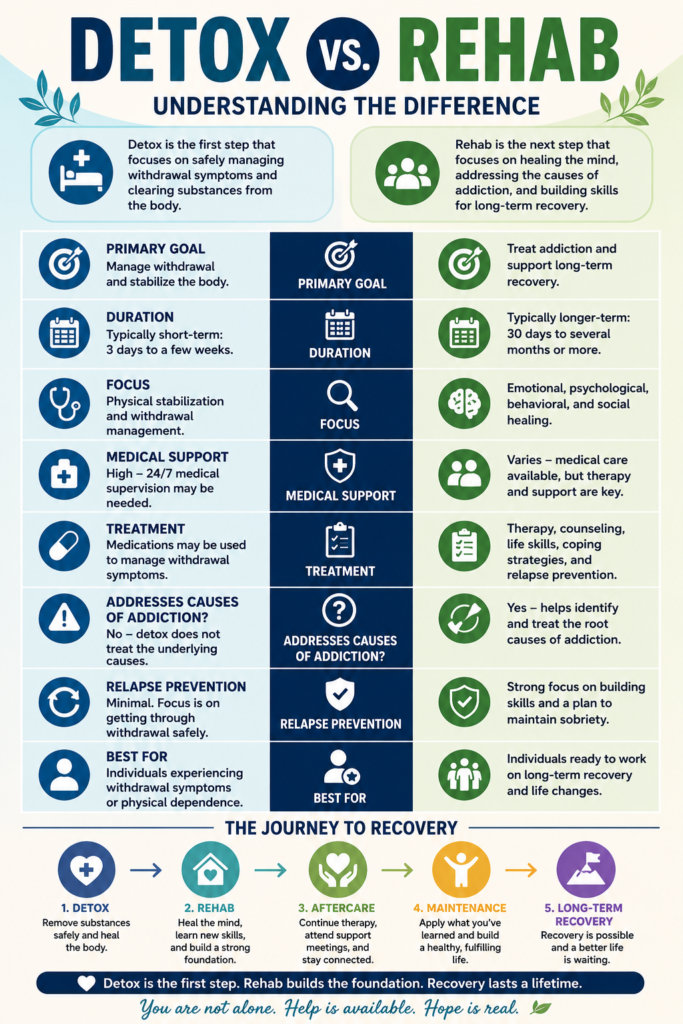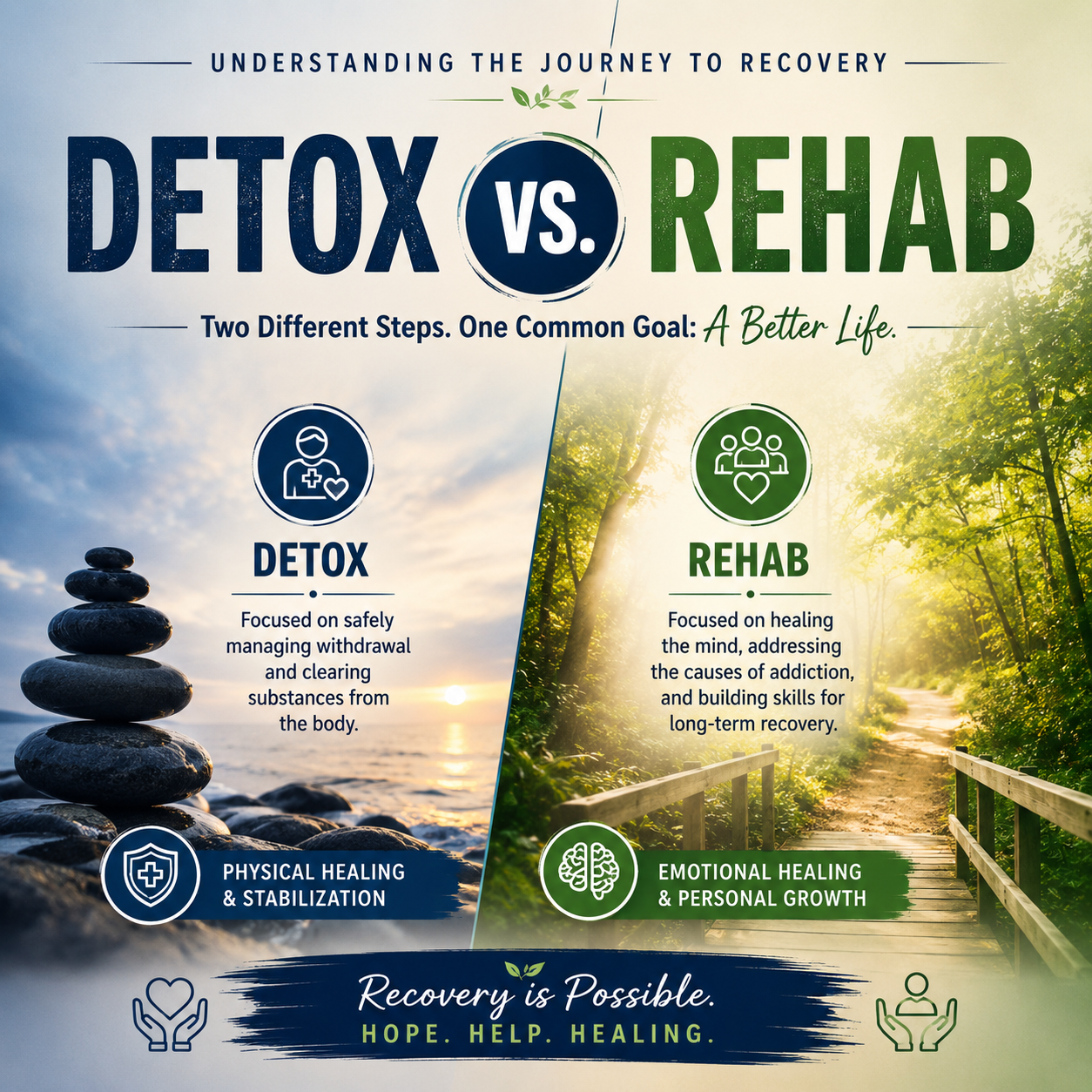
Detoxification (detox) and rehabilitation (rehab) are two essential but distinct stages of addiction treatment that work together to support long-term recovery. While these terms are often used interchangeably, they serve different purposes in the healing process. Detox focuses on safely managing withdrawal symptoms and helping the body eliminate alcohol or drugs under appropriate medical supervision. Rehabilitation builds upon this foundation by addressing the psychological, emotional, behavioral, and social factors that contribute to substance use disorder. Through counseling, evidence-based therapies, relapse prevention, and recovery support, rehab helps individuals develop the knowledge and skills needed to maintain lasting sobriety. Understanding the differences between detox and rehab enables individuals, families, and healthcare providers to make informed treatment decisions and emphasizes the importance of continuing care beyond physical stabilization.
Detox vs. Rehab
Substance use disorder recovery often involves two distinct phases: detoxification (detox) and rehabilitation (rehab). Although these terms are frequently used interchangeably, they serve different purposes. Detox focuses on safely managing withdrawal symptoms as the body eliminates alcohol or drugs, while rehab addresses the psychological, behavioral, and social factors that contribute to addiction. Understanding the differences helps individuals and families choose the most appropriate level of care and improves the likelihood of long-term recovery.
What Is Detox?
Detoxification is the first stage of treatment for many people with substance use disorders. Its primary goal is to help the body safely adjust to the absence of alcohol or drugs while managing withdrawal symptoms.
Withdrawal symptoms vary depending on the substance used, the amount consumed, the duration of use, and the individual’s overall health. Symptoms may include:
- Anxiety and irritability
- Nausea and vomiting
- Sweating and tremors
- Insomnia
- Muscle aches
- Increased heart rate
- Cravings
- Seizures (in severe alcohol or sedative withdrawal)
- Delirium tremens (a medical emergency associated with severe alcohol withdrawal)
Medical detox may include:
- 24-hour monitoring
- Medications to reduce withdrawal symptoms
- Hydration and nutritional support
- Monitoring of vital signs
- Treatment of medical complications
- Initial counseling and discharge planning
Detox usually lasts:
- Alcohol: 3–7 days (sometimes longer)
- Opioids: 5–10 days
- Benzodiazepines: Several weeks or months with gradual tapering
- Stimulants: Several days to weeks, primarily supportive care
Detox alone is not considered treatment for addiction because it does not address the underlying causes of substance use.
What Is Rehab?
Rehabilitation begins after detox or, for some individuals, without detox if withdrawal is not medically necessary. Rehab focuses on helping people understand their addiction, develop healthier coping skills, prevent relapse, and rebuild their lives.
Treatment may include:
- Individual counseling
- Group therapy
- Family therapy
- Cognitive Behavioral Therapy (CBT)
- Motivational Interviewing (MI)
- Trauma-informed therapy
- Medication for addiction treatment (when appropriate)
- Mental health treatment for co-occurring disorders
- Life skills training
- Stress management
- Relapse prevention planning
- Peer recovery support
Rehab addresses issues such as:
- Why substance use developed
- Emotional triggers
- Trauma
- Depression and anxiety
- Family conflict
- Relationship problems
- Employment concerns
- Healthy lifestyle habits
Types of Rehab Programs
Inpatient (Residential) Rehab
Individuals live at the treatment facility for several weeks or months.
Benefits include:
- Structured daily routine
- 24-hour support
- Removal from environmental triggers
- Intensive therapy
- Peer support
- Reduced access to substances
Best for:
- Severe addiction
- Multiple relapses
- Co-occurring mental illness
- Unstable living environments
Outpatient Rehab
Individuals live at home while attending scheduled treatment sessions.
Benefits include:
- Greater flexibility
- Ability to continue work or school
- Lower cost
- Family involvement
Best for:
- Mild to moderate substance use disorders
- Strong support system
- Stable housing
- High motivation for recovery
Detox vs. Rehab: Key Differences
| Feature | Detox | Rehab |
|---|---|---|
| Primary goal | Safely manage withdrawal | Treat addiction and prevent relapse |
| Focus | Physical stabilization | Psychological, emotional, and behavioral recovery |
| Typical duration | Days to weeks | Weeks to months |
| Medical supervision | Often required | Varies by program |
| Therapy | Limited | Extensive counseling and behavioral therapies |
| Addresses cravings | Partially | Yes, through therapy and medications when appropriate |
| Prevents relapse | No | Yes, through comprehensive treatment |
| Long-term recovery | Not sufficient alone | Essential component of recovery |
Why Detox Alone Is Not Enough
Many individuals feel physically better after detox and believe they no longer need treatment. However, the brain changes associated with addiction often persist long after withdrawal symptoms resolve.
Without rehabilitation, individuals may continue to struggle with:
- Cravings
- Stress
- Emotional distress
- Habitual behaviors
- Environmental triggers
- Social pressures
- Poor coping skills
Research consistently shows that individuals who participate in comprehensive rehabilitation after detox have better long-term outcomes than those who complete detox alone.
Medication-Assisted Treatment (MAT)
For some substance use disorders, medications can improve recovery outcomes when combined with counseling.
Examples include:
Opioid Use Disorder
- Buprenorphine
- Methadone
- Extended-release naltrexone
Alcohol Use Disorder
- Naltrexone
- Acamprosate
- Disulfiram (for selected patients)
These medications help reduce cravings, lower the risk of relapse, and support sustained recovery.
The Role of Family
Family members can support recovery by:
- Learning about addiction
- Encouraging continued treatment after detox
- Participating in family therapy
- Avoiding enabling behaviors
- Supporting medication adherence
- Recognizing relapse warning signs
- Promoting healthy routines
- Offering encouragement without judgment
Continuing Care After Rehab
Recovery continues long after formal treatment ends. Ongoing support may include:
- Peer support groups
- Individual counseling
- Recovery coaching
- Sober living homes
- Medication management
- Alumni programs
- Regular follow-up with healthcare providers
- Healthy nutrition, exercise, sleep, and stress management
Continuing care helps reinforce recovery skills and reduces the likelihood of relapse.
Conclusion
Detox and rehab are complementary but distinct parts of addiction treatment. Detox helps individuals safely manage withdrawal and achieve physical stabilization, while rehab addresses the emotional, psychological, behavioral, and social aspects of addiction that drive continued substance use. Completing detox without ongoing rehabilitation leaves many of the underlying causes of addiction unaddressed, increasing the risk of relapse. A comprehensive treatment plan that includes detox when needed, evidence-based rehabilitation, appropriate medications, family involvement, and long-term recovery support offers the best opportunity for sustained recovery, improved health, and a higher quality of life.
Self-Management Strategies for Understanding Detox vs. Rehab
Recovery from substance use disorder is a lifelong process that often begins with detoxification and continues through rehabilitation and ongoing support. Understanding the differences between detox and rehab can help individuals make informed decisions, set realistic expectations, and actively participate in their recovery. Self-management strategies encourage individuals to take responsibility for their health, recognize their needs, and build habits that support long-term recovery.
1. Learn the Purpose of Each Stage of Treatment
Educate yourself about the roles of detox and rehab. Understand that detox focuses on safely managing withdrawal symptoms, while rehab helps address the emotional, behavioral, and psychological aspects of addiction. Knowing that detox is only the first step can reduce unrealistic expectations and encourage continued treatment.
Self-management tips:
- Read information from reliable healthcare sources.
- Ask healthcare providers questions about your treatment plan.
- Keep a journal of what you learn during treatment.
2. Be Honest About Withdrawal Symptoms
Withdrawal symptoms can range from mild discomfort to life-threatening medical emergencies, depending on the substance involved. Monitor your symptoms honestly and seek medical attention when necessary instead of attempting to manage severe withdrawal alone.
Self-management tips:
- Report symptoms promptly to healthcare providers.
- Avoid self-medicating with alcohol or other drugs.
- Understand that medical detox is the safest option for many substances.
3. Commit to Continuing Treatment After Detox
Feeling physically better after detox does not mean addiction has been treated. Make a personal commitment to participate fully in rehabilitation, counseling, medication management when appropriate, and recovery support services.
Self-management tips:
- Attend every scheduled therapy session.
- Complete your treatment program.
- Develop short-term and long-term recovery goals.
4. Identify Personal Triggers
Recovery involves recognizing situations, emotions, people, and environments that increase the risk of substance use. Understanding your personal triggers allows you to prepare healthy responses before cravings become overwhelming.
Self-management tips:
- Write down common triggers.
- Develop coping strategies for each trigger.
- Avoid high-risk situations whenever possible, especially early in recovery.
5. Develop Healthy Coping Skills
Many people use substances to cope with stress, anxiety, trauma, or difficult emotions. Replace unhealthy coping mechanisms with healthier alternatives learned during rehabilitation.
Examples include:
- Deep breathing exercises
- Mindfulness meditation
- Physical activity
- Journaling
- Creative hobbies
- Talking with supportive friends or family
- Relaxation techniques
6. Follow Medication Instructions Carefully
If prescribed medications for withdrawal management or medication for addiction treatment (MAT), take them exactly as directed. These medications work best when combined with counseling and behavioral therapies.
Self-management tips:
- Never adjust doses without consulting your healthcare provider.
- Keep follow-up appointments.
- Report side effects promptly.
7. Establish a Structured Daily Routine
Structure helps reduce boredom, stress, and impulsive behaviors that can contribute to relapse.
Include:
- Regular sleep schedule
- Healthy meals
- Exercise
- Therapy appointments
- Work or school responsibilities
- Relaxation time
- Recovery meetings
- Positive recreational activities
8. Build a Strong Recovery Support Network
Recovery is strengthened by healthy relationships. Surround yourself with people who encourage sobriety and positive lifestyle changes.
Self-management tips:
- Attend peer support groups.
- Stay connected with trusted family members.
- Build friendships with others in recovery.
- Reach out for help when struggling.
9. Practice Stress Management Daily
Stress is a common relapse trigger. Learning to manage stress improves emotional resilience and overall well-being.
Effective techniques include:
- Yoga
- Stretching
- Meditation
- Walking outdoors
- Listening to calming music
- Progressive muscle relaxation
- Adequate sleep
- Time management
10. Monitor Your Mental Health
Depression, anxiety, trauma, and other mental health conditions frequently occur alongside substance use disorders. Pay attention to changes in mood, sleep, motivation, or emotional well-being.
Self-management tips:
- Keep a mood journal.
- Attend mental health appointments.
- Report worsening symptoms early.
- Follow treatment recommendations consistently.
11. Prepare for Cravings
Cravings are a normal part of recovery and usually decrease over time. Having a plan before cravings occur increases confidence and reduces the risk of relapse.
Strategies include:
- Delay acting on the craving.
- Practice deep breathing.
- Call a support person.
- Attend a recovery meeting.
- Exercise or go for a walk.
- Distract yourself with a healthy activity until the craving passes.
12. Celebrate Recovery Milestones
Recovery is built one day at a time. Recognizing progress helps maintain motivation and reinforces positive behavior.
Celebrate achievements such as:
- Completing detox
- Finishing rehab
- Thirty days of sobriety
- Six months in recovery
- One year sober
- Personal growth and improved relationships
Choose healthy rewards that support your recovery goals.
Key Takeaway
Detox and rehab serve different but equally important roles in recovery. Detox helps stabilize the body and manage withdrawal safely, while rehab provides the skills needed to understand addiction, address its underlying causes, and prevent relapse. By learning about each stage of treatment, following medical advice, developing healthy coping strategies, building supportive relationships, managing stress, monitoring mental health, and committing to ongoing recovery, individuals can take an active role in their healing journey. Successful recovery is not defined by completing detox alone, but by continuing rehabilitation and maintaining healthy habits that support lifelong wellness.
Family Support Strategies for Understanding Detox vs. Rehab
Family members play a vital role in helping a loved one navigate the recovery process. Understanding the differences between detoxification (detox) and rehabilitation (rehab) enables families to provide informed, compassionate, and realistic support. Detox focuses on safely managing withdrawal symptoms and stabilizing physical health, while rehab addresses the psychological, emotional, and behavioral aspects of addiction. Recognizing that these are separate but complementary stages helps families encourage continued treatment and long-term recovery.
1. Learn the Difference Between Detox and Rehab
Educate yourself about the purpose of each phase of treatment. Understanding that detox is the beginning of recovery—not the end—helps families avoid unrealistic expectations and better support their loved one throughout the treatment process.
Ways to help:
- Read reliable educational materials about addiction treatment.
- Attend family education sessions offered by treatment programs.
- Ask healthcare providers questions about the recovery plan.
2. Encourage Completion of the Entire Treatment Plan
Many individuals feel physically better after detox and may believe they no longer need treatment. Families can encourage their loved one to continue with rehabilitation, counseling, medication management when appropriate, and ongoing recovery services.
Ways to help:
- Offer encouragement without pressure or criticism.
- Celebrate each step completed in the recovery process.
- Reinforce that long-term healing takes time and commitment.
3. Provide Emotional Support Without Judgment
Recovery can be physically and emotionally challenging. During detox and rehab, individuals may experience fear, frustration, anxiety, guilt, or mood changes. Compassionate support can reduce feelings of shame and isolation.
Ways to help:
- Listen without interrupting or blaming.
- Offer reassurance and encouragement.
- Acknowledge progress, even when it seems small.
- Use respectful, person-first language.
4. Participate in Family Therapy
Addiction often affects the entire family. Family therapy provides a safe environment to improve communication, rebuild trust, address unresolved conflicts, and develop healthier relationship patterns.
Benefits include:
- Improved understanding of addiction.
- Better communication skills.
- Stronger family relationships.
- Collaborative relapse prevention planning.
- Increased confidence in supporting recovery.
5. Recognize That Recovery Is a Long-Term Process
Families should understand that detox manages withdrawal symptoms, but rehabilitation and continuing care help individuals build the skills needed for lasting recovery. Recovery often includes setbacks, and healing takes time.
Ways to help:
- Be patient with the recovery journey.
- Avoid expecting immediate behavioral changes.
- Focus on long-term progress rather than perfection.
6. Avoid Enabling Behaviors
Supporting recovery is different from protecting someone from the natural consequences of addiction. Enabling behaviors can unintentionally interfere with treatment and accountability.
Examples of enabling include:
- Providing money that may be used for substances.
- Making excuses for harmful behavior.
- Covering up legal, financial, or work-related consequences.
- Ignoring ongoing substance use.
Instead, encourage personal responsibility while offering compassionate support.
7. Help Create a Safe Recovery Environment
A stable and substance-free home environment supports recovery after detox and rehab.
Ways to help:
- Remove alcohol, illicit drugs, and drug paraphernalia from the home.
- Reduce exposure to high-risk situations.
- Encourage healthy daily routines.
- Promote adequate sleep, nutritious meals, and regular physical activity.
8. Encourage Healthy Coping Skills
Families can reinforce the healthy coping strategies learned during rehabilitation.
Encourage activities such as:
- Walking or exercising together.
- Preparing healthy meals.
- Practicing mindfulness or relaxation exercises.
- Participating in hobbies.
- Spending quality time as a family.
- Celebrating recovery milestones.
9. Learn the Warning Signs of Relapse
Relapse is not a sign of failure but may indicate that additional support or treatment is needed. Families who recognize early warning signs can encourage timely intervention.
Possible warning signs include:
- Increased isolation.
- Mood swings or irritability.
- Missing therapy or support meetings.
- Reconnecting with people associated with substance use.
- Changes in sleep or appetite.
- Expressing hopelessness or cravings.
Respond calmly and encourage professional support rather than reacting with anger or blame.
10. Support Medication Adherence
If medications are prescribed to manage withdrawal or support recovery, families can encourage consistent use as directed by healthcare providers.
Ways to help:
- Encourage attendance at follow-up appointments.
- Remind loved ones to take medications as prescribed if appropriate.
- Understand the purpose and benefits of medication-assisted treatment.
- Never encourage stopping medications without medical guidance.
11. Take Care of Your Own Well-Being
Supporting someone with addiction can be emotionally demanding. Family members should also prioritize their own physical and mental health.
Self-care strategies include:
- Joining family support groups.
- Seeking individual counseling if needed.
- Maintaining healthy boundaries.
- Practicing stress management.
- Continuing personal hobbies and relationships.
- Asking for help when overwhelmed.
Healthy caregivers are better equipped to provide consistent and effective support.
12. Celebrate Progress and Maintain Hope
Recovery is built through many small successes over time. Recognizing positive changes can strengthen motivation and reinforce healthy behaviors.
Celebrate milestones such as:
- Completing detox safely.
- Entering or finishing rehab.
- Attending counseling regularly.
- Maintaining sobriety.
- Rebuilding family relationships.
- Achieving educational, employment, or personal goals.
Encouragement and hope can make a meaningful difference throughout the recovery journey.
Key Takeaway
Families are essential partners in the recovery process. By understanding that detox is the first step toward physical stabilization and rehab is the stage where lasting behavioral and emotional change occurs, families can provide informed and compassionate support. Through education, open communication, healthy boundaries, participation in family therapy, encouragement of ongoing treatment, recognition of relapse warning signs, and attention to their own well-being, families create an environment that promotes healing, resilience, and long-term recovery. Together with healthcare professionals and community resources, supportive families can help their loved ones build a strong foundation for a healthier and more fulfilling future.
Community Resource Strategies for Understanding Detox vs. Rehab
Recovery from substance use disorder is strengthened when individuals and families have access to community resources that support each stage of treatment. Detoxification (detox) and rehabilitation (rehab) serve different purposes, and understanding how community services fit into each phase helps individuals receive the right care at the right time. Detox provides medical supervision to safely manage withdrawal symptoms, while rehab focuses on long-term recovery through counseling, behavioral therapies, education, and relapse prevention. Community organizations, healthcare providers, peer support groups, and public health agencies work together to ensure a continuum of care that promotes lasting recovery.
1. Utilize Substance Use Disorder Treatment Centers
Community treatment centers provide assessments to determine whether an individual needs medical detox, inpatient rehabilitation, outpatient services, or a combination of treatments.
Available services may include:
- Comprehensive substance use assessments
- Medical detoxification
- Residential rehabilitation
- Intensive outpatient programs (IOPs)
- Standard outpatient counseling
- Aftercare and relapse prevention planning
Seeking a professional evaluation helps match individuals with the level of care most appropriate for their needs.
2. Access Hospital and Medical Detox Programs
Hospitals and specialized detox facilities offer medically supervised withdrawal management for individuals experiencing moderate to severe withdrawal symptoms.
Benefits include:
- Twenty-four-hour medical monitoring
- Withdrawal medications when appropriate
- Emergency care if complications occur
- Coordination of transition into rehabilitation programs
Medical detox improves safety, particularly for alcohol, benzodiazepine, and opioid withdrawal.
3. Participate in Peer Support Groups
Peer recovery organizations provide ongoing encouragement before, during, and after rehabilitation. Members share experiences, coping strategies, and hope with others facing similar challenges.
Examples include:
- Twelve-Step recovery meetings
- SMART Recovery®
- Recovery Dharma
- Celebrate Recovery
- Local peer recovery organizations
Peer support reduces isolation and reinforces long-term recovery.
4. Use Community Mental Health Centers
Many individuals have co-occurring mental health conditions alongside substance use disorders. Community mental health centers provide integrated care that addresses both conditions simultaneously.
Services may include:
- Individual therapy
- Psychiatric evaluation
- Medication management
- Crisis intervention
- Trauma-informed care
- Case management
Integrated treatment improves recovery outcomes by addressing the whole person.
5. Connect With Recovery Community Organizations
Recovery community organizations provide services that extend beyond formal treatment and help individuals rebuild healthy, productive lives.
Programs often include:
- Recovery coaching
- Employment assistance
- Educational support
- Housing referrals
- Transportation assistance
- Social recovery activities
- Volunteer opportunities
These resources strengthen long-term recovery by supporting daily living and community engagement.
6. Encourage Family Education Programs
Many treatment facilities and community organizations offer educational workshops for families to better understand addiction, detox, rehab, relapse prevention, and healthy communication.
Family education helps participants:
- Understand the recovery process.
- Recognize relapse warning signs.
- Develop healthy boundaries.
- Reduce stigma.
- Improve communication skills.
- Support long-term recovery.
7. Utilize Crisis and Emergency Services
Individuals experiencing severe withdrawal, overdose, suicidal thoughts, or psychiatric emergencies require immediate professional assistance.
Community emergency resources include:
- Emergency departments
- Mobile crisis teams
- Local behavioral health crisis centers
- Emergency medical services
- Suicide and crisis hotlines
Prompt intervention can prevent life-threatening complications and connect individuals to ongoing treatment.
8. Explore Medication for Addiction Treatment (MAT) Programs
Community clinics that provide medication for addiction treatment combine FDA-approved medications with counseling and behavioral therapies.
These programs may offer:
- Buprenorphine treatment
- Methadone treatment
- Extended-release naltrexone
- Counseling services
- Recovery support
- Regular medical follow-up
Medication-assisted treatment has been shown to reduce relapse risk and improve treatment retention for many individuals with opioid or alcohol use disorders.
9. Access Recovery Housing and Sober Living Homes
Individuals leaving detox or rehab may benefit from structured, substance-free living environments that support continued recovery.
Recovery housing often provides:
- Accountability
- Peer support
- Drug-free living environments
- Recovery meetings
- Employment assistance
- Daily structure
These settings help individuals transition successfully back into the community.
10. Take Advantage of Public Health and Prevention Programs
Local public health departments often provide educational programs that explain addiction, available treatments, overdose prevention, and recovery resources.
Programs may include:
- Community education events
- Naloxone training
- Prevention campaigns
- Harm reduction services
- Resource directories
- Screening and referral programs
Public education helps reduce stigma and encourages earlier treatment.
11. Utilize Employment, Education, and Social Services
Long-term recovery is supported by stable employment, education, housing, and financial security. Community agencies can assist with rebuilding these important areas of life.
Available resources may include:
- Job training programs
- Vocational rehabilitation
- Adult education classes
- Financial counseling
- Housing assistance
- Transportation services
- Childcare support
Addressing these social needs helps reduce stress and lowers the risk of relapse.
12. Develop a Long-Term Recovery Plan
Community resources should be viewed as part of an ongoing recovery journey rather than a one-time intervention. Individuals who remain connected to supportive services are often better equipped to maintain recovery.
A long-term recovery plan may include:
- Regular counseling appointments
- Primary healthcare visits
- Medication management
- Peer support meetings
- Family therapy
- Wellness activities
- Relapse prevention planning
- Community volunteer opportunities
Maintaining consistent engagement with community resources strengthens resilience and promotes sustained recovery.
Key Takeaway
Community resources provide essential support throughout every stage of addiction recovery, from medically supervised detox to rehabilitation and lifelong recovery maintenance. Detox helps individuals safely manage withdrawal, while rehab addresses the emotional, behavioral, and psychological aspects of addiction. Hospitals, treatment centers, peer recovery groups, community mental health agencies, recovery housing, public health programs, and social service organizations work together to create a comprehensive system of care. By understanding and utilizing these resources, individuals and families can build a strong support network, improve treatment engagement, reduce the risk of relapse, and promote long-term health, stability, and recovery.
Frequently Asked Questions
Here are some common questions:
1. What is the difference between detox and rehab?
Answer:
Detox is the process of safely removing alcohol or drugs from the body while managing withdrawal symptoms, often under medical supervision. Rehab is the next stage of treatment, focusing on the emotional, psychological, behavioral, and social aspects of addiction through counseling, therapy, education, and relapse prevention. Detox prepares the body for recovery, while rehab helps build the skills needed for long-term sobriety.
2. Is detox enough to overcome addiction?
Answer:
No. Detox addresses physical dependence and withdrawal but does not treat the underlying causes of addiction. Without rehabilitation and ongoing support, individuals remain at a higher risk of relapse. Long-term recovery usually requires counseling, behavioral therapy, peer support, and, when appropriate, medication.
3. Who needs medical detox?
Answer:
Medical detox is recommended for individuals who may experience severe or potentially life-threatening withdrawal symptoms. This commonly includes people withdrawing from alcohol, benzodiazepines, or opioids. A healthcare professional can determine whether medical supervision is necessary based on the substance used, the severity of dependence, and the individual’s overall health.
4. How long does detox usually last?
Answer:
The length of detox varies depending on the substance used and the individual. In general:
- Alcohol detox: 3–7 days
- Opioid detox: 5–10 days
- Benzodiazepine detox: Several weeks or longer with a gradual taper
- Stimulant withdrawal: Several days to a few weeks, primarily with supportive care
Some people may require additional time based on their medical condition and treatment needs.
5. How long does rehab typically last?
Answer:
Rehabilitation programs vary in length depending on individual needs. Common program durations include:
- 30 days
- 60 days
- 90 days
- Longer-term residential or outpatient care
Many people also benefit from continuing care, such as outpatient counseling and peer support, after completing formal rehab.
6. Can someone go directly to rehab without detox?
Answer:
Yes. Individuals who are not physically dependent on alcohol or drugs or who do not have significant withdrawal symptoms may begin rehab without medical detox. A professional assessment helps determine the most appropriate starting point for treatment.
7. What happens during rehab?
Answer:
Rehab focuses on helping individuals understand addiction, identify triggers, develop healthy coping strategies, and prevent relapse. Treatment may include:
- Individual counseling
- Group therapy
- Family therapy
- Cognitive Behavioral Therapy (CBT)
- Medication management
- Relapse prevention planning
- Life skills training
- Mental health treatment for co-occurring disorders
8. Can medications be used during detox and rehab?
Answer:
Yes. Medications may be used during detox to reduce withdrawal symptoms and improve safety. During rehab, medications for addiction treatment (MAT) may help reduce cravings and lower the risk of relapse, especially for opioid and alcohol use disorders. These medications are most effective when combined with counseling and behavioral therapies.
9. What is the difference between inpatient and outpatient rehab?
Answer:
Inpatient rehab requires individuals to live at the treatment facility and provides around-the-clock support in a structured environment. Outpatient rehab allows individuals to live at home while attending scheduled therapy sessions. The most appropriate option depends on the severity of addiction, medical needs, support system, and personal circumstances.
10. What happens after rehab is completed?
Answer:
Recovery continues after rehab through ongoing care and support. Many individuals participate in:
- Outpatient counseling
- Peer support groups
- Recovery coaching
- Sober living programs
- Medication management
- Regular healthcare follow-up
- Healthy lifestyle activities
Continuing care helps strengthen recovery and reduce the risk of relapse.
11. Can relapse happen after detox or rehab?
Answer:
Yes. Relapse can occur at any stage of recovery and does not mean treatment has failed. Addiction is a chronic condition, and setbacks may happen. If relapse occurs, seeking help promptly and adjusting the treatment plan can help individuals return to recovery and continue making progress.
12. How can family members support someone during detox and rehab?
Answer:
Families can support recovery by learning about addiction, encouraging treatment participation, attending family therapy, maintaining healthy boundaries, avoiding enabling behaviors, offering emotional support without judgment, and celebrating recovery milestones. A supportive family environment can improve treatment engagement and long-term recovery outcomes.
13. Why is rehab important after detox?
Answer:
While detox helps the body recover from physical dependence, rehab addresses the thoughts, emotions, behaviors, and life circumstances that contribute to addiction. Without rehab, many individuals may continue to struggle with cravings, triggers, and unhealthy coping patterns. Rehab provides the tools needed to build a healthier lifestyle and maintain long-term recovery.
14. How do healthcare professionals decide whether someone needs detox or rehab?
Answer:
Healthcare professionals perform a comprehensive assessment that considers:
- The type of substance used
- Length and severity of substance use
- Withdrawal risk
- Medical conditions
- Mental health status
- Previous treatment history
- Living environment
- Family and social support
Based on this evaluation, they recommend the most appropriate level of care, which may include detox, rehab, or both.
15. What is the key message about detox and rehab?
Answer:
Detox and rehab are complementary stages of addiction treatment, not competing options. Detox helps individuals safely manage withdrawal and achieve physical stability, while rehab provides the education, therapy, coping skills, and relapse prevention strategies needed for lasting recovery. Completing both stages, followed by ongoing support and continuing care, offers the strongest foundation for long-term health, sobriety, and improved quality of life.
Conclusion
Detox and rehab are complementary components of comprehensive addiction treatment, with each playing a critical role in the recovery journey. Detox provides a safe and medically supervised environment for managing withdrawal and achieving physical stability, but it does not address the underlying causes of addiction. Rehabilitation offers the therapeutic support, coping strategies, and relapse prevention skills necessary for long-term recovery and improved quality of life. Lasting success is most likely when individuals complete detox, actively participate in rehabilitation, and remain engaged in ongoing recovery services such as counseling, peer support, and aftercare programs. By recognizing the unique purpose of each stage and committing to the full continuum of care, individuals can build a strong foundation for sustained recovery, healthier relationships, and lifelong wellness.
Video: Why Most People Relapse After Detox #AddictionRecovery #Rehab #MentalHealth