Sleep disturbances are a common and often overlooked aspect of addiction recovery, affecting both physical well-being and emotional stability. While many expect sleep to improve once substance use stops, the opposite is often true in the early stages. This is because the brain and body are recalibrating the systems that regulate sleep, mood, and stress. As a result, individuals may experience insomnia, vivid dreams, or irregular sleep patterns. Understanding these disturbances as part of the healing process is essential, as it helps reduce frustration and supports a more patient, informed approach to recovery.
“Restless Nights: Understanding Sleep Disturbances in Addiction Recovery”
Sleep disturbances are one of the most common—and often frustrating—challenges in addiction recovery. While many people expect physical withdrawal symptoms, fewer anticipate the ongoing disruption to sleep patterns that can persist even after substance use has stopped. These disturbances are not random; they are closely tied to the brain’s process of healing and rebalancing after prolonged substance exposure.
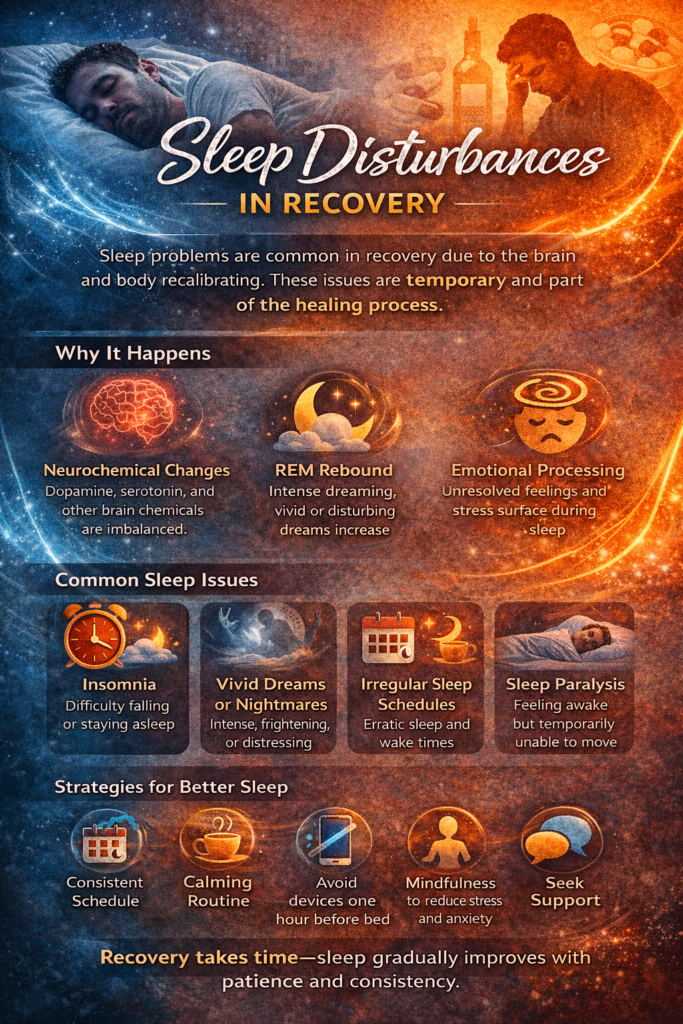
During active addiction, substances often interfere with the brain’s natural sleep-wake cycle, particularly REM (rapid eye movement) sleep, which is essential for emotional processing and memory consolidation. When substance use stops, the brain attempts to restore balance, often leading to REM rebound—a phase where dreams become more intense, vivid, or even disturbing. This can contribute to frequent awakenings, nightmares, or experiences like sleep paralysis.
Another factor is the disruption of neurotransmitters such as dopamine, serotonin, and GABA. These chemicals play a key role in regulating mood, relaxation, and sleep. In early recovery, the brain is still recalibrating these systems, which can result in insomnia, restless sleep, or irregular sleep patterns. This period can feel discouraging, especially when rest is needed most for emotional and physical recovery.
Stress and emotional processing also play a significant role. Recovery often brings unresolved thoughts, feelings, and memories to the surface—many of which were previously numbed by substance use. At night, when external distractions are reduced, these internal experiences can become more prominent, making it harder to fall or stay asleep.
Importantly, sleep disturbances in recovery are usually temporary, though their duration can vary. As the brain and body continue to stabilize, sleep patterns gradually improve. In the meantime, developing healthy sleep habits and coping strategies is essential for managing this phase effectively.
Self-care practices—such as maintaining a consistent sleep schedule, limiting screen time before bed, and creating a calming nighttime routine—can support the body’s natural rhythm. Additionally, techniques such as mindfulness, relaxation exercises, and journaling can help reduce nighttime anxiety and promote better sleep.
Seeking support is also important. Persistent sleep issues may benefit from professional guidance, including therapy or medical evaluation, especially if they significantly impact daily functioning.
Ultimately, sleep disturbances are not a sign of failure in recovery—they are a sign of adjustment and healing. Understanding this process can reduce frustration and help individuals approach sleep challenges with patience and realistic expectations.
Key Points
- Patience and consistency are key
Why Sleep Is Disrupted
- Substances alter natural sleep cycles
- The brain is recalibrating after prolonged use
REM Rebound
- Increased dreaming or nightmares
- More frequent awakenings
Neurochemical Changes
- Imbalances in dopamine, serotonin, and GABA
- Contribute to insomnia or restless sleep
Emotional Processing
- Unresolved thoughts surface during recovery
- Increased nighttime anxiety or overthinking
Common Sleep Issues
- Insomnia
- Vivid dreams or nightmares
- Sleep paralysis
- Irregular sleep schedules
Coping Strategies
- Maintain a consistent sleep routine
- Limit caffeine and screen time before bed
- Practice relaxation or mindfulness techniques
When to Seek Help
- Sleep problems persist long-term
- Significant impact on daily functioning
Long-Term Outlook
- Sleep typically improves over time
“Restoring Rest: Self-Management Strategies for Sleep Disturbances in Recovery”
Sleep disturbances in recovery can feel exhausting, discouraging, and at times overwhelming. Many individuals expect that once substance use stops, rest will naturally return—but in reality, sleep often becomes more disrupted before it improves. This is because the brain is actively recalibrating its internal systems. During this phase, self-management strategies become essential tools for understanding and navigating sleep challenges with patience and intention.
The foundation of self-management begins with awareness. Understanding that sleep disturbances are a normal part of recovery—not a personal failure—can reduce frustration and anxiety. Instead of reacting with worry (“Why can’t I sleep?”), individuals can reframe the experience as part of the brain’s healing process. This cognitive shift alone can reduce the pressure that often worsens sleep problems.
One of the most effective strategies is establishing a consistent sleep routine. The brain relies on patterns to regulate the sleep-wake cycle, also known as the circadian rhythm. Going to bed and waking up at the same time each day—even when sleep is inconsistent—helps retrain the body over time. Consistency, rather than perfection, is what gradually restores balance.
Another critical component is stimulus control and environment management. This means creating a sleep environment that signals rest: dim lighting, minimal noise, and limited screen exposure before bed. Avoiding stimulating activities—such as scrolling on a phone or engaging in stressful conversations—helps the brain associate the bedroom with sleep rather than wakefulness or anxiety.
Emotional regulation also plays a major role. Recovery often brings increased awareness of thoughts and feelings that were previously suppressed. At night, these can surface more intensely. Self-management strategies such as journaling before bed, practicing deep breathing, or using mindfulness techniques can help process these emotions and reduce mental overactivity.
Another important strategy is to manage expectations and reduce performance pressure around sleep. Trying too hard to fall asleep can actually increase anxiety and keep the mind alert. Instead, adopting a more neutral approach—such as getting out of bed if unable to sleep and engaging in a calming activity—can reduce frustration and make sleep more likely to occur naturally.
Lifestyle adjustments also support better sleep. Limiting caffeine, staying physically active during the day, and getting exposure to natural light all help regulate the body’s internal clock. These small, consistent habits reinforce the body’s ability to return to a more stable rhythm.
Self-management also includes tracking patterns and triggers. Noticing what affects sleep—such as stress, diet, or emotional states—can provide insight into how to adjust routines. Over time, this builds a sense of control and predictability.
Importantly, self-management is not about forcing sleep—it’s about supporting the conditions that allow sleep to happen. Recovery is a gradual process, and sleep is one of the systems that takes time to stabilize. Patience, consistency, and self-compassion are key.
Ultimately, improving sleep in recovery is not just about rest—it’s about strengthening the ability to regulate the mind and body. These same self-management skills support overall recovery, making sleep both a challenge and an opportunity for growth.
Key Self-Management Strategies
- Focus on gradual progress, not immediate results
Awareness and Reframing
- Recognize sleep disturbances as part of recovery
- Reduce anxiety by understanding the healing process
Consistent Sleep Routine
- Go to bed and wake up at the same time daily
- Reinforce the body’s natural circadian rhythm
Sleep Environment Management
- Keep the room dark, quiet, and comfortable
- Limit screen time and stimulation before bed
Emotional Regulation
- Use journaling, breathing, or mindfulness techniques
- Process thoughts before trying to sleep
Reduce Sleep Pressure
- Avoid forcing sleep
- Get out of bed if unable to sleep and reset calmly
Healthy Lifestyle Habits
- Limit caffeine and late-night eating
- Engage in regular physical activity
- Get natural light exposure during the day
Track Patterns and Triggers
- Identify factors that affect sleep quality
- Adjust habits based on patterns
Practice Patience and Consistency
- Understand that improvement takes time
“Supporting Rest: Family Strategies for Understanding Sleep Disturbances in Recovery”
Sleep disturbances are a common and often misunderstood part of addiction recovery. While individuals in recovery may struggle with insomnia, vivid dreams, or irregular sleep patterns, families can also feel the impact—witnessing fatigue, irritability, or emotional ups and downs. Understanding that these sleep challenges are part of the brain’s healing process is the first step toward providing effective and supportive care.
One of the most important family support strategies is education and perspective. Sleep disruptions in recovery are often linked to neurobiological changes as the brain recalibrates after substance use. When families understand that these issues are temporary and not a sign of failure or lack of effort, they are less likely to respond with frustration or unrealistic expectations. This shift from judgment to understanding can significantly reduce tension.
Creating a supportive environment is another key strategy. Families can help by encouraging consistent routines and maintaining a calm, stable household—especially in the evening. Reducing noise, limiting late-night disruptions, and supporting a regular sleep schedule can reinforce healthy sleep patterns. Even small environmental adjustments can make a meaningful difference.
Communication also plays a vital role. Instead of expressing concern through criticism (e.g., “Why are you still awake?”), families can use supportive language such as “I know sleep has been hard—how can I support you?” This approach reduces pressure and encourages openness. Sleep struggles can already feel frustrating; supportive communication helps prevent additional stress.
Another important strategy is avoiding pressure or over-monitoring. While it may be tempting to track sleep patterns or push for immediate improvement, this can increase anxiety and make sleep more difficult. Recovery requires patience, and sleep often improves gradually. Families can support this process by allowing space rather than trying to control outcomes.
Families can also encourage healthy coping strategies. Suggesting calming activities—like reading, journaling, or relaxation techniques—can help individuals wind down without feeling forced. Supporting these habits reinforces self-management without taking over the process.
Emotional awareness is equally important. Sleep deprivation can affect mood, making individuals more irritable, sensitive, or withdrawn. Recognizing that these reactions may be linked to lack of rest—not personal conflict—can help families respond with empathy rather than escalation.
Supporting professional help when needed is another key component. If sleep disturbances persist or significantly affect daily functioning, encouraging the individual to seek guidance from a therapist or healthcare provider can be beneficial. Families can play a supportive role by normalizing help-seeking rather than viewing it as a last resort.
Finally, families should practice self-care and patience. Supporting someone through recovery can be emotionally demanding, especially when sleep issues affect the entire household. Taking care of your own well-being allows you to remain calm, consistent, and supportive over time.
Ultimately, family support is not about fixing sleep—it’s about creating conditions where recovery, including healthy sleep, can gradually take place. With understanding, consistency, and empathy, families can help reduce stress and contribute to a more stable, healing environment.
Family Support Strategies
- Focus on gradual progress, not quick fixes
Educate Yourself
- Understand that sleep disturbances are part of recovery
- Recognize the role of brain and body adjustment
Create a Supportive Environment
- Maintain a calm, quiet evening routine
- Encourage consistent sleep and wake times
Use Supportive Communication
- Express concern without criticism
- Ask how you can help rather than assuming
Avoid Pressure
- Do not force or rush sleep improvements
- Reduce monitoring that may increase anxiety
Encourage Healthy Habits
- Support calming pre-sleep activities
- Reinforce routines without controlling them
Practice Emotional Awareness
- Recognize mood changes linked to lack of sleep
- Respond with patience rather than frustration
Support Professional Help
- Encourage therapy or medical guidance if needed
- Normalize seeking help for sleep issues
Take Care of Yourself
- Maintain your own well-being and boundaries
- Avoid burnout from ongoing stress
Promote Patience and Consistency
- Understand that improvement takes time
“Restoring Sleep Together: Community Resource Strategies in Recovery”
Sleep disturbances in addiction recovery can feel isolating, confusing, and difficult to manage alone. While individuals and families play important roles in supporting healthy sleep patterns, community resources provide essential structure, education, and professional guidance that help make sense of these disruptions. By stepping outside the immediate environment and engaging with broader support systems, individuals gain access to tools that promote both recovery and restorative sleep.
One of the most effective strategies is participating in peer support groups, such as Alcoholics Anonymous or Narcotics Anonymous. These groups offer shared experiences where individuals can openly discuss challenges such as insomnia, vivid dreams, or fatigue. Hearing others describe similar sleep issues can normalize the experience and reduce anxiety. It also reinforces the understanding that sleep disturbances are a common and temporary part of recovery.
Another key resource is professional counseling and therapy, including approaches like Cognitive Behavioral Therapy. Specifically, CBT techniques for insomnia (CBT-I) help individuals identify thoughts and behaviors that interfere with sleep. Therapy can address underlying anxiety, stress, or trauma that may surface during recovery and disrupt rest.
Community-based treatment programs and recovery centers also provide structured environments that support healthy routines. These programs often include consistent schedules, wellness education, and guidance on sleep hygiene. Structure is especially important in early recovery, as it helps regulate the body’s internal clock and reduces irregular sleep patterns.
Educational workshops and public health resources are another valuable strategy. Many organizations offer information on sleep science, circadian rhythms, and the effects of substances on the brain. Understanding concepts like REM rebound and neurotransmitter imbalance can help individuals approach sleep disturbances with patience rather than frustration.
Additionally, community-based medical and mental health services can address persistent or severe sleep issues. Sleep specialists, primary care providers, or mental health professionals can evaluate whether additional interventions—such as behavioral strategies or short-term treatments—are needed.
Community resources also include wellness programs and holistic supports, such as yoga classes, meditation groups, or fitness programs. These activities promote relaxation, reduce stress, and support the body’s natural sleep processes. Engaging in these programs can improve both physical and emotional regulation, which directly impacts sleep quality.
Another important strategy is building accountability and support networks. Sponsors, mentors, or recovery peers can help individuals stay consistent with routines and coping strategies. Having someone to check in with provides encouragement and reinforces healthy habits, including those related to sleep.
Ultimately, community resources shift the experience from struggling alone to being supported within a system of care. They provide knowledge, structure, and connection—three key elements that help individuals understand and manage sleep disturbances more effectively. Over time, this collective support contributes to improved sleep, stronger recovery, and overall well-being.
Community Resource Strategies
- Stay consistent with support and strategies
Join Peer Support Groups
- Participate in Alcoholics Anonymous or Narcotics Anonymous
- Share experiences and normalize sleep challenges
Seek Professional Therapy
- Use approaches like Cognitive Behavioral Therapy
- Address anxiety, stress, and sleep-related thought patterns
Engage in Structured Programs
- Attend outpatient or inpatient recovery programs
- Follow consistent routines that support sleep regulation
Access Educational Resources
- Learn about sleep cycles, REM rebound, and brain recovery
- Reduce frustration through understanding
Utilize Medical Support
- Consult healthcare providers for persistent sleep issues
- Explore behavioral or clinical interventions if needed
Participate in Wellness Activities
- Join yoga, meditation, or fitness programs
- Support relaxation and physical regulation
Build Accountability Networks
- Connect with sponsors or recovery peers
- Stay consistent with healthy routines
Reduce Isolation
- Engage with community-based support systems
- Replace isolation with connection and shared growth
Focus on Long-Term Improvement
- Understand that sleep recovery takes time
Frequently Asked Questions
Here are some common questions:
1. Why are sleep disturbances so common in recovery?
Sleep disturbances occur because the brain is rebalancing after substance use. Substances disrupt normal sleep cycles and brain chemistry, so when use stops, the body needs time to restore its natural rhythm.
2. Is it normal to have worse sleep after getting sober?
Yes. Many people experience a temporary worsening of sleep in early recovery. This is part of the brain’s adjustment process and does not mean something is wrong.
3. What is REM rebound?
REM rebound is when the brain increases rapid eye movement (REM) sleep after a period of suppression. This often leads to:
- Vivid dreams
- Nightmares
- More frequent awakenings
4. How long do sleep disturbances last in recovery?
It varies:
- Early recovery: days to weeks
- Some cases: months
Sleep typically improves gradually as the brain stabilizes.
5. What types of sleep problems are most common?
- Insomnia (trouble falling or staying asleep)
- Vivid dreams or nightmares
- Irregular sleep schedules
- Sleep paralysis
- Frequent waking during the night
6. Why do dreams feel so intense in recovery?
Dreams become more intense due to:
- REM rebound
- Emotional processing
- Increased brain activity during sleep
The brain is “catching up” on processing experiences and emotions.
7. Can sleep disturbances trigger relapse?
Yes, they can increase risk because:
- Fatigue affects decision-making
- Irritability and stress increase
- Coping ability decreases
This is why managing sleep is important in recovery.
8. Why do I feel anxious at night in recovery?
Without substances, the brain becomes more aware of:
- Unprocessed thoughts
- Stress and emotions
- Internal discomfort
Nighttime quiet can make these feelings more noticeable.
9. What is sleep paralysis, and why does it happen?
Sleep paralysis is when you:
- Wake up, but cannot move
- May feel fear or pressure
It can occur due to disrupted REM sleep patterns, which are common during recovery.
10. What helps improve sleep in recovery?
- Consistent sleep schedule
- Reducing screen time before bed
- Relaxation techniques (breathing, mindfulness)
- Limiting caffeine
- Creating a calm sleep environment
11. Should I use sleep medications?
It depends. Some medications may help in the short term, but they should be used cautiously and under medical guidance, especially in recovery.
12. Can exercise help with sleep?
Yes. Regular physical activity:
- Improves sleep quality
- Reduces stress
- Supports circadian rhythm
13. Why does my sleep schedule feel “off”?
Substances disrupt the circadian rhythm (internal clock). Recovery involves retraining this system, which can take time and consistency.
14. When should I seek professional help?
Consider help if:
- Sleep problems persist for months
- Daily functioning is affected
- Anxiety or depression worsens
15. What is the biggest mindset shift about sleep in recovery?
Moving from:
- “Something is wrong.” → “My brain is healing.”
- Frustration → patience
- Forcing sleep → supporting sleep
16. What’s the main takeaway about sleep in recovery?
Sleep disturbances are a normal part of healing, not a failure. With time, consistency, and support, sleep gradually improves—and better sleep strengthens overall recovery.
Conclusion
Although sleep disturbances in recovery can be challenging, they are typically temporary and reflect the body’s effort to restore balance. With time, consistency, and supportive strategies, sleep patterns gradually stabilize. Recognizing the importance of healthy routines, emotional regulation, and external support can make this transition more manageable. Ultimately, improving sleep is not just about rest—it is a key component of overall recovery, contributing to better mental clarity, emotional resilience, and long-term stability.
Video: Why Sobriety Means Sleepless Nights (At First) #recovery #awareness