If you feel unmotivated, easily distracted, or no longer enjoy activities that once made you happy, your brain’s dopamine system may be out of balance. Dopamine is a neurotransmitter that helps regulate motivation, pleasure, and learning. Constant exposure to highly stimulating activities like social media, junk food, gaming, and binge-watching can make everyday experiences feel less rewarding. A dopamine reset isn’t about avoiding all pleasure—it’s about reducing excessive stimulation so your brain can reconnect with simple, meaningful sources of enjoyment. By taking a short break from dopamine-driven habits and focusing on healthier activities like exercise, reading, creativity, and time outdoors, many people find that their focus, motivation, and appreciation for everyday life begin to return. A one-week dopamine reset can be a helpful way to restore balance and make simple joys feel rewarding again.
Understanding Dopamine Overload
Dopamine isn’t a bad thing. It’s what motivates you to go after goals and keeps you curious. The trouble kicks in when your brain gets bombarded with fast, easy rewards, like junk food, endless notifications, or constant entertainment. Over time, your brain craves only strong dopamine hits and ignores smaller, everyday pleasures. This can look like feeling bored easily, losing interest in hobbies, or always needing something new and exciting to feel good.
Researchers have begun to call this modern struggle “dopamine overload.” While there’s still a lot to learn, pausing and giving your brain a break from quick rewards can help bring things back into balance. You don’t have to quit all fun things; just swap out things that give you a quick high for ones that encourage real, lasting satisfaction.
How a One-Week Dopamine Reset Works
A dopamine reset is basically a short break from overstimulating activities, paired with an effort to find joy in simple things again. During this week, I usually cut back on activities like social media, processed snacks, video games, online shopping, and binge-watching shows. Instead, I focus on slower, low-stimulation activities such as walking outside, journaling, reading, cooking real food, or even doing nothing for a bit.
This break gives my brain a chance to calm down, making it easier to pay attention, enjoy small wins, and stay motivated for longer stretches. Most people notice a difference in a week, but it’s fine to adjust this plan to fit your own routine and responsibilities.
It’s not about being perfect; it’s about regaining balance. Even taking small steps, like reading instead of scrolling before bed or swapping a processed snack for fruit, can make a big impact over the course of the week. People often find that after just a few days, they start to experience more pleasure from little things, and even their stress levels drop.
Setting Up Your Environment
Making a few changes to your environment before starting this reset really helps reduce temptation. Here’s what I usually do to set myself up for a more restful week:
- Declutter Digital Devices: Move distracting apps off your home screen, or use screen time controls to limit access during the week.
- Prep Easy Healthy Snacks: Stock up on whole foods like fruit, nuts, or cut veggies so you’re not reaching for candy or chips by default.
- Plan Your Schedule: Try to fill your calendar with outdoor walks, creative hobbies, or quiet activities.
- Tell Friends or Family: Let people know you’re taking a little break from group chats or social scrolling. It helps reduce FOMO and keeps you accountable.
- Create a Cozy Space: Rearranging a corner of your home with books, a blanket, and a cup for herbal tea gives you a nice zone to relax and reset without tech. Even small touches, such as plants or candles, signal to your brain that it’s time to slow down and unplug.
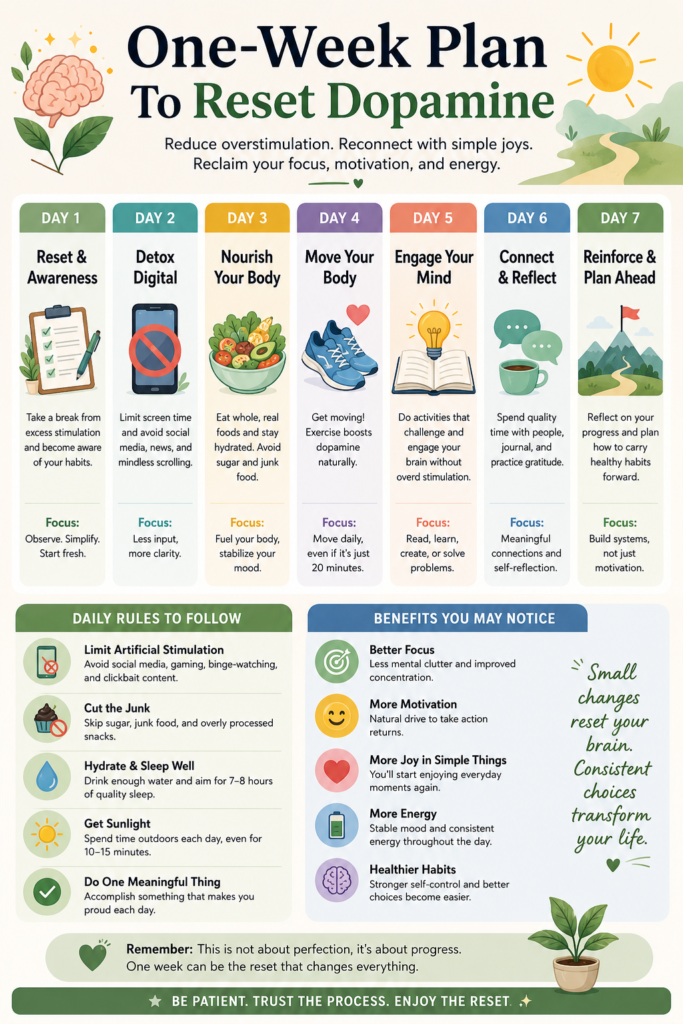
Day-by-Day Guide: My One-Week Dopamine Reset
This is how I’d break down a typical dopamine reset week. Feel free to switch things around to suit your routine and commitments.
Day 1: Awareness and Planning
This first day is all about noticing. I keep a log (on paper or a digital notepad) of what I usually reach for when I’m bored, stressed, or just want to feel good. This helps me figure out where most of my quick dopamine hits come from.
If you’re unsure, take brief notes whenever you feel the urge to reach for your phone, a snack, or another fast reward. Recognizing these patterns puts you in the driver’s seat for the rest of the week.
Day 2: Removing High Stimulation Triggers
On day two, I set my phone to grayscale and deleted or hid distracting apps, especially social media, games, and news feeds. I put junk food out of sight and pause non-supportive group chats or email notifications for a while. Turning off push notifications on your devices also helps take the power out of those instant urges.
Day 3: Focusing on Mindful Activities
With distractions out of the way, I block out time for low-key, rewarding activities. Reading, drawing, listening to calm music, cooking, or just sitting with a cup of tea work well. The goal is to fill downtime with things that don’t trigger a dopamine flood but still feel nice. Meditation or mindful breathing can also calm restless energy and anchor your mind in the present.
Day 4: Getting Moving and Going Outside
Nature is a game-changer. A walk in a local park, light jogging, or simple stretching outdoors can boost mood and attention. Sunlight, fresh air, and light exercise help retrain your brain to find pleasure in simpler, everyday experiences. Try gardening, birdwatching, or just sitting in a green space to reset your senses.
Day 5: Practicing Gratitude and Reflection
I journal about anything I enjoyed in the past few days—maybe noticing new details during a walk, the smell of coffee in the morning, or a good song. This reflection makes it easier for my brain to notice positive, subtle experiences and appreciate them more. You could also jot down things you’re grateful for or share them out loud with a friend.
Day 6: Creative or Skill-Building Hobbies
Instead of digital entertainment, I dig into hobbies that take time and patience but pay off in satisfaction. This might be learning a few chords on guitar, painting, baking something new, building a puzzle, or tending to houseplants. Things that let me get absorbed and lose track of time really help with this reset. If you feel stuck, start with something simple, like doodling or trying a new recipe, to keep things fun and easygoing.
Day 7: Digital Reentry and Long-Term Planning
On the final day, it’s time to gently bring digital tools or entertainment back in, but with intention. I check which activities I truly missed versus which ones just filled empty time. Then I map out how to use screens or snacks mindfully going forward, such as scheduling social media breaks, setting aside time for TV, or keeping junk food as an occasional treat rather than a default habit.
What To Expect (And What’s Totally Normal)
The first couple of days usually feel tough. I notice irritation, boredom, or even a restless urge to grab my phone or snack. These feelings don’t last. By the third or fourth day, I start to enjoy little things more. Music sounds better, flavors stand out, or I just feel less restless. By the end of the week, my mind feels clearer, and it’s easier to hang out with friends or focus on slow, peaceful activities.
According to neuroscientists studying dopamine and behavior, these changes occur because the brain builds up its own reward sensitivity again after a break (see scientific research on dopamine and motivation for more details).
Troubleshooting: Common Challenges and How To Handle Them
- Boredom: This is normal. I try to lean into it instead of running from it. Sometimes just sitting with nothing to do gives my brain space to reset.
- Social Pressure: Taking a break can feel isolating if friends or family are always online. I usually suggest a phone call or plan a walk instead, so I stay connected in real life.
- Urges: If I get a strong urge to check social media or have a sugary snack, I sit with it for five minutes. Most cravings fade if I give myself time and a little compassion.
- Frustration: You might feel restless, extra tired, or even grumpy as your routine changes. Remind yourself that these feelings are temporary and part of the reset. Breathing or talking it out with someone you trust can help you push through and keep going.
Making It Stick: Habits That Support Dopamine Balance
I use a few tricks to keep the benefits going even after the reset:
- Scheduled Tech Use: Set fixed times for checking email or social media.
- Mindful Snacking: Keep snacks out of reach and only eat them at certain times or on certain days.
- Regular Downtime: Plan routine activities that don’t involve screens, like a walk after dinner or reading before bed.
- Intentional Social Time: Prioritize real-world conversations, shared meals, or group hobbies over endless group chats. Even short moments of face-to-face time help retrain your brain to value deeper bonds.
Real World Applications of a Dopamine Reset
Students, busy professionals, and anyone who feels burnt out can all benefit from a dopamine reset. Here’s how people put these ideas into practice:
- Students: Take regular breaks from studying by doing exercise or simple art activities instead of scrolling through apps.
- Employees: Take short walks, deep breaths, or a quick stretch break during work instead of checking social media.
- Parents: Practice mindful eating and device-free family time to help the whole household feel calmer and more present.
- Retirees: Picking up old passions like gardening, painting, or birdwatching can reawaken satisfaction and joy, especially if digital distractions aren’t as tempting.
Frequently Asked Questions
Question: Do I need to cut out all pleasure for a dopamine reset?
Answer: Not at all! The goal is to move away from quick, intense rewards and lean into slower, more meaningful forms of enjoyment, such as hobbies, nature, and face-to-face time with people.
Question: Can a dopamine reset help reduce anxiety or stress?
Answer: Many people find it helps them feel calmer and less dependent on their phones or snacks when stressed, but it’s not a cure for anxiety disorders. If you’re struggling with your mood or motivation all the time, talking to a mental health professional is a good next step.
Question: How often should I do a dopamine reset?
Answer: Personally, I do a mini version every few months or whenever I start feeling too distracted or unmotivated. It’s okay to adjust based on your needs and lifestyle.
Final Thoughts
Taking a week to reset your dopamine system is a pretty handy, low-cost way to get back in touch with what really makes life enjoyable. Whether you feel burned out or just want to get more out of everyday moments, this simple plan helps your brain restore its natural rhythm and rediscover small joys. Try it out and see how a week of unplugging and slowing down changes the way you feel. Be patient with yourself, celebrate small wins, and remember that every reset makes it a little easier to find happiness in the ordinary.
Video: 7 Days No Phone (My Brain Completely Changed) #dopamine #focus #challenge