Painkillers have been part of my medicine cabinet for as long as I can remember, but there’s always chatter about whether popping them too often can mess with my brain. So, I went on a mission to dig through the facts, science, and a bit of personal experience to put together everything people should know about painkillers and the talk around brain health. Here’s the full scoop about using painkillers and the truth behind any risks of brain damage.
Painkillers: What They Are and How They Work
Painkillers show up in all sorts of situations. Whether it’s a quick fix for a throbbing headache or something more serious after surgery, they’re designed to help manage discomfort. The main types of painkillers you’ll find at the pharmacy or be prescribed by a doctor include:
- Nonsteroidal anti-inflammatory drugs (NSAIDs): Think ibuprofen, naproxen, or aspirin. These are popular for treating everyday pain, such as muscle aches and headaches.
- Acetaminophen (Paracetamol): Best known as Tylenol, this is another go-to for pain and fever. It doesn’t reduce swelling but works well for mild-to-moderate pain.
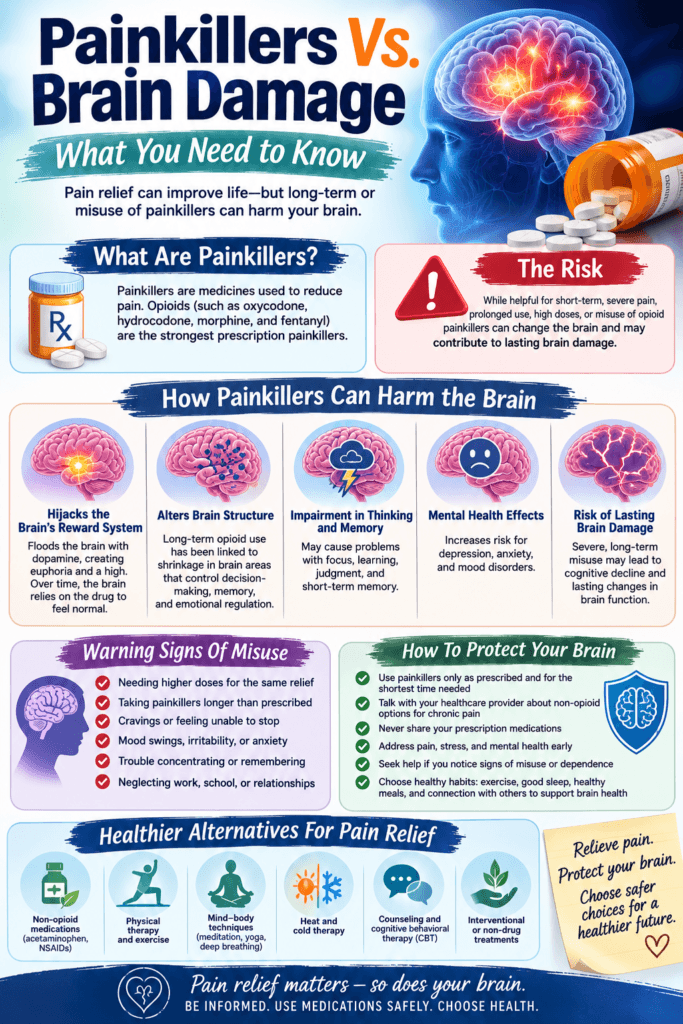
- Opioids: These are the heavy-duty drugs like morphine, codeine, oxycodone, or hydrocodone, often used for severe pain after injuries or surgery.
They all work in different ways, but the usual aim is to block or alter pain signals before they reach the brain. While this is handy, how each type interacts with the body makes a big difference in terms of risks and side effects.
The Real Science: Do Painkillers Cause Brain Damage?
There’s a ton of confusion online about whether painkillers can flat-out damage the brain. The short answer: it depends on the type, dose, and duration of use. To fully grasp the answer, let’s check out what the research says about each major kind of painkiller.
NSAIDs and Acetaminophen
For most people, using these for a few days to treat aches or fevers doesn’t harm brain cells or cause brain damage. NSAIDs generally don’t cross the blood-brain barrier in large amounts, so they don’t directly mess with your brain’s inner workings. Acetaminophen works in the brain to reduce pain, but studies don’t show any evidence that normal, short-term use causes brain damage. There are occasional reports of overdose situations causing liver failure or, very rarely, confusion, but brain tissue damage isn’t shown with standard use.
Opioids and the Brain
This is where things get a bit more complicated. Opioids target receptors in your brain and spinal cord to block pain. They also cause that well-known “high” feeling. In normal, carefully supervised doses for short periods, actual damage to brain tissue isn’t common. But when these medicines are misused or taken at high doses over long periods, you might face some pretty serious problems, including:
- Changes in memory and mood
- Slower reaction times and trouble focusing
- In rare overdose cases, a lack of oxygen (called hypoxia), which could actually hurt brain cells
A few studies suggest that long-term, heavy use of opioids might shrink certain brain structures involved in decision-making and emotions. But this doesn’t mean everyone who uses opioids for a short period is at risk.
Some research articles spell these effects out in detail (NIH overview on opioids and cognition). It’s always worth checking with your doctor if you’re curious about how this matches up with your prescription or situation.
The Most Common Myths About Painkillers and Brain Health
Scrolling through forums or talking to people at the pharmacy, I keep running into a few myths. Here’s what I’ve found out about the most popular ones:
- “Taking painkillers always fries your brain.” This just isn’t backed by science, especially when the right medicine is used at the right dose.
- “Only opioids are dangerous for the brain.” Opioids are riskier than NSAIDs or acetaminophen, but no medicine is totally safe if misused.
- “If I have brain fog after taking painkillers, my brain is damaged permanently.” Most brain fog or fuzzy feelings fade when the medicine leaves your system. If it sticks around, talk to your doctor.
- “Natural painkillers aren’t harmful, unlike ‘chemical’ ones.” Some “natural” painkillers (like kratom or kava) come with their own brain risks and possible side effects too.
Sorting fact from fiction is really important, especially when it comes to a topic as serious as the brain. People often get nervous because stories can be exaggerated, but looking at the real risks is key to making good choices.
Red Flags: When Painkiller Use Could Be a Problem
Like with any medicine, there are situations where painkillers can mess with your brain more than you’d like. Some signs that painkillers (especially prescription opioids) might be having a bigger impact than intended include:
- Constant drowsiness or trouble waking up
- Confusion, disorientation, or personality changes
- Problems with memory or focus that weren’t there before
- Mixing painkillers with alcohol, sleep meds, or anxiety meds (which can boost brain-related side effects)
- Feeling you need more medicine for the same pain or just to feel “normal”
If you spot any of these, it’s a good idea to check in with a healthcare provider. I always find it easier to be upfront about what I’m taking rather than trying to guess what’s feeling “off.”
Tips for Using Painkillers Safely Without Causing Brain Issues
- Stick to the lowest dose for the shortest time possible. Most painkillers are safest this way and reduce the risk of side effects.
- Follow up with your doctor if you need painkillers for longer than a week. There might be safer alternatives, depending on what’s going on.
- No mixing with alcohol or recreational drugs. This can set you up for trouble, especially if you are using anything prescription-strength.
- Stay hydrated and give yourself time to rest while using strong medications. Keep water nearby and don’t push yourself too hard.
- Let your prescriber know if you notice anything weird with your memory, mood, or mental clarity. Tracking these changes keeps you safe.
I usually keep a log—nothing fancy, just a note on my phone—tracking when I take meds and any side effects that pop up. This has helped clear up confusion with doctors and keep me tuned in to how I’m feeling. If you have a complicated medication schedule, writing things down can really help you and your healthcare provider keep everything in check.
Other Factors: Brain Damage and Pre-existing Conditions
If you or someone you’re caring for already has a brain injury, dementia, or another neurological issue, painkillers—especially opioids or those that cause sedation—might create bigger risks. I’ve noticed family members with memory problems have a harder time handling pain pills. Always mention any mental health or neurological conditions when talking to a provider about pain management, so they can adjust the prescription if needed. Sometimes, even over-the-counter medicines can act differently if underlying issues are present, so don’t leave out any details during your next checkup.
Painkillers: Real-World Risks Versus Fake News
It can be tough sorting through dramatic headlines. Stories about painkillers “causing brain damage” often leave out important facts, like how the damage happened (such as through overdose or mixing drugs), the amounts involved, or whether the person had other health stuff going on. Carefully controlled use, as supervised by a doctor or pharmacist, differs significantly from unsupervised or recreational use. Remember, context is everything, and the same medicine can be safe or risky depending on how it’s used. The news sometimes cranks up fear with shocking examples, but it’s always best to talk directly with your healthcare provider about your unique situation.
Answers to Popular Painkiller and Brain Health Questions
Here are answers to some common questions I’ve been asked over the years about painkillers and brain health. These are questions that come up most in online forums or from friends and family:
Question: If I use over-the-counter painkillers now and then, should I worry about brain damage?
Answer: For healthy adults, NSAIDs and acetaminophen taken as directed don’t cause brain damage. Unless there are other health conditions, short-term use is considered safe by medical experts.
Question: How do doctors monitor for side effects of prescription painkillers?
Answer: Doctors check for changes in alertness, memory, and breathing, especially during the first few days. Honest communication makes this process way smoother. If you feel drowsy, off-balance, or confused, don’t keep it to yourself—report it early.
Question: Are children or older adults more at risk?
Answer: Young kids and seniors may experience stronger brain-related side effects from painkillers. Lower doses and closer monitoring make a big difference. With the elderly, doctors are especially careful about dosages for opioids and strong meds.
Question: What should I do if I accidentally take too much pain medication?
Answer: Call your doctor or poison control, even if you’re not feeling symptoms yet. Fast action can prevent more serious problems. Never wait for side effects to appear—help is always better sooner than later.
Wrapping Up
Painkillers are a regular part of life for a lot of people dealing with pain, and for most, short-term use at recommended doses doesn’t hurt the brain. Problems usually come up with strong opioids whenever the rules on doses or mixing meds aren’t followed. Spending a few minutes reading labels and having open conversations with your doctor helps you make smart, safe choices. As with anything health-related, paying attention to your body and getting answers to concerns are super important steps to keep your mind sharp and your pain under control. If you’re ever unsure, don’t hesitate to ask your provider for personalized guidance—it’s always better to be safe and informed than to guess and hope for the best.
Video: What You Don’t Know About Opioids Can Hurt You #opioideducation #health