If you’ve ever wondered why people struggling with addiction seem to face the same relationship challenges again and again, you’re not alone. Relationship patterns play a huge part in addiction, shaping both how the addiction begins and how it keeps going over time. I’ve seen firsthand how spotting these social dynamics can actually help people break free from old cycles and build healthier connections.
What Are Relational Patterns in Addiction?
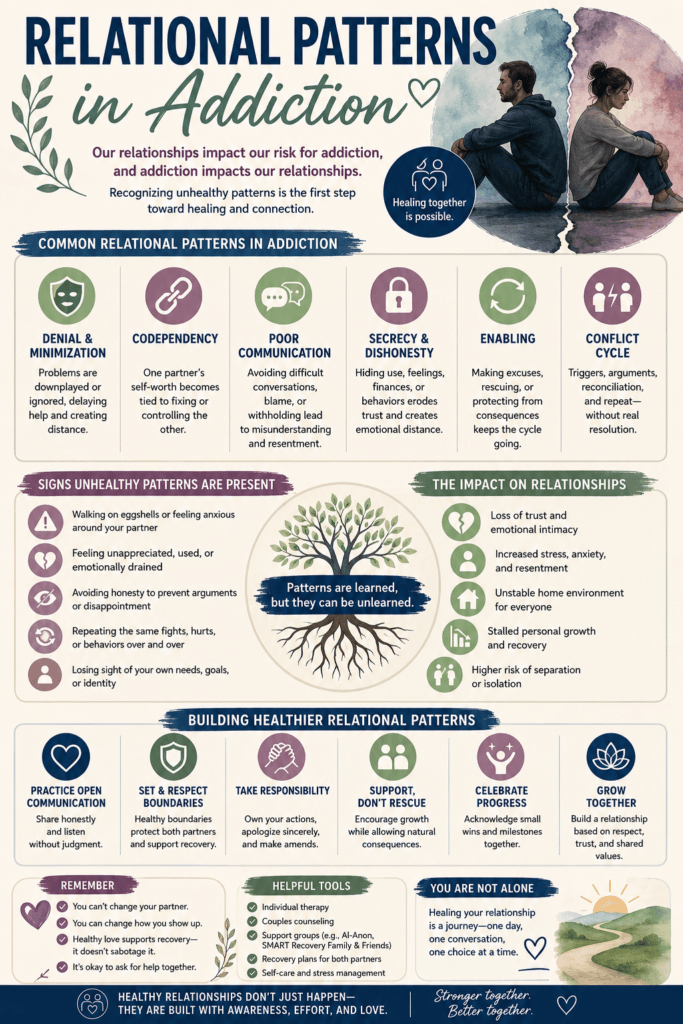
A relationship pattern is the default way someone relates to others, especially when things get stressful or conflict arises. In the world of addiction, these patterns can grow pretty tangled. They’re often shaped by early life experiences or family dynamics, then carried into adulthood, sometimes without even noticing.
For instance, if someone grew up in a home where emotional needs weren’t met, they might keep people at arm’s length or, on the other hand, become overly attached. When addictive behaviors come into play, these old patterns don’t just vanish. Actually, they usually get even stronger due to the stress, secrecy, and shame that come with substance use.
How Relational Patterns Develop
Most of the time, these patterns start early. Maybe it began with parents struggling with their own mental health, or an environment where addiction was treated as “normal”. Kids learn whom to trust and how to handle tough feelings by watching adults around them. If emotions weren’t welcomed, finding comfort in substances might feel like a pretty logical next move down the road.
Some common relationship patterns tied to addiction include:
- Codependency: Putting others’ needs over your own and feeling responsible for their happiness or problems.
- Enabling: Often, this means covering up, making excuses, or solving problems caused by someone else’s addiction.
- Isolation: Distancing yourself from others to dodge conflict, criticism, or even help.
- People-pleasing: Going out of your way to keep others happy by hiding your feelings or pretending everything’s fine.
Once these cycles get started, it’s easy to see why they hang around, even when someone wants to quit or change their life.
The Role of Relationships in Addiction Maintenance
Some people assume addiction is just about alcohol or drugs. The truth is, relationships often reinforce those habits. When trapped in unhealthy social cycles, it’s tough to break free from the things that offer short-term comfort, like substances.
Here are a few ways relationships may help keep addiction going:
- Triggers and Stress: Family arguments, breakups, or even caring messages can spark a return to substance use.
- Enabling Dynamics: If others keep jumping in to handle consequences, the person using substances might not feel the push to change.
- Lack of Genuine Support: If relationships feel fake, lonely, or judgmental, it’s tempting to turn back to substances for relief or escape.
Murray Bowen’s family systems theory and attachment theory both support these ideas, showing how family cycles repeat unless we actively work to change them. If you’re curious for more, the National Institutes of Health has some research on family systems and addiction worth checking out.
Spotting Relational Patterns in Real Life
If you’re dealing with addiction or supporting someone who is, noticing these patterns is a powerful first step—even if it feels awkward at first. Some clues look like:
- Running into the same arguments with loved ones, no matter how hard you try to switch things up
- Feeling panicked at the idea of being alone or left behind
- Putting everyone else first at your own expense
- Acting as the “fixer” in your family or group
- Pushing people away because you worry they’ll judge or leave you
I’ve seen many people have big lightbulb moments when they realize these aren’t personal failures—they’re learned habits. The good news is, with patience and support, they can be unlearned as well.
Steps Toward Breaking Unhealthy Patterns
Dealing with addiction is tough, but working on the relationship side can really give recovery a boost. Here are a few tools I’ve seen help, both for myself and for others:
- Develop Awareness: Start by noticing patterns in your closest relationships. Journaling or talking to someone you trust can help you spot repeating cycles.
- Set Boundaries: This means deciding what’s okay for you and what isn’t. Boundaries protect your time, energy, and emotional health.
- Seek Connection, Not Just Abstinence: Sobriety isn’t just about saying “no” to substances. Having healthy relationships adds meaning to your life and supports lasting change.
- Replace “Enabling” with “Real Support”: If you’re supporting someone, focus on encouraging healthy choices rather than fixing every issue. This helps adjust patterns in the long run.
- Get Professional Guidance: Therapists, social workers, and groups like Al-Anon, SMART Recovery, or Narcotics Anonymous all offer new ways to learn and practice healthier relating.
Challenges Along the Way
Switching up relationship patterns isn’t quick. Old habits can pop up when life gets messy; sometimes that’s during family holidays, a rough day, or even after something great happens and you want to celebrate in familiar ways. Critical or confused feedback from loved ones, even when they’re trying to help, can make change feel even more challenging.
Boredom and loneliness can also be powerful triggers. If you’re used to drama or always taking care of others, healthy connections might feel odd or boring at first. That awkwardness usually means you’re moving in a new—and healthier—direction instead of repeating past cycles.
Getting Through Setbacks
Relapses and slip-ups are not the end, but ignoring old relationship habits can definitely make things harder. Being honest with yourself—and with trusted people—can help you bounce back much faster. In my experience, people recover more quickly from relapses when they have solid, open, and safe relationships to lean on.
When Family Patterns Go Deep
If your patterns are especially stubborn or linked to trauma, therapy (either alone or as a family) can offer a safe place to untangle things. Looking into resources about adverse childhood experiences (ACEs) or trauma-informed care may also offer useful ideas if this speaks to your situation.
Building Healthy Relationship Skills
Relating in new and healthier ways is a skill you can learn. Here are a few practical steps that you can try:
- Active Listening: Focus on what someone’s sharing without immediately offering solutions or getting defensive.
- Honest Expression: Practice putting your true feelings out there, even just a little, instead of burying or blaming.
- Mutual Support: All good relationships are shared. Take turns supporting and being supported, and check in about needs with no guilt.
- Self-Compassion: Don’t be hard on yourself for slipping into old ways. Progress is about steady steps forward, not about getting it perfect every time.
Frequently Asked Questions
Want to know how these patterns really show up? Here are common questions I hear:
How do I spot relationship patterns if I’m so used to them?
Answer: Patterns tend to repeat during tough times. If you keep noticing the same fights, fears, or choices in different relationships, that’s a sign. Getting feedback from a therapist or support group can help you see things from a new perspective.
Is it possible to recover from addiction without changing my relationships?
Answer: Some people do it, but healthy connections make sticking to recovery way more likely. Honest and supportive relationships can ease shame and encourage positive choices.
What if the people around me don’t want to change?
Answer: You can only change your part in things. By setting boundaries, building new connections, or joining a peer support group, you can make a difference for yourself even if others aren’t ready for change.
Wrapping Up: Moving Forward
Getting a sense of how relationship patterns and addiction mix together can be a game-changer for healing. These patterns might be sneaky, but they can be changed. Whether you’re supporting someone or working on yourself, staying aware and open to change will lay the groundwork for stronger relationships and a better shot at lasting recovery.
If you want to learn more about how relationships affect addiction recovery, check out Psychology Today or resources from SAMHSA for more ideas and next steps.
Video: When Trust is Broken #AddictionAndRelationships #Communication