Jealousy shows up in all sorts of relationships and situations, and figuring out how to spot it and manage it can really make your life easier. Some jealousy is totally normal, but when it gets out of hand, it can hurt both you and your relationships. I’ll break down where jealousy comes from, the difference between healthy envy and toxic jealousy, and practical ways to keep things in check if those jealous feelings start to spiral. Plus, we’ll get into how different cultures view jealousy, ways to talk about it without shame, and how you can look out for jealousy in group situations like sports teams or families.
What Is Jealousy, Really?
Jealousy isn’t just about feeling possessive over a partner or friend. It’s that uneasy feeling that someone else might take something or someone you value, like attention, approval, love, or even your social status. I often notice it comes with a mix of anxiety, fear, and sometimes even embarrassment. While almost everyone feels it at some point, the way we react can make all the difference.
Researchers identify jealousy as an emotion rooted in comparison and insecurity. It pops up when you think there’s a threat to something you care about: romantic relationships, friendships, work projects, or family dynamics. This doesn’t only affect romantic jealousy; siblings, colleagues, and friends all experience it too. The emotion itself isn’t bad; it’s what you do with it that determines whether things get toxic or stay manageable.
In some cultures, jealousy is seen as a signal that you care deeply or value a relationship, while in others, expressing jealousy is frowned upon. Knowing how attitudes toward jealousy vary across different social settings can make it easier to talk about and understand your own feelings.
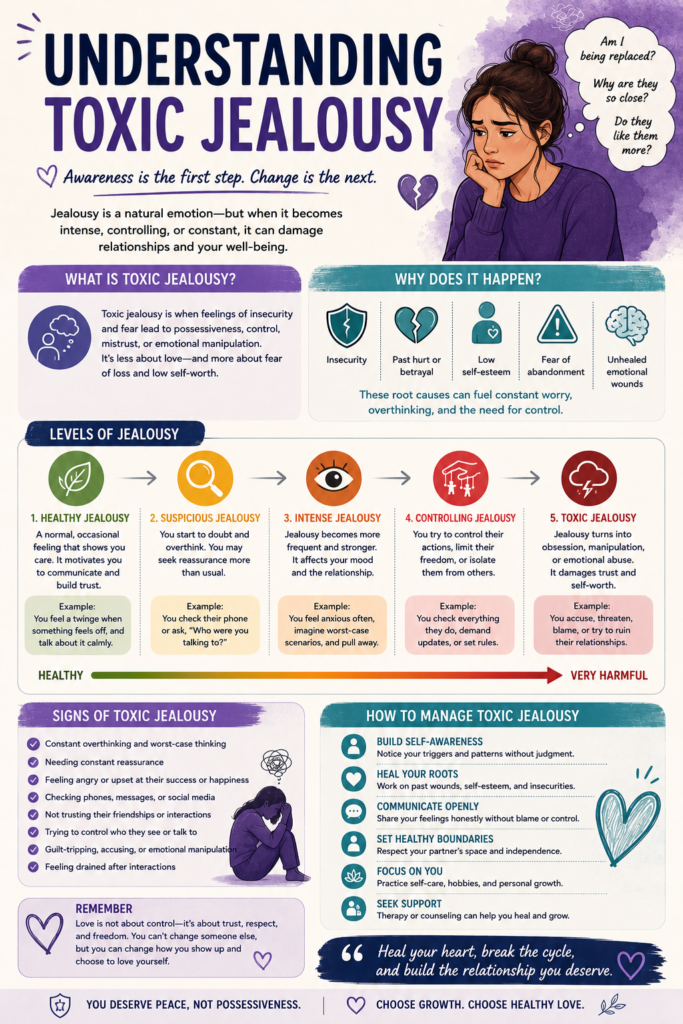
Healthy Jealousy Versus Toxic Jealousy
Recognizing healthy versus toxic jealousy is pretty important if you want to keep relationships from going sideways. Here’s how I usually explain it to people:
- Healthy Jealousy: This is when you feel a twinge of jealousy but use it as a prompt to check in with yourself or your partner. Maybe you’ve noticed a new friend hanging out with your bestie. You might feel a little left out, but you handle it by talking it over or spending more time together. No accusations, no drama, just honest communication.
- Toxic Jealousy: This version is more intense. It sticks around, doesn’t go away after a chat, and can cause a lot of stress. Toxic jealousy often drives people to demand constant updates, check messages or social media obsessively, or accuse loved ones of things that aren’t happening. At its worst, it can lead to controlling behavior, manipulation, or even emotional abuse.
Spotting where you fall on this spectrum is the first step toward healthier habits. If your jealousy feels overwhelming or causes you to act out, that’s a signal things could be moving into toxic territory.
How to Spot the Signs of Toxic Jealousy
I’ve found that toxic jealousy leaves a trail of warning signs. Recognizing them early is really useful for both you and the people you care about. Here are some common red flags:
- Constant suspicion: You feel like you have to check up on someone or test their loyalty over and over.
- Comparing yourself nonstop: You check who’s texting your partner or wonder who got the promotion at work, then beat yourself up over not measuring up.
- Avoiding honest talks: Instead of bringing concerns up openly, you drop hints, withdraw, or get passive-aggressive.
- Controlling behavior: You try to pick your partner’s friends, track their location, or demand passwords “for security.”
- Emotional rollercoaster: You go from anxious to angry to guilty, sometimes all in one day.
When jealousy reaches the toxic level, it can make both people in the relationship feel on edge or unsafe. That’s why recognizing these patterns is the first line of defense.
Jealousy isn’t always directed at one person either. Teams dealing with competition or siblings fighting for attention can also spiral if no one calls out jealousy for what it is. Talking together as a group and making space for everyone’s feelings can reduce this kind of group jealousy before it takes over.
Main Causes of Jealousy
Jealousy almost always has roots somewhere, and knowing where these feelings come from can help you handle them better:
- Low self-esteem: If you don’t feel confident or secure in yourself, it’s a lot easier to get jealous, even over small stuff.
- Past experiences: If you’ve been hurt or betrayed before, you might be extra sensitive to similar situations, even if nothing’s wrong this time around.
- Lack of trust: Without trust, every action looks suspicious. Building trust, or admitting when it’s broken, is really important here.
- Fear of abandonment: Worrying that someone will leave you can trigger jealousy, even if that fear isn’t based on actual behavior.
- Societal and cultural expectations: Sometimes, external pressure can lead to unrealistic ideas about relationships, success, or popularity.
Instead of ignoring these root causes, it’s often more helpful to name them and see whether they align with what’s actually happening right now. In larger families or friend groups, jealousy can get tangled up with competition for praise, leaving people feeling stuck or left out. Naming the issue together can help everyone feel seen and stop old patterns from repeating.
Practical Ways to Manage Jealousy
The good news is, you don’t have to let jealousy run the show. I use and recommend a few simple steps that make a real difference over time:
- Pause before reacting: When you notice that jealous feeling rise up, take a minute. Ask yourself if your brain is making assumptions or if you actually have a reason to be suspicious.
- Talk about it: Honest conversations can lower the temperature really quickly. Try saying something like, “I noticed I felt jealous, but I want to talk about it so I don’t let it get out of control.” You’re not accusing; you’re opening up.
- Check your facts: Jealousy can make little things seem huge. Ask yourself, “Is there evidence for what I’m worried about, or am I filling in the gaps?”
- Care for your self-esteem: Boosting your confidence makes it easier to trust others. Spend time on hobbies, friendships, or self-care that help you feel good about yourself outside of any relationship.
- Look at past patterns: If jealousy has caused problems before, think about what triggered it and how you might respond differently now.
Not all solutions are easy or quick, but practicing a little self-awareness every day really does help keep jealousy from taking over. If you find it tough to talk about jealousy, writing down your thoughts in a journal before sharing them out loud can make it easier to open up.
Things That Make Toxic Jealousy Worse
Sometimes, jealousy isn’t just about emotions but also about what you do in response. Here are a few behaviors that can turn mild jealousy into something more damaging:
- Checking phones or social media accounts: Snooping doesn’t build trust; it just makes you more anxious and can break boundaries.
- Pushing for constant reassurance: Everyone needs a little reassurance now and then, but demanding answers all the time can exhaust your partner or friends.
- Ignoring your own triggers: If you pretend you’re not jealous without working through it, the emotion can bubble up in other, less healthy ways.
- Escalating arguments quickly: Turning every jealous feeling into a fight creates a tough cycle to escape.
It helps to notice these habits early and switch them up before they become routine. Remember, being open about what triggers your jealousy does not make you weak; it just means you’re trying to get ahead of a problem.
Common Jealousy Traps and How to Avoid Them
I see a few recurring patterns with toxic jealousy that almost everyone falls for at some point. Making small changes to avoid these can help keep jealousy out of the toxic zone:
- Attachment traps: Feeling like you need your partner to “complete you” or solve your loneliness. Focusing on your own growth keeps the relationship healthier.
- Rumination: Playing out worst-case scenarios in your head over and over. Try to interrupt these loops by focusing on what’s real instead of what’s possible.
- Social comparison: Judging your life or relationship based on what you see on social media. Remember, most people only post their highlight reels.
If you catch yourself falling into these patterns, take a step back and ask yourself what you really need. Sometimes it’s just a little reassurance from yourself or a reminder that you’re more than your fears.
When Jealousy Starts to Interfere With Your Life
If jealousy keeps popping up and gets in the way of your daily life or your relationships, it might be time to get extra support. Therapy or relationship counseling is really helpful for breaking old patterns and learning new tools.
You might notice big problems like constant fighting, isolation from friends, or anxiety that doesn’t go away even after lots of reassurance. These are pretty good signs that an outside perspective could be helpful. Even just talking to someone you trust can make a difference.
In some cases, jealousy can overlap with deeper mental health struggles like anxiety or depression. Let your therapist know if you notice patterns that seem connected, because working on the underlying issues can make a big difference with jealousy too.
Real-Life Examples: How Jealousy Affects Different Situations
- Romantic relationships: Feeling threatened by your partner’s coworkers or friends might seem harmless at first, but if you start tracking them or questioning their loyalty regularly, it creates distance instead of closeness.
- Friendships: Getting jealous if your friend spends time with others can drive them away if it turns into possessiveness.
- Workplace: Comparing yourself to a colleague’s success may motivate you, but it turns toxic if you try to sabotage their work or spread rumors.
I’ve seen situations turn around just by naming the jealousy out loud, getting some reassurance, and switching the focus to personal growth or shared goals.
In families or sports teams, jealousy might show up when someone gets more praise or attention. The best way to keep things running smoothly is to address favoritism and give everyone a chance to shine, rather than letting resentment build in silence.
Frequently Asked Questions About Jealousy
Here are a few questions people usually ask when they’re trying to track down the facts about jealousy:
Question: Is it normal to feel jealous sometimes?
Answer: Absolutely. Almost everyone feels jealous on occasion. The key is how you handle those feelings.
Question: How do I know if my jealousy is unhealthy?
Answer: If jealousy makes you feel anxious all the time, drives your actions, or damages your relationships, it might be time to take a step back and address it.
Question: Can jealousy ever be good for my relationship?
Answer: Healthy jealousy can spark good conversations and highlight what matters to you or your partner. As long as it leads to honest communication rather than control, it can actually strengthen the connection.
Question: What’s the best way to handle a jealous partner?
Answer: Support them, communicate openly, set boundaries, and encourage self-confidence. But remember, you’re not responsible for managing all their emotions by yourself.
Wrapping Up: Learning to Work With Jealousy
Understanding jealousy and knowing how to spot the warning signs can help you build better, healthier relationships. It comes down to self-awareness, open communication, and a bit of patience with yourself and others. With practice, you can turn those uneasy feelings into chances for growth, trust, and even a little more self-love along the way. Staying sharp about your emotions doesn’t just help with jealousy—it sets you up for better connections across the board.
Video: That ‘protective’ behavior might actually be abuse #relationshipadvice #toxic #shorts