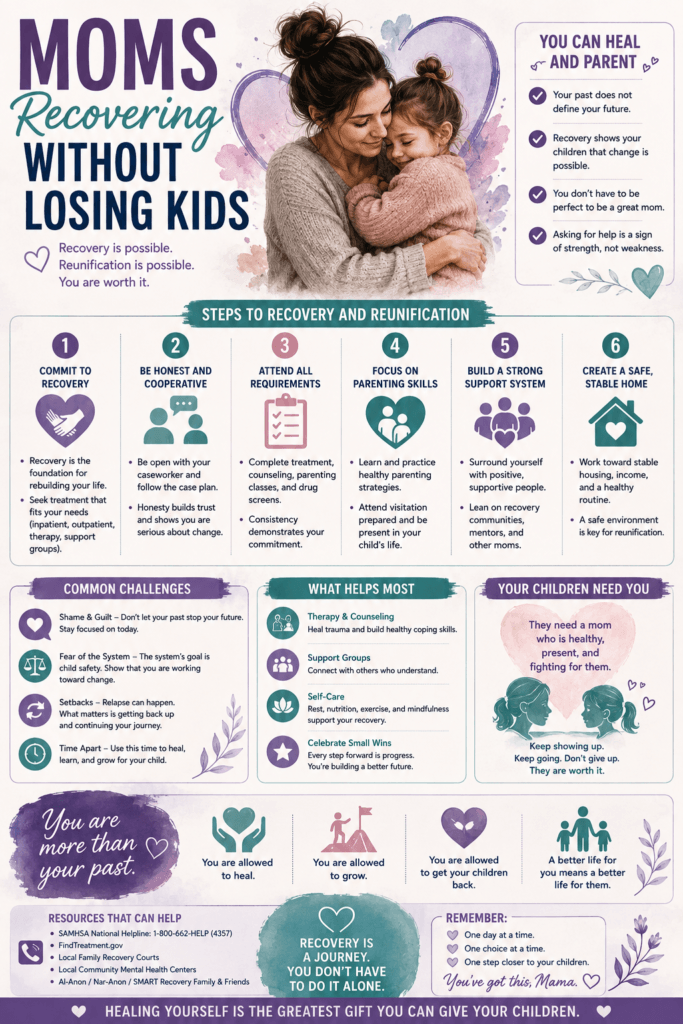
Moms who are in recovery often carry an extra weight: the fear of losing their kids. It’s something that can keep many moms from getting needed help, or it can make recovery feel twice as hard. Every mom’s story is different, but if you’re trying to recover from addiction while holding on tightly to your family, you’re not alone. I’ve gathered ideas, real strategies, and resources to help keep moms and kids together during recovery, because family stability makes a huge difference on this ride.
Why Recovery as a Mom Can Feel So Overwhelming
Moms in recovery get hit with a double challenge, dealing with addiction or mental health issues, plus the never-ending responsibilities of parenting. The fear of having children removed by authorities or being judged harshly by others can add even more pressure. I’ve heard from moms who say that every step—whether it’s looking for help, going to appointments, or even talking honestly about their struggles—feels risky because they don’t want to be separated from their children. It makes total sense to feel this way. But the good news is there are more pathways and support systems out there designed to help keep families together while moms get the help they need.
Understanding Family-Based Recovery Programs
Family-based recovery programs are designed to support mothers and their children together, rather than focusing only on the individual. These programs exist all over the U.S., and some offer living centers where moms can bring their children. Others partner with parenting support services and outpatient counselors to craft a plan just for you. These setups usually provide childcare, parenting skill workshops, and therapy that includes the whole family.
The Substance Abuse and Mental Health Services Administration (SAMHSA) recommends these types of programs because they know that keeping families intact can really lift recovery outcomes. A mom who feels supported in keeping her family together often feels more hopeful; plus, kids usually do better staying with parents when it’s safe rather than being moved through foster care or temporary placements.
Steps for Moms: Recovering Without Losing Kids
Finding the right path isn’t always straightforward, but these steps give a solid place to start:
- Reach Out for the Right Support: Specialized programs or agencies can help moms begin recovery while maintaining custody. Track down local women’s shelters, substance use hotlines, and treatment programs that advertise family housing or parenting support.
- Know Your Rights and Local Laws: Every state has its own rules for how child protective services (CPS) handle families in crisis. Understanding the process and your rights as a parent can take away some of the uncertainty. Organizations like the National Family Preservation Network offer resources and advocacy tips.
- Build Your Team: Having a group of supportive people, like social workers, counselors, relatives, friends, or parent advocates, can be a game-changer. They can help with transportation, childcare, or even just encouragement on tough days.
- Document Your Progress: Keeping track of appointments, evidence of sobriety, therapy sessions, and positive parenting moments can show social workers and courts that you’re taking recovery seriously and putting your kids first.
- Stay Communicative: Whenever possible, keep in touch with your child’s school, pediatrician, and social services. Open, honest communication (where you feel safe) can help show that you’re committed to your kids’ well-being.
Challenges Moms in Recovery Often Face
Recovery is rarely a simple or fast ride, especially for moms. Here are common barriers and some ideas for steering through them:
- Limited Access to Family-Friendly Rehab: Not every treatment center allows children or is set up for parents. Sometimes the nearest family-friendly program is hours away.
- Stigma and Judgment: Moms face more blame and social stigma than dads or individuals without children. It can make it feel unsafe to ask for help or share your story.
- Childcare Issues: Even if you find an outpatient program, it’s tough to find someone you trust to watch your kids while you attend meetings or therapy.
- Money and Transportation: The cost of care, transportation to appointments, and lack of paid time off stack up, especially for single moms or those with limited income.
- Communication with Child Welfare: Sometimes CPS may not seem supportive at first. Talking to them can be intimidating, especially when there’s fear of losing custody.
How to Tackle These Barriers
I’ve seen moms get resourceful, connecting with other parents in support groups, contacting local nonprofits for childcare help, applying for sliding-scale or free community programs, and using online group therapy when getting to appointments is a struggle. Sometimes, reaching out to advocacy groups can make a big difference when facing stigma or navigating complicated child welfare systems. These organizations know the ins and outs and can help you share your story in a way that shows both your love for your kids and your commitment to recovery.
Why Family-Centered Recovery Matters
Years of research show that when families stay together during recovery, the chances of long-term sobriety go up. Kids feel safer and keep their sense of routine, and moms avoid the trauma of separation, which can otherwise push some back into old habits. Some programs even include parenting therapy, bonding exercises, and support for rebuilding trust with children.
One study from the National Institutes of Health found that moms in family-centered programs had better outcomes for themselves and their children than those who entered recovery alone. That’s why it’s so important to push for programs and policies that consider the whole family, not just the individual mom.
Real Life Supports and Resources for Moms
Sometimes the most helpful resources are people or organizations that have “been there, done that.” Here are a few options I’ve found especially helpful:
- SAMHSA (Substance Abuse and Mental Health Services Administration): Their helpline can guide you to family-friendly treatment facilities.
- Child Welfare Information Gateway: Information about rights, child protection processes, and family preservation services.
- National Family Preservation Network: Resources and advocacy aimed at keeping families together.
- Local churches and community centers: Some offer support groups, emergency childcare, transportation assistance, and meal programs.
- Parent-to-parent support networks: These are groups of moms who have faced similar situations and can offer emotional support or facilitate child-watching swaps.
Frequently Asked Questions
Here are some questions I hear a lot from moms trying to recover while keeping their families together.
Question: Can I get help for addiction without automatically losing custody?
Answer: In many cases, yes. Laws vary, but more states and agencies now look for ways to keep families united unless there’s a reason the children are unsafe. It helps to work with social workers and programs that support family-based care and to keep track of all the steps you’re taking toward recovery.
Question: What if my local rehab doesn’t take children?
Answer: This comes up a lot. Ask about programs that do, even if they’re farther away, or look for outpatient centers that offer parenting support. Some states offer transportation or temporary emergency childcare to help moms get to treatment.
Question: How do I manage stress from parenting and recovery at the same time?
Answer: Connecting with others who get it is super helpful, whether it’s peer support, therapy, or online parent groups. Small routines like daily check-ins with your kids or evening walks can help everyone feel more steady. Don’t be afraid to ask for short breaks or extra help from family, friends, or local organizations.
Wrapping up: Hope and Healing Go Together
Getting sober and being the mom you want to be can feel like a lot, but it’s far from impossible. Every positive step, whether it’s making a phone call, going to an appointment, or asking for help, counts, and there are people and programs willing to stand with you, not against you. The ride really does get more manageable with the right support and information, especially when you know you don’t have to choose between your recovery and your family.
The path won’t always be smooth, but it’s definitely worth it. Keeping hope alive, using family-centered supports, and giving yourself plenty of grace during setbacks can make a difference for you—and your kids.
Video: Moms: You CAN Recover AND Keep Your Family. Here’s How.