If you’ve ever caught yourself repeatedly scrolling your phone, munching on snacks when you aren’t actually hungry, or refreshing your inbox for the third time in 10 minutes, you’ve had a run-in with everyday addictive behaviors. These little routines pop up all the time in daily life, and they’re way more common than most people realize. I’m going to break down what these behaviors look like, explore why they happen, and share practical ways to spot and manage them so they don’t quietly take over your routine.
What Are Everyday Addictive Behaviors?
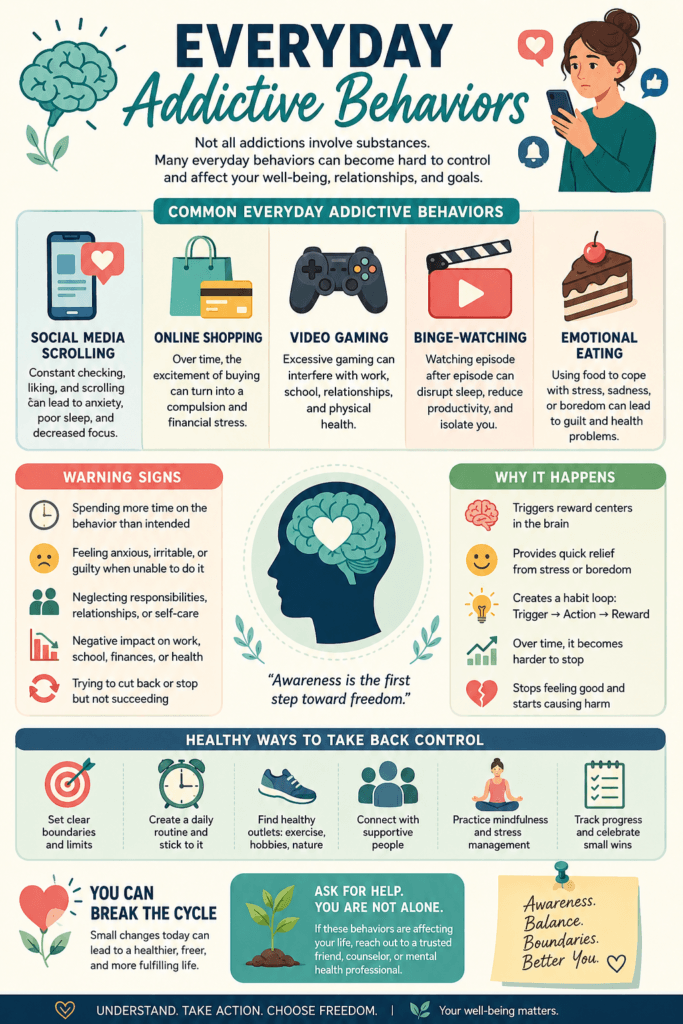
Everyday addictive behaviors are habits that give you a quick hit of satisfaction but can be difficult to stop or control. Think of these as routines people fall into almost without noticing, like checking social media throughout the day, grabbing sweets for a mood boost, or losing hours watching shows. These things aren’t necessarily dangerous in small doses, but when they start crowding out healthier habits or become tough to break, things get tricky.
The point isn’t about clinical addiction like with substances, but more about patterns of behavior that can sneak up and make life feel off balance. Phone use, snacking, shopping, gaming, and even doomscrolling the news all fit under this umbrella. Job stress, boredom, or even just daily routines can help these habits grow faster than we expect.
Why Do Addictive Behaviors Happen So Easily?
Our brains are wired to love reward loops. When you eat a tasty treat or get a like on social media, your brain sends out some dopamine—the built-in feel-good chemical. After a while, you start wanting that feeling more often. I’ve definitely had days where “just five minutes” on my favorite app turns into a lunch break with no real break at all.
- Instant Rewards: Habits that pay off quickly stick faster than long-term activities like exercise. That quick scroll or snack is just too easy for your brain to latch onto.
- Stress Relief: Life gets stressful, and these quick fixes distract from anxiety or boredom. Even something as simple as an afternoon soda can become a “need” instead of a choice.
- Boredom Busters: When nothing else is happening, it’s really easy to reach for those fallback activities—social media, comfort food, or online shopping, for example.
This mix of easy rewards, escaping tough feelings, and habit-building makes it simple for these behaviors to become a regular part of everyday life.
Recognizing Addictive Patterns in Daily Life
I’ve found it super helpful to notice when something shifts from an occasional treat to a not-so-great habit. Here’s how you can spot the difference:
- Loss of Control: If you tell yourself, “Just one more chapter,” but end up reading until 2 a.m., that might be a sign.
- Negative Impacts: If you’re skipping activities you enjoy, losing sleep, or spending more than you mean to, that’s a good cue to check in with yourself.
- Hard to Stop: Trying to cut back makes you feel antsy, bored, or even irritable, even when you know it’s a good move.
If any of this sounds familiar, you’re definitely not alone. Most people run into at least one of these points with a habit in their life—even harmless stuff like video games or TikTok.
Common Types of Everyday Addictive Behaviors
Everyone has their habits that can get a little too cozy. Here are some of the most common ones (many of which I’ve wrestled with myself):
- Tech Habits: Doomscrolling news, refreshing email, or watching endless YouTube or streaming videos are all modern classics. Devices are designed to grab your attention, so it’s not a shock that these habits gain ground fast. A 2023 survey found nearly half of Americans thought they spent too much time on their phones each day. (Source: Pew Research)
- Food and Snacking: Reaching for food when you’re not hungry—especially sweets or salty snacks—often happens for comfort or just to fill time. Emotional eating plays a big role here, and hunger isn’t always the reason.
- Shopping: Online shopping is easier than ever. That mini thrill when you click “Buy Now” can lead to more purchases than you intended, especially if you shop to fix stress or boredom.
- Gaming: Video games on phones or computers are made to reward you and pull you back for “just one more level.” It’s no wonder these stick as habits.
- TV and Streaming: It’s simple to blow past a single episode when the next one autoplays. Binge-watching is fun, but it can take over your downtime before you know it.
How to Manage Everyday Addictive Behaviors
Getting a handle on these habits doesn’t mean you have to quit having fun. It’s about finding balance and keeping things in check. Here’s what has worked for me and others who’ve tackled the same:
- Set Boundaries: Give yourself a clear time boundary, like 20 minutes of social media after dinner, then silence your phone. Even tiny limits can help break those long stretches.
- Switch Up the Routine: If you always snack when bored, try swapping it for a glass of water, a quick walk, or a chat with a friend. Finding healthy substitutes makes it easier for your brain to break the connection.
- Get Some Backup: Tell a friend about your goal—this helps with accountability. You can also try group app blockers or phone-free evenings, both of which are great ways to build mutual support.
- Practice Mindfulness: Paying closer attention to your triggers and feelings in the moment can really help. Before hitting “play” on another show, pause and check if it’s genuinely what you want.
- Wait It Out: When you get the urge to fall back into a habit, just wait ten minutes before acting. Often, the craving passes and breaks the automatic reaction.
Common Challenges and Solutions
Kicking old habits is tough, and setbacks are perfectly normal. Here are some challenges you might hit—and how to deal with them:
- Slip-Ups: Sliding back into an old habit happens, especially when you’re stressed or tired. Rather than beating yourself up, look at what triggered the slip and set a plan for next time.
- Peer Pressure: If your circle always scrolls social media together or orders takeout every week, it’s tough to break out of that loop. Being honest about your goal and suggesting a different activity helps keep things fun and respectful.
- Boredom: Cutting out a well-worn habit leaves empty time to fill. This is your chance to try new hobbies—even if it feels awkward at first. Drawing or taking walks can help fill the gaps left by breaks from doomscrolling.
Instant Gratification vs. Long-Term Gains
Brains chase quick rewards, but new habits take some time to stick. Remind yourself why you want to change: a better mood, extra free time, and less stress are all solid reasons. If you stick with it, those new routines become much easier and more satisfying down the line.
When to Get Extra Help
If one of these habits starts interfering with relationships, work, or finances, or starts making you feel bad about yourself, chatting with a therapist or counselor is a smart move. These professionals understand habit change—not only severe addictions. Sometimes just a few conversations can arm you with new tools and insights.
Frequently Asked Questions
Question: How do I know if a habit has become addictive?
Answer: You might spot that you’re doing it more often, find it tough to scale back, or feel bad when you don’t get that “fix.” If it’s getting hard to manage or messing with daily life, that’s a cue to reexamine your routine.
Question: Is it bad to have these habits if they make me happy?
Answer: Enjoying snacks, games, or social media is perfectly normal. Things become a concern when they take over other stuff you care about—like your sleep, health, or actual connections. The key is balance.
Question: What’s the best way to cut down on a behavior I want to change?
Answer: Start small, setting easy goals like trimming back one part of the routine. Track your progress and reward yourself when you meet your goal; this helps make it achievable and motivating.
Nurturing Healthier Everyday Habits
Everyday addictive behaviors are a normal part of the modern world, but they don’t have to be calling the shots. When you pay attention, set gentle boundaries, and try out fresh routines, you’ll open up time and space for things that really recharge you. If you feel stuck, remember you’re far from alone—and even a few small changes add up to something meaningful over time.
Video: Don’t let your habits control you #AddictiveBehaviors #MentalHealth