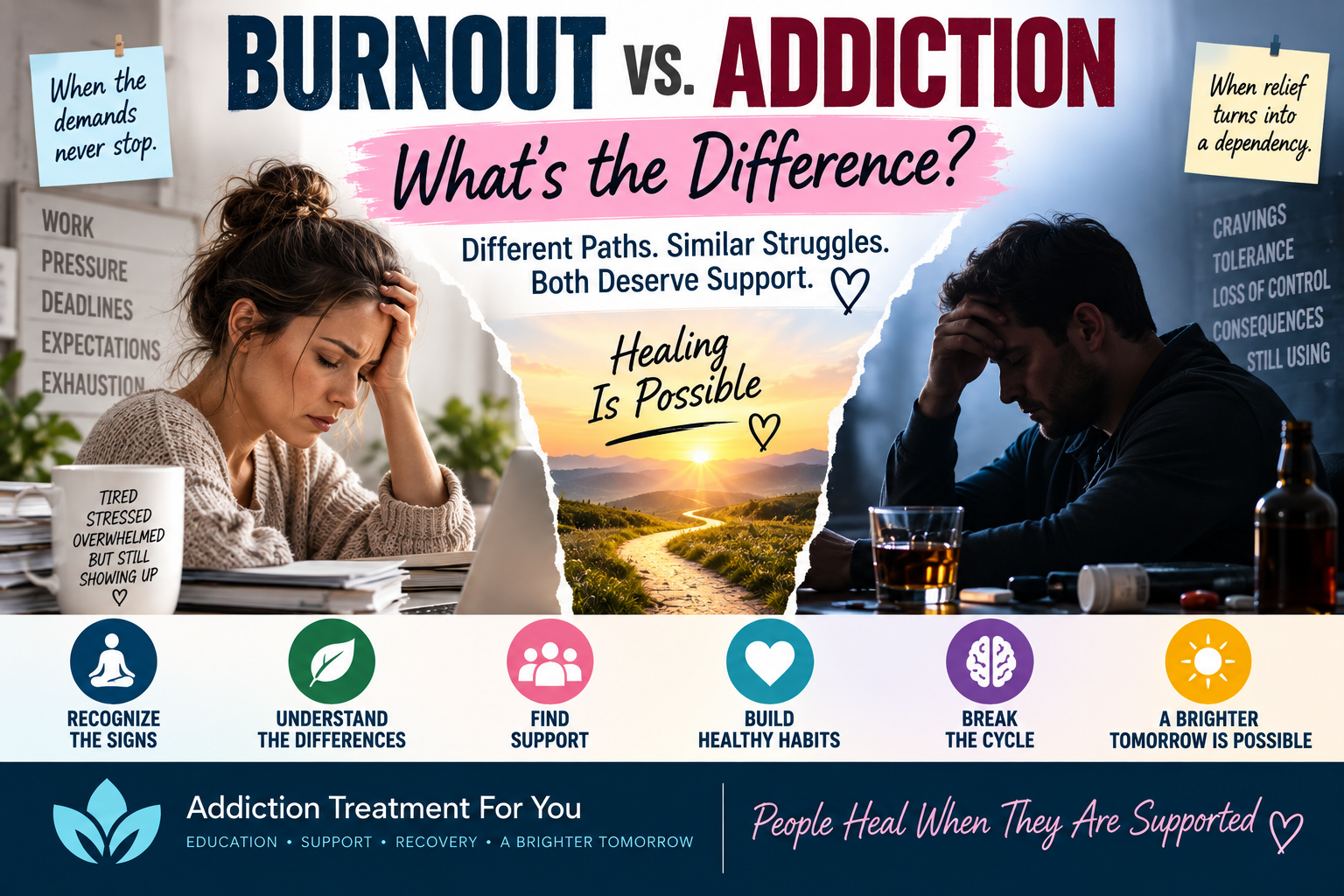
Feeling exhausted, emotionally drained, unmotivated, or desperate for relief can make someone wonder: Am I burned out, or is something more serious happening?
Burnout and addiction can sometimes look similar from the outside. Both may involve changes in mood, declining performance, withdrawal from other people, disrupted sleep, irritability, and difficulty managing everyday responsibilities. They are not, however, the same condition.
Burnout generally develops from prolonged, poorly managed stress, particularly in occupational settings. Addiction, or substance use disorder, involves a problematic pattern of substance use that causes significant impairment or distress and may include impaired control, cravings, risky use, and continued use despite harmful consequences.
The distinction matters because someone experiencing burnout may need significant changes in workload, boundaries, rest, and stress management, while someone experiencing addiction may require specialized substance use treatment.
Sometimes, a person may be experiencing both.
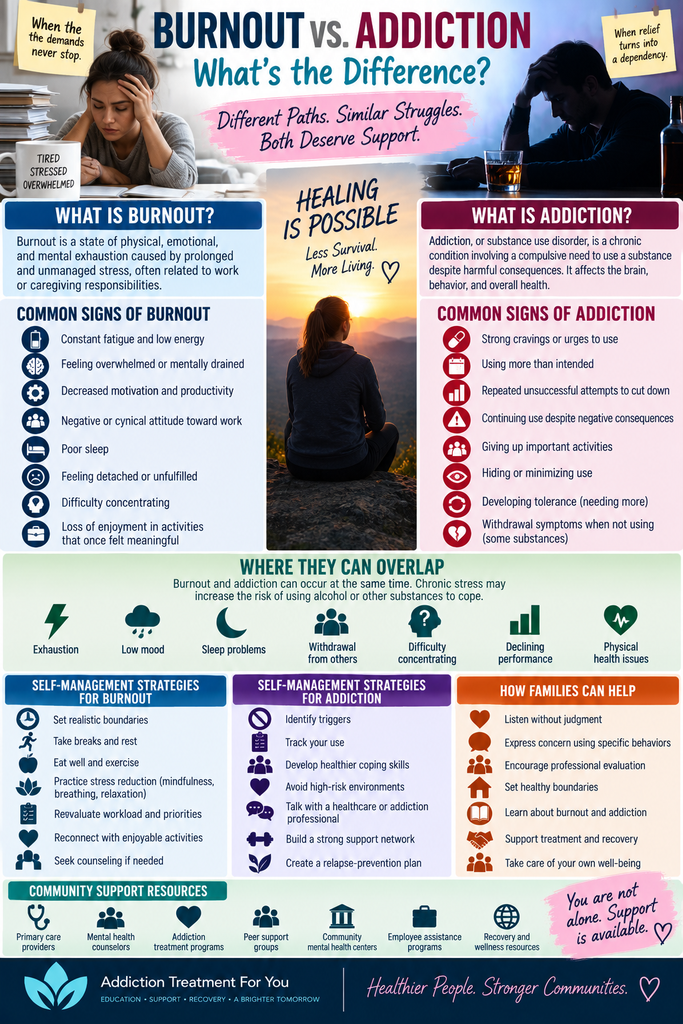
What Is Burnout?
Burnout is more than simply having a difficult day at work.
The World Health Organization describes burnout as an occupational phenomenon resulting from chronic workplace stress that has not been successfully managed. It is characterized by exhaustion, increased mental distance or negativity toward one’s job, and reduced professional effectiveness.
Someone experiencing burnout may think:
“I can’t keep doing this.”
“I have nothing left to give.”
“I don’t care about work anymore.”
“I used to be good at this. What happened?”
Burnout can gradually affect relationships, sleep, physical health, and overall quality of life.
What Is Addiction?
Addiction involves more than using alcohol or another drug to relax occasionally.
A substance use disorder develops when substance use becomes increasingly difficult to control and continues despite significant consequences.
Warning signs may include:
- Strong cravings or urges to use
- Using more than intended
- Repeated unsuccessful attempts to reduce or stop
- Spending considerable time obtaining, using, or recovering from substances
- Continuing despite relationship, health, or occupational problems
- Giving up important activities
- Using substances in dangerous situations
- Developing tolerance
- Experiencing withdrawal with certain substances
- Hiding or minimizing substance use
Not everyone with a substance use disorder experiences every symptom.
Burnout and Addiction Can Overlap
One reason these conditions can become confusing is that chronic stress may contribute to unhealthy coping behaviors.
Imagine someone who finishes every exhausting workday with alcohol.
Initially, drinking may seem like a way to relax. Eventually, one drink becomes several. The person begins thinking about alcohol during stressful afternoons and increasingly depends on it to transition from work to home.
Now two problems may be developing simultaneously.
Burnout may be creating emotional exhaustion, while alcohol is becoming the primary method of coping with that exhaustion.
Addressing only the drinking without addressing the overwhelming stress may leave an important trigger untreated. Addressing only the burnout while ignoring escalating alcohol use may allow a substance use disorder to progress.
Key Differences Between Burnout and Addiction
One helpful distinction is to examine what happens when the stressor or substance is removed.
Someone experiencing occupational burnout may begin to improve when workload, working conditions, recovery time, boundaries, or other sources of chronic workplace stress change in meaningful ways.
Addiction behaves differently. Even when the original stress improves, cravings, compulsive substance use, withdrawal, or established behavioral patterns may continue.
Ask yourself:
Am I exhausted primarily because of prolonged stress?
Have substances become my main way of coping?
Can I comfortably choose not to use them?
Am I using more than I planned?
Have I tried unsuccessfully to cut down?
Do I continue using despite consequences?
The answers can help determine whether professional assessment is appropriate.
Self-Management Strategies for Burnout
Burnout recovery requires more than telling yourself to “think positively.”
Helpful strategies may include:
- Identify the major sources of chronic stress.
- Establish clearer boundaries between work and personal life.
- Take scheduled breaks rather than waiting until exhaustion becomes severe.
- Protect adequate sleep.
- Maintain regular meals and physical activity.
- Reduce unnecessary commitments when possible.
- Reconnect with enjoyable activities outside work.
- Use relaxation, mindfulness, or breathing exercises.
- Talk with supervisors about realistic workload changes when appropriate.
- Seek counseling when stress becomes difficult to manage independently.
Self-care cannot fix every unhealthy workplace. Sometimes the environment itself needs to change.
Self-Management Strategies When Substance Use Is Increasing
If alcohol or other substances are becoming the primary way to manage stress, additional strategies are needed.
Consider:
- Track how frequently and how much you are using.
- Identify situations and emotions that trigger substance use.
- Develop substance-free ways to decompress after stressful days.
- Avoid environments strongly associated with problematic use.
- Talk openly with a healthcare or addiction professional.
- Build relationships with people who support healthier choices.
- Develop a relapse-prevention plan if you are already in recovery.
- Seek professional guidance before abruptly stopping substances that can cause medically dangerous withdrawal.
Alcohol and benzodiazepine withdrawal, for example, can sometimes become medically serious. Detoxification decisions should therefore be made with appropriate professional guidance when physical dependence may be present.
How Families Can Recognize the Difference
Family members may notice changes before the individual recognizes them.
A person experiencing burnout may become exhausted, irritable, detached, cynical, or less productive.
With addiction, families may additionally notice secrecy, unexplained spending, intoxication, changes in substance tolerance, repeated promises to cut down, missing medications, risky behavior, or continued substance use despite obvious consequences.
Families can help by:
- Expressing concern without immediately accusing.
- Describe specific behaviors rather than applying labels.
- Ask how the person has been coping with stress.
- Encourage medical or behavioral health evaluation.
- Avoid providing money or resources that enable substance use.
- Establish reasonable household boundaries.
- Learn about burnout and substance use disorders.
- Support treatment rather than demanding instant change.
- Seek counseling or support for themselves when necessary.
Instead of saying, “You’re an addict,” a family member might say, “I’ve noticed you’re drinking much more since work became overwhelming, and I’m worried about you.”
That approach focuses on observable behavior rather than shame.
Community Support Strategies
Burnout and addiction should not have to be managed in isolation.
Depending on the situation, community resources may include:
- Primary care professionals
- Mental health counselors
- Addiction treatment programs
- Employee assistance programs
- Peer recovery specialists
- Recovery support groups
- Community mental health centers
- Occupational health services
- Family counseling programs
- Workplace wellness resources
Someone experiencing both burnout and problematic substance use may benefit from integrated care that addresses stress, mental health, physical health, and substance use together.
When Burnout Becomes a Recovery Warning Sign
For someone already recovering from addiction, burnout deserves particular attention.
Chronic exhaustion can weaken established routines. Someone may stop attending recovery meetings, exercise less, sleep poorly, isolate themselves, and begin thinking about substances as a quick source of relief.
These changes do not automatically mean relapse is coming, but they can signal that the person’s recovery system needs reinforcement.
Early intervention is usually easier than rebuilding after a crisis.
Burnout, Depression, and Addiction Are Not Interchangeable
Burnout can also resemble depression.
Persistent sadness, hopelessness, loss of pleasure, major sleep or appetite changes, difficulty functioning, or thoughts of death or suicide deserve professional evaluation rather than being automatically attributed to burnout.
Likewise, depression and addiction frequently occur together and may require coordinated treatment.
Labels matter less than obtaining an accurate assessment when symptoms are significantly interfering with someone’s life.
Rest Alone May Not Solve the Problem
A vacation may temporarily reduce burnout symptoms, but returning to exactly the same unsustainable environment can restart the cycle.
Similarly, simply stopping a substance for several days does not necessarily address addiction.
Long-term improvement requires examining why the pattern developed and what continues to maintain it.
Burnout might mean workload, lack of control, inadequate support, poor boundaries, or chronic workplace conflict.
For addiction, it may involve cravings, reinforcement, stress, trauma, mental health symptoms, social environments, physical dependence, or established habits.
Moving Forward
Burnout says, “The demands have exceeded my ability to recover.”
Addiction may say, “I am increasingly relying on a substance despite the harm it is causing.”
And sometimes both messages are happening at once.
Self-management can help identify stressors, strengthen routines, and develop healthier coping strategies. Families can recognize changes, encourage treatment, and provide support without enabling harmful behavior. Community and professional resources can address the deeper problems that personal determination alone may not resolve.
The goal is not to decide whether someone is simply “stressed” or “addicted” based on appearances. The goal is to recognize patterns early enough to intervene.
Burnout needs recovery from chronic stress. Addiction needs recovery from compulsive substance use. When the two overlap, addressing both may provide the strongest path toward lasting wellness.
Frequently Asked Questions
Here are some common questions:
1. What is the main difference between burnout and addiction?
Burnout is generally associated with prolonged, poorly managed stress, particularly chronic workplace stress. Addiction, or substance use disorder, involves a problematic pattern of alcohol or drug use that causes significant impairment or distress. Addiction may involve cravings, impaired control, and continued use despite harmful consequences.
2. Can burnout look like addiction?
Sometimes. Both can involve irritability, poor sleep, isolation, difficulty concentrating, declining performance, and changes in relationships. The underlying patterns, however, are different, which is why a professional assessment may be helpful when symptoms are significant.
3. What are common signs of burnout?
Burnout may involve persistent exhaustion, increased negativity or emotional distance from work, reduced professional effectiveness, difficulty concentrating, and feeling overwhelmed by responsibilities. Burnout is more than simply feeling tired after a difficult week.
4. What are common warning signs of addiction?
Warning signs may include strong cravings, using more than intended, unsuccessful attempts to cut down, hiding substance use, neglecting responsibilities, and continuing to use despite physical, emotional, occupational, or relationship consequences.
5. Can someone experience burnout and addiction at the same time?
Yes. Chronic stress may lead some people to rely increasingly on alcohol or other substances for relief. Eventually, the person may be dealing with both an unhealthy stress environment and problematic substance use.
6. Can burnout cause addiction?
Burnout does not automatically cause addiction. However, chronic stress can increase vulnerability to unhealthy coping behaviors. Frequently using alcohol or drugs to manage exhaustion, anxiety, or emotional distress can become increasingly problematic.
7. How can I tell if I’m drinking because of burnout or developing an alcohol problem?
Consider whether alcohol has become necessary for relaxation, whether you’re drinking more than intended, experiencing cravings, hiding your drinking, unsuccessfully trying to reduce it, or continuing despite consequences. These patterns deserve attention regardless of why the drinking originally began.
8. Will taking a vacation cure burnout?
A vacation may provide temporary relief, but it may not solve burnout if the underlying conditions remain unchanged. Workload, lack of control, inadequate support, unrealistic expectations, and poor work-life boundaries may need to be addressed.
9. Will taking a break from alcohol prove that I don’t have an addiction?
Not necessarily. Being able to stop temporarily does not by itself rule out a substance use disorder. Healthcare professionals consider a broader pattern of control, cravings, consequences, and functioning.
10. What self-management strategies can help with burnout?
Helpful strategies can include improving sleep, setting realistic boundaries, scheduling recovery time, exercising, eating regularly, reducing unnecessary commitments, and reconnecting with meaningful activities. Workplace conditions may also need to change.
11. What self-management strategies can help when substance use is becoming problematic?
Track when and why you use substances, identify triggers, develop alternative coping strategies, avoid high-risk situations, and discuss concerns with a healthcare or addiction professional. People already in recovery may also benefit from strengthening their relapse-prevention plan.
12. Is it safe to suddenly stop drinking if I think I have an alcohol problem?
Not always. People who have developed physical dependence on alcohol can experience potentially dangerous withdrawal. Heavy or prolonged alcohol use should be discussed with a healthcare professional before abruptly stopping, particularly if previous withdrawal symptoms have occurred.
13. Can burnout be confused with depression?
Yes. Exhaustion, reduced motivation, sleep difficulties, and problems concentrating can occur with both. Depression can also involve persistent sadness, hopelessness, and loss of interest or pleasure across different areas of life. Significant or persistent symptoms deserve professional evaluation.
14. How can families tell whether someone is burned out or struggling with addiction?
Families should focus on observable changes rather than trying to diagnose the person. Burnout may become apparent through exhaustion, detachment, and declining work performance. Addiction may additionally involve secrecy, intoxication, increasing substance use, financial problems, or continued use despite obvious consequences.
15. How should families approach someone they are worried about?
Use specific observations rather than labels. For example, saying “I’ve noticed you’ve been drinking much more since work became overwhelming, and I’m concerned about you” is generally more constructive than accusing someone of being an addict.
16. How can families support recovery without enabling addiction?
Families can provide emotional support, encourage professional treatment, and establish healthy boundaries. They should avoid providing money, excuses, or other assistance that repeatedly protects continued substance use from its consequences.
17. What community resources can help with burnout and addiction?
Depending on the situation, resources may include primary care professionals, therapists, addiction treatment programs, employee assistance programs, peer recovery groups, community mental health centers, and family counseling services.
18. Is burnout a relapse risk for someone already in addiction recovery?
It can be. Chronic exhaustion, poor sleep, isolation, and overwhelming stress can weaken established recovery routines and increase cravings. Recognizing burnout early allows someone to strengthen support before substance use returns.
19. When should professional help be considered?
Seek professional assessment when exhaustion or substance use is interfering with work, relationships, physical health, or everyday functioning; when attempts to make changes repeatedly fail; or when significant depression, anxiety, or other psychiatric symptoms are present.
20. What is the easiest way to remember the difference between burnout and addiction?
Think of it this way: burnout centers on chronic stress and inadequate recovery, while addiction centers on an increasingly problematic relationship with a substance despite harm. They can occur independently or together.
21. What is the most important message about burnout and addiction?
Neither condition should be dismissed as weakness or simply a lack of willpower. Recognizing the pattern early, changing unhealthy circumstances, developing healthier coping strategies, and obtaining appropriate support can prevent problems from worsening.
Video: Burnout vs. addiction: How to tell which one you have #mentalhealth #recovery #shorts