Celebrity life is often associated with wealth, success, glamorous events, and seemingly unlimited opportunities. Yet behind the carefully managed public image, celebrities can experience the same substance use disorders, mental health challenges, trauma, grief, relationship problems, and emotional distress as anyone else. In some cases, the pressures surrounding fame can create additional barriers to recognizing a problem and asking for help.
When a celebrity enters rehabilitation, headlines may focus on scandal, career damage, or public behavior. But the real reason someone seeks rehab is usually much more personal: something in their life is no longer manageable, and they need structured help to change it.
Fame Does Not Protect Someone From Addiction
Addiction does not discriminate according to income, occupation, popularity, or social status. A successful career may actually make a substance use problem harder for others to recognize. Someone can continue working, performing, traveling, or earning money while experiencing significant problems behind the scenes.
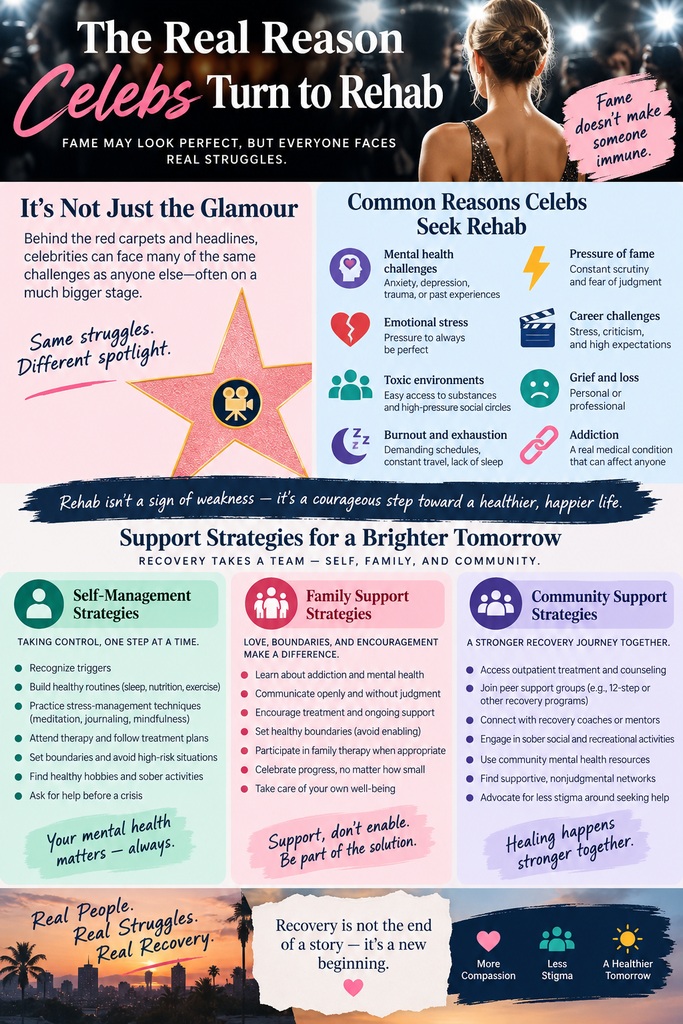
Celebrities may also face circumstances that complicate recovery, including:
- Constant public attention and criticism
- Demanding work and travel schedules
- Easy access to alcohol or other substances
- Social environments where substance use is normalized
- Pressure to maintain a successful public image
- Fear that seeking treatment could damage a career
- Loneliness despite being surrounded by people
- Difficulty knowing whom they can genuinely trust
- Chronic stress, poor sleep, or emotional exhaustion
- Untreated mental health or trauma-related concerns
These factors do not automatically cause addiction. They can, however, interact with biological vulnerability, psychological distress, environmental influences, and repeated substance exposure.
Why Celebrities Finally Enter Rehab
There is rarely one single reason a person decides to seek treatment. For some celebrities, the turning point may follow an overdose, medical emergency, arrest, relationship crisis, workplace problem, relapse, or intervention. Others may privately recognize that their substance use is interfering with their health and quality of life.
Entering rehab can represent an important realization: continuing the same pattern may have greater consequences than asking for help.
Treatment is also not simply about removing drugs or alcohol from someone’s life. Depending on individual needs, rehabilitation may help a person understand triggers, develop coping skills, address co-occurring mental health concerns, improve relationships, and create a plan for continuing recovery after leaving treatment.
Self-Management Strategies During Recovery
Professional treatment can provide a foundation, but recovery continues through everyday choices and routines. Self-management means learning to recognize vulnerabilities and respond to them before they develop into larger problems.
Helpful strategies can include:
- Identifying personal triggers for substance use
- Developing a written relapse-prevention plan
- Attending therapy and recommended follow-up appointments
- Taking prescribed medications appropriately
- Establishing consistent sleep and daily routines
- Using exercise, meditation, journaling, or relaxation techniques for stress
- Avoiding people, environments, or events strongly associated with previous substance use
- Building sober recreational activities
- Recognizing early warning signs of relapse
- Asking for help before a crisis develops
For celebrities, boundaries may be especially important. This could mean reducing certain social commitments, changing members of a personal or professional circle, or protecting time for treatment and recovery.
Family Support: Helping Without Enabling
Families can play an important role in recovery, but support does not mean protecting someone from every consequence of addiction.
Family members may help by:
- Learning about substance use disorders and recovery
- Encouraging treatment without humiliation or public shaming
- Communicating concerns calmly and specifically
- Establishing healthy and consistent boundaries
- Avoiding financial or behavioral enabling
- Participating in family therapy when appropriate
- Recognizing that relapse risk can continue after rehab
- Supporting healthy routines and recovery activities
- Taking care of their own emotional health
A celebrity’s family may also face unusual pressures, including media attention and concerns about privacy. Protecting confidentiality and keeping treatment decisions focused on health rather than publicity can be valuable.
Community Support After Rehab
One of the biggest misconceptions about rehabilitation is that completing a program means someone is “cured.” Recovery often requires continued support long after formal treatment ends.
Community resources may include:
- Outpatient addiction treatment
- Mental health counseling
- Peer recovery programs
- Recovery community organizations
- 12-step or alternative mutual-support groups
- Medication treatment when clinically appropriate
- Recovery coaches or peer-support specialists
- Sober recreational activities
- Vocational and educational support
- Crisis and overdose-prevention services
Celebrities may have access to expensive private treatment, but the fundamental recovery needs—connection, accountability, appropriate healthcare, coping skills, and ongoing support—are not exclusive to famous people.
Rehab Is Not a Publicity Stunt by Default
When celebrities enter treatment, people sometimes question whether the decision is sincere. While motivations differ from person to person, outsiders rarely know everything happening privately.
Entering treatment should not automatically be dismissed as damage control or publicity.
A person can initially enter treatment due to pressure from family, employers, legal issues, or public consequences and still develop genuine motivation for recovery. Readiness for change can evolve during treatment.
Relapse Does Not Erase Previous Progress
Another damaging assumption occurs when a celebrity returns to treatment. Headlines may describe the person as having “failed rehab.”
Recovery is more complicated than that.
Substance use disorders can involve periods of recurrence. A return to substance use may signal that treatment needs to be reassessed or intensified. It does not mean previous periods of recovery were meaningless.
Returning to treatment can demonstrate recognition that additional help is needed.
What Celebrity Rehab Stories Can Teach Us
Celebrity recovery stories receive attention because the individuals are recognizable, but the underlying lessons apply far beyond Hollywood.
They remind us that:
- Success does not eliminate emotional pain.
- Money does not provide immunity from addiction.
- Asking for professional help is not weakness.
- Recovery usually requires more than willpower.
- Families need education and support too.
- Treatment should be individualized.
- Long-term recovery requires continued attention.
- Returning to treatment can be part of continuing care.
Changing the Conversation Around Rehab
Instead of asking, “What did this celebrity do wrong?” a more constructive question may be, “What happened that made this person realize help was necessary?”
That shift changes the conversation from judgment to understanding.
Rehabilitation is not simply a place celebrities disappear to after a scandal. For someone experiencing a substance use disorder, it can provide an opportunity to interrupt dangerous patterns, stabilize physically and emotionally, understand what contributes to substance use, and begin developing healthier ways of coping.
Conclusion
The real reason celebrities turn to rehab is often the same reason millions of other people seek treatment: their current way of living has become harmful, unsustainable, or dangerous, and they need help making a change.
Fame may change the environment surrounding addiction, but it does not change the fundamental human need for treatment, connection, accountability, and support.
Self-management can help individuals recognize triggers and strengthen daily recovery habits. Families can provide encouragement while maintaining healthy boundaries. Communities can offer professional treatment, peer connection, and continuing care.
A celebrity entering rehab should not merely become another headline. It can remind us of something much more important: addiction can affect anyone, and seeking treatment can be the beginning of a healthier direction—not evidence of personal failure.
Frequently Asked Questions
Here are some common questions:
1. Why do celebrities go to rehab?
Celebrities may enter rehab for many of the same reasons as anyone else, including alcohol or drug problems, mental health concerns, emotional distress, trauma, or difficulty controlling harmful behaviors. Fame can add pressures such as constant scrutiny, demanding schedules, and limited privacy.
2. Does fame increase the risk of addiction?
Fame itself does not cause addiction. However, chronic stress, easy access to substances, social environments where substance use occurs, irregular schedules, isolation, and intense public expectations may contribute to vulnerability in some individuals.
3. Why might a celebrity wait before seeking treatment?
Fear of negative publicity, career consequences, stigma, denial, or concerns about confidentiality may delay treatment. Like anyone experiencing addiction, a celebrity may also have difficulty recognizing how serious the problem has become.
4. Is celebrity rehab sometimes just for publicity?
It is impossible to determine someone’s motivation simply from media coverage. Even when external pressures contribute to entering treatment, a person can become increasingly motivated to recover once treatment begins.
5. What happens when someone enters rehab?
Treatment varies according to individual needs. It may include medical assessment, withdrawal management when necessary, individual or group therapy, treatment for co-occurring mental health conditions, addiction education, relapse-prevention planning, and preparation for continuing care.
6. Why isn’t willpower enough to overcome addiction?
Substance use disorders can affect brain systems involved in reward, motivation, learning, stress, and self-control. Recovery often requires more than deciding to stop. Professional treatment, behavioral changes, supportive relationships, and sometimes medication can all be important.
7. What self-management strategies can support recovery?
Helpful strategies include recognizing triggers, developing healthy routines, managing stress, getting adequate sleep, attending therapy, following prescribed treatment, avoiding high-risk situations, developing sober activities, and asking for help when warning signs appear.
8. How can families support someone returning from rehab?
Families can learn about addiction, communicate without unnecessary judgment, encourage continued treatment, establish healthy boundaries, avoid enabling harmful behavior, and consider family counseling. Family members should also protect their own physical and emotional well-being.
9. Why is community support important after rehab?
Recovery continues after someone leaves a treatment facility. Outpatient programs, therapists, peer-support groups, recovery coaches, community organizations, and other continuing-care services can provide connection and accountability.
10. Why do some celebrities return to rehab?
Some people need additional or repeated treatment. A recurrence of substance use may indicate that triggers, mental health concerns, environmental influences, or the treatment plan need to be reassessed. Returning to treatment can be an appropriate response rather than proof that treatment was pointless.
11. Does relapse mean rehab failed?
Not necessarily. Recovery can involve setbacks, and treatment plans sometimes need to be modified. The important response is to address renewed substance use promptly and determine what additional support or treatment is needed.
12. Can celebrities recover while remaining in the entertainment industry?
Yes. Recovery does not necessarily require abandoning a career. However, someone may need stronger boundaries, different social environments, schedule changes, ongoing treatment, and supportive people who respect recovery priorities.
13. Do celebrities receive better addiction treatment because they are wealthy?
Wealth may provide access to private facilities and additional services, but expensive treatment does not guarantee recovery. Effective treatment should be evidence-based, individualized, and followed by appropriate continuing care.
14. What can ordinary people learn from celebrity rehab stories?
Celebrity stories can remind us that addiction can affect people regardless of money, status, or professional success. They can also help challenge the misconception that seeking treatment is a sign of weakness.
15. What is the real reason celebrities turn to rehab?
There is no single reason. Ultimately, many seek treatment because substance use, mental health difficulties, or related behaviors have become harmful or unmanageable. Behind the fame is a person who may need the same things anyone else needs in recovery: appropriate treatment, accountability, compassion, healthy boundaries, and ongoing support.
Video: Why even the richest stars struggle to get sober #celebrity #sobriety