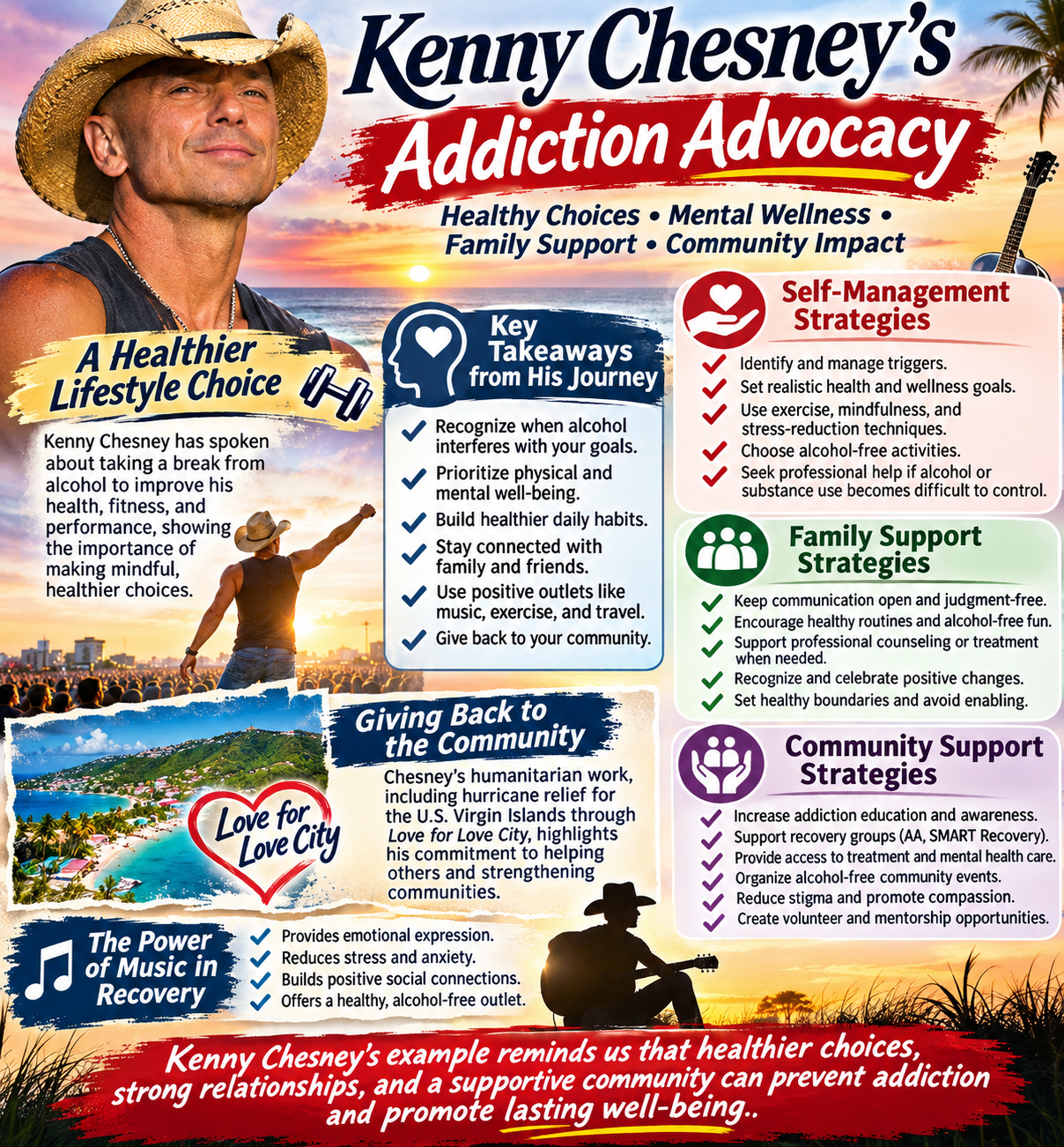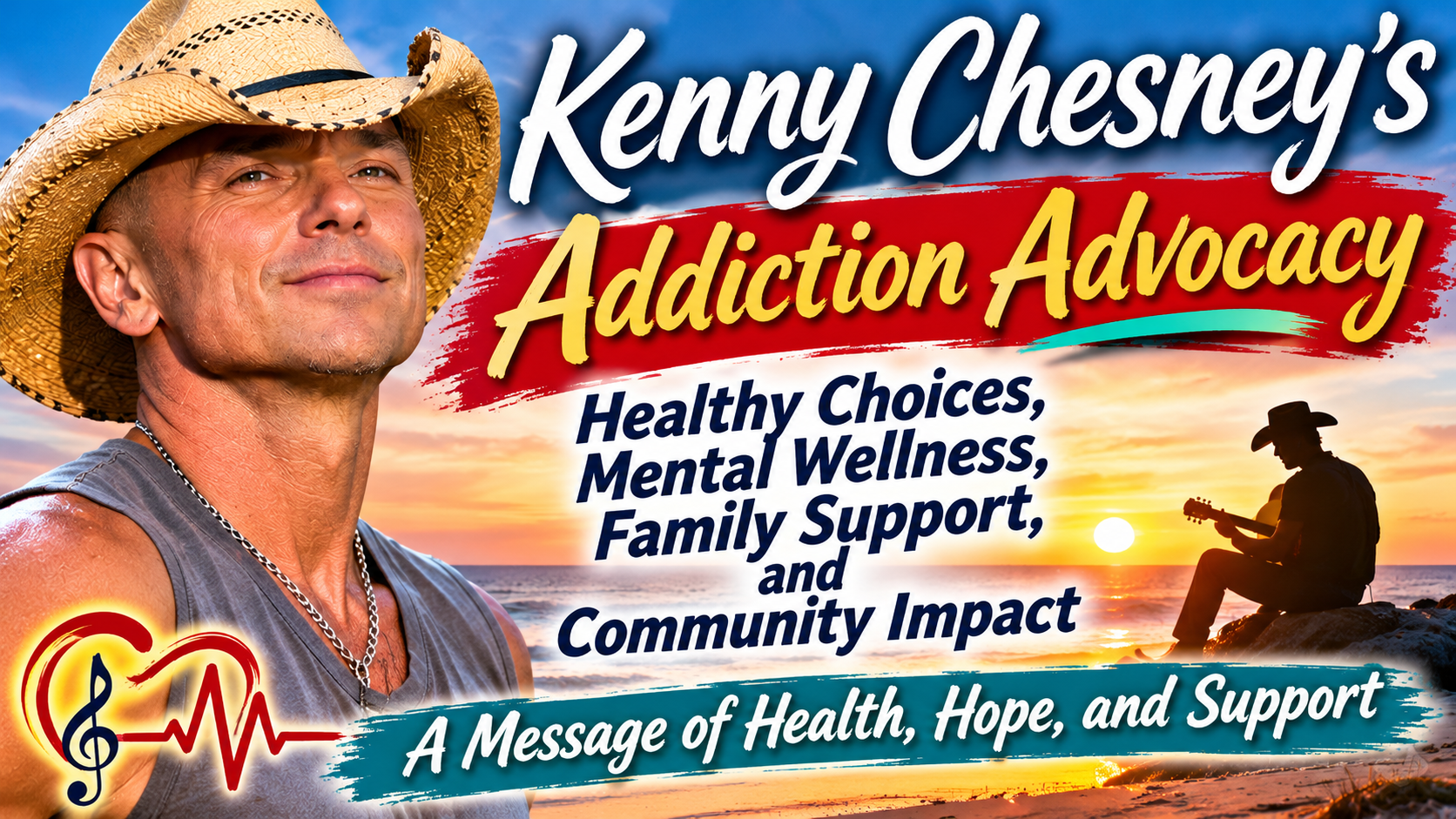
Kenny Chesney, one of country music’s most celebrated performers, has built a successful career through heartfelt songs, energetic concerts, and meaningful connections with fans. Beyond his musical achievements, Chesney has demonstrated a commitment to charitable causes, emotional well-being, and healthier lifestyle choices.
Although Chesney is not widely documented as a formal addiction recovery advocate, his public discussions about reducing alcohol consumption, maintaining physical fitness, and prioritizing mental wellness offer valuable lessons for substance use prevention and recovery.
His humanitarian activities also demonstrate the importance of compassion, community involvement, and helping individuals overcome difficult circumstances.
Important distinction: There is no reliable public evidence establishing that Kenny Chesney has been diagnosed with alcohol use disorder or another substance use disorder. His decision to temporarily abstain from alcohol should not be interpreted as proof of addiction or recovery from addiction.
Kenny Chesney’s Journey: Choosing Health Over Alcohol
Country music frequently celebrates social gatherings, drinking, and entertainment. Chesney’s songs often reflect beach lifestyles, friendships, and carefree experiences. However, his personal approach to alcohol has evolved as he has become more conscious of his physical health and professional responsibilities.
During a June 2024 appearance on The Pat McAfee Show, Chesney explained that he had stopped drinking alcohol at the beginning of the year to prepare for his demanding concert schedule.
He said he recognized that excessive partying and delivering high-energy performances were increasingly difficult to balance. His decision involved improving his fitness, managing his diet, and maintaining the stamina needed to perform.
Chesney emphasized that his alcohol-free period was not necessarily a permanent commitment to abstinence. Instead, he viewed it as a deliberate lifestyle choice to improve his performance and well-being.
His experience illustrates an important principle: individuals do not need to develop alcohol dependence before deciding to reduce their drinking.
Lessons From His Decision to Reduce Alcohol
- Recognizing personal limits: Understanding when alcohol interferes with physical performance or daily responsibilities.
- Prioritizing long-term health: Choosing behaviors that support energy, sleep, and cardiovascular health.
- Practicing self-discipline: Establishing personal goals and maintaining consistent routines.
- Reevaluating social habits: Recognizing that entertainment and celebration do not require alcohol.
- Encouraging healthier choices: Demonstrating that reducing alcohol consumption can be a positive lifestyle decision.
For people living with alcohol use disorder, however, lifestyle changes alone may be insufficient. Professional treatment, behavioral therapy, and medications may be necessary.
Kenny Chesney’s Mental Health Awareness
Mental health and substance use are closely connected. Some individuals use alcohol or drugs to cope with anxiety, depression, loneliness, or chronic stress.
Chesney has spoken publicly about the importance of protecting his mental well-being while managing the pressures of fame.
In a 2023 interview, he discussed using physical activity, breathing exercises, and cold-water immersion as part of his personal wellness routine. He has also described experiencing social anxiety related to the loss of privacy that accompanied his growing celebrity status.
Although Chesney has described cold-water immersion as helpful to him personally, it is not an established treatment for addiction, depression, or anxiety disorders. It can also pose cardiovascular risks for certain individuals.
His experiences highlight the importance of finding healthy ways to manage stress rather than relying on alcohol or other substances.
Self-Management Strategies: Building a Healthier Lifestyle
Kenny Chesney’s emphasis on fitness, preparation, and emotional wellness provides an opportunity to discuss practical strategies for individuals seeking to prevent problematic substance use or maintain addiction recovery.
Self-management involves recognizing personal challenges, developing coping mechanisms, and making consistent decisions that support physical and psychological health.
Practical Self-Management Strategies
- Identify substance use triggers: Recognize situations involving stress, loneliness, peer pressure, or emotional distress that increase the desire to drink or use drugs.
- Set realistic wellness goals: Establish achievable objectives such as reducing alcohol consumption, improving sleep, or exercising regularly.
- Develop healthy routines: Maintain consistent eating habits, physical activity, hydration, and sleep schedules.
- Practice stress-management techniques: Use mindfulness, relaxation exercises, journaling, or counseling to address emotional challenges.
- Seek professional assistance: Consult healthcare professionals when substance use becomes difficult to control.
- Explore evidence-based treatment: Cognitive behavioral therapy, motivational interviewing, and medications for alcohol use disorder can support recovery.
- Monitor emotional well-being: Recognize symptoms of depression, anxiety, or burnout that may contribute to substance misuse.
- Create a relapse-prevention plan: Identify warning signs, supportive contacts, and strategies for responding to cravings.
People who drink heavily and regularly should consult a healthcare professional before abruptly stopping alcohol because severe withdrawal can be life-threatening.
Family Support Strategies: Encouraging Healthy Choices Without Judgment
Families can play an important role in preventing substance misuse and supporting recovery.
Although Chesney maintains a relatively private personal life, his public emphasis on meaningful relationships and staying connected with loved ones reinforces the broader importance of emotional support.
In a 2013 interview with CBS Sunday Morning, Chesney discussed stepping away from touring temporarily to reconnect with family and friends. His decision reflected the value of maintaining relationships despite demanding professional responsibilities.
For individuals experiencing addiction, family involvement can help improve motivation, treatment engagement, and long-term stability.
Practical Family Support Strategies
- Encourage open communication: Create opportunities to discuss alcohol use, emotional stress, and personal concerns without criticism.
- Promote alcohol-free activities: Organize family gatherings, outdoor adventures, and celebrations that do not center on drinking.
- Recognize behavioral changes: Pay attention to increased alcohol consumption, isolation, mood changes, or declining responsibilities.
- Support professional treatment: Encourage counseling, medical evaluation, and addiction treatment when necessary.
- Establish healthy boundaries: Avoid behaviors that unintentionally enable harmful substance use.
- Participate in family counseling: Strengthen communication, rebuild trust, and address relationship difficulties.
- Celebrate positive progress: Recognize healthier habits, treatment participation, and meaningful recovery milestones.
- Protect family well-being: Encourage caregivers and relatives to seek emotional support for themselves.
Family members should understand that addiction is a treatable medical condition, not simply a lack of willpower.
Community Support Strategies: Kenny Chesney’s Humanitarian Contributions
One of Kenny Chesney’s most significant contributions outside music has been his commitment to humanitarian causes.
His philanthropic activities emphasize compassion, resilience, and community rebuilding—values that are also important in addiction recovery.
In 2020, Chesney received the Country Radio Broadcasters’ Artist Humanitarian Award in recognition of his charitable efforts.
His initiatives have included support for survivors of the Boston Marathon bombing, hurricane recovery in the U.S. Virgin Islands, children’s charities, and other community assistance programs.
In 2026, the Los Angeles Press Club also recognized his public service and charitable contributions.
These activities are examples of broader humanitarian advocacy rather than evidence of a dedicated addiction treatment campaign.
How Community Support Helps Addiction Recovery
Community involvement can reduce isolation, increase access to treatment, and create opportunities for individuals to rebuild confidence and meaningful relationships.
Practical strategies include:
- Expand addiction education: Organize community workshops explaining substance use disorders, prevention, and available treatments.
- Support peer recovery groups: Encourage participation in Alcoholics Anonymous, SMART Recovery, and other recovery communities.
- Improve access to treatment: Connect individuals with addiction specialists, mental health professionals, and affordable healthcare services.
- Promote alcohol-free social events: Provide concerts, recreational activities, and gatherings that do not require alcohol consumption.
- Reduce addiction stigma: Encourage respectful language and recognize addiction as a medical condition.
- Develop mentorship opportunities: Connect individuals in recovery with trained peer recovery specialists.
- Support community volunteerism: Encourage meaningful activities that promote belonging, purpose, and social connection.
- Integrate mental health services: Address co-occurring depression, anxiety, trauma, and substance use disorders through coordinated treatment.
These approaches reflect the same broad values of compassion and collective responsibility that Chesney has emphasized through his humanitarian work.
The Role of Music in Addiction Recovery
Music can be a meaningful part of emotional expression, stress reduction, and social connection.
Kenny Chesney’s songs frequently explore relationships, reflection, resilience, gratitude, and appreciation for life’s experiences.
For individuals recovering from addiction, music may provide a constructive outlet for processing difficult emotions.
How Music Can Support Recovery
- Emotional expression: Listening to or creating music may help individuals recognize and communicate feelings.
- Stress management: Relaxing music can complement mindfulness and other healthy coping techniques.
- Positive social connections: Music-related activities can create opportunities to develop supportive friendships.
- Motivation: Personally meaningful songs may encourage perseverance during difficult periods.
- Healthy recreation: Singing, learning an instrument, or joining music groups can provide enjoyable, alcohol-free activities.
- Professional music therapy: Credentialed music therapists can use structured interventions to support emotional and behavioral treatment goals.
Music can complement addiction treatment but should not replace evidence-based medical or psychological care.
Understanding the Difference Between Alcohol Awareness and Addiction Advocacy
Kenny Chesney’s public discussion of temporarily stopping alcohol use provides an example of personal health awareness.
However, addiction advocacy generally involves more specific efforts, such as educating the public about substance use disorders, reducing stigma, expanding access to treatment, and supporting individuals and families affected by addiction.
These distinctions are important:
| Alcohol awareness | Addiction recovery advocacy |
|---|---|
| Encourages informed drinking decisions | Promotes treatment and sustained recovery |
| Highlights health benefits of reducing alcohol | Addresses substance use disorders |
| Supports healthier lifestyle habits | Works to reduce addiction-related stigma |
| May involve voluntary abstinence | Supports clinical and community recovery services |
| Focuses on prevention and wellness | Includes prevention, treatment, and recovery |
Chesney’s publicly documented activities most clearly demonstrate alcohol-related health awareness and broader community philanthropy. They can inspire discussion about addiction prevention without suggesting he has a personal addiction diagnosis.
Lessons From Kenny Chesney’s Journey
Kenny Chesney’s experiences offer several important lessons about personal responsibility, emotional wellness, and community involvement.
First, individuals can reevaluate their relationship with alcohol before developing serious health complications. Recognizing that drinking interferes with personal goals can motivate healthier decisions.
Second, physical and emotional well-being require consistent attention. Exercise, stress management, meaningful relationships, and adequate rest can support overall wellness.
Third, family and community relationships can provide encouragement during difficult periods. Individuals facing addiction often benefit from compassionate support and access to professional treatment.
Finally, Chesney’s charitable activities demonstrate how helping others can strengthen communities and create meaningful connections.
For people in addiction recovery, volunteering and community participation may support a sense of purpose, although these activities should complement rather than replace treatment.
Conclusion: Healthier Choices, Stronger Families, and Supportive Communities
Kenny Chesney’s journey demonstrates that success involves more than professional achievements. His decision to temporarily stop drinking, commitment to physical fitness, and emphasis on mental wellness illustrate the importance of prioritizing personal health.
Although he is not publicly established as a dedicated addiction recovery advocate, his lifestyle choices and humanitarian contributions offer valuable lessons about prevention, compassion, and community support.
Individuals experiencing addiction can benefit from combining self-management strategies, evidence-based treatment, family encouragement, and accessible community resources.
Recovery begins with recognizing the need for change, grows through consistent action, and becomes stronger with compassionate support.
For confidential substance use treatment referrals, contact the SAMHSA National Helpline at 1-800-662-HELP (4357) or visit FindTreatment.gov.
Frequently Asked Questions and Answers
Kenny Chesney’s Alcohol Awareness and Personal Journey
1. Is Kenny Chesney an addiction recovery advocate?
Kenny Chesney has publicly discussed healthier lifestyle choices, including temporarily avoiding alcohol to improve his physical fitness and concert performance. He has also supported numerous charitable initiatives.
However, he is not widely documented as leading a dedicated addiction treatment or recovery advocacy campaign. His experiences are better described as examples of alcohol awareness, personal wellness, and community philanthropy.
2. Has Kenny Chesney struggled with alcohol addiction?
There is no reliable public confirmation that Kenny Chesney has been diagnosed with alcohol use disorder.
Although he has discussed drinking and choosing to abstain for a period, these statements should not be interpreted as evidence of addiction.
3. Why did Kenny Chesney decide to stop drinking alcohol?
In 2024, Chesney explained that he had temporarily stopped drinking to prepare for his physically demanding concert performances.
He wanted to improve his stamina, fitness, and overall health. His decision demonstrates how individuals can reevaluate their drinking habits to achieve personal and professional goals.
4. Is Kenny Chesney permanently sober?
Chesney described his alcohol-free period as a personal lifestyle decision rather than a permanent commitment to sobriety.
His current alcohol consumption should not be assumed without updated, reliable public statements.
A June 2026 interview also supports Chesney’s continuing emphasis on avoiding alcohol during performances and protecting his health.
5. What can people learn from Kenny Chesney’s decision to reduce alcohol consumption?
His experience demonstrates that reducing alcohol use can be a proactive health decision. People may choose to drink less to improve sleep, concentration, physical performance, and emotional well-being.
For individuals with alcohol use disorder, professional treatment may also be necessary.
Self-Management and Addiction Prevention
6. What self-management strategies can help prevent alcohol addiction?
Effective strategies include:
- Recognizing emotional and environmental drinking triggers.
- Setting realistic alcohol reduction goals.
- Establishing regular exercise and sleep routines.
- Developing healthy stress-management techniques.
- Participating in alcohol-free recreational activities.
- Seeking professional counseling when drinking becomes difficult to control.
- Monitoring drinking patterns and their effects on daily functioning.
7. How does physical fitness support addiction recovery?
Regular exercise can improve sleep quality, reduce stress, support emotional regulation, and strengthen overall health.
Chesney’s demanding fitness routine illustrates how physical activity can become part of a structured wellness plan. Exercise is a helpful complement to addiction treatment, not a replacement for counseling or medication when indicated.
8. Can reducing alcohol consumption improve mental health?
Yes. Reducing alcohol intake may improve sleep, concentration, mood stability, and overall well-being, particularly when alcohol has been contributing to these problems.
However, alcohol withdrawal can be dangerous for individuals with physical dependence. Medical supervision may be necessary before stopping abruptly.
9. How can individuals manage stress without alcohol?
Healthy alternatives include mindfulness, deep breathing, physical activity, music, journaling, social connection, and professional counseling.
Individuals can also develop personalized coping plans to address anxiety, loneliness, or emotional distress without relying on alcohol.
10. What is the difference between drinking less and recovering from alcohol addiction?
Reducing alcohol consumption is a behavioral choice that may improve health and lower future risks.
Recovering from alcohol use disorder involves addressing a diagnosed or suspected medical condition through appropriate behavioral, psychological, social, and sometimes medication-based treatment.
Not everyone who stops drinking has an addiction.
Family Support Strategies
11. How can families encourage healthier drinking habits?
Families can support healthier choices by offering alcohol-free beverages, planning activities that do not revolve around drinking, respecting individual boundaries, and encouraging open conversations about alcohol.
12. What should families do when someone shows signs of alcohol addiction?
Family members should express concerns compassionately, encourage professional evaluation, and avoid judgmental language.
They can also seek family counseling, establish appropriate boundaries, and learn about evidence-based addiction treatment.
13. Can family support improve addiction recovery outcomes?
Yes. Supportive relationships can improve engagement in treatment, reduce isolation, and provide emotional encouragement.
Family counseling and structured family-based interventions may help address communication problems and strengthen recovery support.
14. How can families celebrate recovery milestones?
Families can recognize achievements such as attending treatment, developing healthier routines, reaching sobriety goals, and rebuilding relationships.
Celebrations should respect the individual’s preferences and avoid creating pressure or unrealistic expectations.
15. How can family members protect their own mental health?
Family members can seek counseling, join support groups such as Al-Anon or SMART Recovery Family & Friends, set healthy boundaries, and maintain personal interests.
Supporting a loved one does not require neglecting one’s own emotional well-being.
Community Support and Humanitarian Advocacy
16. How has Kenny Chesney supported communities through charitable work?
Chesney established the Love for Love City Foundation to support communities affected by Hurricanes Irma and Maria in the U.S. Virgin Islands.
His efforts included delivering essential supplies, supporting rebuilding activities, and assisting displaced residents and animals. His humanitarian contributions helped earn him the 2020 Country Radio Broadcasters Artist Humanitarian Award.
17. Is Kenny Chesney’s Love for Love City Foundation an addiction recovery organization?
No. Love for Love City primarily focuses on disaster relief, humanitarian assistance, and community rebuilding.
However, its emphasis on helping vulnerable communities illustrates values such as compassion, social responsibility, and collective support that are also important in addiction recovery.
18. How can communities support people recovering from addiction?
Communities can strengthen recovery services by:
- Providing affordable addiction treatment.
- Offering peer recovery support groups.
- Organizing alcohol-free social events.
- Expanding mental health counseling.
- Supporting harm reduction and overdose prevention programs.
- Creating employment and volunteer opportunities.
- Educating the public to reduce addiction stigma.
19. Can volunteering and helping others support addiction recovery?
Yes. Volunteering may strengthen social connections, increase self-esteem, provide structure, and create a sense of purpose.
However, volunteering should complement evidence-based addiction treatment rather than replace professional care.
20. What community organizations offer addiction recovery support?
Helpful resources include Alcoholics Anonymous, SMART Recovery, and FindTreatment.gov.
These resources provide peer support, practical recovery strategies, or access to professional treatment services.
Music, Mental Wellness, and Recovery
21. Can Kenny Chesney’s music help people cope with emotional challenges?
Music can help individuals express emotions, reduce stress, and develop positive connections with others.
Chesney’s songs often explore friendship, relationships, reflection, and appreciation for life. Listeners may find these themes personally meaningful during difficult experiences.
22. How can music therapy support addiction recovery?
Music therapy uses structured, therapeutic activities delivered by qualified professionals.
It may help individuals develop emotional awareness, practice coping skills, improve communication, and manage stress. Music therapy is generally considered a complementary approach rather than a standalone treatment for substance use disorders.
23. Can concerts and social gatherings be enjoyed without alcohol?
Absolutely. People can enjoy concerts, celebrations, and other social events without drinking.
Practical strategies include bringing alcohol-free beverages, attending with supportive friends, planning transportation, and preparing an exit strategy if cravings or social pressure become uncomfortable.
24. How can public figures influence addiction awareness?
Celebrities can help normalize conversations about alcohol use, emotional wellness, and seeking support.
When public figures discuss healthier lifestyle choices, their experiences may encourage audiences to examine their own habits. However, personal wellness stories should not be confused with medical advice or formal addiction advocacy.
25. What is the most important lesson from Kenny Chesney’s lifestyle choices and humanitarian work?
Kenny Chesney’s example demonstrates that prioritizing health, maintaining meaningful relationships, and helping others can contribute to a fulfilling life.
His decision to reduce drinking for professional and personal reasons highlights the value of self-awareness. His charitable contributions illustrate the importance of supporting communities during difficult times.
For individuals experiencing addiction, these lessons can complement professional treatment, family encouragement, and long-term recovery planning.
Video: