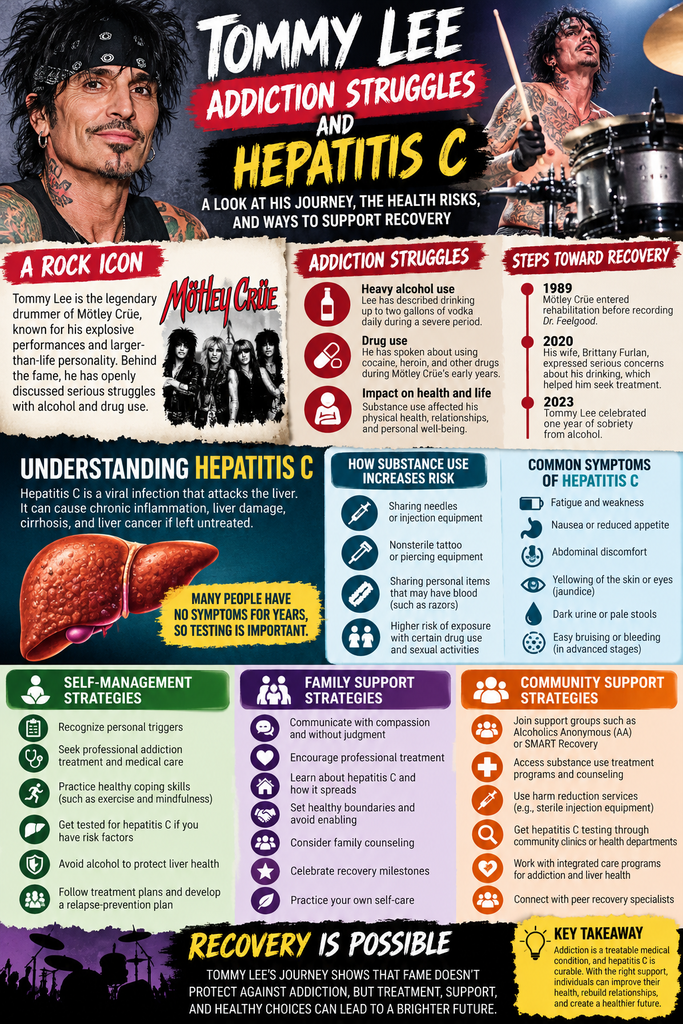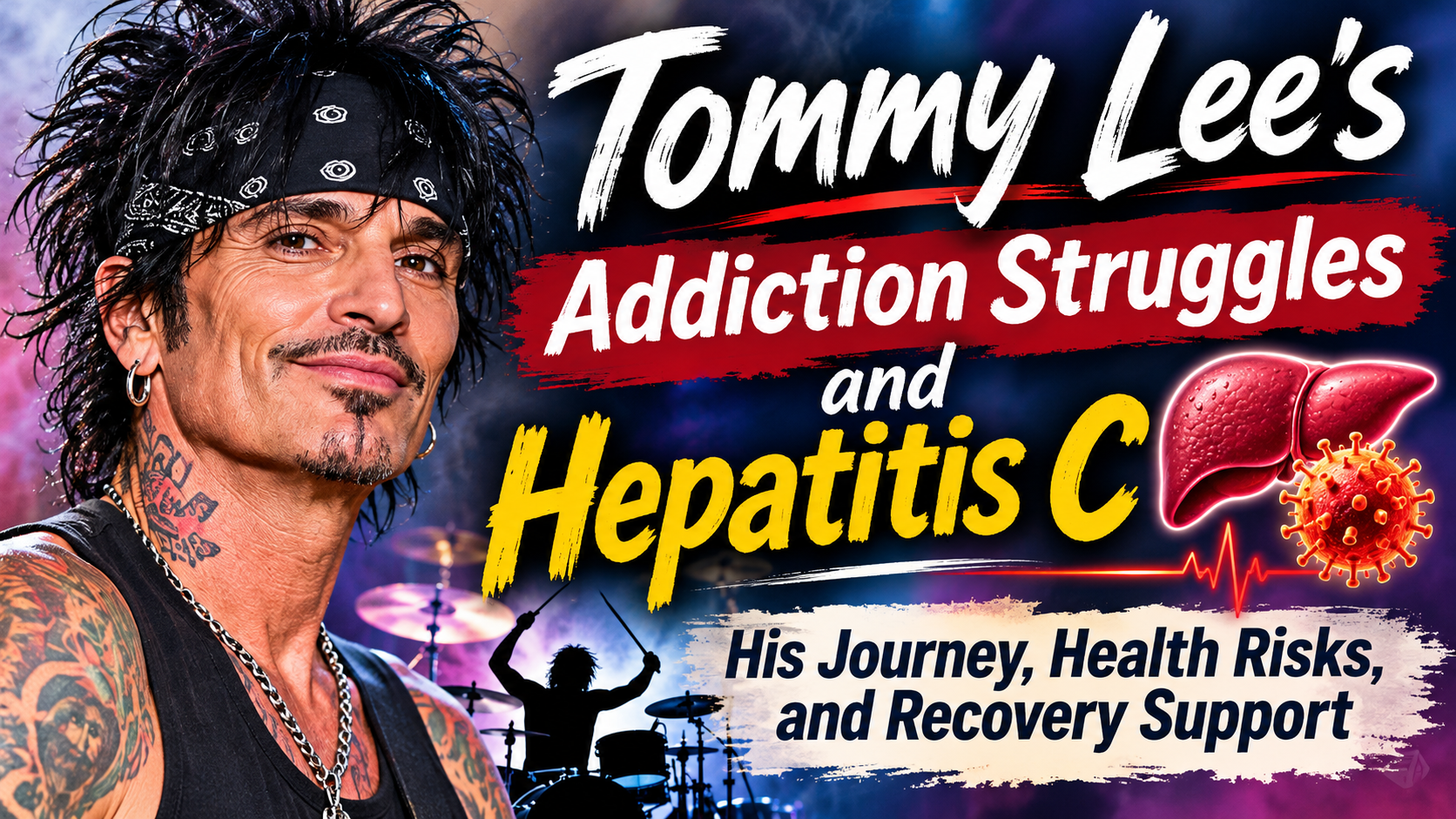
Tommy Lee, the legendary drummer of the rock band Mötley Crüe, has lived a life filled with musical success, fame, controversy, and personal challenges. Behind his energetic performances and rock-and-roll image, Lee has publicly discussed struggles with alcohol and drug use, including periods of excessive drinking and attempts to maintain sobriety.
His experiences provide an opportunity to explore the relationship between substance use disorders, liver health, and hepatitis C, a viral infection that can cause chronic liver disease.
Important clarification: Although Tommy Lee has publicly discussed substance use, there is no sufficiently verified public evidence presented here confirming that he personally has hepatitis C. His addiction history should not be interpreted as proof of an HCV diagnosis. This article examines his documented substance use experiences alongside the general medical risks of hepatitis C.
Tommy Lee’s History of Addiction and Substance Abuse
During the height of Mötley Crüe’s popularity in the 1980s and 1990s, the band became known for its extravagant lifestyle, heavy drinking, and drug use. Lee has openly described periods of substance misuse, reflecting the pressures and temptations associated with fame and the music industry.
Alcohol became one of his most significant challenges. In interviews, Lee described consuming approximately two gallons of vodka daily during a particularly severe period of drinking. Such extreme alcohol consumption can contribute to dependence, alcohol-related liver disease, cardiovascular complications, and serious psychological consequences.
His struggles highlight several important factors associated with substance use disorders:
- Environmental influences: Frequent exposure to alcohol and drugs can normalize dangerous substance use.
- Emotional stress: Fame, relationship difficulties, and professional pressures may contribute to unhealthy coping behaviors.
- Physical dependence: Repeated substance use can produce tolerance, withdrawal symptoms, and compulsive use.
- Relationship difficulties: Addiction can interfere with trust, communication, and family stability.
- Recovery challenges: Maintaining sobriety often requires sustained behavioral changes and professional support.
In 2023, Lee publicly celebrated one year of sobriety from alcohol. This milestone demonstrated his willingness to acknowledge problematic drinking and pursue healthier habits, although it does not independently confirm his current recovery status.
Understanding Hepatitis C and Its Relationship to Addiction
Hepatitis C is a bloodborne viral infection caused by the hepatitis C virus (HCV). It primarily affects the liver and can lead to chronic inflammation, fibrosis, cirrhosis, and hepatocellular carcinoma if untreated.
Hepatitis C is particularly relevant to addiction medicine because sharing needles, syringes, or other injection equipment can transmit infected blood between individuals.
How Substance Use Increases Hepatitis C Risk
Several behaviors associated with substance use may increase exposure to HCV:
- Sharing needles, syringes, or injection preparation equipment.
- Using nonsterile equipment for tattoos or body piercings.
- Sharing personal items contaminated with blood, such as razors.
- Sharing equipment for intranasal drug use when blood exposure occurs.
- Engaging in sexual activities involving blood exposure, particularly in higher-risk circumstances.
Alcohol consumption does not directly cause hepatitis C. However, heavy drinking can accelerate liver damage in individuals already infected with HCV.
This distinction is important when discussing Tommy Lee’s addiction history. Substance use may increase certain health risks, but a person’s diagnosis cannot be assumed from their lifestyle or past behaviors.
Recognizing Hepatitis C Symptoms and Complications
Many people with chronic hepatitis C experience few or no symptoms for years. Others develop symptoms associated with liver inflammation or progressive liver disease.
Potential symptoms include:
- Persistent fatigue and weakness.
- Reduced appetite, nausea, or unexplained weight loss.
- Abdominal discomfort, particularly in the right upper abdomen.
- Dark urine or pale stools.
- Yellowing of the skin or eyes (jaundice).
- Easy bruising or bleeding in advanced liver disease.
- Abdominal swelling or confusion associated with severe liver dysfunction.
Because symptoms may be absent, screening is essential. The CDC recommends hepatitis C screening at least once for all adults aged 18 and older, with repeat testing for people who have ongoing risk factors.
Hepatitis C antibody testing followed by HCV RNA testing, when indicated, can determine whether an active infection is present.
Modern direct-acting antiviral medications can cure more than 95% of hepatitis C infections, typically within 8–12 weeks of treatment.
Self-Management Strategies: Taking Control of Addiction and Protecting Liver Health
Tommy Lee’s experiences demonstrate the importance of recognizing harmful drinking patterns and seeking treatment before serious complications develop. For individuals recovering from addiction, self-management involves developing healthier coping mechanisms, preventing relapse, and protecting physical health.
Practical Self-Management Strategies
- Recognize personal triggers: Identify situations involving stress, boredom, emotional distress, or social pressure that encourage substance use.
- Seek professional addiction treatment: Medical detoxification, behavioral therapy, and medications for alcohol use disorder, such as naltrexone or acamprosate when appropriate, can support recovery.
- Protect liver health: Avoid alcohol, undergo recommended liver evaluations, and discuss hepatitis screening with a healthcare professional.
- Practice healthy coping skills: Exercise, meditation, creative activities, and structured daily routines can help manage cravings.
- Prioritize hepatitis C testing: Individuals with a history of injection drug use should receive HCV testing, even without symptoms.
- Follow prescribed treatment: Individuals diagnosed with active hepatitis C should complete antiviral therapy and obtain follow-up testing to confirm cure.
- Develop a relapse-prevention plan: Recognize warning signs, identify supportive contacts, and establish steps to take when cravings intensify.
For individuals with severe alcohol dependence, suddenly stopping alcohol without medical supervision can cause life-threatening withdrawal complications.
The Importance of Hepatitis C Treatment
Modern hepatitis C treatment has transformed the prognosis for people living with the infection.
Direct-acting antiviral medications can cure more than 95% of cases, usually within 8–12 weeks. Successful treatment substantially reduces the risk of progressive liver damage, although people with cirrhosis may still require ongoing liver cancer surveillance.
Importantly, people do not need to achieve sobriety before receiving hepatitis C treatment. Addiction treatment and antiviral treatment can occur simultaneously.
Family Support Strategies: Helping Loved Ones Overcome Addiction
Family members often experience emotional distress when someone they love struggles with addiction. Fear, frustration, guilt, and uncertainty can make communication difficult.
Tommy Lee’s wife, Brittany Furlan, reportedly expressed serious concerns about his excessive drinking and its potential consequences. Lee later acknowledged that her concerns influenced his decision to seek rehabilitation.
This example illustrates how compassionate communication can sometimes motivate individuals to recognize harmful behaviors.
Practical Family Support Strategies
- Encourage open communication: Discuss concerns calmly without accusations, humiliation, or judgment.
- Promote professional treatment: Help loved ones explore addiction counseling, rehabilitation programs, and medical evaluations.
- Understand hepatitis C: Learn how the virus spreads and recognize that ordinary household contact, hugging, and sharing meals do not transmit HCV.
- Establish healthy boundaries: Avoid enabling harmful substance use while maintaining emotional support.
- Participate in family counseling: Therapy can improve communication, address relationship conflicts, and support healthier family dynamics.
- Celebrate recovery milestones: Recognize positive behavioral changes, treatment participation, and progress toward sobriety.
- Practice caregiver self-care: Family members should protect their own mental health and seek support when needed.
Families should remember that addiction is a treatable medical condition. Encouragement can make a meaningful difference, but family members cannot control another person’s recovery.
Community Support Strategies: Building a Strong Recovery Network
Community resources play an essential role in helping individuals maintain recovery and manage substance-related health complications.
For musicians and entertainers, environments where alcohol and drugs are readily available may create additional challenges. Supportive professional relationships and recovery-focused communities can help reduce exposure to triggers.
Community Resources and Recovery Strategies
- Alcoholics Anonymous (AA): Peer-led meetings offer fellowship and support for people seeking recovery from alcohol misuse.
- SMART Recovery: Provides evidence-informed tools for managing cravings, changing behaviors, and maintaining motivation.
- Substance use treatment centers: Offer medical evaluation, counseling, withdrawal management, and ongoing treatment.
- Harm reduction programs: Provide sterile injection equipment, overdose prevention education, naloxone, and connections to medical care.
- Community hepatitis C screening: Health departments and community clinics may offer affordable or free testing and referrals.
- Integrated addiction and liver care: Coordinated services help individuals address substance use disorders and hepatitis C together.
- Peer recovery specialists: People with lived recovery experience can provide encouragement, practical guidance, and connections to services.
Community support also reduces stigma. Individuals are more likely to seek treatment when they feel respected rather than judged.
Lessons From Tommy Lee’s Addiction Journey
Tommy Lee’s history demonstrates that fame, wealth, and professional success do not protect individuals from substance use disorders.
In 2026, Lee discussed how Mötley Crüe’s dangerous drug use contributed to the band’s decision to enter rehabilitation in 1989. His recollections highlight how substance misuse can escalate into life-threatening situations.
His experiences offer several lessons about recovery and long-term health.
First, recognizing harmful substance use is an important step toward seeking treatment. Second, supportive family relationships can encourage individuals to pursue professional help. Third, periods of sobriety do not eliminate the need for continued relapse-prevention strategies.
Finally, addiction recovery should include attention to physical health. Hepatitis C screening, liver evaluations, and timely treatment can prevent serious complications in people who have relevant risk factors.
Conclusion: Recovery, Hope, and Protecting Long-Term Health
Tommy Lee’s public discussions of alcohol and drug misuse reveal the challenges of addiction and the importance of recognizing when professional treatment is necessary.
Although there is no verified public confirmation that Lee has hepatitis C, his experiences provide an educational starting point for understanding the connection between substance use, bloodborne infections, and liver health.
Self-management, compassionate family involvement, and accessible community services can help individuals overcome addiction while addressing preventable medical complications.
With modern hepatitis C treatment, evidence-based addiction care, and strong recovery networks, people can significantly improve their health and quality of life.
Recovery is more than stopping substance use. It is about protecting your health, rebuilding relationships, and creating a healthier future.
For confidential addiction treatment referrals in the United States, contact the SAMHSA National Helpline at 1-800-662-HELP (4357) or visit FindTreatment.gov.
Frequently Asked Questions and Answers
Tommy Lee’s Addiction History
1. What substances did Tommy Lee struggle with?
Tommy Lee has publicly discussed excessive alcohol consumption and past drug use, including cocaine and heroin. His experiences reflect the dangerous substance use that became associated with Mötley Crüe’s early rock-and-roll lifestyle.
2. How serious was Tommy Lee’s alcohol addiction?
Lee has described drinking as much as two gallons of vodka daily during an especially severe period. Such extreme alcohol consumption can cause physical dependence, alcohol poisoning, liver damage, cardiovascular complications, and potentially life-threatening withdrawal.
3. Did Tommy Lee attend rehabilitation for addiction?
Yes. Mötley Crüe entered rehabilitation in 1989, before recording Dr. Feelgood. Lee has also discussed seeking treatment for alcohol misuse decades later. Rehabilitation can provide medical supervision, behavioral counseling, relapse-prevention education, and ongoing recovery support.
4. What motivated Tommy Lee to seek sobriety?
Lee has credited concerns expressed by his wife, Brittany Furlan, as an important influence on his decision to address excessive drinking. Her encouragement demonstrates how supportive family communication can sometimes help individuals recognize harmful substance use.
5. Is Tommy Lee currently sober?
In October 2023, Lee publicly reported celebrating one year of sobriety from alcohol. However, past sobriety milestones should not be interpreted as confirmation of his current drinking status without updated, reliable information.
Tommy Lee and Hepatitis C
6. Has Tommy Lee been diagnosed with hepatitis C?
There is no reliable public confirmation that Tommy Lee has been diagnosed with hepatitis C. Although he has discussed past drug use and concerns about his liver health, these experiences do not establish an HCV infection.
In 2023, Lee reported receiving reassuring results from a medical evaluation. However, those statements do not establish whether he underwent hepatitis C testing.
7. What is hepatitis C, and how does it affect the liver?
Hepatitis C is a bloodborne viral infection that causes liver inflammation. Without treatment, chronic infection can result in liver fibrosis, cirrhosis, liver failure, and liver cancer.
Many individuals remain asymptomatic for years, making routine screening essential.
8. Can drug addiction increase the risk of hepatitis C?
Yes. Injection drug use is a major risk factor for hepatitis C when needles, syringes, or other injection equipment are shared.
The virus spreads primarily through contact with infected blood. Substance use alone does not mean someone has hepatitis C.
9. Does heavy alcohol consumption cause hepatitis C?
No. Hepatitis C is caused by a virus, not alcohol. However, excessive drinking can independently damage the liver and accelerate liver disease in someone who already has hepatitis C.
10. What are the early warning signs of hepatitis C?
Many people experience no symptoms. When symptoms occur, they may include:
- Persistent fatigue or weakness.
- Nausea and loss of appetite.
- Abdominal discomfort.
- Dark urine or pale stools.
- Yellowing of the skin or eyes.
- Joint pain.
A blood test is necessary to determine whether someone has hepatitis C.
11. How is hepatitis C diagnosed?
Diagnosis generally involves an HCV antibody test followed by an HCV RNA test if antibodies are detected.
The antibody test identifies previous exposure, while the RNA test determines whether an active infection is present.
12. Can hepatitis C be cured?
Yes. Modern direct-acting antiviral medications cure more than 95% of hepatitis C infections, typically within 8–12 weeks.
Successful treatment can prevent serious complications, particularly when infection is identified before advanced liver damage develops.
13. Can someone receive hepatitis C treatment while recovering from addiction?
Absolutely. Individuals do not need to demonstrate sobriety before receiving hepatitis C treatment.
Antiviral medications can be provided alongside addiction counseling, medications for substance use disorders, and harm reduction services.
Self-Management and Recovery
14. What self-management strategies can help someone struggling with alcohol addiction?
Effective strategies include:
- Identifying emotional and environmental triggers.
- Developing structured daily routines.
- Seeking counseling or behavioral therapy.
- Discussing medications for alcohol use disorder with a clinician.
- Participating in recovery support groups.
- Creating a personalized relapse-prevention plan.
- Monitoring physical health, including liver function.
Individuals with significant alcohol dependence should seek medical supervision before abruptly stopping drinking because withdrawal can be life-threatening.
15. How can individuals with hepatitis C protect their liver?
People diagnosed with hepatitis C should complete antiviral treatment, avoid alcohol, maintain a balanced diet, exercise regularly, and discuss medications or supplements with their healthcare provider.
Vaccination against hepatitis A and B is also recommended when appropriate. Patients with cirrhosis may need ongoing liver cancer surveillance even after successful hepatitis C treatment.
16. Can addiction recovery reduce future liver complications?
Yes. Reducing or eliminating harmful alcohol consumption can help prevent additional alcohol-related liver damage.
For people with hepatitis C, antiviral treatment addresses the viral infection, while addiction treatment and alcohol avoidance help protect long-term liver health.
Family and Community Support
17. How did Tommy Lee’s family influence his recovery?
Lee has explained that his wife, Brittany Furlan, expressed serious concerns about his drinking. Her worries contributed to his decision to seek rehabilitation.
His experience illustrates how compassionate communication and encouragement can motivate someone to seek professional help.
18. How can families support someone struggling with addiction?
Families can provide meaningful support by:
- Communicating without blame or judgment.
- Encouraging medical evaluation and addiction treatment.
- Establishing healthy boundaries.
- Learning about substance use disorders.
- Participating in family counseling.
- Recognizing recovery milestones.
- Seeking emotional support for themselves.
Family involvement is valuable, but individuals remain responsible for their own treatment decisions and recovery.
19. Can someone with hepatitis C safely live with family members?
Yes. Hepatitis C is not transmitted through hugging, kissing in ordinary circumstances, sharing meals, or casual household contact.
Families should avoid sharing razors, toothbrushes, or other items that could contain blood. Clean any blood spills using appropriate precautions.
20. What community resources help people recovering from addiction?
Several organizations provide support:
- Alcoholics Anonymous: Peer support for alcohol recovery.
- SMART Recovery: Evidence-informed tools for managing addictive behaviors.
- FindTreatment.gov: Substance use and mental health treatment services.
- CDC Hepatitis C Resources: Screening, prevention, and treatment education.
- SAMHSA National Helpline: 1-800-662-HELP (4357), providing confidential treatment referrals.
21. What lessons can people learn from Tommy Lee’s addiction struggles?
Tommy Lee’s experiences illustrate that addiction can affect individuals regardless of fame, financial success, or professional accomplishments.
His public discussions of heavy drinking, rehabilitation, and sobriety demonstrate the importance of recognizing harmful substance use, seeking treatment, and maintaining supportive relationships.
His story also provides an opportunity to educate people about hepatitis C prevention and liver health without assuming that he personally has the infection.
Video: Tommy Lee Almost Didn’t Survive His Own Addiction #Recovery #TommyLee