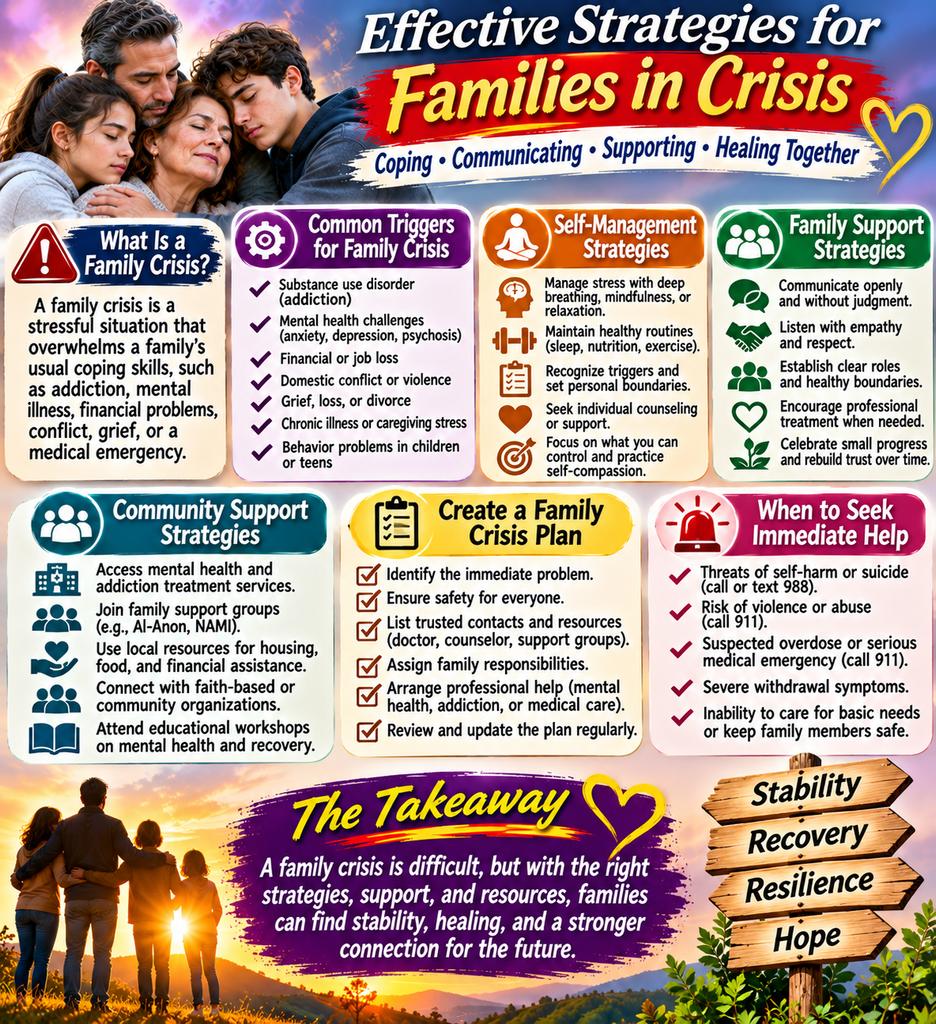
Every family experiences challenges, but some situations can become overwhelming and develop into a crisis. Whether caused by addiction, mental illness, financial difficulties, domestic conflict, grief, or a sudden medical emergency, family crises can disrupt emotional stability, relationships, and everyday responsibilities.
When a loved one struggles with substance use disorder, depression, anxiety, or another serious condition, the entire family may experience fear, frustration, uncertainty, and emotional exhaustion.
During these difficult periods, family members may disagree about how to respond, struggle to communicate effectively, or feel responsible for solving problems beyond their control.
However, a family crisis does not have to permanently damage relationships or prevent recovery.
With effective self-management, healthy family communication, professional guidance, and community support, families can develop resilience, restore stability, and move toward healing.
Understanding What Happens During a Family Crisis
A family crisis occurs when a stressful event or series of challenges overwhelms a family’s usual coping mechanisms and resources.
Some crises develop suddenly, while others emerge gradually through unresolved conflicts, chronic stress, or ongoing substance use problems.
Common situations that may trigger a family crisis include:
- Substance use disorders: Alcohol or drug addiction can create financial problems, strained relationships, and concerns about safety.
- Mental health conditions: Severe depression, psychosis, anxiety disorders, or suicidal behavior may require urgent intervention.
- Financial hardship: Job loss, debt, housing insecurity, or unexpected medical expenses can create significant stress.
- Domestic conflict: Persistent arguments, emotional abuse, or violence can threaten family stability.
- Grief and loss: The death of a loved one, divorce, or separation may cause profound emotional distress.
- Chronic illness: Long-term medical conditions can affect caregiving responsibilities and household routines.
- Adolescent behavioral challenges: Substance use, school difficulties, and emotional distress can strain parent-child relationships.
- Caregiver burnout: Family members caring for someone with complex medical or psychological needs may experience exhaustion and resentment.
Families respond differently depending on their resources, communication patterns, cultural backgrounds, and previous experiences.
Recognizing the nature of the crisis is the first step toward developing an effective response.
Recognizing the Warning Signs of a Family in Crisis
Family crises may produce emotional, behavioral, physical, and social warning signs.
Identifying these changes early can help prevent further deterioration and encourage timely intervention.
Emotional and Psychological Warning Signs
- Persistent anxiety, fear, or excessive worry.
- Increased irritability, anger, or emotional outbursts.
- Feelings of hopelessness, guilt, or helplessness.
- Depression or withdrawal from family activities.
- Difficulty concentrating or making decisions.
- Persistent tension between family members.
Behavioral and Social Warning Signs
- Frequent arguments or communication breakdowns.
- Increased alcohol or drug use.
- Avoidance of responsibilities.
- Social isolation from friends or relatives.
- Changes in children’s school performance or behavior.
- Financial secrecy or escalating household conflict.
Physical Warning Signs
- Sleep disturbances or chronic fatigue.
- Headaches, muscle tension, or gastrointestinal symptoms.
- Changes in appetite or weight.
- Increased blood pressure or stress-related symptoms.
- Neglect of personal hygiene or medical needs.
When warning signs interfere with daily functioning or pose safety risks, professional evaluation may be necessary.
Why Addiction Can Create a Family Crisis
Substance use disorders frequently affect more than the individual using alcohol or drugs.
Family members may experience repeated disappointments, financial difficulties, broken trust, unpredictable behavior, and fear of overdose or other medical complications.
Some relatives respond by attempting to control the person’s substance use, while others withdraw emotionally to protect themselves.
These responses can unintentionally increase conflict and emotional distress.
Common Family Challenges Associated With Addiction
- Loss of trust: Repeated dishonesty or unfulfilled commitments may damage relationships.
- Financial strain: Substance use can interfere with employment, household expenses, and financial responsibilities.
- Emotional instability: Family members may experience anxiety, anger, guilt, or fear.
- Unhealthy boundaries: Relatives may struggle to distinguish supportive behavior from actions that enable harmful substance use.
- Caregiver exhaustion: Constant monitoring or crisis management can lead to burnout.
- Impact on children: Exposure to chronic conflict or unpredictable behavior can affect emotional development and feelings of safety.
It is important to recognize that addiction is a treatable medical condition. Families can offer encouragement and support, but they cannot force someone to recover.
Self-Management Strategies: Staying Emotionally Stable During a Family Crisis
Self-management involves recognizing personal stress responses, regulating emotions, and making thoughtful decisions during difficult circumstances.
When family members become overwhelmed, they may react impulsively, escalate arguments, or neglect their own health.
Developing healthy coping strategies can improve emotional stability and support better decision-making.
Practical Self-Management Strategies
- Recognize emotional triggers: Identify situations that increase anger, fear, guilt, or anxiety.
- Practice stress reduction: Use mindfulness, deep breathing, progressive muscle relaxation, or grounding exercises.
- Maintain healthy routines: Prioritize adequate sleep, balanced nutrition, hydration, and regular physical activity.
- Set realistic expectations: Understand that complex family problems rarely resolve immediately.
- Establish personal boundaries: Recognize which responsibilities belong to you and which decisions must be made by others.
- Seek individual counseling: Professional therapy can help manage emotional distress and develop healthier coping strategies.
- Avoid unhealthy coping behaviors: Limit alcohol use and avoid relying on substances to manage stress.
- Create a personal support network: Stay in touch with trusted friends, relatives, or counselors.
- Practice self-compassion: Recognize that difficult emotions are normal responses to stressful circumstances.
- Develop a personal crisis plan: Identify emergency contacts, safe locations, and practical steps for responding to escalating situations.
The Importance of Emotional Regulation
Emotional regulation does not mean suppressing feelings or pretending that everything is fine.
Instead, it involves recognizing emotions, understanding their causes, and choosing constructive responses.
For example, a parent concerned about an adult child’s addiction may feel anger and fear. Rather than beginning a confrontation during an emotionally charged moment, the parent may choose to speak calmly, express concern, and offer treatment resources.
This approach can reduce conflict and increase the likelihood of productive communication.
Family Support Strategies: Strengthening Communication and Rebuilding Trust
Healthy family communication is one of the most important factors in managing a crisis.
When family members feel unheard, criticized, or misunderstood, disagreements may escalate.
Creating an environment where individuals can express concerns respectfully can improve cooperation and emotional safety.
Practical Family Support Strategies
- Encourage open communication: Allow family members to express feelings without interruption or judgment.
- Practice active listening: Focus on understanding the speaker rather than immediately offering solutions.
- Use respectful language: Avoid blame, insults, threats, or accusations.
- Hold regular family discussions: Establish opportunities to review concerns, responsibilities, and progress.
- Clarify family roles: Distribute household and caregiving responsibilities fairly.
- Establish healthy boundaries: Define acceptable behaviors and consequences without using punishment or humiliation.
- Support professional treatment: Encourage medical evaluation, mental health counseling, or addiction services when appropriate.
- Recognize individual needs: Understand that children, adolescents, adults, and older relatives may respond differently to stress.
- Celebrate small improvements: Acknowledge positive communication, treatment participation, and constructive behavioral changes.
- Practice forgiveness when appropriate: Rebuilding relationships may require time, accountability, and consistent behavior changes.
Forgiveness should never be used to pressure someone to tolerate abuse or return to an unsafe environment.
Creating a Family Crisis Management Plan
A written crisis management plan can help families respond more effectively during emergencies.
Rather than making decisions in moments of panic, family members can establish clear procedures and identify available resources.
Family crisis response plan
Use this interactive checklist to organize immediate priorities.
Identify the immediate problem
Determine what is happening and who is affected.
Assess immediate safety
Check for threats, violence, overdose, suicidal behavior, or urgent medical needs.
Identify trusted contacts
Choose relatives, friends, or professionals who can assist.
Assign responsibilities
Decide who will contact services, supervise children, or arrange transportation.
Arrange professional support
Contact appropriate medical, mental health, or community services.
Schedule a follow-up discussion
Review progress and revise the plan as circumstances change.
Copy crisis plan
A crisis plan should remain flexible because circumstances may change. It should also include specific arrangements for children, older adults, and family members with disabilities or complex medical needs.
Supporting Children During a Family Crisis
Children are particularly vulnerable to the emotional effects of family instability.
They may not fully understand the circumstances but can recognize changes in household routines, parental behavior, and emotional tension.
Without appropriate reassurance, children may blame themselves or develop fears about family separation, illness, or safety.
Strategies for Supporting Children
- Provide age-appropriate explanations: Explain difficult situations using language children can understand.
- Reassure children about responsibility: Make clear that adult problems are not caused by children.
- Maintain consistent routines: Preserve regular meals, school attendance, bedtime schedules, and recreational activities.
- Encourage emotional expression: Allow children to discuss fear, sadness, anger, or confusion.
- Avoid exposing children to adult conflicts: Do not involve children in arguments or ask them to take sides.
- Identify trusted adults: Ensure children know whom they can approach when they feel unsafe or overwhelmed.
- Seek professional counseling when necessary: Child psychologists and school counselors can help children process difficult experiences.
- Promote positive family activities: Shared meals, outdoor recreation, and creative activities can strengthen emotional connections.
Children experiencing domestic violence, abuse, or neglect require appropriate protective intervention rather than routine family conflict resolution alone.
Community Support Strategies: Finding Help Beyond the Family
Families experiencing crises often benefit from resources outside their immediate household.
Community organizations can provide emotional support, medical treatment, financial assistance, crisis intervention, and educational services.
Seeking outside assistance is not a sign of family failure. It is a practical strategy for managing complex challenges.
Practical Community Support Strategies
- Access mental health services: Connect with community mental health centers, counselors, and psychiatric providers.
- Seek addiction treatment: Use outpatient programs, residential treatment, medications for substance use disorders, and recovery support groups when indicated.
- Participate in family support groups: Organizations such as Al-Anon and NAMI provide education and peer support.
- Utilize social services: Explore housing assistance, food programs, transportation support, and financial counseling.
- Engage school resources: School counselors, social workers, and teachers can support children experiencing family stress.
- Develop community partnerships: Faith communities, nonprofit organizations, and neighborhood groups may provide practical assistance.
- Support caregiver programs: Respite services and caregiver support groups can reduce exhaustion.
- Promote crisis education: Community workshops can teach communication, suicide prevention, overdose response, and conflict management.
- Encourage peer mentorship: Families with similar experiences can share practical coping strategies.
- Reduce stigma: Promote understanding of mental illness, addiction, and the importance of seeking professional help.
When Professional Crisis Intervention Is Necessary
Some family crises cannot be managed safely through self-help strategies or informal support.
Professional intervention may be necessary when someone experiences severe psychiatric symptoms, substance-related medical emergencies, violence, or an inability to maintain basic safety.
Warning Signs Requiring Immediate Assistance
- Suicidal statements, plans, or behaviors.
- Threats of violence toward family members.
- Suspected opioid overdose or severe intoxication.
- Severe confusion, psychosis, or inability to care for basic needs.
- Physical abuse or immediate danger to children.
- Severe alcohol or sedative withdrawal symptoms.
- Medical emergencies involving chest pain, seizures, or difficulty breathing.
In the United States, call 911 for immediate danger or medical emergencies. For suicidal thoughts or a mental health crisis, call or text 988 for the Suicide & Crisis Lifeline.
If domestic violence is present, prioritize safety planning with a trained advocate. Joint family counseling or confrontation may be unsafe when coercion or abuse is ongoing.
Building Long-Term Family Resilience
Resilience refers to the ability to adapt, recover, and maintain functioning during adversity.
Resilient families are not free from conflict or hardship. Instead, they develop skills and resources that help them respond constructively to challenges.
Strategies for Strengthening Family Resilience
- Build emotional connections: Spend meaningful time together and maintain supportive relationships.
- Encourage flexibility: Adapt family roles and routines when circumstances change.
- Develop problem-solving skills: Focus on realistic solutions rather than blame.
- Maintain healthy boundaries: Respect individual needs and personal responsibilities.
- Promote shared values: Encourage compassion, respect, accountability, and cooperation.
- Strengthen financial planning: Develop emergency savings and access financial counseling when possible.
- Support mental health awareness: Recognize emotional distress and seek early intervention.
- Encourage healthy coping: Promote physical activity, relaxation, and positive social engagement.
- Maintain community relationships: Build connections with neighbors, friends, and local organizations.
- Recognize progress: Celebrate improvements even when the larger crisis has not fully resolved.
Resilience develops gradually through consistent actions, supportive relationships, and access to appropriate resources.
Lessons Families Can Learn From a Crisis
Although family crises can be emotionally painful, they may reveal important needs and opportunities for change.
Families may recognize unhealthy communication patterns, identify previously overlooked mental health concerns, or discover the importance of setting appropriate boundaries.
A crisis may also encourage family members to seek professional treatment, strengthen community connections, and develop more effective coping strategies.
Several lessons are especially important:
- Safety comes first: Physical and emotional safety must take priority over preserving appearances or avoiding conflict.
- Communication matters: Respectful conversations can reduce misunderstandings and improve cooperation.
- Boundaries protect relationships: Healthy boundaries help family members maintain personal well-being.
- Professional help is valuable: Complex mental health and addiction problems often require specialized treatment.
- Children need reassurance: Stable routines and age-appropriate communication help protect emotional development.
- Community support strengthens recovery: Families do not have to manage every challenge alone.
- Healing takes time: Rebuilding trust and emotional stability may require ongoing effort.
Conclusion: Moving From Family Crisis Toward Healing and Hope
Family crises can create emotional distress, uncertainty, and significant disruption. Whether the challenges involve addiction, mental illness, financial hardship, grief, or relationship conflict, the effects can extend throughout the household.
However, families can improve their ability to respond by developing effective coping strategies, strengthening communication, establishing healthy boundaries, and seeking appropriate professional assistance.
Self-management helps individuals maintain emotional stability. Family support promotes understanding, cooperation, and accountability. Community resources provide additional services and opportunities for recovery.
Together, these approaches can help families navigate difficult circumstances and build healthier relationships.
A family crisis does not have to define a family’s future. With safety, compassion, professional guidance, and continued support, healing and resilience are possible.
For confidential mental health crisis support in the United States, call or text 988. For addiction treatment referrals, contact SAMHSA at 1-800-662-HELP (4357) or visit FindTreatment.gov.
Frequently Asked Questions and Answers
Understanding Family Crises
1. What is a family crisis?
A family crisis occurs when a stressful situation overwhelms a family’s usual coping abilities and resources. Common causes include substance use disorders, mental illness, financial difficulties, relationship conflicts, serious illness, and the death of a loved one.
A crisis may develop suddenly or gradually, depending on the circumstances.
2. What are the most common causes of family crises?
Common causes include:
- Alcohol or drug addiction.
- Depression, anxiety, or other mental health conditions.
- Financial hardship or unemployment.
- Domestic violence or persistent family conflict.
- Divorce, separation, or relationship breakdown.
- Serious medical conditions or disability.
- Grief following the death of a loved one.
- Caregiver burnout and chronic stress.
Multiple challenges may occur simultaneously, increasing the family’s need for assistance.
3. What are the warning signs that a family is experiencing a crisis?
Warning signs may include frequent arguments, emotional withdrawal, persistent anxiety, changes in sleep or appetite, financial instability, substance misuse, and difficulty maintaining daily responsibilities.
Children may demonstrate behavioral changes, declining school performance, or increased emotional distress.
4. How does a family crisis affect mental health?
Family crises can contribute to anxiety, depression, sleep disturbances, irritability, emotional exhaustion, and feelings of helplessness.
Prolonged stress may also worsen existing mental health conditions and interfere with relationships, work, and daily functioning.
5. Can families recover from a serious crisis?
Yes. Many families can rebuild stability through effective communication, healthy boundaries, professional counseling, and community support.
Recovery may involve changes in family roles, expectations, and relationships. Healing takes time, and some relationships may require distance or separation to maintain safety.
Self-Management Strategies During a Family Crisis
6. What are effective self-management strategies during a family crisis?
Helpful strategies include:
- Practicing mindfulness and relaxation exercises.
- Maintaining healthy sleep and eating routines.
- Identifying emotional triggers.
- Establishing realistic expectations.
- Seeking individual counseling.
- Maintaining supportive friendships.
- Avoiding alcohol or drugs as coping mechanisms.
- Creating a personal crisis response plan.
These strategies can improve emotional regulation and decision-making.
7. How can family members manage stress during a crisis?
Stress management begins with recognizing emotional and physical signs of distress.
Deep breathing, regular exercise, journaling, relaxation techniques, and counseling can help reduce stress.
When possible, family members should also take breaks from overwhelming responsibilities and ask others for practical assistance.
8. Why is emotional regulation important during a family crisis?
Emotional regulation helps individuals respond thoughtfully rather than impulsively.
Managing anger, fear, and frustration can reduce unnecessary conflict, improve communication, and support safer decision-making.
9. How can someone avoid caregiver burnout during a family crisis?
Caregivers should establish realistic responsibilities, schedule rest periods, seek respite services, and maintain their own medical and mental health appointments.
Sharing responsibilities with other trusted individuals can reduce emotional and physical exhaustion.
10. How can families maintain hope during prolonged crises?
Hope can be strengthened by setting achievable goals, recognizing small improvements, maintaining supportive relationships, and focusing on actions within the family’s control.
Hope should be balanced with realistic expectations and appropriate safety planning.
Family Communication and Support Strategies
11. How can families improve communication during a crisis?
Families can improve communication by:
- Listening without interrupting.
- Using respectful and nonjudgmental language.
- Expressing concerns through “I” statements.
- Avoiding accusations and personal attacks.
- Discussing problems when emotions are manageable.
- Clarifying expectations and responsibilities.
- Seeking family counseling when necessary.
12. Why are healthy boundaries important during family crises?
Healthy boundaries protect emotional well-being and clarify individual responsibilities.
They help family members distinguish between providing support and accepting harmful behavior.
Boundaries may involve financial assistance, personal privacy, household expectations, and safety.
13. How can families rebuild trust after a crisis?
Rebuilding trust requires consistent behavior, accountability, respectful communication, and time.
Family counseling may help address unresolved conflicts and establish realistic expectations.
Trust should not be rushed, especially when a crisis involves dishonesty, abuse, or repeated harmful behavior.
14. How can families support a loved one struggling with addiction?
Families can encourage professional treatment, learn about substance use disorders, communicate compassionately, and establish healthy boundaries.
They can also participate in family counseling and support groups such as Al-Anon or SMART Recovery Family & Friends.
15. What should families avoid doing during a crisis?
Families should avoid:
- Blaming or humiliating one another.
- Making threats during emotional confrontations.
- Ignoring serious safety concerns.
- Using children as messengers during disputes.
- Encouraging alcohol or drug use to manage stress.
- Taking responsibility for every decision another adult makes.
- Delaying professional assistance when immediate intervention is necessary.
Supporting Children and Adolescents
16. How do family crises affect children?
Children may experience fear, confusion, sadness, anxiety, or behavioral changes when their family environment becomes unstable.
Some children may blame themselves for adult problems or worry about family separation.
Supportive communication and predictable routines can reduce emotional distress.
17. How should parents explain a family crisis to children?
Parents should provide honest, age-appropriate explanations without overwhelming children with adult details.
Reassure children that they are not responsible for the crisis and that trusted adults are working to keep them safe.
18. What are effective strategies for helping teenagers during a family crisis?
Helpful approaches include:
- Encouraging open communication.
- Respecting appropriate privacy.
- Maintaining school and social routines.
- Monitoring significant behavioral changes.
- Supporting healthy friendships.
- Encouraging physical activity and creative outlets.
- Seeking adolescent counseling when needed.
19. When should parents seek mental health counseling for their children?
Professional evaluation may be appropriate when children experience persistent anxiety, depression, school difficulties, social withdrawal, sleep disturbances, or significant behavioral changes.
Immediate intervention is necessary when a child expresses suicidal thoughts, experiences abuse, or faces serious safety threats.
Family Crisis Planning and Intervention
20. What is a family crisis management plan?
A family crisis management plan is a written guide outlining how family members will respond to emergencies or overwhelming situations.
It may include emergency contacts, safety procedures, professional resources, transportation arrangements, and assigned responsibilities.
21. What should be included in a family crisis plan?
An effective plan should include:
- A description of the immediate problem.
- Identification of safety risks.
- Emergency contact information.
- Trusted family or community contacts.
- Individual responsibilities.
- Medical and mental health resources.
- Safe locations and transportation options.
- Plans for children or dependent adults.
- Follow-up appointments and reassessment.
22. When should a family seek professional crisis intervention?
Professional intervention is necessary when a crisis involves serious mental health symptoms, substance-related emergencies, domestic violence, or an inability to maintain basic safety.
Call 911 for immediate danger or medical emergencies. In the United States, call or text 988 for suicidal thoughts or a mental health crisis.
23. What should families do if a loved one refuses professional help?
Families can express concerns respectfully, provide treatment information, and encourage evaluation without unnecessary confrontation.
They should maintain appropriate boundaries and seek professional guidance for themselves.
When someone presents an immediate danger to themselves or others, emergency assessment may be necessary under applicable laws.
24. How should families respond to domestic violence during a crisis?
Safety should be the immediate priority.
Individuals experiencing abuse should seek assistance from trained domestic violence advocates, identify safe locations, and develop personalized safety plans.
Joint family counseling may be unsafe when coercive control or ongoing abuse is present.
The National Domestic Violence Hotline is available at 1-800-799-SAFE (7233) or through TheHotline.org.
Community Support and Recovery Resources
25. What community resources are available for families in crisis?
Community resources may include:
- Mental health clinics and crisis services.
- Addiction treatment programs.
- Family counseling centers.
- Housing and food assistance.
- Financial counseling organizations.
- School counselors and social workers.
- Family caregiver support programs.
- Faith-based and nonprofit organizations.
- Peer support and recovery groups.
26. How can family support groups help during a crisis?
Support groups allow individuals to connect with others facing similar challenges.
They can provide emotional encouragement, practical coping strategies, education, and referrals to professional resources.
27. How can communities help families affected by addiction?
Communities can improve access to evidence-based addiction treatment, mental health services, overdose prevention education, and recovery support.
Providing affordable treatment, transportation assistance, and supportive housing can help families overcome barriers to care.
28. How can financial assistance programs support families in crisis?
Financial assistance can help families meet essential needs such as housing, food, utilities, transportation, and healthcare.
In the United States, calling 211 can help connect individuals with available local social services.
29. What role does family counseling play in crisis recovery?
Family counseling can improve communication, clarify responsibilities, address relationship conflicts, and support healthier coping patterns.
However, treatment should be tailored to the family’s circumstances, particularly when abuse, serious psychiatric illness, or substance dependence is involved.
30. What is the most important lesson for families experiencing a crisis?
The most important lesson is that families do not have to manage overwhelming challenges alone.
Recognizing problems early, prioritizing safety, communicating compassionately, and seeking appropriate professional and community support can improve outcomes.
Family resilience develops through consistent efforts, realistic expectations, and supportive relationships.
Video: