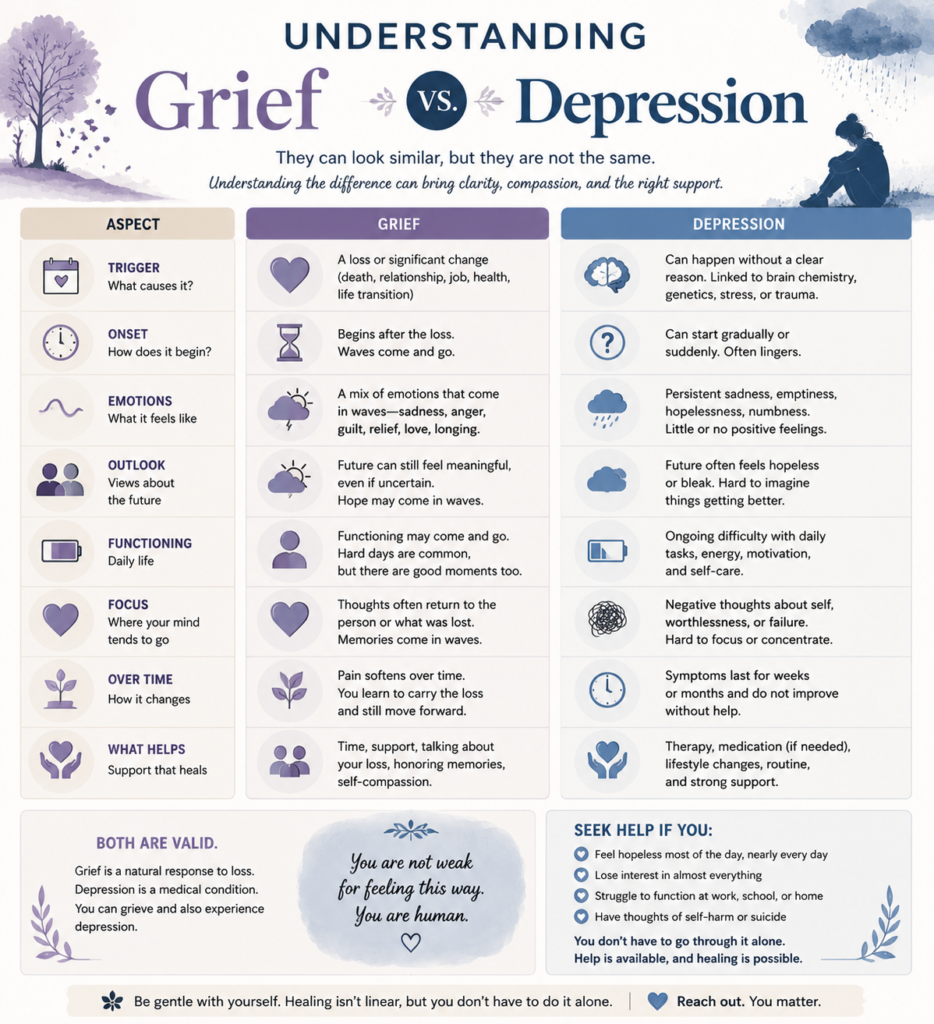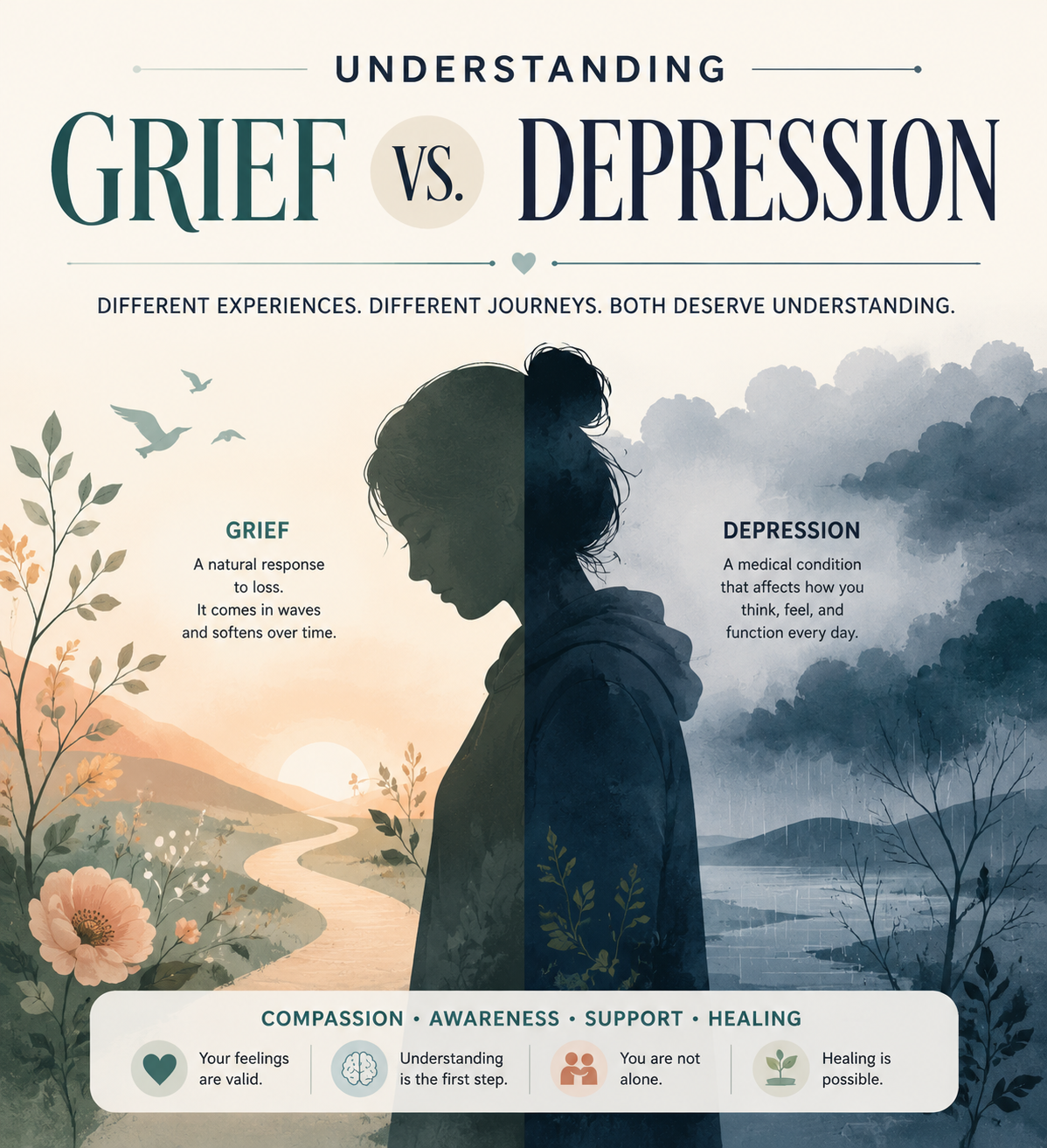
Grief and depression are two experiences that can feel pretty overwhelming, sometimes even showing up with similar emotions or symptoms. Knowing the differences between them helps people find the right support and respond better to what they’re actually going through. Here, I’ll walk you through what makes grief distinct from depression, why these differences matter, and what you can do if you or someone you know is having a tough time.
Understanding Grief: A Natural Response to Loss
Grief is something everyone feels at some point, usually after losing someone or something really important. It might be the death of a loved one, a breakup, losing a job, or even moving away from a place you love. Grief shows up differently for each person, but it usually involves a mix of sadness, longing, and sometimes anger or guilt.
This response is completely normal. It’s just your mind and body processing a big change or loss. While the intensity of grief can come and go like waves, most people find that it does soften with time, even if life never feels quite the same as before. It’s also common to feel moments of joy, relief, or gratitude even during grieving. You may be able to make out feelings of hope or comfort when you remember something special about who or what you lost.
What Makes Depression Different?
Depression is a mental health condition that goes beyond a response to a single loss. It usually sticks around longer than normal sadness and can affect nearly every part of your life, from sleeping and eating to your motivation and how you see yourself. With depression, feelings of hopelessness, emptiness, or even numbness might stick around for weeks, months, or longer, and they’re often not tied to a specific event.
Where grief usually comes and goes, depression has a habit of hanging on day after day. It can also trigger thoughts that make everyday tasks much harder, like brushing your teeth or even getting out of bed. It isn’t just feeling sad; it’s feeling stuck and unable to enjoy things that once brought happiness. Even when something good happens, depression can keep a person from feeling pleasure at all.
Common Symptoms of Grief vs. Depression
Sorting out the symptoms can help people spot whether they’re dealing with grief or something more persistent, like depression. Here’s a breakdown of typical symptoms for each:
- Grief: Intense sadness, crying, longing for the person or thing lost, thinking a lot about the loss, sometimes feeling anger or guilt, and physical symptoms like fatigue or trouble sleeping. These emotions usually come in waves and can be triggered by reminders of the loss or certain memories.
- Depression: Feeling sad or empty nearly every day, losing interest in activities you used to enjoy, changes in appetite, sleeping too much or too little, feeling worthless or excessively guilty (not just about the loss), trouble concentrating, low energy, and sometimes thoughts of self-harm or suicide.
It’s common for grief to share some symptoms with depression, but there are some clear signs that depression might be happening instead of typical grief. Grief tends to be focused on the loss itself and varies in intensity, while depression can bring a heavy, unchanging cloud over everything.
How Grief and Depression Overlap (And Why It Matters)
Grief and depression can sometimes look a lot alike, especially in the first weeks or months after a big loss. Some people even experience what’s called “complicated grief” or “prolonged grief disorder,” where emotions stay intense and disruptive for a really long time. This can start to blur the line with depression, especially when someone feels hopeless or starts withdrawing from everything.
The difference usually comes down to whether a person can still experience moments of happiness or find meaning, even in small things. Someone in grief might still laugh at a friend’s joke or feel comforted by memories, even if the sadness returns quickly. But with depression, those moments of relief are much rarer. Everything just seems flat or meaningless. This is what makes depression harder to shake off; it blocks the ups and downs.
Key Ways to Tell Grief and Depression Apart
- Time Frame: Grief can last for months or longer, but it tends to become less intense over time. Depression sticks around with little or no improvement and often feels unchanging.
- Ability to Feel Pleasure: People who are grieving might still smile or look forward to things. Depression makes happiness or pleasure feel impossible most of the time, cutting off enjoyment from things once loved.
- Focus of Thoughts: Grief is usually centered on the loss. Depression often leads to very negative thoughts about oneself, life in general, or the future. It’s a heavy lens that colors all thoughts.
- Self-Esteem: While grief can bring guilt, it usually isn’t tied to feelings of worthlessness. Depression is more likely to include negative ideas about oneself and persistent shame or hopelessness.
- Self-Harm or Suicidal Thoughts: These can show up in both, but they’re more common and more persistent with depression. If anyone experiences thoughts of self-harm or suicide, it’s super important to reach out for help immediately, as support from loved ones and professionals can make a real difference.
When Grief Turns Into Depression
Almost everyone feels very low after a big loss, but sometimes grief doesn’t ease up with time or starts morphing into something that looks and feels more like depression. Signals that grief may have turned into depression include:
- Intense sadness that doesn’t let up after several months, showing up even when reminders of the loss aren’t present
- Loss of interest in nearly all activities, even the small comforts or hobbies that used to help during grief
- Avoiding friends, family, and responsibilities for weeks on end, which can lead to a loss of connections with support networks
- Self-harming behaviors or frequent thoughts about dying (not just missing the loved one, but wishing to stop existing)
- Physical symptoms like weight loss or gain, trouble concentrating, or feeling sluggish nearly every day, sometimes causing health to spiral down further
If you’re noticing these kinds of changes in yourself or someone you care about, reaching out to a doctor, therapist, or counselor can start turning things around. Support is available, and people do recover.
Ways to Cope with Grief
No one grieves the same, so there’s no right or wrong way to process loss. Here are a few coping strategies I’ve found helpful (and you might, too):
- Let Yourself Feel: Tears and sadness are normal; bottling things up doesn’t make them go away. It’s okay to cry or express your emotions out loud.
- Lean on Your Support Network: Talking to friends, family, or support groups can make a difference, even if you don’t want advice; just having someone listen helps. Sometimes just sharing a memory or sitting together in silence can be enough.
- Take Care of Your Health: Try to get enough sleep, eat well, and exercise when you can. Grief is hard on the body, and caring for the basics helps protect your mental health. Simple routines can anchor you in a difficult time.
- Remember the Good Times: Looking at photos, sharing stories, or making a scrapbook of memories can be healing. These actions help honor what was lost while bringing warmth during sad moments.
- Ask for Help: If things aren’t getting easier, chatting with a counselor or therapist is a smart move. Professionals can offer a boost and tailored coping ideas.
Other small actions—like spending time in nature, creating art, or writing about your feelings—can also make the pain feel less heavy by the day. Being patient with yourself is key. Some days are much harder than others, and that’s part of the process.
Managing Depression: Steps That Actually Help
Depression sometimes needs more than just waiting things out or relying on time. Here are some practical steps that can help manage depressive symptoms:
- Professional Support: Therapists, counselors, or doctors can recommend treatments like talk therapy, medication, or other tools. They may work with you to find the right game plan, sometimes blending multiple approaches for recovery.
- Build a Routine: Setting simple daily goals, like getting dressed or having a meal, can help rebuild lost motivation. Start small and give yourself credit for each step forward.
- Stay Connected: Even small interactions or messages with friends count as progress. Socializing can seem hard, but short conversations or gatherings with loved ones, even virtually, can boost your mood.
- Exercise and Fresh Air: Even just walking around the block can kickstart your mood and improve your energy. Moving your body helps your mind, too.
- Limit Negative Inputs: Social media or news can feel overwhelming when you’re not feeling great, so try taking breaks or unfollowing accounts that feel stressful. Seek out uplifting or calming content instead.
Another helpful tip is to keep a mood journal or write down things you’re grateful for. Tracking your feelings and small wins can remind you that progress happens, even when it’s slow. Remember, depression is tough, but it is treatable.
Frequently Asked Questions (FAQs) about Grief and Depression
Question: Is it normal to feel both grief and depression after a major loss?
Answer: Yes. Sometimes grief can trigger a period of depression, especially if there are past struggles with mental health. The best step here is to talk honestly with your doctor if sadness becomes unmanageable.
Question: How long does grief usually last?
Answer: Grief is different for everyone. It might feel intense for weeks or months, but the sadness usually becomes more manageable over time. If heavy emotions don’t get any easier after 6 to 12 months, checking in with a mental health professional is a good idea.
Question: Can you grieve someone’s loss and still be diagnosed with depression?
Answer: Yes, both can happen at the same time. Doctors and therapists look for symptoms that go beyond typical grief to figure out if depression needs treatment, too.
Question: When should I ask for help for grief or depression?
Answer: Any time you feel overwhelmed, stuck, or unable to function as usual, it’s worth reaching out. Thoughts of self-harm or suicide mean you should get help right away. A counselor or doctor can offer suggestions tailored just for you.
Looking Forward: Support and Recovery
Feeling intense emotions after a loss is part of being human, but no one has to struggle alone. Whether you’re grappling with grief, depression, or both, having the right information and support makes a difference. It’s all about finding healthy ways to process your feelings and getting help when you need extra support. Recovery takes time and patience, but reaching out—even just once—can switch things in a positive direction. Remember, small steps forward add up, and you deserve to get the support you need for brighter days ahead.
Video: How I finally told the difference #GriefVsDepression #MentalWellness