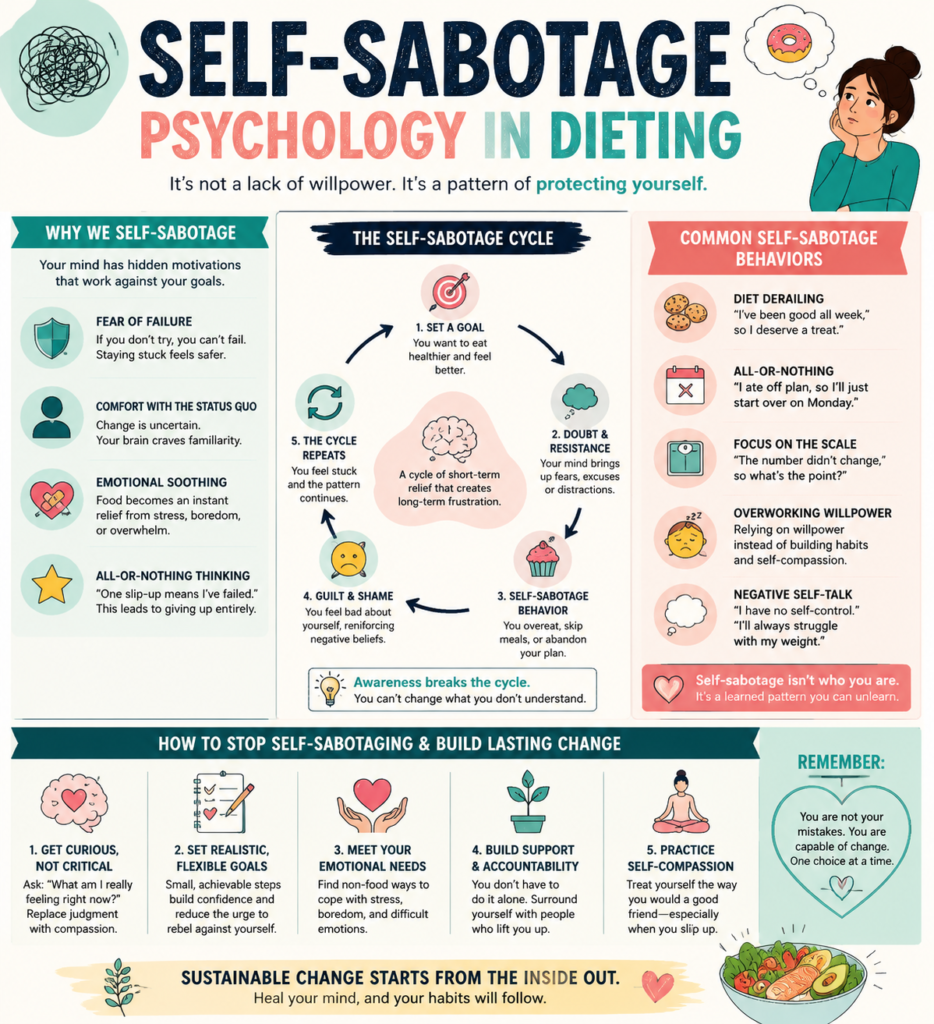
If you’ve ever found yourself promising to “start eating healthy tomorrow” while reaching for that second slice of cake, you already know how sneaky the inner negotiator can be in the dieting game. It’s that little voice always ready to bargain, justify, or make deals that end up getting in the way of your goals. Understanding how this shows up isn’t just interesting; it’s pretty important for anyone looking to stick to better habits and build a relationship with food that actually feels good.
What Is the “Inner Negotiator” and Why Does It Matter?
When I think about willpower and healthy eating, it’s easy to picture a simple choice: Say yes to salad, no to fries. But most of us know it doesn’t quite work that way. The inner negotiator is that part of your mind that steps in when you’re about to make a healthy choice and throws a wrench into the works.
This mental negotiator often pipes up with thoughts like, “Just one won’t hurt,” or “You had a rough day; you deserve a treat.” Sometimes these bargains sound so reasonable, but over time, they can seriously derail your progress.
The inner negotiator is actually a collection of learned habits, emotional triggers, and—believe it or not—a pretty clever sense of self-preservation. Our brains are wired to seek comfort, manage stress, and save energy. When faced with diet changes, that wiring resists anything too difficult or unfamiliar. That’s when the negotiating starts.
How Does the Inner Negotiator Sabotage Diet Progress?
This mental trickster shows up in everyday moments, usually when you’re tired, stressed, or feeling deprived. Here are some ways I notice it tends to pop up:
- Procrastination Tactics: Thoughts like “I’ll start eating better on Monday” end up pushing goals off day after day.
- Justification Games: “You walked a lot today, so you can have dessert.” These self-rewards and bargains are classic sabotage strategies.
- Minimizing: Telling yourself, “It’s just a bite,” or, “This won’t make a big difference.” Tiny habits add up, though.
- Comparison Shopping: Looking at what others are eating and convincing yourself you deserve the same, even when it doesn’t serve your own goals.
- Stress Response: When life gets busy or overwhelming, it’s easy to give in to self-soothing or distract from problems.
Each of these tricks chips away at motivation and makes it harder to see progress, leaving you stuck in a frustrating cycle. This pattern isn’t limited to food either. The same mindset might show up when you’re trying to make other changes, like improving sleep habits or adopting a regular exercise routine. The more aware you become of your negotiating tendencies, the more likely you’ll be able to stop them in their tracks.
Breaking Down Why the Mind Negotiates
Peeling back what’s going on below the surface helps a lot. Most diet struggles aren’t just about food; they’re about emotions, habits, and even the stories we tell ourselves.
- Emotional Triggers: Food is more than fuel. It’s comfort, celebration, and sometimes even relief. When strong feelings come up, the inner negotiator builds a case for food-based comfort.
- Habit Loops: The brain gets used to certain routines. If reaching for snacks after work is your norm, your mind will negotiate to keep that familiar reward rolling in.
- All or Nothing Thinking: If you view eating as “good” or “bad,” one small slip can convince you to throw all your healthy plans out the window, with your inner negotiator cheering on the free-for-all.
- Lack of Immediate Reward: Healthy food choices give long-term benefits, but the brain loves instant gratification. That’s why the negotiator argues for a quick snack over a long-term win.
Feeling challenged by cravings doesn’t mean you’re lacking discipline; it simply means your mind is working as designed. Over time, recognizing these patterns helps you create distance between the urge and the action, giving you more control over your choices.
Action Steps to Outsmart Your Inner Negotiator
Luckily, this mental pattern isn’t set in stone. Here’s what has helped me, and what I’ve seen work for others who want to stay on track without feeling like they’re constantly battling themselves.
- Notice the Voice: Start paying attention when your mind tries to make a deal about food. Awareness is the first step to changing the pattern.
- Pause Before Deciding: When the urge to negotiate kicks in, take a few deep breaths or drink a glass of water before responding. Giving yourself a moment often weakens the urge.
- Ask “Why Now?”: Check in on what’s really going on. Are you bored? Stressed? Lonely? Labeling emotions helps break the automatic link between feeling and eating.
- Reframe the Choice: Replace phrases like “I can’t eat that” with “I’m choosing not to right now because it supports my goal.”
- Celebrate Small Wins: Notice and give yourself credit every time you stick to your plan, even in tiny ways. Positive reinforcement can weaken your negotiator’s grip.
Working through these action steps isn’t about perfection. It’s about building up enough moments of mindful choice that, over time, your habits actually change. If you slip up, that’s normal—just use it as a learning moment, not a reason to give the negotiator more power.
Common Roadblocks and How to Handle Them
- Late Night Snacking: If the inner negotiator comes out strongest at night, try brushing your teeth earlier or packing up the kitchen after dinner. Sometimes a hot cup of herbal tea or a change in activity helps snap you out of the automatic urge.
- Stress Eating: Journaling, short walks, or even a quick call with a friend helps break the link to stress eating. You can also try keeping a list of quick stress-busting activities handy, so you’re not scrambling for ideas when a tough moment hits.
- “Special Occasion” Overload: Not every event requires a full-on food celebration. Pick the treats that feel most meaningful, and give yourself permission to skip the rest without guilt. It’s okay to say no, even when others are indulging.
- Peer Pressure: If friends or family encourage you to “just have one,” practice simple responses such as “I’m good, thanks” or “I’m trying something new with my eating.” The more you use these phrases, the more natural they’ll feel.
Why Willpower Alone Doesn’t Always Work
Dieting isn’t about “being strong” all the time. Even folks with loads of willpower have an inner negotiator. The difference is that people who stick with changes over the long term have strategies ready when thoughts about negotiation pop up. Creating an environment where the healthy choice is the easy one, having prepped snacks, setting clear goals, and relying on social support replaces willpower with smart planning.
Trying to simply power through tough moments is exhausting. It’s better to lay the groundwork for success so you don’t have to rely on willpower alone. Think of willpower as your backup plan, not your main strategy.
Small Changes That Quiet the Negotiator
- Routine Swaps: Swap out a nightly dessert for herbal tea a few times a week and see how it feels. Small tweaks can retrain your mind over time.
- Positive Triggers: Pair something healthy (like a walk or stretching) with times you usually crave snacks. Soon, the urge might trigger you to move instead of munch.
- Set Easy Boundaries: Decide in advance what, when, and how much you’ll eat, especially for weaker moments like takeout nights or celebrations. Boundaries set when you’re calm are easier to follow than last-minute decisions.
Try to switch up routines slowly. Making too many drastic changes can make your inner negotiator even more opinionated. By tweaking a few things at a time, you give yourself a chance to adapt and actually enjoy the upgrade.
Real-Life Stories: How People Outsmarted Their Inner Negotiator
One friend of mine used to eat ice cream every night while unwinding in front of the TV. When she tried to cut back, her inner negotiator kept offering endless reasons to justify keeping the habit. She started putting her TV remote in the freezer next to the ice cream, so every time she opened it, she had to consciously choose what she really wanted. Silly, but it actually worked for her.
Another person I know started journaling whenever he felt the urge to negotiate with himself about food. Seeing his thoughts in writing made the whole process less automatic and gave him more control. It wasn’t about shaming himself, just about making the bargaining process more visible so he could respond rather than react.
I also heard from someone who pre-packed small containers of their favorite snacks so they could grab a portion without getting into the bargaining loop: “Should I eat the whole bag or just a handful?” Setting comfort-snack boundaries showed him that enjoying food didn’t have to be all-or-nothing, and his inner negotiator gradually softened its voice.
Frequently Asked Questions About Diet Negotiation
Question: Is having an inner negotiator a bad thing?
Answer: Not at all. It means your mind is trying to help you feel better or avoid discomfort. Recognizing it gives you more choices, not less.
Question: How do I know the difference between a genuine need and my negotiator talking?
Answer: Genuine needs tend to come with clear physical cues (like hunger or fatigue), while negotiator thoughts are more about convenience or emotion. A short pause and self-check can help sort them out.
Question: How can I make healthy habits stick when my negotiator feels extra loud?
Answer: Keep your environment supportive, lean on friends or family, and focus on what you’re adding to your life—not just what you’re taking away. Habits get stronger with repetition and small wins.
Building a Healthier Mindset for the Long Run
Working with, rather than against, your inner negotiator makes sticking to good habits feel much more doable. Calling out those sneaky bargains, setting up supportive routines, and practicing patience with yourself are all pretty important if you want your diet changes to last.
Everyone has an inner negotiator. It’s not about fighting or ignoring it every time. It’s about understanding why it shows up and giving yourself better ways to respond. Over time, those small adjustments quiet the noise and make space for healthier choices to become your new normal. By building a healthier mindset around food and self-talk, you lay the foundation for lasting change—not just temporary willpower wins. Keep experimenting, be gentle with yourself, and celebrate every bit of progress along the way. That’s how you win over your inner negotiator for good.
Video: How Your Brain Protects Your Bad Habits #discipline #mindset