Family disclosure in addiction is a critical yet often challenging step in the recovery journey. For individuals experiencing Substance Use Disorder, opening up to loved ones requires vulnerability, honesty, and courage. Fear of judgment, rejection, or misunderstanding can make this process difficult, leading many to remain silent despite the need for support. However, disclosure is more than simply admitting a problem—it is the beginning of rebuilding trust, strengthening relationships, and creating a support system that can foster long-term recovery.
Family Disclosure in Addiction: The Power of Honesty in the Healing Process
Addiction often thrives in silence. Shame, fear, and uncertainty can make it incredibly difficult for individuals to open up about their struggles. However, family disclosure—sharing one’s experience with addiction with loved ones—can be a transformative step in recovery. For individuals facing Substance Use Disorder, honest communication with family is not just about revealing a problem—it’s about creating a foundation for support, understanding, and long-term healing.
What Is Family Disclosure in Addiction?
Family disclosure refers to the process of informing family members about one’s substance use and its impact. This can include:
- Admitting the presence of addiction
- Sharing personal experiences and challenges
- Discussing the need for help or treatment
Disclosure is not a one-time event—it’s often an ongoing process of communication and trust-building.
Why Disclosure Is So Difficult
Many individuals hesitate to open up due to:
- Fear of judgment or disappointment
- Shame and guilt associated with addiction
- Concern about damaging relationships
- Uncertainty about how others will react
These emotional barriers can keep people isolated, reinforcing the cycle of addiction.
The Benefits of Family Disclosure
Despite the difficulty, disclosure can lead to powerful outcomes:
🤝 1. Building a Support System
Family members can become allies in recovery, offering encouragement, accountability, and practical help.
🧠 2. Reducing Shame
Speaking openly about addiction helps break the secrecy that fuels it.
🗣️ 3. Improving Communication
Honest conversations create opportunities for deeper understanding and connection.
🔄 4. Encouraging Treatment Engagement
Family involvement often increases the likelihood of seeking and staying in treatment for Substance Use Disorder.
How to Approach Family Disclosure
🧩 1. Choose the Right Time and Setting
Find a calm, private moment where everyone can focus without distractions.
🗣️ 2. Be Honest but Thoughtful
Share your experience clearly, without minimizing or exaggerating.
🎯 3. Focus on Your Needs
Explain what kind of support you’re seeking—whether it’s emotional support, understanding, or help accessing treatment.
🤝 4. Prepare for Different Reactions
Family members may respond with concern, confusion, anger, or relief. These reactions are part of the process.
The Role of Family After Disclosure
Once disclosure happens, families can support recovery by:
- Listening without judgment
- Learning about addiction as a health condition
- Encouraging treatment and healthy boundaries
- Avoiding enabling behaviors
Education and empathy are key to creating a supportive environment.
Challenges in Family Disclosure
Disclosure does not guarantee immediate understanding or support. Some challenges include:
- Family denial or minimization
- Conflict or emotional reactions
- Misunderstanding addiction as a moral failing
In some cases, involving a therapist or counselor can help guide these conversations.
A Key Insight: Disclosure Is a Step, Not the Finish Line
Opening up to family is an important milestone—but recovery is an ongoing journey. Disclosure creates the opportunity for support, but maintaining that support requires continued communication and effort.
What This Means for Recovery
Family disclosure can:
- Strengthen relationships
- Increase accountability
- Provide emotional and practical support
- Improve long-term recovery outcomes
When approached with honesty and care, it becomes a powerful tool for healing.
Final Thoughts
Talking to family about addiction is one of the hardest steps—but also one of the most impactful. It shifts the experience from isolation to connection, from secrecy to support.
You don’t have to carry addiction alone. When you open the door to honest conversation, you also open the door to understanding, healing, and hope.
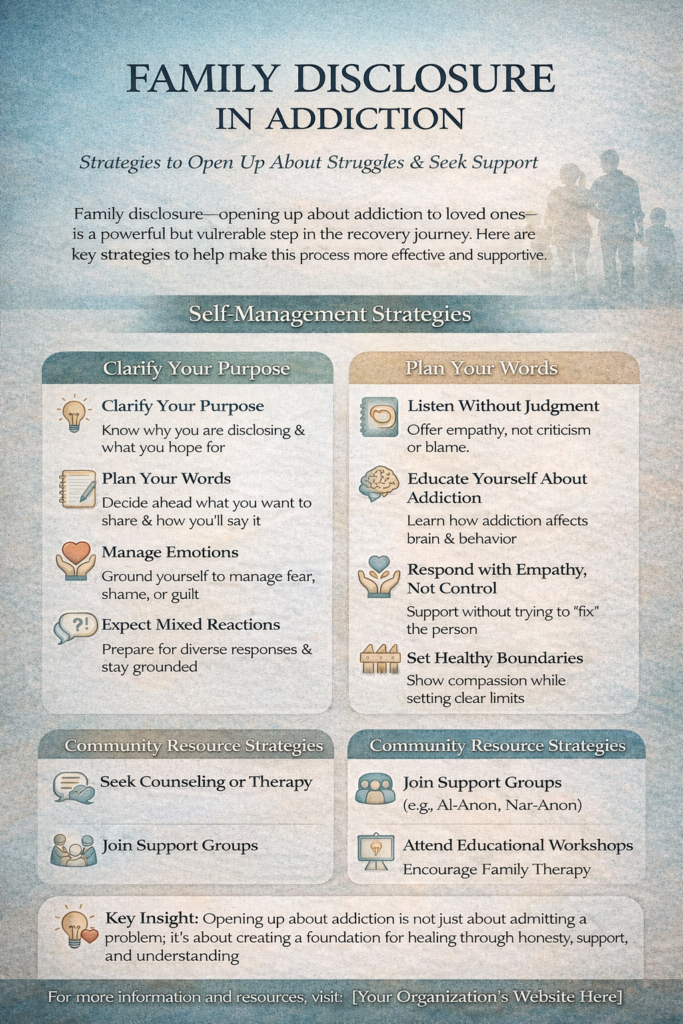
Family Disclosure in Addiction: Self-Management Strategies for Opening Up and Moving Forward
Talking to family about addiction can feel overwhelming, emotional, and even intimidating. For individuals facing Substance Use Disorder, the idea of disclosure often brings up fear of judgment, rejection, or disappointment. However, with the right self-management strategies, this process can become more structured, intentional, and ultimately empowering.
Self-management isn’t about doing it alone—it’s about preparing yourself mentally and emotionally so you can approach disclosure in a healthy, constructive way.
Why Self-Management Matters Before Disclosure
Family disclosure is not just about what you say—it’s about how prepared you are to say it. Without preparation, conversations can become reactive, unclear, or emotionally overwhelming.
Self-management helps you:
- Stay grounded during difficult conversations
- Communicate more clearly and honestly
- Handle different reactions without shutting down
- Focus on your recovery goals
Self-Management Strategies for Family Disclosure
🧠 1. Clarify Your Purpose
Before starting the conversation, ask yourself:
- Why do I want to tell my family?
- What do I hope will come from this?
Your purpose might be:
- Seeking support
- Being honest
- Starting recovery
Having clarity keeps the conversation focused and meaningful.
📝 2. Plan What You Want to Say
You don’t need a script, but having a general idea helps.
Consider:
- How to explain your experience
- What challenges have you faced
- What kind of help do you need
Practicing ahead of time can reduce anxiety and improve communication.
🌬️ 3. Manage Your Emotions
Disclosure can bring up fear, guilt, or shame. Use grounding techniques like:
- Deep breathing
- Pausing before responding
- Reminding yourself why you’re doing this
Staying emotionally regulated helps you remain present and engaged.
⏱️ 4. Choose the Right Timing
Self-management includes knowing when you’re ready.
Ask yourself:
- Am I calm enough to have this conversation?
- Is this a good moment for them to listen?
Avoid starting the conversation during a conflict or high-stress situation.
🧩 5. Set Realistic Expectations
You cannot control how others respond.
Family members may react with:
- Support
- Confusion
- Anger
- Denial
Preparing for mixed reactions helps you avoid feeling discouraged or overwhelmed.
🗣️ 6. Use Clear and Honest Language
Try to speak from your own experience:
- “I’ve been struggling with…”
- “I need support because…”
Avoid blaming or minimizing. Honesty builds trust.
🛑 7. Set Boundaries for Yourself
You have the right to:
- Share at your own pace
- Do not answer every question immediately
- Pause the conversation if it becomes too intense
Self-management includes protecting your emotional well-being.
📓 8. Reflect After the Conversation
After disclosure, take time to process:
- What went well?
- What felt difficult?
- What do I need next?
Reflection helps you learn and prepare for future conversations.
A Key Insight: You Are in Control of Your Story
Family disclosure can feel like giving up control—but in reality, it’s an act of taking control. You are choosing to be honest, to seek support, and to move toward recovery.
What This Means for Recovery
When self-management is part of the disclosure process:
- Communication becomes more effective
- Emotional overwhelm is reduced
- Relationships have a stronger foundation for healing
- You feel more confident and empowered
This preparation can make a difficult conversation more productive and meaningful.
Final Thoughts
Opening up to family about addiction is not easy—but it is a powerful step forward. By managing your thoughts, emotions, and expectations, you give yourself the best chance for a constructive and supportive conversation.
You don’t have to be perfect—you just have to be prepared, honest, and willing to take that step.
Family Disclosure in Addiction: Family Support Strategies for Understanding and Healing
When a loved one opens up about addiction, it can be a powerful and emotional moment for everyone involved. Family disclosure—sharing struggles related to Substance Use Disorder—often marks the beginning of a new phase in recovery. However, how families respond to this disclosure can significantly influence the outcome. Supportive, informed, and compassionate reactions can strengthen recovery, while misunderstanding or judgment may create additional barriers.
Understanding how to respond is just as important as the disclosure itself.
Why Family Support Matters in Disclosure
When someone shares their experience with addiction, they are taking a vulnerable step. Family responses can:
- Encourage continued honesty and openness
- Reduce feelings of shame and isolation
- Strengthen trust and connection
- Support long-term recovery efforts
Without support, individuals may withdraw again, making recovery more difficult.
Family Support Strategies for Understanding Disclosure
👂 1. Listen Without Judgment
The most important first step is simply to listen.
Avoid:
- Interrupting
- Blaming
- Jumping to conclusions
Instead, focus on understanding their experience:
- “Thank you for telling me.”
- “I’m here to listen.”
This creates a safe space for honest communication.
🧠 2. Educate Yourself About Addiction
Understanding Substance Use Disorder as a medical condition—not a moral failure—is essential.
Learn about:
- How addiction affects the brain
- Why is it difficult to stop
- The role of triggers and relapse
Education helps replace judgment with empathy.
🗣️ 3. Respond with Empathy, Not Control
It’s natural to want to “fix” the situation, but recovery is a personal process.
Instead of:
- “You need to do this…”
Try:
- “How can I support you?”
This approach respects autonomy while offering help.
⚖️ 4. Set Healthy Boundaries
Support does not mean enabling.
Families should:
- Avoid covering up or excusing harmful behaviors
- Be clear about what is and isn’t acceptable
- Balance compassion with accountability
Healthy boundaries protect both the individual and the family.
🤝 5. Encourage Professional Help
Recovery often requires more than family support.
Encourage:
- Therapy or counseling
- Treatment programs
- Support groups
Professional guidance complements family involvement and improves outcomes.
🧩 6. Be Patient with the Process
Disclosure is just the beginning. Recovery takes time, and setbacks may happen.
Families can support by:
- Staying consistent
- Avoiding harsh reactions to relapse
- Celebrating progress, no matter how small
Patience helps maintain trust and motivation.
💬 7. Keep Communication Open
Ongoing dialogue is key.
Check in regularly:
- “How are you feeling today?”
- “Is there anything you need from me?”
Open communication prevents misunderstandings and strengthens relationships.
Common Challenges for Families
Families may experience:
- Shock or denial
- Anger or frustration
- Fear about the future
- Guilt or self-blame
These reactions are normal. Seeking support—such as family counseling or support groups—can help families process their own emotions while supporting their loved one.
A Key Insight: Support Is About Connection, Not Perfection
You don’t need to have the perfect response. What matters most is showing up with willingness, care, and openness. Even imperfect support can make a meaningful difference.
What This Means for Recovery
When families respond to disclosure with understanding and support:
- Individuals are more likely to stay engaged in recovery
- Relationships can begin to heal
- Trust can be rebuilt over time
- The recovery journey becomes less isolating
Family support becomes a powerful part of the healing process.
Final Thoughts
Family disclosure in addiction is a courageous step—and how it is received matters deeply. By listening, learning, and responding with empathy, families can transform a difficult moment into the beginning of meaningful change.
You don’t have to fix everything. Your role is to support, understand, and walk alongside your loved one as they move toward recovery.
Family Disclosure in Addiction: Using Community Resources to Support Honest Conversations and Recovery
Opening up to family about addiction can be one of the most difficult steps in the recovery process. For individuals facing Substance Use Disorder, fear of judgment, rejection, or misunderstanding can make disclosure feel overwhelming. This is where community resources become essential. They provide guidance, structure, and support to help individuals and families navigate these conversations in a healthier, more informed way.
Community-based support can transform disclosure from a moment of fear into a foundation for healing.
Why Community Resources Matter in Family Disclosure
Family disclosure is not just a personal conversation—it’s a complex emotional process. Community resources help by:
- Offering professional guidance on how to communicate effectively
- Providing safe spaces to practice or process conversations
- Educating both individuals and families about addiction
- Reducing isolation and stigma
With the right support, disclosure becomes more intentional and less overwhelming.
Community Resource Strategies for Implementing Family Disclosure
🏥 1. Utilize Counseling and Therapy Services
Licensed therapists and counselors can:
- Help individuals prepare for disclosure
- Facilitate family conversations
- Teach communication and coping skills
Family therapy, in particular, creates a structured environment where everyone can express themselves safely.
👥 2. Engage in Support Groups
Peer support groups—both for individuals and families—offer valuable insight.
In these settings, people can:
- Learn how others approached disclosure
- Share fears and experiences
- Receive encouragement and feedback
Groups for families also help loved ones understand Substance Use Disorder from a supportive perspective.
📚 3. Attend Community Education Programs
Workshops and seminars on addiction and communication can:
- Teach the science of addiction
- Explain the emotional dynamics of disclosure
- Provide practical tools for difficult conversations
Education reduces fear and promotes empathy on both sides.
🧑⚕️ 4. Seek Guidance from Recovery Programs
Structured recovery programs often include:
- Communication skill-building
- Family involvement sessions
- Step-by-step guidance for disclosure
These programs help individuals approach conversations with clarity and purpose.
🤝 5. Use Advocacy and Support Organizations
Community organizations offer:
- Helplines and resources
- Referrals to family counseling
- Educational materials
They also promote stigma reduction, making it easier to talk openly about addiction.
🌐 6. Leverage Online Community Resources
Online platforms can provide:
- Anonymous support
- Access to shared experiences
- Practical advice for starting conversations
While helpful, these should complement—not replace—professional support.
📓 7. Combine Community Support with Personal Preparation
Community resources are most effective when paired with self-reflection.
Before disclosure:
- Clarify your goals
- Understand your emotions
- Identify the support you need
Then use community guidance to shape your communication.
A Key Insight: Disclosure Is Stronger with Support
Trying to navigate family disclosure alone can increase anxiety and uncertainty. Community resources provide perspective, reassurance, and tools that make the process more manageable and effective.
What This Means for Recovery
When community resources are part of the disclosure process:
- Conversations are more constructive
- Families are better prepared to respond
- Individuals feel less isolated
- Recovery support systems become stronger
This combination of personal courage and community support creates a more stable path forward.
Final Thoughts
Family disclosure in addiction is a courageous step—but it doesn’t have to be taken alone. Community resources offer the guidance, education, and support needed to approach these conversations with confidence and care.
By reaching out, learning, and connecting with others, individuals can turn a difficult moment into the beginning of understanding, support, and lasting recovery.
Frequently Asked Questions
Here are some common questions:
What is family disclosure in addiction?
Family disclosure is the process of openly sharing struggles related to Substance Use Disorder with family members. It involves honest communication about substance use, its impact, and the need for support or treatment.
Why is family disclosure important?
Disclosure helps:
- Reduce secrecy and shame
- Build a support system
- Improve communication and trust
- Encourage engagement in recovery
It shifts the experience from isolation to connection.
Why is it so hard to tell family about addiction?
Many people fear:
- Judgment or disappointment
- Rejection or anger
- Damaging relationships
- Losing trust
Shame and guilt associated with Substance Use Disorder can make opening up especially difficult.
When is the right time to disclose to family?
There’s no perfect time, but it’s best when:
- You feel emotionally ready
- The environment is calm and private
- You have a clear purpose for the conversation
Preparation can make the process smoother and more effective.
What should I say when disclosing?
Focus on:
- Being honest about your experience
- Explaining how addiction has affected you
- Sharing what kind of support you need
Using “I” statements (e.g., “I’ve been struggling with…”) can help keep the conversation constructive.
How might family members react?
Reactions vary and may include:
- Support and understanding
- Shock or confusion
- Anger or frustration
- Denial
These responses are normal and may change over time as family members process the information.
What if my family reacts negatively?
If the response is difficult:
- Stay calm and avoid escalating conflict
- Give them time to process
- Seek support from a therapist or support group
- Remember that their reaction does not define your recovery
You can still move forward with help from other support systems.
Can family involvement improve recovery?
Yes. Supportive family involvement can:
- Increase accountability
- Provide emotional encouragement
- Improve treatment engagement
- Strengthen long-term recovery outcomes
However, support should be healthy, not enabling.
What role should the family play after disclosure?
Families can help by:
- Listening without judgment
- Learning about addiction
- Encouraging treatment
- Setting healthy boundaries
Their role is to support—not control—the recovery process.
Should I involve a professional in the disclosure process?
In many cases, yes. A therapist or counselor can:
- Help you prepare
- Facilitate the conversation
- Guide both you and your family through emotional responses
This is especially helpful if relationships are strained.
Is disclosure a one-time conversation?
No. Family disclosure is often an ongoing process. As recovery progresses, continued communication helps maintain trust and support.
What if I’m not ready to tell my family yet?
That’s okay. You can:
- Talk to a therapist first
- Join a support group
- Work on your recovery independently
Disclosure should happen when you feel prepared and safe.
Conclusion
Understanding the importance of family disclosure in the context of Substance Use Disorder highlights its powerful role in healing and recovery. While the process may be uncomfortable and met with mixed reactions, it opens the door to communication, support, and shared understanding. When approached with honesty and supported by empathy, family disclosure can transform isolation into connection and uncertainty into hope. Ultimately, it is not just about revealing a struggle—it is about creating a path forward where recovery is supported, understood, and sustained.
Video: The Hardest Conversation That Saves Lives #addiction #family