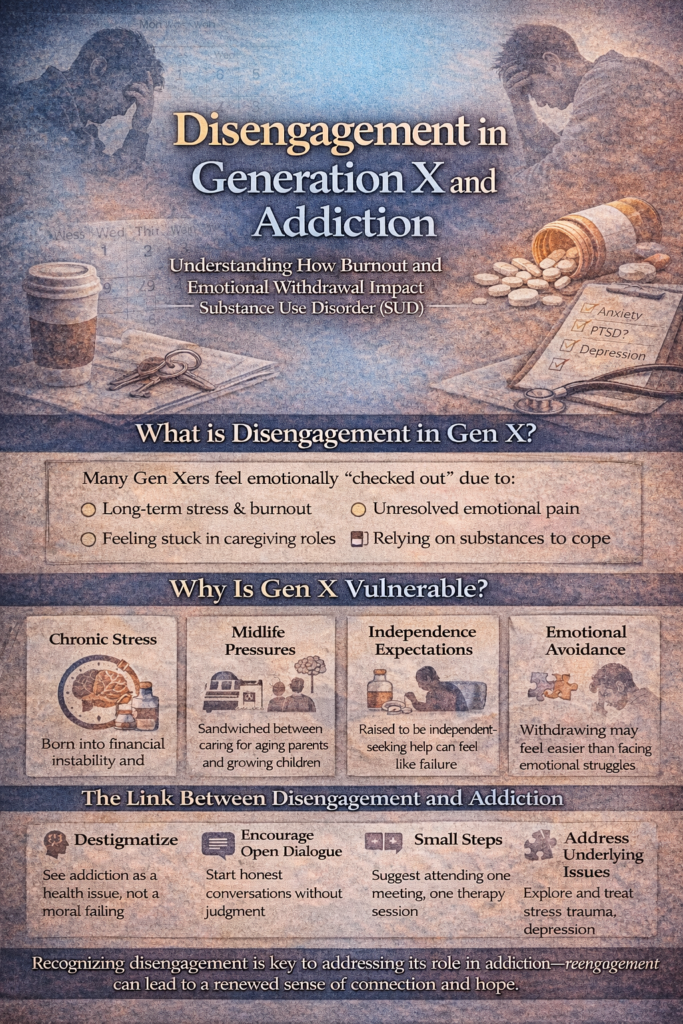
Disengagement in Generation X is an often-overlooked factor in understanding addiction and recovery. Individuals within this generation, now in midlife, frequently face cumulative stress from career demands, family responsibilities, and long-term societal pressures. These experiences can contribute to emotional withdrawal, reduced motivation, and a tendency to cope in isolation. In the context of Substance Use Disorder, this disengagement can make it more difficult to recognize the severity of the issue or seek appropriate help. Rather than being a sign of indifference, disengagement is often a complex response to burnout, unmet emotional needs, and prolonged stress.
Disengagement in Generation X and Addiction: Understanding the Disconnect and Rebuilding Engagement
Generation X—often described as the “in-between” generation—has faced unique life pressures, from economic instability to shifting cultural expectations. In the context of addiction, this generation may experience a particular form of disengagement that can complicate both recognition of the problem and the recovery process. Disengagement is not simply apathy; it is often a response to long-term stress, burnout, and unresolved emotional experiences that intersect with conditions like Substance Use Disorder.
What Does Disengagement Look Like in Gen X?
Disengagement can appear in subtle but impactful ways:
- Emotional detachment or “checking out.”
- Reduced motivation or interest in change
- Avoidance of conversations about mental health or addiction
- Increased reliance on substances to cope
Unlike more visible distress, disengagement often flies under the radar, making it harder to identify and address.
Why Generation X Is Particularly Vulnerable
🧠 1. Chronic Stress and Burnout
Gen X has navigated decades of economic shifts, caregiving responsibilities, and workplace pressures. Long-term stress can lead to emotional exhaustion and withdrawal.
🧩 2. Cultural Expectations of Independence
Many in this generation were raised to be self-reliant, often minimizing emotional needs. This can make it difficult to seek help or acknowledge struggles with Substance Use Disorder.
⚖️ 3. Midlife Pressures
Balancing careers, aging parents, and sometimes children creates a “sandwich generation” effect, increasing stress and reducing time for self-care.
🔄 4. Coping Through Avoidance
Disengagement can become a coping mechanism—avoiding uncomfortable emotions or situations by mentally or emotionally withdrawing.
The Link Between Disengagement and Addiction
Disengagement and addiction often reinforce each other:
- Emotional numbness may lead to increased substance use
- Substance use can deepen withdrawal from relationships and responsibilities
- Lack of engagement can delay recognition of the problem
Over time, this cycle can make recovery feel distant or unattainable.
Barriers to Recovery for Gen X
- Stigma: Viewing addiction as a personal failure rather than a health condition
- Skepticism of Treatment: Distrust in mental health systems
- Time Constraints: Limited availability due to responsibilities
- Emotional Suppression: Difficulty expressing vulnerability
These barriers can prevent individuals from fully engaging in treatment or support systems.
Rebuilding Engagement in Recovery
🧠 1. Reframing Addiction
Understanding addiction as a medical condition—not a moral failing—can reduce shame and increase openness to help.
🗣️ 2. Encouraging Honest Dialogue
Creating safe spaces for conversation helps break through emotional detachment.
🔄 3. Small, Manageable Steps
Engagement doesn’t have to happen all at once. Small actions—like attending one meeting or having one honest conversation—can build momentum.
🤝 4. Connection Over Isolation
Rebuilding relationships and support systems is key to counteracting disengagement.
🧩 5. Addressing Underlying Issues
Disengagement may mask deeper concerns such as trauma, depression, or burnout. Treating these alongside addiction improves outcomes.
A Key Insight: Disengagement Is a Signal, Not a Failure
Disengagement is often misunderstood as laziness or a lack of care. In reality, it is frequently a protective response to overwhelm, stress, or emotional pain. Recognizing this shifts the focus from blame to understanding.
What This Means for Recovery
For Generation X, recovery may require:
- Flexible, accessible treatment options
- Approaches that respect independence while encouraging connection
- Addressing both addiction and emotional disengagement
When engagement is rebuilt, recovery becomes more sustainable and meaningful.
Final Thoughts
Disengagement in Generation X is not the absence of desire for change—it is often the result of years of pressure, adaptation, and coping. In the context of addiction, understanding this disconnect is essential.
By approaching disengagement with empathy, curiosity, and support, we can help transform it into re-engagement—one step at a time.
Family Disclosure in Addiction: The Power of Honesty in the Healing Process
Addiction often thrives in silence. Shame, fear, and uncertainty can make it incredibly difficult for individuals to open up about their struggles. However, family disclosure—sharing one’s experience with addiction with loved ones—can be a transformative step in recovery. For individuals facing Substance Use Disorder, honest communication with family is not just about revealing a problem—it’s about creating a foundation for support, understanding, and long-term healing.
What Is Family Disclosure in Addiction?
Family disclosure refers to the process of informing family members about one’s substance use and its impact. This can include:
- Admitting the presence of addiction
- Sharing personal experiences and challenges
- Discussing the need for help or treatment
Disclosure is not a one-time event—it’s often an ongoing process of communication and trust-building.
Why Disclosure Is So Difficult
Many individuals hesitate to open up due to:
- Fear of judgment or disappointment
- Shame and guilt associated with addiction
- Concern about damaging relationships
- Uncertainty about how others will react
These emotional barriers can keep people isolated, reinforcing the cycle of addiction.
The Benefits of Family Disclosure
Despite the difficulty, disclosure can lead to powerful outcomes:
🤝 1. Building a Support System
Family members can become allies in recovery, offering encouragement, accountability, and practical help.
🧠 2. Reducing Shame
Speaking openly about addiction helps break the secrecy that fuels it.
🗣️ 3. Improving Communication
Honest conversations create opportunities for deeper understanding and connection.
🔄 4. Encouraging Treatment Engagement
Family involvement often increases the likelihood of seeking and staying in treatment for Substance Use Disorder.
How to Approach Family Disclosure
🧩 1. Choose the Right Time and Setting
Find a calm, private moment where everyone can focus without distractions.
🗣️ 2. Be Honest but Thoughtful
Share your experience clearly, without minimizing or exaggerating.
🎯 3. Focus on Your Needs
Explain what kind of support you’re seeking—whether it’s emotional support, understanding, or help accessing treatment.
🤝 4. Prepare for Different Reactions
Family members may respond with concern, confusion, anger, or relief. These reactions are part of the process.
The Role of Family After Disclosure
Once disclosure happens, families can support recovery by:
- Listening without judgment
- Learning about addiction as a health condition
- Encouraging treatment and healthy boundaries
- Avoiding enabling behaviors
Education and empathy are key to creating a supportive environment.
Challenges in Family Disclosure
Disclosure does not guarantee immediate understanding or support. Some challenges include:
- Family denial or minimization
- Conflict or emotional reactions
- Misunderstanding addiction as a moral failing
In some cases, involving a therapist or counselor can help guide these conversations.
A Key Insight: Disclosure Is a Step, Not the Finish Line
Opening up to family is an important milestone—but recovery is an ongoing journey. Disclosure creates the opportunity for support, but maintaining that support requires continued communication and effort.
What This Means for Recovery
Family disclosure can:
- Strengthen relationships
- Increase accountability
- Provide emotional and practical support
- Improve long-term recovery outcomes
When approached with honesty and care, it becomes a powerful tool for healing.
Final Thoughts
Talking to family about addiction is one of the hardest steps—but also one of the most impactful. It shifts the experience from isolation to connection, from secrecy to support.
You don’t have to carry addiction alone. When you open the door to honest conversation, you also open the door to understanding, healing, and hope.
Family Disclosure in Addiction: Self-Management Strategies for Opening Up and Moving Forward
Talking to family about addiction can feel overwhelming, emotional, and even intimidating. For individuals facing Substance Use Disorder, the idea of disclosure often brings up fear of judgment, rejection, or disappointment. However, with the right self-management strategies, this process can become more structured, intentional, and ultimately empowering.
Self-management isn’t about doing it alone—it’s about preparing yourself mentally and emotionally so you can approach disclosure in a healthy, constructive way.
Why Self-Management Matters Before Disclosure
Family disclosure is not just about what you say—it’s about how prepared you are to say it. Without preparation, conversations can become reactive, unclear, or emotionally overwhelming.
Self-management helps you:
- Stay grounded during difficult conversations
- Communicate more clearly and honestly
- Handle different reactions without shutting down
- Focus on your recovery goals
Self-Management Strategies for Family Disclosure
🧠 1. Clarify Your Purpose
Before starting the conversation, ask yourself:
- Why do I want to tell my family?
- What do I hope will come from this?
Your purpose might be:
- Seeking support
- Being honest
- Starting recovery
Having clarity keeps the conversation focused and meaningful.
📝 2. Plan What You Want to Say
You don’t need a script, but having a general idea helps.
Consider:
- How to explain your experience
- What challenges have you faced
- What kind of help do you need
Practicing ahead of time can reduce anxiety and improve communication.
🌬️ 3. Manage Your Emotions
Disclosure can bring up fear, guilt, or shame. Use grounding techniques like:
- Deep breathing
- Pausing before responding
- Reminding yourself why you’re doing this
Staying emotionally regulated helps you remain present and engaged.
⏱️ 4. Choose the Right Timing
Self-management includes knowing when you’re ready.
Ask yourself:
- Am I calm enough to have this conversation?
- Is this a good moment for them to listen?
Avoid starting the conversation during a conflict or high-stress situation.
🧩 5. Set Realistic Expectations
You cannot control how others respond.
Family members may react with:
- Support
- Confusion
- Anger
- Denial
Preparing for mixed reactions helps you avoid feeling discouraged or overwhelmed.
🗣️ 6. Use Clear and Honest Language
Try to speak from your own experience:
- “I’ve been struggling with…”
- “I need support because…”
Avoid blaming or minimizing. Honesty builds trust.
🛑 7. Set Boundaries for Yourself
You have the right to:
- Share at your own pace
- Do not answer every question immediately
- Pause the conversation if it becomes too intense
Self-management includes protecting your emotional well-being.
📓 8. Reflect After the Conversation
After disclosure, take time to process:
- What went well?
- What felt difficult?
- What do I need next?
Reflection helps you learn and prepare for future conversations.
A Key Insight: You Are in Control of Your Story
Family disclosure can feel like giving up control—but in reality, it’s an act of taking control. You are choosing to be honest, to seek support, and to move toward recovery.
What This Means for Recovery
When self-management is part of the disclosure process:
- Communication becomes more effective
- Emotional overwhelm is reduced
- Relationships have a stronger foundation for healing
- You feel more confident and empowered
This preparation can make a difficult conversation more productive and meaningful.
Final Thoughts
Opening up to family about addiction is not easy—but it is a powerful step forward. By managing your thoughts, emotions, and expectations, you give yourself the best chance for a constructive and supportive conversation.
You don’t have to be perfect—you just have to be prepared, honest, and willing to take that step.
Disengagement in Generation X and Addiction: Self-Management Strategies for Reconnection and Recovery
Disengagement is a common but often overlooked experience among Generation X, especially in the context of addiction. Many individuals in this generation face long-term stress, burnout, and emotional fatigue, which can lead to withdrawal, detachment, and reduced motivation. When combined with Substance Use Disorder, this disengagement can make it harder to recognize the problem, seek help, or stay committed to recovery.
The good news is that disengagement is not permanent. With intentional self-management strategies, individuals can begin to reconnect with themselves, their goals, and their recovery journey.
Why Self-Management Matters
Disengagement often feels like being “checked out” or stuck. Self-management helps you:
- Regain awareness of your thoughts and behaviors
- Rebuild motivation and purpose
- Take small, meaningful steps toward recovery
- Break the cycle of avoidance and isolation
It’s about taking control in a way that feels manageable and realistic.
Self-Management Strategies for Re-Engagement
🧠 1. Increase Self-Awareness
Start by recognizing signs of disengagement:
- Emotional numbness
- Lack of motivation
- Avoidance of responsibilities or relationships
Ask yourself:
- “When did I start feeling this way?”
- “What might be contributing to this?”
Awareness is the first step toward change.
📓 2. Identify Patterns and Triggers
Track when you feel most disengaged.
Common triggers may include:
- Stress or burnout
- Relationship conflicts
- Feelings of overwhelm
- Substance use patterns
Understanding these patterns helps you anticipate and respond more effectively.
🎯 3. Set Small, Achievable Goals
Disengagement can make everything feel overwhelming.
Start small:
- Attend one support meeting
- Go for a short walk
- Complete one task
Small wins build momentum and restore a sense of control.
🔄 4. Create Structure and Routine
Lack of structure can deepen disengagement.
Try:
- Setting a daily schedule
- Establishing consistent sleep and meal times
- Planning simple, productive activities
Routine helps reintroduce stability and purpose.
🌬️ 5. Reconnect with Your Body and Emotions
Disengagement often involves disconnecting from your feelings.
Use:
- Mindfulness or meditation
- Physical activity
- Deep breathing exercises
These practices help you become more present and aware.
🧩 6. Challenge Avoidance Behaviors
Avoidance reinforces disengagement.
Instead:
- Break tasks into smaller steps
- Tackle one thing at a time
- Reward yourself for effort
Facing challenges gradually helps rebuild confidence.
🤝 7. Rebuild Connection Gradually
Isolation is a key part of disengagement.
Start with:
- One conversation
- One meeting
- One moment of connection
You don’t have to reconnect all at once—progress is enough.
🗣️ 8. Shift Your Internal Narrative
Disengagement often comes with thoughts like:
- “What’s the point?”
- “Nothing will change.”
Challenge these thoughts and replace them with:
- “I can take one step today.”
- “Small changes still matter.”
Your mindset influences your level of engagement.
A Key Insight: Disengagement Is a Protective Response
Disengagement is not laziness—it’s often a response to overwhelm, stress, or emotional exhaustion. Recognizing this helps reduce self-blame and opens the door to more compassionate, effective change.
What This Means for Recovery
When you apply self-management strategies:
- You begin to re-engage with your life and recovery
- Motivation gradually returns
- You reduce reliance on substances to cope
- You build a stronger foundation for long-term healing
Re-engagement doesn’t happen overnight—but it does happen with consistent effort.
Final Thoughts
Disengagement in Generation X is understandable—but it doesn’t have to define your future. By taking small, intentional steps, you can begin to reconnect with yourself and your recovery.
You don’t need to have everything figured out—you just need to start. One step at a time is enough to move forward.
Disengagement in Generation X and Addiction: Family Support Strategies for Reconnection and Recovery
Disengagement is a common yet often misunderstood experience among Generation X, especially for those struggling with Substance Use Disorder. Years of stress, responsibility, and emotional fatigue can lead to withdrawal, reduced motivation, and a sense of “checking out.” When addiction is present, this disengagement can deepen, making recovery feel distant or overwhelming.
Family support plays a crucial role in helping individuals move from disconnection to re-engagement. With the right strategies, families can become a powerful source of encouragement, stability, and healing.
Why Family Support Matters
Disengagement often thrives in isolation. Family involvement can:
- Break through emotional withdrawal
- Provide consistent encouragement
- Help rebuild connection and trust
- Support motivation for recovery
Even small, supportive actions from family members can make a meaningful difference.
Family Support Strategies for Re-Engagement
👂 1. Approach with Empathy, Not Judgment
Disengagement is often a response to overwhelm—not a lack of care.
Instead of:
- “Why are you so distant?”
Try:
- “I’ve noticed you seem overwhelmed—how can I support you?”
Empathy helps reduce defensiveness and opens the door to communication.
🧠 2. Understand the Root Causes
Family members should recognize that disengagement may be linked to:
- Burnout or chronic stress
- Emotional exhaustion
- Underlying mental health concerns
Learning about these factors helps shift from blame to understanding.
🗣️ 3. Encourage Open, Low-Pressure Communication
Avoid forcing conversations. Instead:
- Check in regularly
- Ask open-ended questions
- Be patient with responses
Creating a safe space makes it easier for your loved one to re-engage over time.
🤝 4. Reinforce Small Steps Forward
Re-engagement doesn’t happen all at once.
Acknowledge:
- Attending a meeting
- Completing a task
- Having a conversation
Recognizing progress builds confidence and motivation.
🛑 5. Avoid Enabling While Staying Supportive
Support should not mean ignoring harmful behaviors.
Families can:
- Set clear, healthy boundaries
- Avoid covering up consequences
- Encourage accountability
This balance supports recovery without reinforcing addiction patterns.
❤️ 6. Rebuild Connection Through Shared Activities
Disengagement often involves isolation. Gentle reconnection can help.
Try:
- Spending time together (walks, meals, simple activities)
- Creating low-pressure opportunities for interaction
Connection helps restore a sense of belonging and purpose.
🧩 7. Encourage Professional Help
Family support is important, but professional guidance is often necessary.
Encourage:
- Therapy or counseling
- Recovery programs
- Support groups
These resources can address both disengagement and Substance Use Disorder more effectively.
🔄 8. Be Patient with the Process
Disengagement develops over time—and so does re-engagement.
Expect:
- Gradual progress
- Occasional setbacks
- Fluctuating motivation
Consistency and patience are key.
A Key Insight: Disengagement Is Not Indifference
It may look like your loved one doesn’t care—but often, disengagement reflects emotional exhaustion or overwhelm. Recognizing this can transform frustration into compassion and guide more effective support.
What This Means for Recovery
When families use supportive strategies:
- Isolation decreases
- Trust begins to rebuild
- Motivation slowly returns
- Recovery becomes more sustainable
Family involvement can help turn disengagement into re-engagement.
Final Thoughts
Disengagement in Generation X is not a dead end—it’s a signal that support, understanding, and connection are needed. Families don’t need to have all the answers—they just need to show up with empathy, patience, and consistency.
Small, supportive actions can create meaningful change. And over time, those small steps can help your loved one reconnect with themselves, their recovery, and their future.
Disengagement in Generation X and Addiction: Community Resource Strategies for Reconnection and Recovery
Disengagement is a growing concern among Generation X, particularly for those struggling with Substance Use Disorder. Years of accumulated stress, burnout, and life responsibilities can lead to emotional withdrawal, isolation, and a sense of disconnection from both personal goals and recovery efforts. While this disengagement can feel difficult to overcome on one’s own, community resources offer powerful tools and support systems to help individuals reconnect and move forward.
Recovery is not meant to happen in isolation—community plays a critical role in restoring engagement, purpose, and connection.
Why Community Resources Matter
Disengagement often thrives in isolation. Community resources help break that cycle by providing:
- Connection with others who understand similar struggles
- Access to professional and peer support
- Opportunities to rebuild routine and purpose
- Encouragement and accountability
For Generation X, who may be less likely to seek help due to cultural values of independence, community support can be especially impactful.
Community Resource Strategies for Re-Engagement
👥 1. Join Peer Support and Recovery Groups
Support groups provide a space where individuals can:
- Share experiences without judgment
- Hear relatable stories from others in similar life stages
- Reconnect socially in a low-pressure environment
These groups help reduce isolation and normalize the recovery process.
🏥 2. Utilize Community Treatment Programs
Local clinics and recovery centers often offer:
- Structured treatment plans
- Group therapy sessions
- Dual-diagnosis care (addressing both addiction and mental health)
These programs provide guidance and structure, which can counteract disengagement.
🧑⚕️ 3. Access Counseling and Mental Health Services
Professional support can help address underlying causes of disengagement, such as:
- Burnout
- Depression
- Trauma
Therapists can also help individuals rebuild motivation and coping strategies.
📚 4. Participate in Educational Workshops and Programs
Community education programs offer:
- Information about addiction and recovery
- Skills for managing stress and emotions
- Tools for rebuilding engagement
Learning new perspectives can help shift the mindset and increase motivation.
🤝 5. Connect with Advocacy and Support Organizations
Organizations focused on addiction recovery provide:
- Resource referrals
- Support networks
- Educational materials
They also promote understanding and reduce stigma, making it easier to seek help.
🌐 6. Use Online Communities for Flexible Support
For busy Gen X individuals, online resources offer:
- Convenient access to support
- Anonymity if desired
- Opportunities to connect at any time
These platforms can be a first step toward re-engagement.
🧩 7. Engage in Community Activities and Volunteering
Reconnecting with purpose is key to overcoming disengagement.
Community involvement can:
- Provide a sense of meaning
- Rebuild confidence
- Encourage social interaction
Even small contributions can help restore a sense of connection.
A Key Insight: Connection Restores Engagement
Disengagement often signals a lack of connection—to self, others, or purpose. Community resources help rebuild those connections, creating an environment where recovery can thrive.
What This Means for Recovery
When community resources are part of the process:
- Isolation decreases
- Motivation gradually returns
- Support systems become stronger
- Recovery feels more achievable and sustainable
Re-engagement becomes a shared effort rather than a solitary struggle.
Final Thoughts
Disengagement in Generation X is not a dead end—it’s a signal that something needs attention and support. Community resources provide the structure, connection, and encouragement needed to move forward.
You don’t have to do this alone. By reaching out and engaging with your community, you can begin to rebuild connection, rediscover purpose, and strengthen your path to recovery—one step at a time.
Frequently Asked Questions
Here are some common questions:
What is disengagement in Generation X?
Disengagement refers to emotional withdrawal, reduced motivation, and a sense of “checking out” from life, relationships, or responsibilities. In the context of addiction, it often overlaps with struggles related to Substance Use Disorder.
Why is Generation X more prone to disengagement?
Generation X often faces:
- Long-term career and financial stress
- Caregiving responsibilities (children and aging parents)
- Cultural expectations of independence
These pressures can lead to burnout, emotional fatigue, and eventual disengagement.
How is disengagement connected to addiction?
Disengagement and addiction often reinforce each other:
- Emotional withdrawal can increase substance use as a coping mechanism
- Substance use can deepen isolation and lack of motivation
This cycle makes recovery more difficult without intervention.
What are common signs of disengagement?
Signs may include:
- Lack of interest or motivation
- Emotional numbness
- Avoidance of responsibilities
- Withdrawal from relationships
- Increased reliance on substances
These signs can be subtle and develop gradually.
Is disengagement the same as depression?
Not exactly. While disengagement can be a symptom of Major Depressive Disorder, it can also occur independently due to stress, burnout, or coping patterns. A professional evaluation can help distinguish between the two.
Why is disengagement often overlooked?
Disengagement can look like:
- Being “busy” or focused on responsibilities
- Quiet withdrawal rather than visible distress
Because it’s less dramatic than other symptoms, it may go unnoticed by others—and even by the individual experiencing it.
How does disengagement affect recovery?
Disengagement can:
- Reduce motivation to seek help
- Limit participation in treatment
- Increase the risk of relapse
- Delay recognition of addiction problems
Active engagement is essential for successful recovery.
Can disengagement be reversed?
Yes. Disengagement is not permanent. With the right strategies—such as self-awareness, support systems, and structured routines—individuals can gradually reconnect with themselves and their recovery.
What role does stress play in disengagement?
Chronic stress is a major contributor. Over time, constant pressure can lead to emotional exhaustion, making disengagement a coping response to avoid feeling overwhelmed.
How can family members help?
Families can:
- Encourage open communication
- Offer support without judgment
- Help identify patterns of withdrawal
- Encourage professional help
Supportive environments can help reduce isolation and promote re-engagement.
Are community resources helpful for disengagement?
Yes. Community resources such as support groups, counseling, and recovery programs provide:
- Connection with others
- Structure and accountability
- Access to professional guidance
These resources help individuals move out of isolation and back into engagement.
What is the first step toward re-engagement?
The first step is awareness—recognizing that disengagement is happening. From there, small actions (like reaching out, setting goals, or seeking support) can begin the process of reconnection.
Conclusion
Understanding disengagement in Generation X is essential for supporting effective recovery from Substance Use Disorder. When individuals appear withdrawn or unmotivated, it may reflect deeper emotional exhaustion rather than a lack of willingness to change. Addressing this disengagement requires a compassionate and individualized approach that acknowledges life experiences, reduces stigma, and encourages gradual re-engagement. By recognizing disengagement as a signal rather than a failure, individuals, families, and communities can better support meaningful recovery, fostering renewed connection, purpose, and long-term well-being.
Video: Gen X Quietly Falling Apart and Nobody Notices #GenX #SilentStruggle