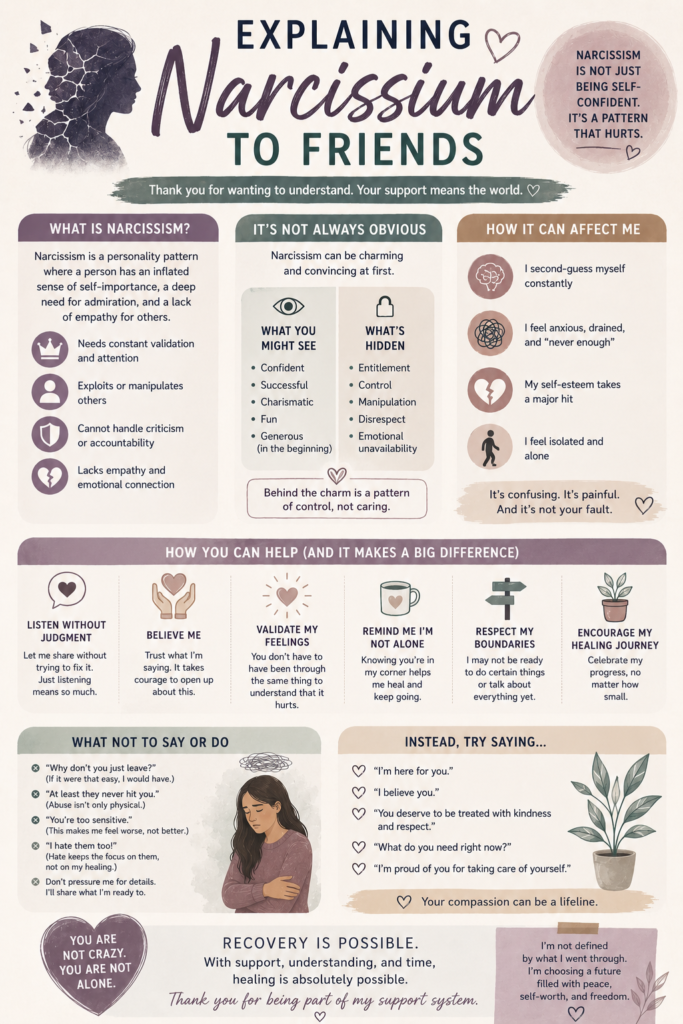
Narcissistic abuse is a term that comes up a lot, especially online. But when you try to talk about it with friends or family who just don’t understand, it can seem like you’re speaking a different language. If you’ve been through this kind of abuse, you know it’s messy and confusing, and it leaves a real mark. Explaining it to someone who hasn’t experienced it can take a lot of patience and thought. Here, I’ll share down-to-earth ways to have this conversation, give you tips to make your friends understand, and address some of the biggest obstacles that can pop up.
What Narcissistic Abuse Actually Looks Like
For people who haven’t lived it, narcissistic abuse isn’t always easy to recognize. It doesn’t show up as black eyes or shouting matches. It’s about mental tricks, subtle manipulation, and slowly chipping away at your self-confidence. Unlike the drama on TV, most of it is quiet and hard to spot. Narcissistic people often appear charming and generous to everyone else, which makes it harder for outsiders to spot what’s really going on.
This type of abuse shows up in several ways: gaslighting, guilt trips, love bombing, and then suddenly pulling back. After a while, you start to doubt yourself, feel lost about what’s true, and feel totally alone. The abuser is skilled at flipping the story; sometimes, even your friends believe they’re the good guy. That’s why it can be so hard to feel believed when you finally talk about it.
A simple way to put it: narcissistic abuse is a repeating cycle of hurtful behaviors that wear away a person’s happiness and trust in themselves, often long before anyone else notices.
How to Talk to Friends About It
Usually, people imagine abuse as physical or loud—but the quiet signs get missed. Friends can shrug it off or think you’re just describing a rocky relationship. Starting the conversation off right can really make a difference.
- Share Everyday Stories: Break your experiences into regular moments. Try something like, “Every time I brought up a concern, they’d find a way to make it seem like I was the problem.” Moments like these are easier for friends to relate to.
- Focus on Your Feelings: Skip the official terms at first; talk about the confusion, anxiety, or self-doubt you felt. Sharing the emotional side helps people understand it’s more than just relationship drama.
- Highlight the Pattern: Point out that it’s not one fight; it’s a long-running habit. Compare it to getting chipped away bit by bit, so you hardly notice until your confidence is gone.
Tips for Being Understood
Getting your friends to really hear you isn’t always easy, but here are a few approaches that can help explain narcissistic abuse in relatable ways:
- Use Simple Analogies: Try saying, “It’s like you’re running a tough obstacle course, but everyone outside only sees you standing in an open field.” This makes the invisible struggle more real.
- Recognize Their Confusion: Let friends know it’s okay to be unsure or surprised. Saying, “I probably would have felt the same if it hadn’t happened to me,” helps them drop their guard.
- Point Out the Double Life: Explain that abuse often happens in private, while the abuser acts perfectly nice around others. Ask things like, “Have you ever seen someone act differently at home than in public?”
- Protect Your Boundaries: If a friend keeps questioning your experience, it’s fine to take a step back. Sometimes, saving your energy is more helpful than trying to force yourself to get it.
Common Challenges and Real-Life Fixes
When you talk about narcissistic abuse with others, you’ll probably hit some classic walls. Here are those challenges and some ways to face them:
- No “Proof” Means No Belief: Gently remind people that emotional scars last, even without visible signs. Mention how experts and even the CDC see emotional abuse as serious (CDC Intimate Partner Violence).
- The Abuser Looks Innocent: Tell your friends that narcissists often “wear a mask.” Their public personality is different from who they are behind closed doors. Bring up the idea of people acting one way with family, another way with friends.
- Minimizing the Experience: If someone keeps saying, “Maybe it was just a misunderstanding,” return to the bigger pattern rather than just individual arguments. Your experience matters, no matter what.
- Friendship Burnout: Repeating yourself gets tiring. It’s normal to find support outside your usual group—think support groups or therapy. Sometimes, internet forums make a good backup when in-person support falls flat.
Normalizing the Ups and Downs
Doubting yourself after these chats is very common. Even your best friends might mess up or say the wrong thing. For most people, learning to recognize narcissistic abuse doesn’t happen overnight. Sometimes sharing easy-to-read articles, real-life stories, or short explainer videos helps get your point across without you having to repeat everything.
Clear-Headed Signs of Narcissistic Abuse (So Friends Can Understand)
Concrete examples help your friends “see” the issue. Here are some hallmarks worth pointing out when you talk about what you’ve survived:
- Gaslighting: You’re told your feelings or experiences aren’t real until you start doubting yourself.
- Nonstop Criticism: You’re often put down—sometimes disguised as jokes.
- Love Bombing, Then Silence: Big gestures and compliments followed by cold distance, leaving you guessing where you stand.
- Changing Expectations: Rules are always moving, so you end up feeling like you can never win.
- Pushing Isolation: Slowly, you’re discouraged from seeing friends or family who might comfort you.
Showing your friends a list like this beats simply saying “I felt manipulated.” It helps make the situation real in their minds.
My Real-World Experience: Why These Talks Matter
In my own life, I know the pain of having friends miss the mark. It’s frustrating to describe an almost invisible type of abuse, only to get blank stares. Now, I try to remind myself: not everyone will understand right away, and that’s no reflection on me. The priority is to hold on to your sense of reality and track down support from those who respect what you’ve been through. Swapping out jargon for plain language and real examples led to a big change in how people responded to me. They were more caring when they actually understood what I was saying.
Ways This Applies in Everyday Life
Conversations about narcissistic abuse go beyond just searching for sympathy. They also help strengthen boundaries and make support networks feel more real. By speaking up, you could help someone else spot trouble in their own relationships early, maybe before things get serious—or step away from a harmful dynamic. Plus, talking about this stuff helps bust the myth that abuse only means physical harm.
- Healing Yourself: Telling your story can help you move forward and open up healthier ways of dealing with painful memories.
- Building Trusting Friendships: The friends who listen become your go-to supportive circle.
- Reducing Shame: When people talk about narcissistic abuse openly, it chips away at outdated ideas about what “real abuse” looks like.
Frequently Asked Questions
Question: Why do people stay with narcissists?
They often stay because the abuse isn’t always clear. There are cycles of hope and hurt, fear of not being believed, and worry about more manipulation if they leave.
Question: Is narcissistic abuse really a thing, or just another buzzword?
It’s not just a trend; mental health experts recognize narcissistic abuse as a real pattern. The National Domestic Violence Hotline (hotline.org) discusses emotional abuse—including narcissistic behavior—as a serious concern.
Question: How can I support a friend dealing with this?
Start by listening without judgment. Don’t minimize their feelings. Offer resources if they ask, and check in regularly. Sometimes just being a solid, nonjudgmental presence is enough.
Start Where You Are
Explaining your experience with narcissistic abuse isn’t easy. It takes time and sometimes a few rounds of telling your story. Not all friends will get it straight away. The point is to make your story known and to seek support that truly respects your experience. If your closest friends don’t connect, try online groups or professionals who understand the dynamic—sometimes just one person who gets it can change everything. The more people learn, the easier it is to talk about this openly in everyday life.
Video: Explaining Narcissism to Friends #narcissism #relationshiphealth