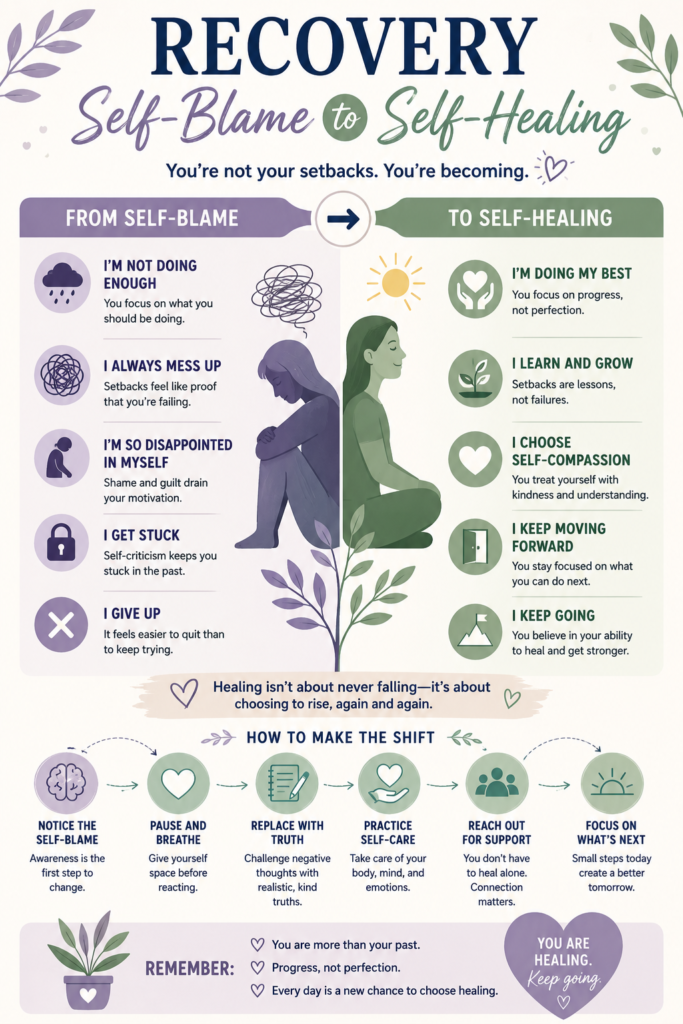
Feeling stuck or discouraged during recovery can be incredibly difficult. It’s common to wonder, “What am I doing wrong?” or “Why does this feel so hard?” When progress seems slow, or setbacks happen, self-blame can quickly take over. Many people come to believe that every struggle means they’re failing or not trying hard enough.
But recovery—whether from addiction, injury, burnout, or emotional pain—is rarely a smooth or perfect process. There are hard days, unexpected challenges, and moments of real growth along the way. Blaming yourself doesn’t help you move forward. What truly supports healing is shifting your focus away from guilt and toward healthy, practical steps that strengthen your recovery journey.
Learning to replace self-criticism with self-awareness and action can make a powerful difference. Let’s explore how to stop tearing yourself down and start building a recovery path that genuinely supports healing and progress.
Why Self-Blame Gets in the Way of Recovery
Self-blame tends to sneak in when you hit snags on the road to getting better. Maybe rehab or rest isn’t going as planned, or you feel like you “should” be further along. These thoughts aren’t just stressful; they actually work against you. I’ve noticed people paralyzed by guilt often miss out on basic opportunities for progress. Instead of spotting what needs adjusting, they spend energy worrying about what they did wrong or what they’re lacking.
When blame takes over, people sometimes:
- Get discouraged and quit trying new strategies
- Push themselves too hard or ignore real limits
- Avoid asking for help, worried it means they failed
- Miss simple changes that could move things forward
I’ve met a lot of people who made solid improvements once they let go of self-criticism and instead focused on curious problem-solving. It’s not about ignoring setbacks; it’s about asking, “What would help right now?”
Understanding Your Recovery is Not Linear
Recovery of any kind has ups, downs, and plateaus. The idea that it happens in a neat upward line is more myth than reality. There are often times when it feels like you’re getting nowhere or, worse, like you’re going backward. That’s natural and completely normal. I’ve worked with clients who get discouraged because they compare their rough days to someone else’s highlight reel or to an unrealistic timeline they set for themselves. Comparing your actual experience to a fantasy version only makes things harder, and it’s easy to forget how much you’re truly handling day to day.
Here are a few things I keep in mind:
- Progress can look really small, but it adds up over time
- Rest and setbacks are part of the process, not proof of failure
- You might have days or weeks where nothing seems to change, and that’s still normal
- Everyone heals and adapts at their own pace
Recognizing that recovery has a rhythm of its own can help you stop blaming yourself for what’s actually totally expected along the way.
Common Traps: How Self-Blame Shows Up in Recovery
Almost everyone in recovery slips into some of these popular traps at one point or another. Spotting them is the first step to changing course:
- Comparing timelines: Watching others progress faster or make it look easy can feel rough. The truth is, recovery isn’t a race, and everyone’s ride is unique.
- Rigid expectations: Thinking “This should be over by now!” piles pressure on you and makes it even tougher to cope when progress slows.
- All-or-nothing thinking: Believing a missed therapy session, a slip-up, or one hard day means you’re back to square one. You aren’t.
- Treating symptoms, not causes: Focusing only on surface-level frustrations can distract from what actually helps—like rest, consistency, or trying new strategies.
If any of that sounds familiar, you’re in good company. Getting unstuck starts with noticing these patterns, then replacing them with practical, compassionate approaches.
Switching Gears: How to Start Fixing Your Recovery
Moving from blaming yourself to actively supporting your recovery changes everything. Instead of staying stuck in “What did I do wrong?” you can start asking, “What can I do next?” I’ve seen huge changes happen just from this mental switch-up. Here’s how to put it into practice for real results:
- Be honest about where things are. No judgment—just notice what’s working and what’s not. Sometimes it helps to write it down or talk it out with someone you trust. Journaling or quick notes on your phone can make tracking changes easier, too.
- Break recovery goals into smaller, more realistic steps. Celebrating little wins will keep you going when big changes seem impossible and help motivate you on tough days.
- Focus on problem-solving, not punishment. If something isn’t working, ask what you can adjust. Recovery isn’t about getting things perfect; it’s about figuring out what truly helps each day.
- Check your self-talk. Your words and thoughts matter. If you wouldn’t say it to a friend, it probably won’t help you. Swap judgment for curiosity and encouragement.
Cool Strategies to Support Your Healing Adventure
There are real, practical things you can do to make recovery smoother and less stressful. Here are a few you can try right away, no matter where you’re starting from or what kind of recovery you’re moving through:
- Set flexible routines: Structure matters, but strict rules don’t. Build in little check-ins throughout the day or week to reflect on how you feel and what you need. Staying consistent yet gentle with yourself sets you up for the long haul.
- Track the small stuff: Write down tiny improvements—maybe you walked for two more minutes or handled a tough urge better. Noticing and celebrating these is worth way more than focusing on guilt about a bad day.
- Ask for support early and often: Whether it’s a physical therapist, counselor, friends, or family, reaching out makes a difference. It’s a sign you’re invested, not proof you’re failing. Having a team helps make things manageable and brings in fresh ideas.
- Rest on purpose: Sometimes the most helpful thing is simply giving your body or mind a break. Recovery calls for patience, so run at your own pace and schedule downtime like you would any other appointment.
- Keep learning and adapting: Stay open to new info about your condition, strategies others have used, or just swapping recovery podcasts. Sometimes one new insight can turn things around. Be willing to mix in some variety to see what fits you best.
What to Watch Out for: Barriers That Slow Progress
Some things slow down recovery, no matter how motivated you are. Recognizing these helps you prepare for them in advance. Here are a few that come up a lot, and some quick ways to spot them:
- Fatigue: Whether it’s physical tiredness or just hitting an emotional wall, exhaustion makes everything feel tougher. Pace yourself and adjust plans as needed. Even rewarding yourself with extra rest can make a big difference.
- Perfectionism: Trying to follow a flawless plan sets most people up for disappointment. Accept that you’ll make adjustments as you go; that’s a sign of progress in itself.
- Lack of information: Sometimes people aren’t improving because they’re missing key facts, tools, or approaches. Reading up, asking experts, and tracking down good resources are super useful.
- Trying to do it all alone: Solo efforts can work for small things, but most chronic challenges need a team approach. Find your crew, whether it’s peer support groups, mentors, or professional help.
Why Tracking Progress Helps
One small way to stay motivated and fight off negative self-talk is to track how you’re doing, honestly and without judgment. This could be a calendar marking your mood, pain, urges, or milestones—whatever feels relevant to your situation. Seeing even tiny improvements builds momentum and can remind you that things are moving forward, even on slower days.
If You Hit a Wall
There are times in every recovery when nothing seems to help or when old challenges return. This isn’t proof you’re failing. It’s a sign you might need to tweak your plan, add more support, or just give yourself a bit of rest. Reach out, switch up strategies, or take a pause. The setback doesn’t define your progress; the next step does. Remember that setbacks are often signals, not signals of defeat, but cues you can respond to.
What Recovery Really Looks Like: Real-World Stories
I’ve met athletes who needed a full year to return to running after surgery. They doubted themselves constantly at first, until they started focusing on small weekly goals instead of obsessing over a finish line. One client recovering from burnout made more headway by building in social time and switching “all or nothing” goals for “good enough” progress. These changes weren’t magic, but they were totally game-changing and made things more manageable in the long term.
- Celebrating small wins: One person I know marked the end of each week by jotting down three things done well, even if progress felt slow. This habit completely changed how setbacks felt; it gave them perspective rather than disappointment and motivated them to keep moving.
- Building in rewards: Another friend set up tiny rewards for milestones like sticking with a stretching routine. Celebrations, even small ones, made tough days much easier to get through and added a little fun along the way.
Frequently Asked Questions
Here are a few questions I hear all the time from folks trying to rebuild after any setback or injury:
Question: How do I know if I’m moving forward in my recovery?
Answer: Progress is about the little stuff. Even if you don’t see big changes yet, improvements in mood, sleep, pain levels, or being able to do small daily tasks all add up and count as steps forward.
Question: What if I have a setback? Did I ruin my progress?
Answer: Setbacks don’t cancel out hard work. They usually mean it’s time to review your plan, rest up, or get extra support. Everyone hits bumps along the way, and this is just part of the process of long-term change.
Question: How do I deal with frustration when recovery is slow?
Answer: Slow days happen to everyone. Give yourself breaks, set tiny achievable goals, and talk things through with someone who gets it. Frustration is temporary; your daily actions matter way more than how you’re feeling in one moment.
Bottom Line: Building a Recovery Mindset That Works
Recovery is about patience, resourcefulness, and being open to trying new things. Be kind to yourself on hard days and celebrate even tiny steps forward. Progress comes from what you do, not how perfectly you do it. Switching your energy away from blame and toward action puts you back in the driver’s seat. I have watched countless people make steady gains by doing this, and you can, too. So, start small, reach out, and remember: every day is a fresh shot at moving forward.
Video: Kindness Breaks the Cycle of Shame #mentalhealth #recoveryispossible