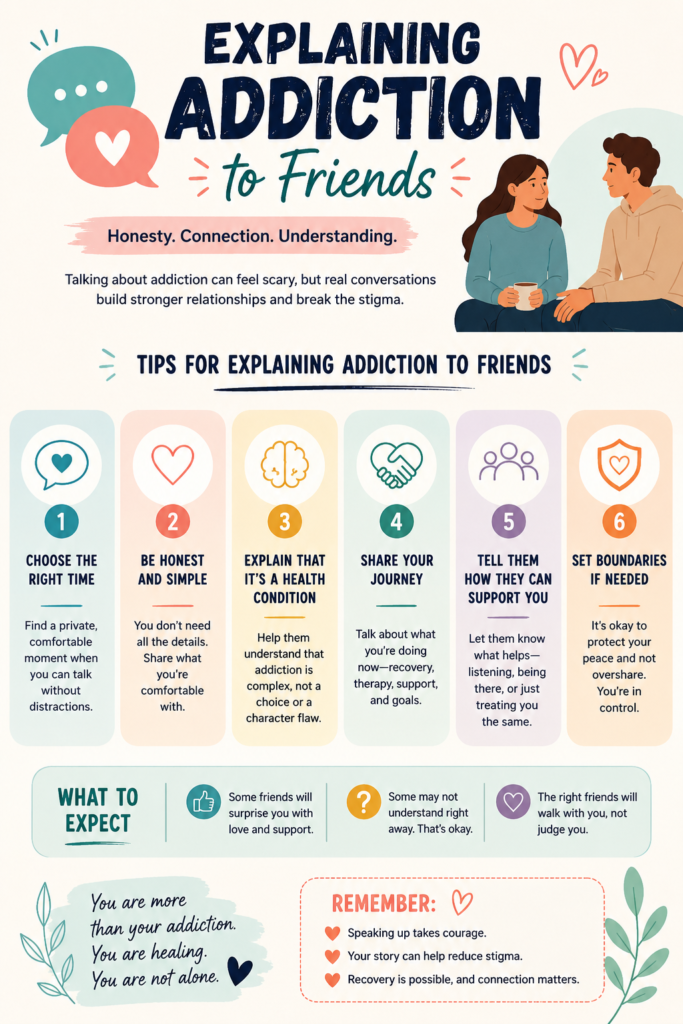
If you’re living with addiction, one of the toughest things can be opening up to people close to you. Worries about judgment or being misunderstood might hold you back. I’ve been there myself, figuring out how and when to bring up my struggles in a way that steers clear of extra shame or stress. I’ve learned a lot over the years, so I’m going to walk through steps and ideas for explaining addiction to friends—without feeling boxed in by stigma or fear.
Understanding Why Stigma Matters When Talking About Addiction
Stigma is basically the negativity and stereotypes people attach to addiction. It’s what makes this conversation feel so tough. People might still think addiction comes from weakness or a lack of willpower, but the truth is that it’s a complex medical and mental health challenge. Explaining things to friends can sometimes feel risky, with fears that they’ll see or treat you differently after you’ve opened up.
I’ve noticed that stigma can trickle in from movies and media, or even from offhand remarks that folks don’t realize are hurtful. These ideas can spark fear or guilt about being honest. Understanding how stigma works helps you prep for misunderstandings or tough questions that might arise. Most importantly, knowing you’re not alone is powerful—many people walk this same road every day and work to push past those bad stereotypes.
How to Prepare for the Conversation
There’s nothing wrong with wanting some control over how (and when) you share your story. Here’s how I get ready for those tough talks with friends:
- Pick a good time and place: Choose somewhere comfortable and quiet, where interruptions are unlikely. Ambiance matters more than you might think.
- Think through what you want to say: Are there details you feel okay discussing? Are there parts you’d rather keep private? Setting boundaries is absolutely fine, and you can always share more later if you feel safe.
- Practice if you want: Rehearse what you want to say, maybe jot down key points, or ask a trusted person to do a run-through.
- Prepare for mixed reactions: Not everyone responds perfectly the first time they hear about addiction, and that’s normal. Reminding yourself of this helps keep things in perspective and less stressful.
Giving yourself space to decide “if” and “how much” you want to share can help you feel less vulnerable. It’s your story, and you always control the narrative.
Explaining Addiction in Everyday Language
You don’t need a medical background to spell out what it’s like to live with addiction. I often describe it as a health condition that shifts the way my brain responds to stress, happiness, or discomfort—definitely not something I asked for, or could just stop by force of will. Here are a few angles that keep things easy to understand, avoiding medical jargon:
- Addiction is a health issue: It’s a bit like diabetes or asthma—something that takes ongoing efforts, not just grit or willpower.
- Mental health matters: Sometimes I touch on how stress, anxiety, trauma, or depression can feed into addictive behaviors. Sharing this way often helps friends connect the dots and see the bigger picture.
- No one chooses this: I bring up that getting addicted is never about bad decisions; most people don’t expect to reach that point.
Simple, honest descriptions are easier for everyone to relate to. If a friend is curious about more information, I sometimes suggest sources like SAMHSA or the CDC Addiction Resource for trustworthy background information.
Dealing With Your Own Feelings First
Before talking to friends, I always check in with myself and process how I’m feeling—maybe through journaling, meeting with a counselor, or just thinking things through at home. Guilt, embarrassment, or fear can sneak into these conversations and mess with your message. Taking the time to untangle your feelings clears the way for a smoother talk.
Sometimes these conversations aren’t about changing friends’ opinions, but about giving yourself freedom to be honest. Owning your story, no apologies, is a practice—but it’s one of the most freeing things you can do on your adventure toward better mental health.
What to Say to Help Friends “Get It” Without Judgment
This isn’t about lecturing or begging for approval. The goal is to help friends get a sense of what you’re facing, without making things awkward or putting anyone on the defensive. I try to keep it personal and direct—here’s a simple way to get started:
- “I want to let you know something important about me. I’ve been struggling with addiction, which means I sometimes lose control over [substance or behavior].”
- “It’s something I’m working on, and I’d appreciate your understanding and support.”
If questions come up, I do my best to answer honestly, but I always set clear boundaries if something feels too raw or private at the time. Sometimes I’ll say, “That’s something I’m still working on putting into words.” Clarity and honesty help keep everyone’s stress level lower.
If opening up feels overwhelming, try practicing with a support group or writing out key points to help find your voice. Connecting with people at organizations like SMART Recovery or Alcoholics Anonymous can also give you some backup and fresh ideas for those conversations.
Handling Negative or Confused Reactions
No matter how prepared you are, some friends may not “get it” right away. I’ve faced this too, and it can feel discouraging. If you get silence, awkwardness, or hard questions, remind yourself that everyone comes from different backgrounds and beliefs.
Some ways to deal with tricky reactions:
- Stay patient: It takes time for people to rethink what they know about addiction. Giving them space can lead to better understanding later.
- Share resources if they’re interested: If a friend wants to understand more, linking them to accurate info or personal stories can help.
- Hold your boundaries: If someone’s judgmental or dismissive, you don’t have to share everything. Protecting your mental wellbeing is always the priority.
Not everyone will be supportive—focus your energy on those who are, and spend your time in spaces where you feel safe and understood.
How Friends Can Help Once They Know
After you open up, friends often ask how they can be supportive. Try to make your requests concrete and manageable, such as:
- Listen without offering advice unless you ask for it
- Be understanding if you skip certain events or situations
- Check in every so often to show you care
Clear, low-pressure suggestions help friends step up in ways that actually make a difference. Remind them that showing up as their usual self is often the best thing they can do for you.
Common Questions About Talking to Friends About Addiction
Let’s check out some real-world questions I’ve run into and worked through:
Q: What if my friends judge or gossip about me?
If someone gossips or treats you badly, they might not be the person to trust with your deeper story. Focus your energy on building healthy bonds with people who have your back.
Q: Should I tell every friend about my addiction?
Not at all. Sharing is your choice. Some people tell only their closest circle, while others bring it up only if it matters. There’s no rule—go with what feels right for you.
Q: What should I do if I regret opening up?
Telling someone once doesn’t force you to share again. You’re allowed to dial back, set new boundaries, or ask for more privacy later. Finding your own comfort takes time and a bit of trial and error.
Key Reminders for Reducing Shame in These Conversations
- You are not your addiction. Speaking up is about building connection, not defining yourself by a label.
- Your progress and ride are unique—comparing yourself to others won’t help.
- Education goes a long way, and every honest conversation chips away at stigma, making things smoother for those who come after you.
- Asking for support is a display of strength, not a weakness.
Building a community of support, where people truly “get it” without judgment, takes time. Every honest conversation helps make things easier for the next person who finds themselves in your shoes. If you feel shaky, remember—reaching out is never something to be ashamed of. With every small step, you’re making a difference, both for yourself and for the people around you who may be silently struggling too.
Video: How to actually talk about addiction with others #SelfCompassion #RecoveryCommunity