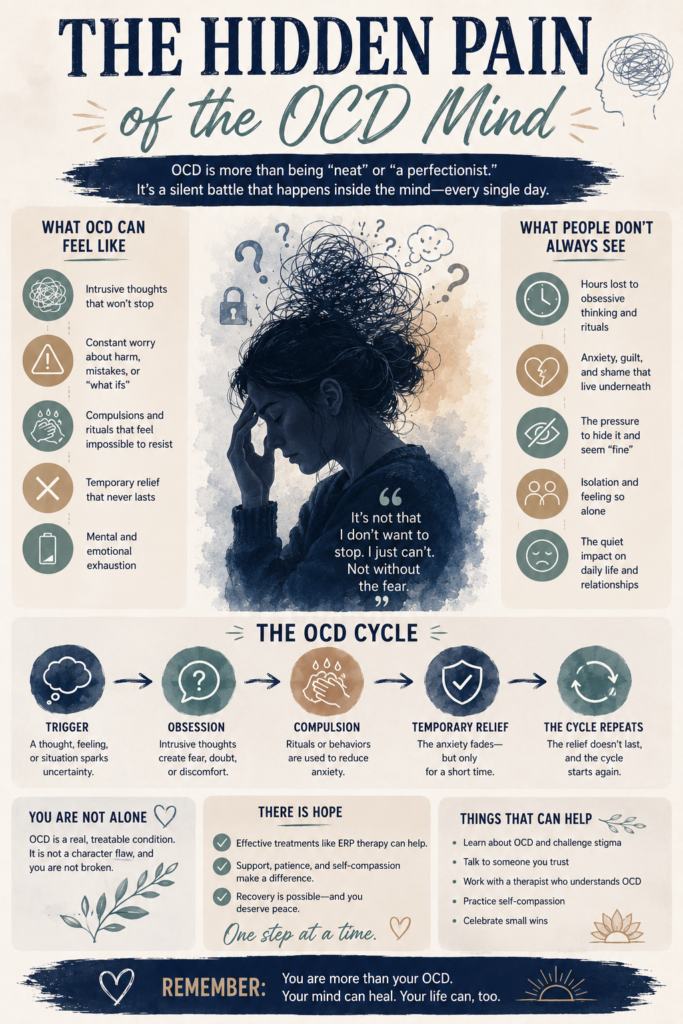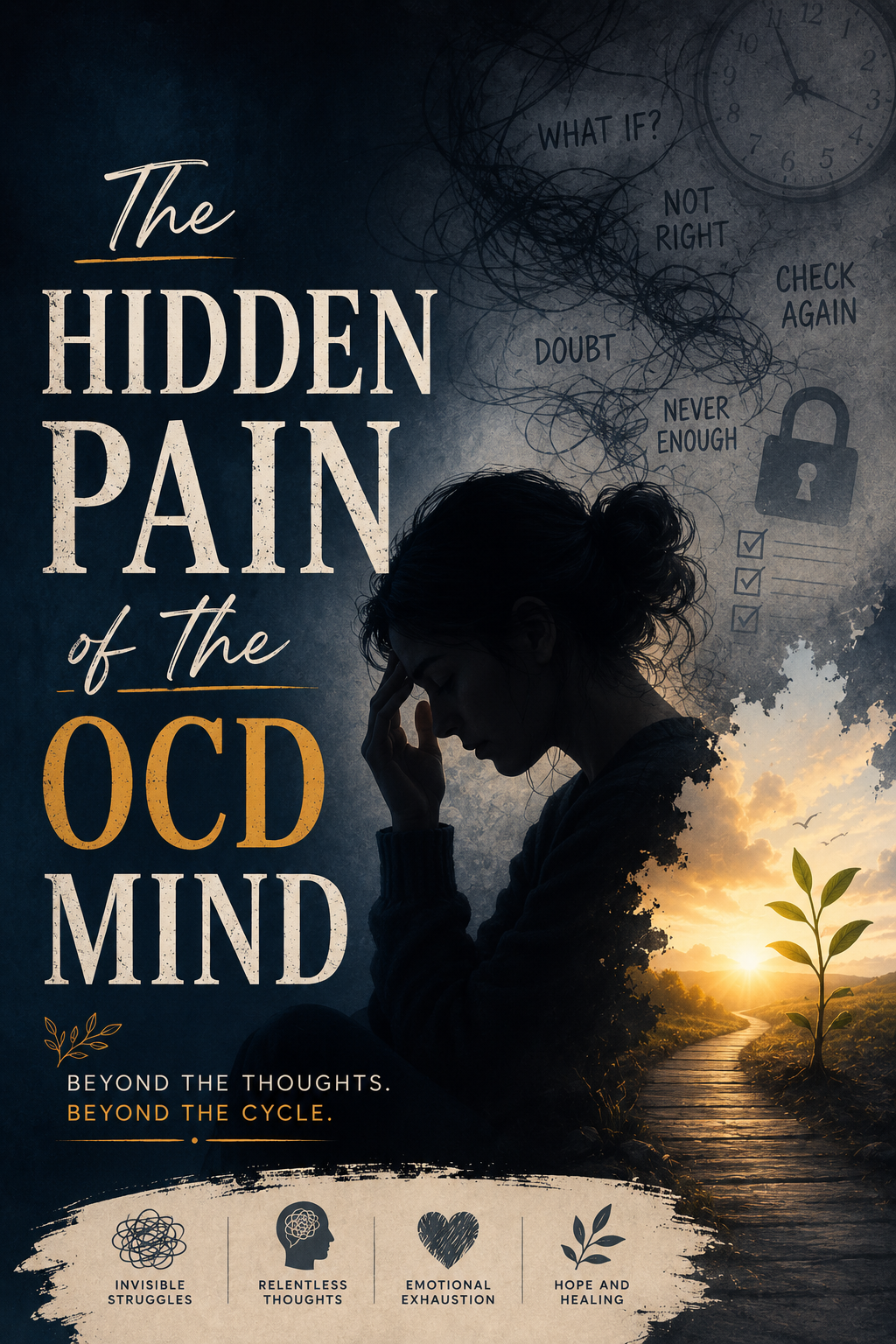
Obsessive-compulsive disorder (OCD) is a mental health condition that’s more than what people often think. It’s not just about being tidy or organized. It’s about relentless, unwanted thoughts (obsessions) and the things people feel driven to do to ease their anxiety (compulsions). Living with OCD can be exhausting and isolating, especially because many of its struggles stay hidden. In this article, I’m going to share what life inside the OCD mind feels like, bust a few myths, and walk through ways people cope, seek help, and support each other.
What OCD Really Feels Like
People often hear about OCD but don’t always understand what’s really happening inside. The classic image is someone washing their hands again and again, but it’s way more complicated. The mind of someone with OCD is like a radio stuck on one station, constantly repeating worries, fears, or doubts. No matter how hard you try, you can’t just turn it off. These thoughts (obsessions) can be about almost anything. Safety, cleanliness, losing control, or even things that feel out of character.
A big misconception is that people with OCD want to do their rituals or have these thoughts. The truth is, most would give anything to stop them. The real pain comes from how exhausting and distressing it is to have your mind hijacked by intrusive thoughts you never asked for. Compulsions, the repetitive actions or mental rituals, are ways to try to quiet the anxiety, but they offer only brief relief, if that.
Common Types of Obsessions and Compulsions
OCD isn’t a one-size-fits-all condition. What happens inside someone’s mind can show up in dozens of ways. Some of the most common obsession themes include:
- Contamination: Fears of germs, dirt, or toxins. This is where classic handwashing comes in.
- Doubt and Responsibility: Fears that you left the stove on, locked the door, or might hurt someone by accident.
- Symmetry and Order: Feeling intense distress if things “aren’t right” or aren’t in a particular order.
- Intrusive Thoughts: Unwanted, taboo ideas or images that can feel shocking or scary (like violent or sexual thoughts).
In response, compulsions can look like:
- Checking things over and over, such as locks, appliances, and other daily necessities.
- Repeating certain actions until they feel “just right.” For example, turning a light switch on and off multiple times.
- Counting, tapping, or silently saying words or prayers as a way to lessen anxiety.
- Avoiding certain situations or people altogether if they might trigger obsessions or rituals.
It’s not always visible on the outside. Some of the toughest compulsions are mental, like repeating silent phrases to feel safe or replaying events to “check” for mistakes. This inner battle can be hard for others to spot, which sometimes adds to the feeling of isolation.
How OCD Impacts Daily Life
Inside the OCD mind, the world feels unpredictable and sometimes threatening. Everyday tasks—locking up, cleaning, making decisions—can take much longer than they should. It’s easy to fall into the trap of seeking reassurance or second-guessing every move. This can affect relationships, work, and self-confidence fast. People with OCD might start to avoid friends, pass up opportunities, or hide their rituals out of embarrassment.
The constant tug-of-war between what you know is rational and what your brain insists on makes it tough to trust yourself. Some people describe it as feeling trapped by your own mind, stuck in a mental loop that’s hard to escape. It’s not rare for people to say they feel guilty or ashamed for having these thoughts, even knowing logically that it’s just part of their OCD.
OCD Myths You Should Know About
There’s no shortage of myths around OCD that make life tougher for those living with it. Here are a few I think are really important to clear up:
- Myth: OCD is just about cleanliness. Many people have obsessions unrelated to germs or cleanliness. Doubt, fear of harming, or unwanted thoughts are just as common.
- Myth: Everyone’s “a little OCD.” Liking things neat or wanting order isn’t the same as OCD. OCD disrupts your life and causes a lot of distress.
- Myth: People with OCD can just stop if they try hard enough. OCD is not about willpower. The thoughts and urges are incredibly tough to ignore and aren’t just habits you can quit.
- Myth: OCD is rare in kids or teens. OCD often starts in childhood or adolescence. Kids struggle, too, even if it’s not always obvious.
What’s Going On in the Brain?
Researchers aren’t totally sure what causes OCD, but studies suggest a mix of genetic, neurological, and environmental factors. Brain scans have shown differences in the areas that handle decision-making, error detection, and emotional processing.
There’s also evidence that serotonin, a chemical messenger in the brain, doesn’t work the same way in people with OCD. That’s one reason why some medications that give serotonin a boost are prescribed as part of treatment. If OCD runs in your family, your risk may be higher, but life experiences and stress can flip the switch, too.
Coping with OCD: What Actually Helps
Managing OCD isn’t about “getting rid of” the thoughts. It’s usually about learning healthier responses and finding ways to break the cycle. Here are approaches people find helpful:
- Exposure and Response Prevention (ERP): This therapy gradually helps you face your fears and resist the urge to engage in compulsions. It’s tough, but many people see real improvement over time.
- Medication: Certain antidepressants (SSRIs) can lessen symptoms for some people. It can take time to find the right one and the right dose.
- Mindfulness and Acceptance Strategies: Learning to notice obsessive thoughts without reacting or judging yourself can make a difference. It’s not about stopping the thoughts, but switching up your reaction.
- Support Groups: Hearing from people who truly get it can be a huge comfort. Organizations like the International OCD Foundation offer resources and support forums.
Daily Life Tips
A few practical things people with OCD find helpful include:
- Keeping a journal to track triggers and patterns throughout your week.
- Setting realistic goals, such as reducing rather than eradicating rituals.
- Opening up to trusted friends or family for support, especially when things feel overwhelming.
- Learning to sit with discomfort instead of rushing to “fix” it every time anxiety shows up.
Challenges People with OCD Face
Life with OCD isn’t just a mental battle. There are some real-world bumps along the way:
- Stigma and Shame: Many people feel embarrassed talking about their symptoms, which keeps them from reaching out for help.
- Misdiagnosis or Delays in Treatment: OCD can slip under the radar, especially if compulsions are mostly mental, or if the person is skilled at masking them.
- Impacts on School or Work: Trouble focusing, needing extra time for rituals, or missing days due to anxiety can quickly slow progress in studies or careers.
Getting Through Relationships
Living with OCD has an effect on how you interact with others. Friends and family might not always understand what you’re going through, so clear, open communication really helps. Even just sharing reliable resources or having a simple explanation of how OCD works makes it easier to ask for understanding instead of sympathy.
Supporting someone with OCD also means using patience and encouragement, never belittling or mocking symptoms. Sometimes, the best support is just being there and learning together about what OCD really means.
Real-World Examples
OCD shows up in so many forms. Someone I know would spend an hour every morning checking switches and locks before leaving the house. Another friend struggled with mental rituals, repeating words in their head as protection against bad things happening to loved ones. Others worry they might accidentally offend someone or do something wrong, running conversations over and over in their minds. None of these are quirks; they’re serious, time-consuming struggles that often go unseen and are emotionally draining.
There’s also a group of people whose OCD centers around fears of harm coming to those they love, leading to constant checking in or seeking reassurance that things are okay. This can create a feedback loop, making their anxiety and rituals stronger. For many, these invisible battles shape their day from start to finish.
Frequently Asked Questions About OCD
I hear plenty of questions from people who are curious or concerned about OCD. Here are a few that come up a lot:
Question: Can OCD go away on its own?
Answer: OCD usually sticks around if untreated, but with the right help, symptoms can become way more manageable, and some people do see big improvements.
Question: Is it possible to hide OCD from others?
Answer: Many people get really good at hiding rituals or obsessions, but this often adds more stress. Support and understanding make it easier to be open and honest.
Question: What should friends or family do to support someone with OCD?
Answer: Show patience, encourage treatment, and avoid taking part in rituals (even if asked). Listen, stay calm, and learn about the condition together.
Question: Is OCD just a phase for kids?
Answer: OCD isn’t a passing phase. Some kids do improve as they grow up, but treatment and support offer the best chance for progress.
Understanding and Compassion Go a Long Way
Life inside the OCD mind isn’t obvious from the outside. The pain, distress, and frustration are real, but so is the possibility of finding support and feeling less alone. Whether OCD touches your life personally or the life of someone you care about, learning about it and talking openly about it can make a huge difference. Resources from places like the International OCD Foundation, the Anxiety and Depression Association of America, or your local mental health services are really worth checking out if you or someone you know needs help.
Video: The Misconception Making OCD Worse #MentalWellness #OCDAwareness #BreakTheStigma