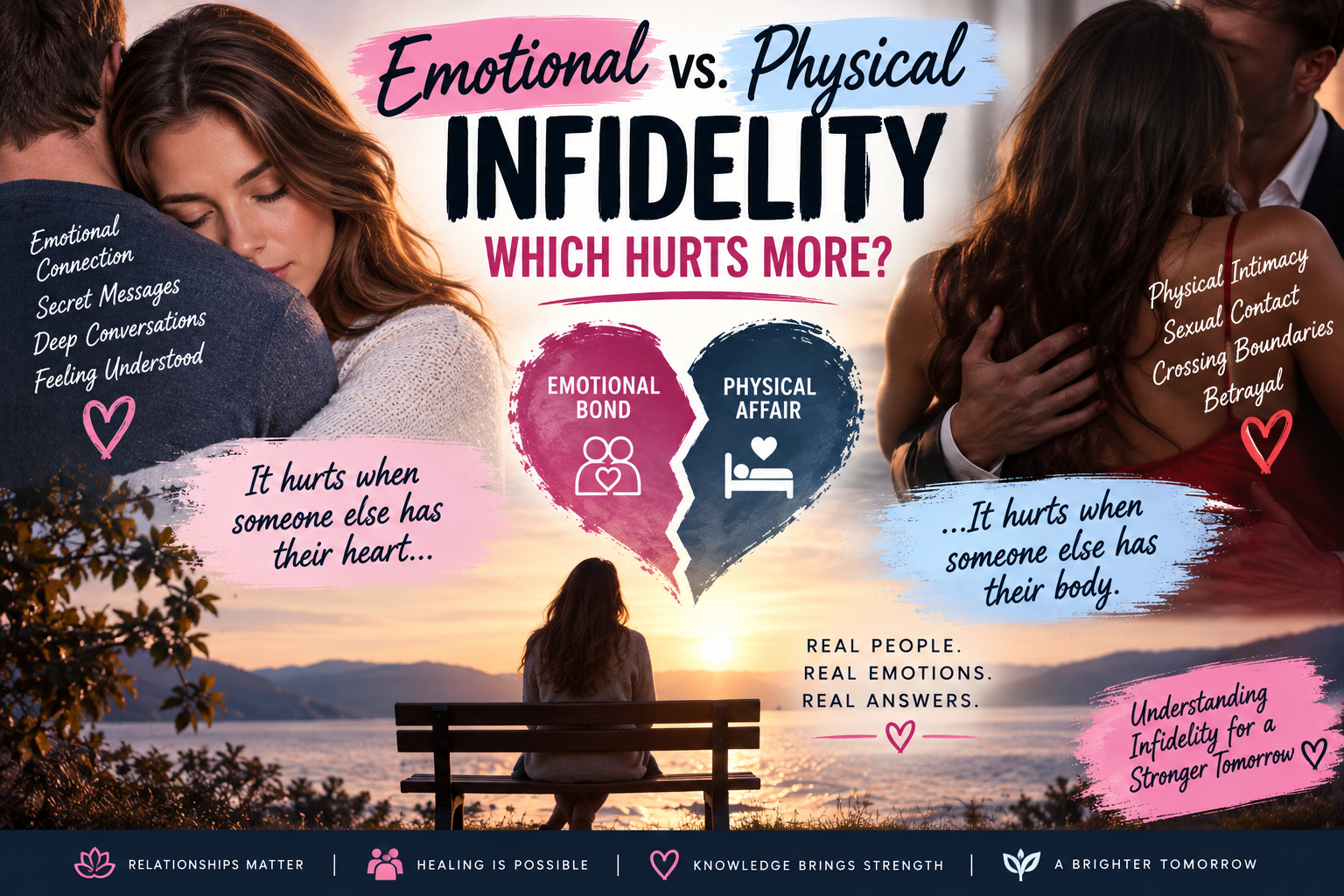
Infidelity can cause profound emotional pain, leaving individuals questioning the trust, intimacy, and security they once felt in their relationship. Physical infidelity involves sexual or intimate contact with someone outside the agreed-upon boundaries of a committed partnership, while emotional infidelity occurs when a person develops a secretive or deeply intimate emotional connection with someone else. Although these forms of betrayal differ, both can create feelings of rejection, jealousy, anger, insecurity, and diminished self-worth. Physical infidelity may lead someone to question their attractiveness, sexual connection, or partner’s commitment. Emotional infidelity can be equally devastating when a partner shares personal thoughts, affection, emotional support, or dreams of the future with another person, leaving the betrayed individual feeling emotionally replaced or disconnected. For many people, the secrecy and dishonesty surrounding the betrayal can be just as painful as the infidelity itself. Ultimately, which type of infidelity hurts more depends on the individual’s values, relationship expectations, emotional needs, and personal experiences. Understanding these differences can help individuals recognize their emotional responses, establish healthier boundaries, and determine what they need to begin healing and rebuilding trust.
What Is Emotional Infidelity?
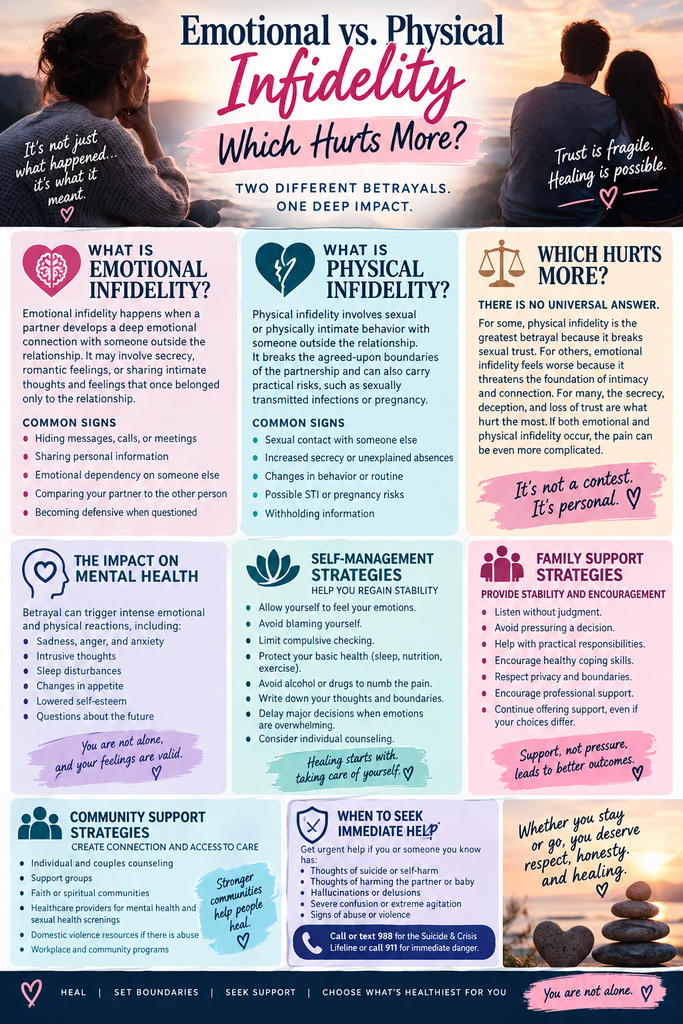
Emotional infidelity occurs when a relationship with someone outside the partnership develops a level of emotional intimacy that violates the couple’s established or understood boundaries. Unlike a normal friendship, it may involve secrecy, romantic feelings, emotional dependence, or turning to the other person for intimacy previously shared primarily with a partner.
Possible warning signs include:
- Hiding messages, calls, meetings, or online interactions.
- Sharing deeply personal information while excluding a partner.
- Becoming emotionally dependent on another person.
- Frequently thinking about or prioritizing the other person.
- Comparing a partner negatively with the other person.
- Becoming defensive when questioned about the relationship.
- Minimizing the connection while simultaneously trying to keep it secret.
Not every close friendship constitutes emotional infidelity. The couple’s boundaries, expectations, intentions, secrecy, and nature of the relationship matter.
What Is Physical Infidelity?
Physical infidelity generally involves sexual or physically intimate behavior with someone outside the relationship when that behavior violates the couple’s agreed-upon boundaries. The definition can vary considerably among relationships.
Physical betrayal may produce intense anger, jealousy, humiliation, grief, or fear. It may also introduce practical concerns such as sexually transmitted infections, pregnancy, and questions about whether other information has been concealed.
Which Type of Infidelity Hurts More?
Neither form is automatically more painful. Betrayal is experienced individually.
Physical infidelity may be especially distressing because sexual exclusivity is a fundamental expectation in many relationships. A betrayed partner may become preoccupied with what happened physically and question their attractiveness or sexual relationship.
Emotional infidelity can be equally devastating because emotional intimacy often represents the foundation of a committed partnership. Discovering that a partner confided in, depended on, or developed romantic feelings for someone else may create the feeling that something that uniquely belonged to the relationship was given away.
When emotional and physical infidelity occur together, the betrayal can be particularly complicated because both emotional and sexual boundaries may have been violated.
Why Betrayal Can Affect Mental Health
After discovering infidelity, some people experience intense emotional and physical reactions. These can include sadness, anger, anxiety, intrusive thoughts, difficulty concentrating, sleep disturbances, appetite changes, lowered self-esteem, and repeatedly reviewing what happened.
People may ask themselves:
“Was I not enough?”
“How long was I being lied to?”
“What else don’t I know?”
“Can I ever trust this person again?”
These reactions can become overwhelming, but the betrayed person’s value should not be determined by another person’s decision to violate relationship boundaries.
Self-Management Strategies After Infidelity
Healing begins with stabilizing yourself before making major decisions about the future of the relationship.
- Allow yourself to experience emotions. Anger, sadness, confusion, grief, and disappointment can all occur after betrayal.
- Avoid blaming yourself for another person’s choices. Relationship difficulties can involve both partners, but each individual remains responsible for their own behavior.
- Limit compulsive checking. Constantly searching phones, social media, or other evidence may temporarily reduce uncertainty but can also keep someone trapped in anxiety.
- Protect basic health. Prioritize sleep, nutrition, exercise, medical care, and supportive routines during periods of intense stress.
- Avoid using alcohol or drugs to numb emotional pain. Temporary relief can create additional problems and interfere with emotional processing.
- Write down questions and boundaries. Organizing thoughts can make difficult conversations more productive.
- Delay irreversible decisions when emotions are extremely intense. Unless safety requires immediate action, some people benefit from allowing the initial crisis to settle before deciding whether to remain in or leave the relationship.
- Consider individual counseling. Therapy can provide a private setting to process betrayal, grief, anger, and decisions about the future.
Family Support Strategies
Trusted relatives and friends can provide valuable support, but their role should be to help the individual regain stability rather than pressure them toward a particular relationship decision.
- Listen without repeatedly criticizing or humiliating either partner.
- Avoid telling the betrayed person that they “must leave” or “must forgive.”
- Provide practical support when stress affects childcare, work, meals, or everyday responsibilities.
- Encourage healthy coping rather than revenge, substance use, or public confrontation.
- Respect privacy and allow the individual to decide who should know about the situation.
- Encourage counseling when emotional distress becomes difficult to manage.
- Continue providing support even if the person’s relationship decision differs from what family members would choose.
Community Support Strategies
Recovering from betrayal can be easier when people have access to supportive resources outside their immediate family.
- Individual psychotherapy can help people process grief, anxiety, anger, and self-esteem concerns.
- Couples counseling may help partners explore what happened and determine whether rebuilding the relationship is appropriate.
- Support groups can reduce isolation by connecting people experiencing similar relationship difficulties.
- Faith or spiritual communities may provide support when these resources align with the individual’s beliefs.
- Healthcare professionals can evaluate significant depression, anxiety, insomnia, or other health consequences.
- Sexual health clinics or healthcare providers can provide STI testing when physical infidelity may have created exposure.
Can Trust Be Rebuilt?
Some relationships survive infidelity, while others do not. Reconciliation should not simply mean pretending the betrayal never happened.
Rebuilding trust generally requires honesty, accountability, appropriate transparency, clear boundaries, and consistent behavior over time. The partner who violated the relationship’s boundaries needs to acknowledge the harm rather than minimizing it or shifting responsibility entirely onto the betrayed partner.
The betrayed partner also needs freedom to determine whether reconciliation is something they genuinely want. Forgiveness, reconciliation, and remaining together are separate decisions.
When the Relationship May Be Unsafe
Infidelity itself should not be confused with abuse, but some relationships also involve manipulation, intimidation, coercive control, stalking, threats, or violence. Couples counseling may not be appropriate when one partner fears the other or when abuse is occurring.
Safety should take priority over preserving the relationship. Individual professional assistance and specialized domestic violence resources may be more appropriate in these situations.
Conclusion
So, which hurts more—emotional or physical infidelity? There is no universal winner in a contest of pain. Physical betrayal may profoundly damage sexual trust, while emotional betrayal may threaten a person’s sense of emotional security and intimacy. For many people, the secrecy, deception, and loss of trust surrounding either type are ultimately what hurt the most.
Healing does not require immediately deciding whether to stay or leave. It begins with understanding what happened, protecting emotional and physical well-being, establishing boundaries, seeking appropriate support, and remembering that another person’s betrayal does not determine someone’s worth. Whether a relationship is eventually rebuilt or ended, recovery can become an opportunity to develop clearer boundaries, healthier relationships, and a stronger understanding of what trust and intimacy should look like.
Frequently Asked Questions
Here are some common questions:
1. What is emotional infidelity?
Emotional infidelity generally occurs when someone develops a secretive or unusually intimate emotional relationship outside their committed partnership that violates established relationship boundaries. It may involve romantic feelings, emotional dependency, private conversations, or sharing intimacy that a partner expected to remain within the relationship.
2. What is physical infidelity?
Physical infidelity involves sexual or physically intimate behavior with another person that violates the couple’s agreed-upon boundaries. What qualifies as infidelity can differ among relationships, making communication about expectations important.
3. Which hurts more: emotional or physical infidelity?
There is no universal answer. Some people experience physical infidelity as the greater betrayal because sexual exclusivity was especially important to them. Others find emotional infidelity more painful because their partner developed intimacy and emotional attachment with someone else.
4. Why can emotional infidelity hurt so deeply?
Emotional intimacy is often central to feeling secure and connected in a relationship. Discovering that a partner has shared affection, personal thoughts, emotional support, or romantic feelings with someone else can create a profound sense of loss.
5. Why can physical infidelity be so traumatic?
Physical infidelity can destroy sexual trust and create feelings of rejection, anger, humiliation, or insecurity. It can also introduce concerns about sexually transmitted infections or pregnancy.
6. Is emotional cheating really cheating if there was no sexual contact?
It can be. Infidelity is not defined solely by sexual behavior. Secrecy, romantic intention, emotional intimacy, and violations of agreed-upon relationship boundaries can make an emotional relationship a significant betrayal.
7. Is having a close friend outside the relationship emotional cheating?
Not necessarily. Healthy relationships can include close friendships. Concerns become greater when there is romantic attraction, secrecy, deception, emotional dependency, or behavior that violates boundaries established by the couple.
8. What are common signs of emotional infidelity?
Possible signs include hiding messages, frequently discussing personal problems with someone other than a partner, becoming emotionally dependent on that person, comparing the partner to them, deleting communications, or becoming defensive about the relationship.
9. Can emotional infidelity become physical?
Sometimes, but not always. Emotional closeness may gradually develop into romantic or sexual involvement, particularly when boundaries become increasingly blurred. However, emotional infidelity can remain entirely nonphysical.
10. Why does secrecy sometimes hurt more than the actual affair?
Betrayal often involves more than sexual or emotional behavior. Repeated lying, deleting messages, hiding meetings, manipulating information, or denying what happened can cause someone to question their understanding of the relationship and make rebuilding trust more difficult.
11. How can infidelity affect mental health?
People discovering a betrayal may experience anxiety, sadness, anger, intrusive thoughts, sleep problems, difficulty concentrating, changes in appetite, lowered self-esteem, or persistent questioning about what happened. Severe or prolonged symptoms may benefit from professional support.
12. Should you immediately end a relationship after infidelity?
There is no single correct decision. Some relationships end, while others eventually recover. Unless personal safety is involved, allowing intense initial emotions to settle before making permanent decisions may help some people determine what they genuinely want.
13. Can a relationship survive emotional or physical infidelity?
Yes, some relationships recover, but rebuilding trust generally requires accountability, honesty, clear boundaries, behavioral changes, and consistent effort over time. Couples counseling may be helpful when both partners want to explore reconciliation.
14. How can someone take care of themselves after discovering infidelity?
Prioritize sleep, nutrition, physical activity, supportive relationships, and healthy emotional outlets. Avoid excessive alcohol or drug use, revenge behaviors, and compulsively checking phones or social media. Individual counseling can also help process grief, anger, and decisions about the relationship.
15. How can family and friends provide support?
Listen without judgment, respect privacy, offer practical assistance, and avoid pressuring the person to stay, leave, or forgive. Supporting someone’s emotional recovery is usually more helpful than trying to make the relationship decision for them.
16. What community resources can help after infidelity?
Individual therapy, couples counseling, relationship support groups, healthcare providers, and faith or spiritual communities can provide support. STI screening may also be appropriate when physical infidelity has occurred.
17. Is forgiveness the same as reconciliation?
No. Someone may eventually forgive while deciding not to continue the relationship. Forgiveness is a personal emotional process; reconciliation requires participation and behavioral change from both partners.
18. What is the most important lesson about emotional versus physical infidelity?
The deepest wound is often not simply whether the betrayal was emotional or physical. Secrecy, deception, broken boundaries, and loss of trust may cause the greatest damage. Healing involves understanding what happened, establishing healthier boundaries, protecting emotional well-being, and deciding what kind of relationship is healthiest moving forward.
Video: Are you being cheated on? The emotional vs physical divide #cheating #relationships