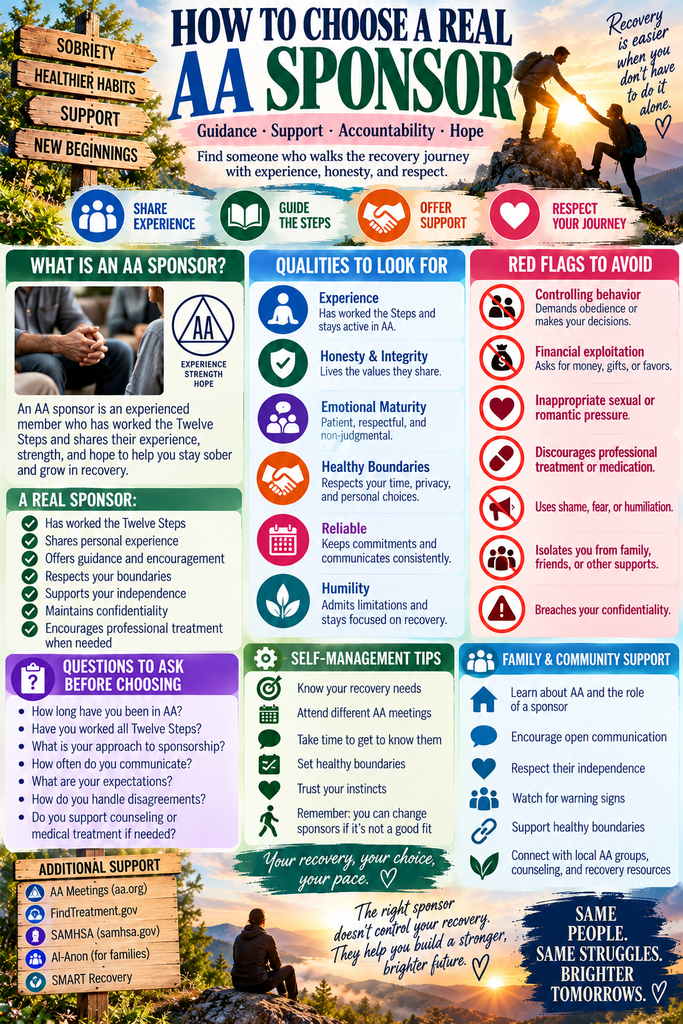
Recovery from alcohol addiction involves more than simply stopping drinking. It requires developing healthier coping strategies, rebuilding relationships, recognizing emotional triggers, and creating a strong support system. For many individuals participating in Alcoholics Anonymous, commonly known as AA, finding a trustworthy sponsor can be an important part of maintaining sobriety and navigating the challenges of recovery.
An AA sponsor is an experienced member of the fellowship who voluntarily provides guidance, encouragement, and support to another person working through the Twelve Steps. A sponsor shares personal experiences, helps individuals understand AA principles, and offers practical suggestions for managing recovery-related challenges.
However, not every experienced AA member is the right sponsor for every individual. Choosing someone simply because they have many years of sobriety, speak confidently during meetings, or hold a respected position does not automatically guarantee a healthy sponsorship relationship.
A genuine AA sponsor should demonstrate honesty, emotional maturity, respect for boundaries, and a willingness to support recovery without manipulation or control.
Understanding how to choose an appropriate sponsor through self-management, family support, and community resources can help individuals establish meaningful recovery relationships while protecting their independence, safety, and long-term well-being.
Understanding the Role of an AA Sponsor
An AA sponsor is a member who has experience working through the Twelve Steps and is willing to share that experience with someone seeking recovery from alcohol addiction.
Sponsorship is based on mutual respect, personal experience, and voluntary participation. It is not a professional counseling relationship, medical service, or position of authority.
A sponsor’s primary responsibility is to help another individual understand and apply the principles of AA while encouraging personal responsibility and continued participation in recovery.
A responsible AA sponsor generally:
- Shares personal experiences with alcohol addiction and recovery.
- Helps newcomers understand and work through the Twelve Steps.
- Encourages regular participation in AA meetings.
- Provides guidance during cravings, emotional challenges, or recovery-related decisions.
- Demonstrates honesty, accountability, and respectful communication.
- Maintains appropriate personal boundaries.
- Respects confidentiality and individual differences.
- Encourages professional treatment when medical or mental health needs arise.
- Supports independence rather than creating emotional dependence.
A sponsor does not need to be perfect. However, their behavior should consistently reflect the recovery principles they encourage others to practice.
What Makes Someone a Real AA Sponsor?
A genuine sponsor is not defined solely by how many years they have remained sober. Long-term sobriety can provide valuable experience, but trustworthiness, emotional stability, and respectful behavior matter just as much.
A good sponsor understands that recovery is personal and that different individuals may require different approaches.
Important qualities to look for
- Experience with the Twelve Steps: The sponsor has worked through the steps and can explain how they applied them in their own recovery.
- Consistent recovery involvement: They remain connected to AA and demonstrate ongoing commitment to their personal recovery.
- Honesty and integrity: Their behavior reflects the values they discuss during meetings.
- Emotional maturity: They respond to challenges without intimidation, humiliation, or unnecessary conflict.
- Healthy boundaries: They respect privacy, personal relationships, and individual decision-making.
- Reliability: They communicate consistently and follow through on reasonable commitments.
- Humility: They acknowledge personal limitations and avoid presenting themselves as experts on every problem.
- Respect for professional care: They recognize that medical treatment, psychiatric medications, and counseling may be essential components of recovery.
A trustworthy sponsor should help individuals become more confident in managing their recovery rather than making them feel powerless without constant supervision.
Red Flags: Warning Signs of an Unhealthy AA Sponsor
Although sponsorship can be beneficial, unhealthy relationships can develop when a sponsor uses their position to control, manipulate, or exploit someone seeking recovery.
Newcomers may be particularly vulnerable because they are often experiencing emotional distress, uncertainty, and a strong desire for guidance.
Warning signs include:
- Controlling behavior: Demanding complete obedience or making decisions about employment, finances, relationships, or medical treatment.
- Emotional manipulation: Using guilt, fear, humiliation, or threats to influence behavior.
- Disrespecting boundaries: Expecting constant availability or becoming angry when reasonable limits are established.
- Financial exploitation: Requesting money, gifts, loans, or financial favors as a condition of sponsorship.
- Sexual or romantic pressure: Pursuing an intimate relationship while occupying a position of influence over a vulnerable newcomer.
- Discouraging professional treatment: Advising someone to discontinue prescribed medications, avoid counseling, or reject evidence-based addiction treatment.
- Breach of confidentiality: Sharing private information without permission.
- Isolation: Discouraging contact with family members, healthcare professionals, or other recovery supports.
- Excessive criticism: Using shame or public embarrassment rather than constructive guidance.
A sponsor should never use recovery as an excuse to justify abusive or exploitative behavior.
If a sponsorship relationship feels unsafe, individuals have the right to establish boundaries, seek another sponsor, and obtain additional support.
Self-Management Strategies: Choosing a Sponsor Who Supports Your Recovery
Self-management means taking an active role in recovery decisions, identifying your needs, and setting healthy boundaries.
Choosing a sponsor should be a thoughtful process, not a decision made solely because someone is available or highly respected within a meeting.
1. Identify your personal recovery needs
Before selecting a sponsor, consider what type of guidance would be most helpful.
Some individuals benefit from structured step work and frequent communication, while others prefer a sponsor who emphasizes reflective conversations and gradual progress.
Questions to consider include:
- Do I need someone who provides structured guidance?
- Am I comfortable discussing personal experiences with this individual?
- Does this person respect different perspectives?
- Can I communicate honestly without fearing judgment?
- Does this individual understand the importance of professional treatment?
- Are their expectations realistic for my work, family, and health responsibilities?
Recognizing personal needs can help individuals choose a sponsor whose approach aligns with their recovery goals.
2. Attend meetings and observe potential sponsors
Rather than immediately selecting the first person who offers sponsorship, attend different AA meetings and observe how experienced members interact with others.
Notice whether potential sponsors demonstrate patience, humility, consistency, and respect.
Consider speaking with several members before deciding.
A person’s behavior outside formal meeting discussions may reveal more about their suitability than their ability to deliver an inspiring recovery message.
3. Ask important questions before choosing
Open communication can help establish realistic expectations.
Potential questions include:
- How long have you been involved in AA?
- Have you worked through all Twelve Steps?
- What is your approach to sponsorship?
- How often do you usually communicate with people you sponsor?
- What do you expect from a sponsee?
- How do you handle disagreements?
- How do you approach relapse or a return to drinking?
- Do you support people who also receive counseling or medication treatment?
- What boundaries do you maintain in sponsorship relationships?
There is no universally correct sponsorship style. The goal is to find someone who offers appropriate guidance while respecting personal autonomy.
4. Establish healthy boundaries
Boundaries are essential for maintaining a respectful sponsorship relationship.
A sponsor may recommend recovery practices, but the individual remains responsible for personal decisions.
Healthy boundaries include respecting privacy, communicating availability, maintaining appropriate financial limits, and avoiding inappropriate emotional or sexual relationships.
Individuals should feel comfortable expressing concerns and asking questions.
5. Reevaluate the relationship when necessary
A sponsorship relationship may change as recovery progresses.
Someone who was helpful during early sobriety may not remain the best fit indefinitely.
Changing sponsors does not mean abandoning AA or failing in recovery.
It may simply reflect changing needs, personal growth, or recognition that another relationship would provide more effective support.
Family Support Strategies: Encouraging Healthy Sponsorship Relationships
Family members often play an important role in supporting individuals recovering from alcohol addiction.
However, they may not fully understand the purpose of AA sponsorship or how it differs from professional addiction treatment.
Families can help by encouraging healthy recovery relationships while respecting the individual’s independence.
How families can provide support
- Learn about AA sponsorship: Understand that sponsors provide peer guidance rather than professional medical or psychological treatment.
- Encourage independent decision-making: Let loved ones choose sponsors based on trust, compatibility, and personal comfort.
- Respect privacy: Recognize that individuals may discuss sensitive recovery experiences with their sponsors.
- Maintain open communication: Encourage conversations about whether the sponsorship relationship feels supportive and safe.
- Recognize warning signs: Be attentive to controlling behavior, financial exploitation, isolation, or pressure to discontinue treatment.
- Support healthy boundaries: Reinforce that recovery should not require surrendering personal autonomy.
- Encourage professional care: Support counseling, addiction medicine, and mental health treatment when appropriate.
- Celebrate progress: Recognize improvements in communication, responsibility, emotional regulation, and engagement in recovery.
Family members should avoid attempting to control sponsorship relationships or demanding access to confidential conversations.
The goal is to support healthy recovery connections while maintaining trust and mutual respect.
Community Support Strategies: Creating Safe and Supportive Recovery Networks
AA sponsorship is one component of a broader recovery support system.
Community resources can help individuals connect with experienced peers, access professional treatment, and develop supportive relationships beyond a single sponsor.
1. Participate in different AA meetings
AA groups vary in size, atmosphere, and meeting format.
Attending multiple meetings can help individuals meet potential sponsors and identify environments where they feel comfortable.
Many communities offer newcomer meetings, discussion groups, speaker meetings, and step-study meetings.
2. Encourage peer recovery support
Peer recovery specialists and recovery community organizations can provide additional assistance with practical challenges such as transportation, employment, housing, and navigating treatment services.
Unlike volunteer AA sponsors, certified peer recovery specialists may work within formal programs with defined training, supervision, and ethical standards.
3. Integrate professional addiction treatment
AA participation can complement evidence-based treatment for alcohol use disorder.
Depending on individual needs, treatment may include:
- Cognitive behavioral therapy.
- Motivational interviewing.
- Medications such as naltrexone or acamprosate.
- Treatment for co-occurring mental health conditions.
- Outpatient or residential treatment.
- Medical monitoring when withdrawal risks are present.
A sponsor should not replace qualified healthcare professionals or interfere with prescribed treatment.
4. Promote recovery education and safety
Community organizations can educate individuals about healthy sponsorship relationships, confidentiality, boundaries, and recognizing exploitation.
Groups can also encourage newcomers to seek help when they experience harassment, coercion, or inappropriate behavior.
Because AA groups are autonomous, local practices may differ. Individuals can contact trusted group members or local AA service offices for information and assistance.
Helpful recovery resources
| Organization | Available support |
|---|---|
| Alcoholics Anonymous | Meeting information, sponsorship literature, and Twelve Step resources |
| SAMHSA | Substance use treatment information and support |
| FindTreatment.gov | Professional addiction treatment services |
| SMART Recovery | Skills-based mutual support for addictive behaviors |
| Al-Anon Family Groups | Support for families and friends affected by alcohol use |
Understanding the Difference Between an AA Sponsor and a Professional Counselor
An AA sponsor and a licensed addiction counselor can both support recovery, but their responsibilities are different.
| AA sponsor | Professional addiction counselor |
|---|---|
| Volunteer peer support | Licensed or otherwise credentialed professional |
| Shares personal recovery experience | Provides clinical assessment and treatment |
| Guides Twelve Step participation | Uses evidence-based therapeutic approaches |
| Offers informal recovery encouragement | Addresses psychological and behavioral health needs |
| Does not diagnose medical conditions | May diagnose within professional scope |
| Operates within AA peer relationships | Follows professional ethical and confidentiality requirements |
A sponsor may provide meaningful emotional support, but they should not diagnose mental health conditions, prescribe medication, direct medical decisions, or attempt to replace professional treatment.
Also, AA sponsorship confidentiality is based on fellowship principles and personal trust; it does not automatically carry the same legal protections as a licensed therapeutic relationship.
Can You Have More Than One Recovery Support Person?
Yes. Recovery is often strengthened by having multiple supportive relationships.
A sponsor can provide Twelve Step guidance, a counselor can address mental health concerns, and a peer recovery coach can help with practical recovery goals.
Family members, trusted friends, healthcare professionals, and recovery groups may also provide valuable support.
Relying exclusively on one person can create unnecessary dependence and limit access to different perspectives.
A strong recovery network provides encouragement, accountability, professional guidance, and meaningful human connection without placing all responsibility on a single individual.
What to Do if Your Sponsor Is Not the Right Fit
Sometimes individuals realize that their sponsor’s communication style, expectations, or behavior does not align with their needs.
If the relationship is simply incompatible, an honest, respectful conversation may help.
However, individuals experiencing manipulation, intimidation, harassment, or exploitation do not need to remain in the relationship or confront the sponsor alone.
Helpful steps include:
- Identify the specific concerns affecting the relationship.
- Communicate boundaries when it is safe to do so.
- Speak with another trusted AA member for perspective.
- Explore other meetings and potential sponsors.
- Maintain professional treatment and other recovery supports.
- Seek immediate assistance if threats, coercion, or abuse are involved.
A temporary sponsor may also provide support while someone searches for a longer-term match.
Changing sponsors is a personal decision and should not be treated as a sign of disloyalty.
Important Lessons About Choosing a Real AA Sponsor
A healthy sponsorship relationship is built on trust, mutual respect, and shared commitment to recovery.
The most important lessons include:
- Sobriety time alone does not determine suitability. Character, boundaries, and consistent behavior matter.
- Sponsorship should support independence. A sponsor guides recovery without controlling personal decisions.
- Professional treatment remains important. Sponsors should respect evidence-based medical and mental health care.
- Healthy boundaries protect both individuals. Privacy, respectful communication, and appropriate expectations strengthen the relationship.
- Family support can reinforce recovery. Loved ones can encourage healthy connections without controlling sponsorship choices.
- Community resources provide additional support. AA meetings, counseling, peer programs, and recovery organizations can complement sponsorship.
- Changing sponsors is acceptable. Recovery needs evolve, and individuals have the right to choose relationships that support their well-being.
Conclusion: Choosing Guidance That Builds Confidence, Not Dependence
Choosing an AA sponsor is an important personal decision that can influence how individuals experience Twelve Step recovery.
A trustworthy sponsor should demonstrate integrity, humility, respect, and a genuine willingness to help others develop the skills needed to maintain sobriety.
Through self-management, individuals can identify their recovery needs, establish boundaries, and make informed sponsorship decisions. Family support can provide encouragement and help recognize unhealthy relationship patterns. Community resources can connect individuals with experienced peers, professional treatment, and additional recovery services.
The most effective sponsorship relationships encourage personal responsibility while respecting independence and individual differences.
A real AA sponsor does not control your recovery, demand unquestioning obedience, or make you dependent on their approval. A real sponsor shares experience, offers guidance, respects boundaries, and helps you build confidence in your own recovery journey.
Frequently Asked Questions and Answers
1. What is an AA sponsor, and why is having one important?
An Alcoholics Anonymous (AA) sponsor is an experienced AA member who voluntarily provides guidance, encouragement, and support to someone working toward recovery from alcohol addiction. Sponsors share their personal experiences, help individuals understand the Twelve Steps, and offer practical recovery advice. Having a sponsor can strengthen accountability, reduce isolation, and provide meaningful peer support throughout recovery.
2. How do you choose the right AA sponsor?
Choosing the right AA sponsor involves finding someone who demonstrates honesty, emotional maturity, respect, and consistent involvement in recovery. Attend AA meetings, observe how experienced members interact with others, and talk with potential sponsors before deciding. A trustworthy sponsor should make you feel comfortable discussing recovery challenges without fear of judgment or manipulation.
3. What qualities should a good AA sponsor have?
A reliable AA sponsor should demonstrate several important qualities:
- Experience working through the Twelve Steps.
- Consistent participation in personal recovery.
- Honesty, integrity, and emotional maturity.
- Respect for confidentiality and personal boundaries.
- Patience and willingness to listen.
- Reliable communication and reasonable availability.
- Encouragement without intimidation or control.
- Respect for professional addiction and mental health treatment.
The best sponsor isn’t necessarily the person with the longest sobriety, but someone whose experience and behavior support healthy recovery.
4. How long should an AA sponsor be sober?
AA does not establish a universal minimum sobriety requirement for sponsorship. However, many members prefer sponsors who have maintained sobriety long enough to gain meaningful recovery experience and work through the Twelve Steps. A sponsor’s understanding of AA principles, emotional stability, and ability to provide respectful guidance matter more than a specific number of sober years.
5. What questions should you ask a potential AA sponsor?
Before choosing a sponsor, consider asking:
- How long have you participated in AA?
- Have you completed the Twelve Steps?
- What is your approach to sponsorship?
- How frequently do you communicate with people you sponsor?
- What expectations do you have for a sponsee?
- How do you handle disagreements?
- How do you support someone experiencing cravings or a return to drinking?
- Do you respect counseling, psychiatric medications, and other professional treatments?
These questions can help determine whether the sponsorship relationship aligns with your personal recovery needs.
6. What are the red flags of a bad AA sponsor?
Warning signs of an unhealthy sponsorship relationship include controlling behavior, emotional manipulation, intimidation, financial exploitation, inappropriate sexual advances, and breaches of confidentiality.
Other concerning behaviors include:
- Demanding unquestioning obedience.
- Using shame or humiliation as motivation.
- Pressuring someone to stop prescribed medications.
- Discouraging professional counseling or addiction treatment.
- Isolating a person from family or other recovery supports.
- Making unreasonable demands on personal time or finances.
- Threatening to withdraw support unless instructions are followed.
A sponsor should provide guidance, not exercise authority over another person’s life.
7. Can an AA sponsor tell you what to do with your personal life?
An AA sponsor may share experiences and offer suggestions about recovery-related decisions, but they should not control employment, finances, relationships, medical treatment, or other personal matters. Sponsorship is a voluntary peer-support relationship, not a position of professional or personal authority. Individuals remain responsible for their own decisions and have the right to set boundaries.
8. Should an AA sponsor be the same gender as the person they sponsor?
Traditional AA sponsorship guidance often recommends same-gender sponsorship, particularly when romantic or sexual attraction could complicate the relationship. However, this is not a universal requirement. The most important considerations are mutual comfort, respect, appropriate boundaries, and freedom from sexual or romantic pressure. Individuals should choose a sponsor with whom they feel safe and supported.
9. Can you change AA sponsors if the relationship is not working?
Yes. AA sponsorship is voluntary, and individuals can change sponsors whenever the relationship no longer supports their recovery needs. Reasons may include incompatible communication styles, changing recovery goals, boundary concerns, or inappropriate behavior. Changing sponsors does not mean someone has failed in recovery. It reflects the importance of finding supportive relationships that promote personal growth.
10. How often should you communicate with your AA sponsor?
Communication frequency depends on individual needs, sponsor availability, and mutually agreed expectations. Some people communicate daily during early recovery, while others speak several times per week or as needed. Regular contact can provide accountability and encouragement, but a sponsor should not demand constant access or use communication requirements to control another person’s life.
11. Can an AA sponsor replace a therapist or addiction counselor?
No. An AA sponsor provides peer guidance based on personal recovery experience, while a licensed therapist or addiction counselor offers professional assessment and evidence-based treatment. Sponsors are not qualified to diagnose mental health disorders, prescribe medications, or manage medical emergencies simply because they have recovery experience. AA sponsorship can complement professional treatment but should not replace it when clinical care is needed.
12. Should an AA sponsor support medication-assisted treatment?
Yes. A responsible sponsor should respect treatment decisions made between an individual and qualified healthcare professionals. Medications such as naltrexone and acamprosate can be effective treatments for alcohol use disorder. Sponsors should not pressure individuals to discontinue prescribed medications or suggest that receiving medical treatment makes their recovery less legitimate.
13. How can family members help someone choose a healthy AA sponsor?
Family members can provide encouragement, learn about the purpose of sponsorship, and support independent decision-making. They can also help identify warning signs such as manipulation, financial exploitation, or inappropriate boundaries.
Helpful family support strategies include:
- Encouraging participation in recovery meetings.
- Respecting privacy and confidentiality.
- Maintaining open communication without judgment.
- Supporting healthy personal boundaries.
- Encouraging professional treatment when appropriate.
- Recognizing progress and personal growth.
Families should avoid selecting or controlling a sponsor on behalf of their loved one.
14. What community resources can help someone find an AA sponsor?
AA meetings are the primary place to connect with potential sponsors. Newcomers can attend different meetings, introduce themselves to experienced members, and ask whether anyone is available to sponsor.
Additional resources include Alcoholics Anonymous, FindTreatment.gov, SMART Recovery, and local recovery community organizations.
These resources can provide meeting information, professional treatment options, and additional peer support.
15. What is the most important lesson about choosing a real AA sponsor?
The most important lesson is that a genuine AA sponsor provides guidance without control, encouragement without judgment, and accountability without humiliation.
A healthy sponsorship relationship should strengthen independence, confidence, and personal responsibility. It should also respect individual differences, medical treatment decisions, and personal boundaries.
A real AA sponsor does not control your recovery. They share experience, offer guidance, respect your choices, and help you build the confidence to maintain your recovery.
Video: