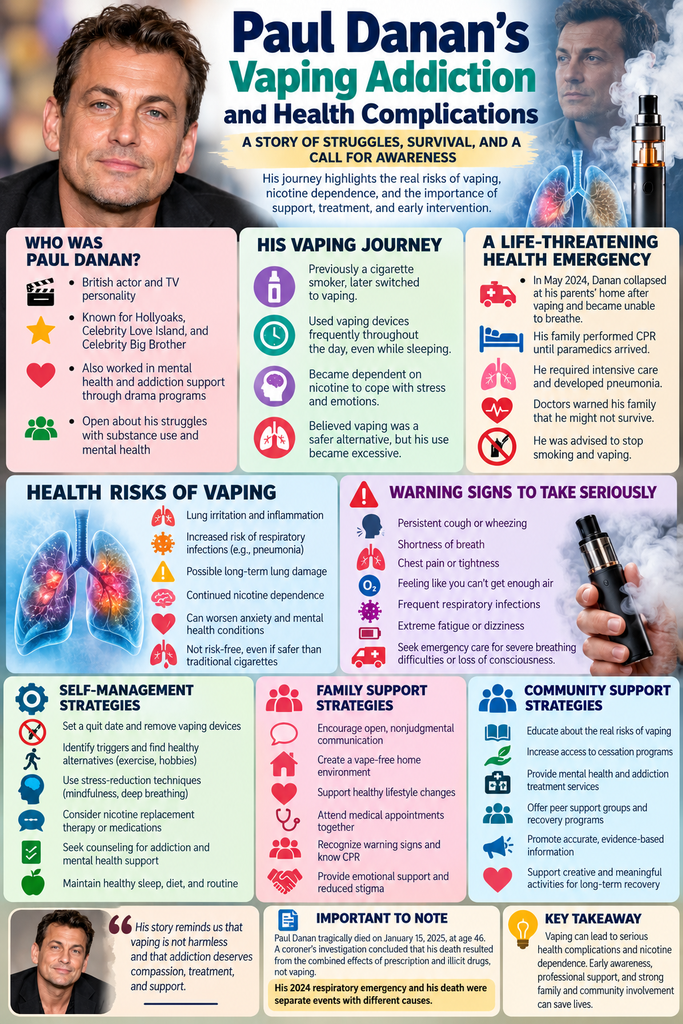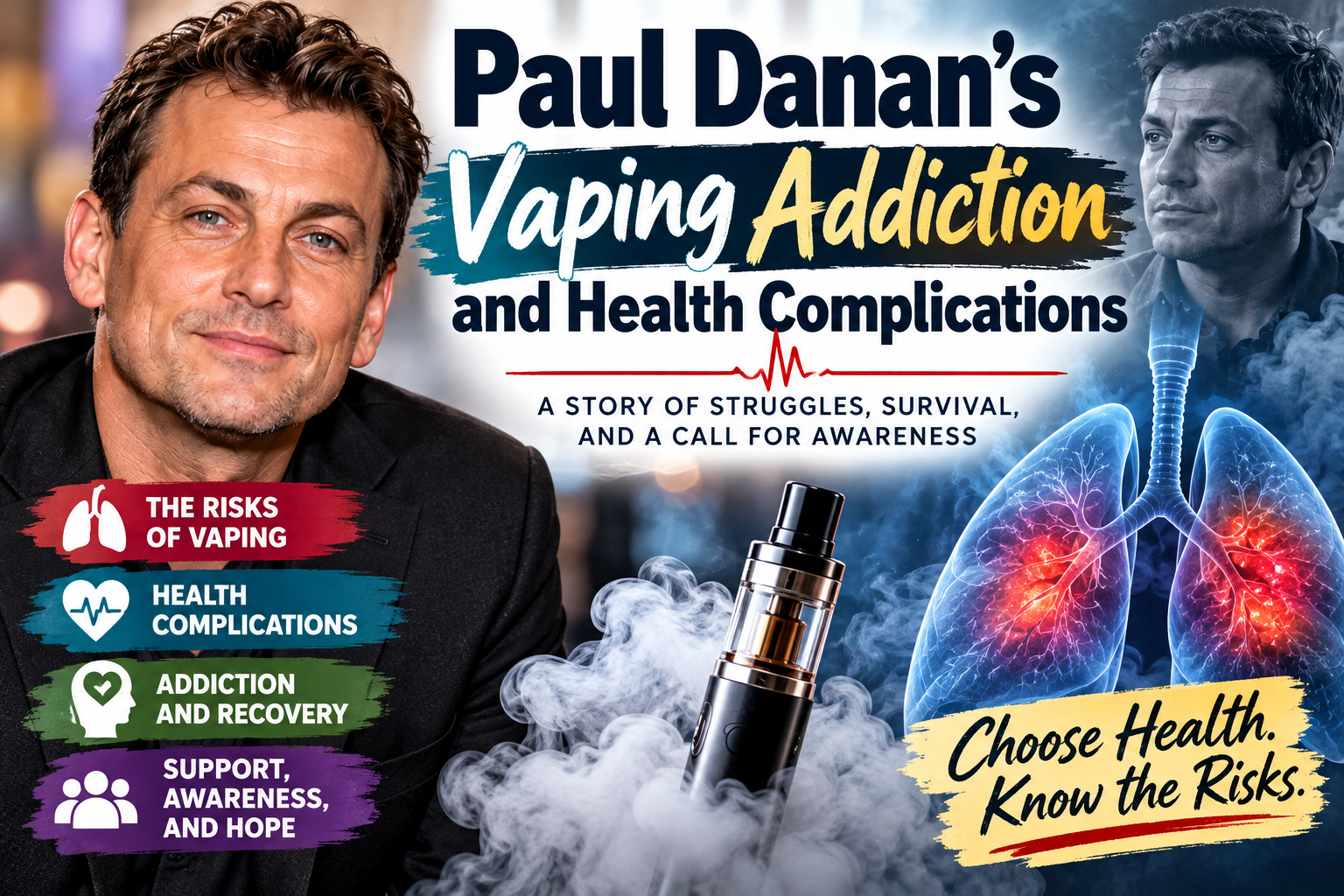
Paul Danan was a British actor and television personality best known for his roles in Hollyoaks, Celebrity Love Island, and Celebrity Big Brother. Behind his television career, Danan faced significant struggles with substance dependence, mental health, and eventually a life-threatening respiratory emergency that he publicly attributed to excessive vaping.
In 2024, Danan revealed that his heavy use of electronic cigarettes had preceded a frightening medical crisis. He collapsed at his parents’ home, required emergency resuscitation, and spent approximately one week in intensive care. He also developed pneumonia during his hospitalization.
Danan believed his vaping habit, combined with years of previous cigarette smoking, had seriously damaged his respiratory health. His experience raised awareness about the potential dangers of nicotine dependence and the misconception that vaping is completely harmless.
Tragically, Danan died on January 15, 2025, at age 46. A subsequent coroner’s investigation determined that his death resulted from the combined effects of prescription and illicit drugs, not vaping. His respiratory emergency and his eventual death were separate events with different reported causes.
His story offers important lessons about nicotine dependence, respiratory health, addiction recovery, and the role of self-management, family involvement, and community support.
Paul Danan’s Journey From Cigarette Smoking to Vaping
Danan had a history of cigarette smoking before transitioning to electronic cigarettes. Like many smokers, he initially viewed vaping as a potentially less harmful alternative to traditional tobacco products.
However, his vaping reportedly became excessive. He described using disposable vaping devices frequently throughout the day and even keeping one close to him while sleeping.
Over time, vaping became deeply integrated into his daily routine.
Factors That May Contribute to Vaping Dependence
Danan’s reported experience illustrates several behaviors commonly associated with nicotine dependence:
- Frequent nicotine exposure: Repeated vaping can maintain nicotine dependence and reinforce cravings.
- Habitual use: Vaping throughout the day can create strong associations between nicotine and everyday activities.
- Emotional reliance: Some individuals use nicotine to cope with stress, anxiety, boredom, or uncomfortable emotions.
- Misunderstanding health risks: Believing vaping is harmless may discourage people from recognizing problematic use.
- Difficulty breaking routines: Constant access to vaping devices can make reducing nicotine consumption challenging.
Although vaping generally exposes users to fewer toxic combustion products than cigarette smoking, it is not risk-free. People who completely switch from cigarettes to regulated nicotine vaping products may reduce exposure to certain harmful chemicals, but continued nicotine dependence and respiratory concerns remain important.
The Respiratory Emergency That Nearly Took His Life
In May 2024, Danan experienced a severe medical emergency while staying at his parents’ home.
According to his account, he was vaping when he suddenly became unable to breathe and collapsed. His family contacted emergency services and began CPR. Police and paramedics then assisted before transporting him to the hospital.
Danan required intensive medical care and respiratory support. He later reported developing pneumonia and recalled that physicians had warned his family that he might not survive.
In June 2024, he publicly described the incident and said doctors had strongly advised him to avoid further smoking or vaping.
Understanding the Medical Complications
Several health concerns are relevant to Danan’s experience:
- Respiratory failure: A life-threatening condition in which the respiratory system cannot adequately maintain oxygenation, eliminate carbon dioxide, or both.
- Pneumonia: Infection and inflammation of lung tissue that may worsen breathing difficulties and require hospitalization.
- Airway irritation: Vaping aerosols may contain substances that irritate the respiratory tract.
- Nicotine dependence: Frequent nicotine exposure can create physical dependence and withdrawal symptoms when use stops.
- Previous tobacco exposure: Years of cigarette smoking can contribute to respiratory disease and complicate the assessment of new breathing problems.
It is important to distinguish Danan’s reported medical experience from a confirmed diagnosis of e-cigarette or vaping product use-associated lung injury (EVALI). Public reporting does not establish that he received an EVALI diagnosis or that vaping was the sole cause of his respiratory failure.
His experience nevertheless demonstrates why sudden breathing difficulties, chest pain, severe coughing, or loss of consciousness require immediate medical evaluation.
Self-Management Strategies: Overcoming Vaping Dependence
Danan’s health crisis highlights the importance of recognizing nicotine dependence before serious health problems develop.
Self-management involves identifying unhealthy patterns, developing coping skills, seeking medical guidance, and establishing realistic goals for reducing or eliminating nicotine use.
1. Recognize Signs of Nicotine Dependence
Nicotine affects the brain’s reward pathways and reinforces repeated consumption. Over time, individuals may experience cravings and withdrawal symptoms when they attempt to stop.
Warning signs include:
- Vaping immediately after waking.
- Using electronic cigarettes throughout the day.
- Feeling anxious or irritable when unable to vape.
- Continuing to vape despite coughing or breathing difficulties.
- Repeatedly attempting to quit without success.
- Using nicotine to manage stress or uncomfortable emotions.
Recognizing these patterns allows individuals to seek support before dependence becomes more difficult to manage.
2. Develop a Personalized Quit Plan
A structured quit plan can help individuals prepare for nicotine withdrawal and establish healthier routines.
Recommended strategies include:
- Select a realistic quit date.
- Identify situations that trigger vaping cravings.
- Remove unnecessary vaping supplies from the home.
- Replace vaping breaks with walking, breathing exercises, or other activities.
- Track cravings and recognize progress.
- Discuss nicotine replacement therapy or other cessation medications with a healthcare professional.
The CDC recommends quit plans, behavioral counseling, and professional guidance for people trying to stop vaping.
3. Address Emotional and Psychological Triggers
Nicotine use may become associated with stress relief, emotional discomfort, or daily routines. Although nicotine can temporarily relieve withdrawal-related distress, continued use may reinforce dependence.
Helpful coping strategies include:
- Practice mindfulness and relaxation exercises.
- Maintain regular physical activity.
- Establish healthy sleep habits.
- Use journaling to identify emotional triggers.
- Seek counseling for anxiety, depression, or co-occurring substance use disorders.
- Build supportive relationships that encourage nicotine-free activities.
4. Prioritize Respiratory Health
Individuals experiencing respiratory symptoms should seek appropriate medical evaluation rather than assuming symptoms are harmless.
Important actions include:
- Report persistent coughing, wheezing, or shortness of breath.
- Follow prescribed respiratory treatments.
- Avoid smoking and vaping after a serious lung injury.
- Attend recommended medical follow-up appointments.
- Stay current with appropriate respiratory vaccinations.
- Seek emergency assistance for severe breathing difficulties, chest pain, confusion, or collapse.
Family Support Strategies: Encouragement During Addiction Recovery
Danan’s family played a critical role during his respiratory emergency. According to his account, family members contacted emergency services and began CPR when he collapsed.
Their response demonstrates the importance of recognizing medical emergencies and acting quickly.
Families can also provide emotional and practical support to individuals struggling with nicotine dependence and other substance use disorders.
1. Encourage Open Communication
People experiencing addiction may feel embarrassed, defensive, or overwhelmed by repeated attempts to quit.
Families can create supportive environments by:
- Listening without criticism or judgment.
- Discussing health concerns calmly.
- Encouraging honest conversations about nicotine use.
- Recognizing the challenges of withdrawal.
- Celebrating progress toward healthier behaviors.
2. Support Healthy Lifestyle Changes
Family involvement can help individuals replace substance-related routines with healthier activities.
Helpful approaches include:
- Establish smoke-free and vape-free home environments.
- Participate in walking, exercise, or recreational activities together.
- Encourage healthy meals and consistent sleep schedules.
- Help individuals attend medical appointments when requested.
- Support counseling or cessation programs.
- Avoid using nicotine products around someone attempting to quit.
3. Recognize Warning Signs and Medical Emergencies
Family members should understand the signs of severe respiratory distress.
Warning signs include:
- Sudden or worsening difficulty breathing.
- Blue or gray discoloration of the lips.
- Severe chest pain.
- Confusion or loss of consciousness.
- Inability to speak because of breathlessness.
When someone collapses and is unresponsive and not breathing normally, emergency services should be contacted immediately. CPR and an automated external defibrillator should be used according to emergency dispatcher instructions and available training.
Learning CPR can prepare families to respond during life-threatening emergencies.
4. Support Mental Health and Long-Term Recovery
Danan also publicly discussed his struggles with alcohol and other drugs. His experiences demonstrate that recovery needs may extend beyond nicotine dependence.
Families can:
- Encourage integrated mental health and addiction treatment.
- Support continuing care after rehabilitation.
- Recognize that substance use disorders may involve periods of recurrence.
- Maintain healthy boundaries without withdrawing compassion.
- Seek family counseling or support groups when necessary.
Community Support Strategies: Prevention, Education, and Treatment
Community involvement is essential for reducing nicotine dependence, improving public awareness, and helping individuals access effective treatment.
Danan was involved in drama-based therapeutic activities through his Morning After Drama program, which used acting to support people facing addiction, trauma, and mental health challenges.
His work illustrates how creative activities and community engagement can complement professional care.
1. Expand Vaping Education and Prevention
Public health programs should provide balanced, evidence-based information about nicotine and electronic cigarettes.
Community initiatives can:
- Educate adolescents about nicotine dependence.
- Explain the differences between vaping and combustible cigarette smoking.
- Address misconceptions that vaping is completely harmless.
- Promote awareness of respiratory symptoms requiring medical attention.
- Encourage non-smokers not to begin vaping.
- Provide accessible information about cessation services.
2. Improve Access to Addiction Treatment
Community healthcare systems should offer affordable and accessible support for individuals attempting to quit nicotine.
Resources may include:
- Tobacco cessation clinics.
- Behavioral counseling.
- Nicotine replacement therapy.
- Physician-guided medication management.
- Telephone and online quit programs.
- Mental health and addiction treatment services.
Medications such as nicotine replacement therapy, varenicline, and bupropion are established treatments for smoking cessation. Their use for vaping cessation should be individualized with a clinician because the evidence base and regulatory indications differ.
3. Support Individuals With Co-Occurring Addictions
People experiencing nicotine dependence may also have alcohol, drug, or mental health concerns.
Communities should encourage integrated treatment that addresses multiple needs rather than treating each condition in isolation.
Effective programs may combine medical care, psychotherapy, relapse prevention, peer support, and social services.
4. Promote Recovery Through Meaningful Activities
Creative programs, volunteer opportunities, and supportive social environments may improve emotional well-being and provide alternatives to substance-centered routines.
Community organizations can offer:
- Art, music, and drama programs.
- Peer recovery meetings.
- Recreational activities.
- Vocational training and employment support.
- Family education workshops.
- Mental health awareness events.
These programs should complement, rather than replace, evidence-based addiction treatment.
Paul Danan’s Death: Understanding the Difference Between Vaping Complications and Drug Toxicity
Danan’s death in January 2025 generated considerable public attention because he had survived a serious respiratory emergency the previous year.
However, his cause of death must be accurately distinguished from his vaping-related hospitalization.
At an inquest completed in May 2025, the coroner determined that Danan died from the combined effects of prescription and illicit drugs. The conclusion was death by misadventure, with no evidence that he intended to end his life.
His death highlights the dangers of polysubstance use, particularly when opioids, sedatives, and other central nervous system depressants are combined.
Important prevention lessons include:
- Avoid combining opioids with benzodiazepines, alcohol, or other sedating substances unless specifically directed and monitored by a clinician.
- Discuss all prescribed and nonprescribed substances with healthcare professionals.
- Ensure people at risk of opioid overdose and their families have access to naloxone.
- Seek emergency assistance immediately when an overdose is suspected.
- Maintain ongoing addiction and mental health support, especially after previous overdose events.
Danan’s death should not be described as a death caused by vaping. His earlier respiratory emergency remains a separate and important part of his health history.
Lessons From Paul Danan’s Journey
Danan’s life and experiences highlight several important public health lessons.
- Nicotine dependence deserves attention. Vaping can become a persistent habit that is difficult to stop.
- Respiratory symptoms should never be ignored. Serious breathing difficulties require prompt medical assessment.
- Family preparedness can save lives. Recognizing emergencies and providing CPR may improve survival.
- Addiction recovery often requires comprehensive care. Mental health, substance use, and physical health needs should be addressed together.
- Public education must be accurate. Vaping is generally less harmful than smoking cigarettes, but it is not harmless.
- Community support matters. Treatment programs, peer relationships, and meaningful activities can help individuals build healthier lives.
Resources for Vaping Cessation and Addiction Recovery
People struggling with nicotine dependence or other substance use disorders can access confidential support.
| Resource | Services |
|---|---|
| CDC — Vaping and Quitting | Education and cessation guidance |
| Smokefree.gov | Quit plans, text support, and coping tools |
| 1-800-QUIT-NOW | Free U.S. tobacco cessation counseling |
| NHS Better Health | UK smoking and vaping cessation support |
| FindTreatment.gov | U.S. substance use and mental health treatment locator |
Conclusion: Turning a Personal Health Crisis Into Public Awareness
Paul Danan’s experience with vaping, respiratory failure, and substance dependence illustrates the importance of understanding addiction as a complex health issue rather than simply a matter of personal choice.
His 2024 medical emergency brought attention to the potential consequences of excessive vaping and the need to recognize serious respiratory symptoms. His later death from combined drug toxicity underscores the broader risks associated with substance use disorders and the importance of comprehensive treatment.
Self-management strategies can help individuals recognize nicotine dependence, identify triggers, develop healthier coping mechanisms, and seek medical assistance. Family support provides encouragement, emergency preparedness, and emotional stability. Community resources strengthen recovery through education, accessible treatment, and ongoing social support.
Danan’s experiences also remind us that people facing addiction are more than their medical conditions or substance use histories. His creative work and efforts to support others remain part of his legacy.
The lasting message is that addiction deserves compassion, respiratory symptoms deserve prompt attention, and access to effective treatment and meaningful support can save lives.
Frequently Asked Questions and Answers
1. Who was Paul Danan, and why did his vaping experience attract public attention?
Paul Danan was a British actor best known for Hollyoaks, Celebrity Love Island, and Celebrity Big Brother. He publicly discussed his struggles with substance dependence and mental health. In 2024, he revealed that he had survived a life-threatening respiratory emergency that he believed was connected to excessive vaping. His experience raised awareness about nicotine dependence, respiratory complications, and the importance of seeking medical attention.
2. Was Paul Danan addicted to vaping?
Danan described using electronic cigarettes excessively throughout the day and having difficulty separating himself from vaping. His reported behavior suggested problematic nicotine use. However, publicly available accounts do not establish a formal clinical diagnosis of nicotine use disorder. His experience illustrates how frequent vaping can reinforce nicotine dependence and become difficult to control.
3. Why did Paul Danan switch from cigarettes to vaping?
Danan had previously smoked traditional cigarettes and reportedly switched to vaping because he believed it was a safer alternative. Although vaping generally exposes users to fewer harmful chemicals than combustible cigarettes, it is not risk-free. Electronic cigarettes can still deliver addictive nicotine and expose the respiratory system to potentially harmful substances.
4. What happened during Paul Danan’s vaping-related health emergency?
In 2024, Danan reported collapsing at his parents’ home after experiencing severe breathing difficulties. His family contacted emergency services and began CPR. He was hospitalized, required intensive medical care, and developed pneumonia. Danan believed excessive vaping contributed to the emergency, although the precise medical cause was not independently established in public reports.
5. Did vaping cause Paul Danan’s respiratory failure?
Danan publicly attributed his respiratory emergency to excessive vaping. However, without access to his complete medical records, it is not possible to confirm that vaping was the sole cause of his respiratory failure. Previous cigarette smoking, infections, and other medical conditions can also contribute to serious respiratory complications.
His experience highlights the importance of evaluating respiratory symptoms rather than assuming that vaping is harmless.
6. Did Paul Danan develop pneumonia because of vaping?
Danan reported developing pneumonia during his hospitalization. Vaping aerosols can irritate the respiratory tract and may affect respiratory defenses, but available public information does not establish that vaping directly caused his pneumonia. Pneumonia can result from bacterial, viral, or other causes and may become life-threatening when respiratory function is severely compromised.
7. Did Paul Danan die from vaping complications?
No. Paul Danan’s death was not attributed to vaping.
Danan died on January 15, 2025, at age 46. A coroner’s inquest concluded that his death resulted from the combined effects of prescription and illicit drugs and recorded a conclusion of death by misadventure.
His 2024 respiratory emergency and his 2025 death were separate events. It is important not to confuse his reported vaping-related health crisis with the officially determined cause of his death.
8. What are the potential health complications of excessive vaping?
Frequent vaping can expose the body to nicotine and aerosolized chemicals that may affect respiratory and cardiovascular health.
Potential complications include:
- Nicotine dependence and withdrawal symptoms.
- Airway irritation, coughing, and wheezing.
- Increased heart rate and blood pressure after nicotine exposure.
- Worsening respiratory symptoms in susceptible individuals.
- Exposure to potentially harmful chemicals and particles.
- Sleep disturbances and anxiety associated with nicotine dependence.
The long-term effects of vaping are still being studied. Risks depend on the device, product ingredients, frequency of use, and individual health factors.
9. Can vaping cause permanent lung damage?
Some vaping-related lung injuries can be severe and may result in lasting respiratory impairment. However, not everyone who vapes develops permanent lung damage.
The 2019 outbreak of e-cigarette or vaping product use-associated lung injury (EVALI) was strongly linked to vitamin E acetate in certain THC-containing vaping products, particularly those obtained from informal sources.
This does not mean all vaping-related respiratory problems have the same cause. Individuals with persistent breathing symptoms should receive medical evaluation.
10. What are the warning signs of vaping-related respiratory problems?
Warning signs may include:
- Persistent coughing or wheezing.
- Shortness of breath.
- Chest tightness or discomfort.
- Reduced exercise tolerance.
- Unusual fatigue.
- Fever or other symptoms suggesting respiratory infection.
Severe difficulty breathing, blue or gray lips, confusion, chest pain, or loss of consciousness requires immediate emergency medical assistance.
11. How does nicotine addiction develop through vaping?
Nicotine activates reward pathways in the brain, including dopamine signaling. Repeated exposure can produce physical dependence, making individuals experience cravings and withdrawal symptoms when nicotine levels decline.
Vaping devices may deliver nicotine efficiently, particularly products containing high concentrations of nicotine salts. Frequent use throughout the day can reinforce dependence and make quitting challenging.
12. What are common nicotine withdrawal symptoms after quitting vaping?
Nicotine withdrawal may cause irritability, anxiety, difficulty concentrating, restlessness, sleep disturbances, increased appetite, and strong cravings.
Symptoms often begin within hours after stopping nicotine, become most intense during the first several days, and gradually improve over the following weeks.
Behavioral counseling, structured quit plans, and appropriate medical treatment can help individuals manage withdrawal.
13. What self-management strategies can help someone overcome vaping dependence?
Effective self-management begins with recognizing triggers and creating a realistic cessation plan.
Helpful strategies include:
- Set a quit date and identify personal reasons to stop.
- Remove vaping devices and supplies from daily environments.
- Recognize emotional and situational triggers.
- Practice exercise, mindfulness, and relaxation techniques.
- Develop alternative routines during cravings.
- Seek professional guidance about nicotine replacement therapy or cessation medications.
- Track progress and develop strategies for managing setbacks.
Individuals who repeatedly struggle to quit may benefit from behavioral counseling and structured cessation programs.
14. How can families support someone struggling with vaping addiction?
Family support can improve motivation and help individuals manage the emotional challenges associated with nicotine withdrawal.
Families can encourage honest communication, establish vape-free environments, participate in healthy activities, and support medical appointments or counseling.
Avoid shame, criticism, or threats. Encouragement, realistic expectations, and consistent boundaries can help individuals maintain progress.
15. What role did Paul Danan’s family play during his health emergency?
According to Danan’s public account, family members responded when he collapsed at his parents’ home by contacting emergency services and beginning CPR.
Their actions demonstrate the importance of emergency preparedness. Families can benefit from learning CPR, recognizing respiratory distress, and understanding when to seek immediate medical assistance.
16. What community resources can help people quit vaping?
Community resources may include tobacco cessation clinics, behavioral health services, primary care providers, telephone quitlines, and peer support programs.
In the United States, individuals can access:
- 1-800-QUIT-NOW: Free tobacco cessation counseling and support.
- Smokefree.gov: Quit plans, educational materials, and coping strategies.
- CDC — Quitting Vaping: Evidence-based guidance on vaping cessation.
- FindTreatment.gov: Behavioral health and substance use treatment services.
17. Can vaping worsen anxiety or other mental health conditions?
Nicotine dependence and withdrawal can contribute to anxiety, irritability, and sleep disturbances. Some individuals believe vaping helps relieve stress, but this temporary relief may reflect the reduction of nicotine withdrawal symptoms.
Individuals experiencing persistent anxiety, depression, or other mental health concerns should seek professional evaluation. Integrated behavioral health care can address both nicotine dependence and underlying psychological needs.
18. Is vaping safer than smoking traditional cigarettes?
For adults who smoke cigarettes, completely switching to regulated nicotine vaping products generally reduces exposure to many harmful chemicals produced by burning tobacco.
However, vaping is not harmless, and the long-term health effects remain incompletely understood. Using cigarettes and electronic cigarettes together may reduce the health benefits of switching.
People who do not smoke should not begin vaping, particularly adolescents and pregnant individuals.
19. Can people successfully quit vaping after years of nicotine dependence?
Yes. Nicotine dependence is treatable, and individuals can successfully stop vaping even after years of frequent use.
Recovery may involve behavioral counseling, changes in daily routines, social support, and clinician-guided medication options. Multiple quit attempts are common and do not mean that long-term cessation is impossible.
20. What is the most important lesson from Paul Danan’s experience?
Paul Danan’s experience emphasizes the importance of recognizing nicotine dependence, taking respiratory symptoms seriously, and seeking timely medical attention.
His story also highlights the broader challenges of substance dependence and the need for comprehensive behavioral health care.
Although Danan believed excessive vaping contributed to his 2024 respiratory emergency, his subsequent death in 2025 was attributed to combined drug toxicity rather than vaping.
The central lesson is that addiction deserves compassionate treatment, respiratory health concerns require appropriate medical care, and strong family and community support can help individuals pursue healthier lives.
Video: