Recovery from addiction is more than simply stopping alcohol or drug use. It is a process of rebuilding physical health, emotional stability, relationships, financial independence, self-confidence, and a sense of purpose. For many individuals, the journey after addiction can feel overwhelming because the consequences of substance use may continue long after the substance itself is gone.
Addiction can affect nearly every aspect of life, including employment, family relationships, housing, mental health, and personal identity. Even after achieving sobriety, individuals may struggle with guilt, shame, loneliness, financial difficulties, or fear of relapse. These challenges do not mean recovery is failing. They reflect the complex process of adjusting to a different way of living.
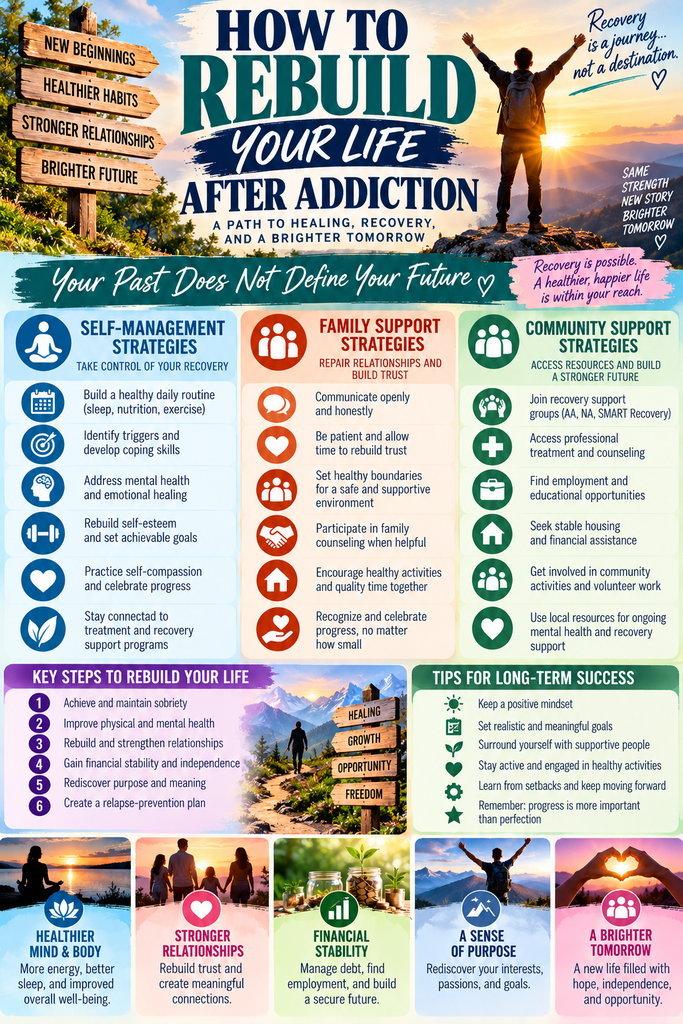
Rebuilding life after addiction requires patience, personal responsibility, self-compassion, and meaningful support. Through self-management, family encouragement, and community resources, individuals can develop healthier habits, repair relationships, regain independence, and create a future that is no longer controlled by substance use.
Understanding the Challenges of Life After Addiction
The early stages of recovery often involve significant physical, psychological, and social adjustments. Substances that previously influenced mood, motivation, and reward are no longer part of daily life, and the brain may need time to adapt.
Individuals may also face consequences from their substance use, such as damaged relationships, financial debt, unemployment, legal problems, or unstable housing.
Common challenges during recovery include:
- Emotional difficulties: Feelings of guilt, shame, anxiety, depression, or regret about past decisions.
- Relationship problems: Rebuilding trust with family members, friends, and romantic partners.
- Financial instability: Managing debt, finding employment, and establishing financial independence.
- Social isolation: Distancing oneself from substance-using environments while developing healthier friendships.
- Cravings and triggers: Learning to manage situations, emotions, and memories associated with substance use.
- Loss of identity: Rediscovering personal interests, values, and goals beyond addiction.
- Fear of relapse: Worrying about returning to substance use after making progress.
Understanding these challenges helps individuals recognize that recovery is not a single event. It is an ongoing process of learning, healing, and personal development.
Self-Management Strategies: Taking Control of Your Recovery
Self-management involves developing the skills, routines, and coping strategies necessary to maintain recovery and improve overall well-being.
One of the most important steps in rebuilding life after addiction is learning to make consistent decisions that support long-term health.
1. Establish a healthy daily routine
During active addiction, daily schedules may become unpredictable. Establishing structure can help restore stability and reduce exposure to triggers.
Helpful strategies include:
- Wake up and go to bed at consistent times.
- Eat balanced meals and stay adequately hydrated.
- Participate in regular physical activity.
- Schedule time for work, education, or meaningful responsibilities.
- Include relaxation, hobbies, and social activities.
- Attend treatment appointments or recovery meetings as appropriate.
A predictable routine can reduce stress, improve sleep, and create a sense of accomplishment.
2. Identify triggers and develop coping skills
Triggers are situations, emotions, people, or environments that increase the desire to use substances.
Common triggers include stress, loneliness, relationship conflict, boredom, and exposure to alcohol or drugs.
Individuals can manage triggers by:
- Identifying situations associated with previous substance use.
- Developing a written plan for managing cravings.
- Practicing deep breathing, mindfulness, or grounding techniques.
- Contacting a trusted support person when cravings increase.
- Avoiding high-risk environments when possible.
- Working with a counselor to develop relapse-prevention skills.
Cravings are often temporary, and learning to respond without using substances can strengthen confidence over time.
3. Address mental health and emotional healing
Substance use disorders frequently coexist with mental health conditions such as depression, anxiety, post-traumatic stress disorder, and bipolar disorder.
Untreated emotional distress can interfere with recovery and quality of life.
Evidence-based approaches may include cognitive behavioral therapy, motivational interviewing, trauma-informed counseling, and appropriate psychiatric medications.
Individuals should also practice self-compassion while taking responsibility for their actions.
Recovery involves learning from past experiences without allowing shame to define personal identity.
4. Rebuild self-esteem and personal identity
Addiction can cause individuals to lose confidence in their abilities and question their self-worth.
Rebuilding self-esteem requires recognizing personal strengths, developing new skills, and setting achievable goals.
Practical approaches include:
- Set small daily and weekly goals.
- Recognize progress rather than expecting perfection.
- Explore new hobbies and interests.
- Return to education or vocational training.
- Volunteer or participate in meaningful community activities.
- Practice positive self-talk and realistic self-reflection.
- Celebrate accomplishments unrelated to substance use.
Over time, individuals can develop an identity based on their values, abilities, relationships, and future aspirations rather than their history of addiction.
Family Support Strategies: Rebuilding Trust and Strengthening Relationships
Addiction often affects the entire family. Loved ones may experience fear, frustration, emotional exhaustion, financial strain, or difficulty trusting someone who previously struggled with substance use.
Rebuilding relationships requires time, honesty, accountability, and consistent behavior.
Family members also need opportunities to heal from their own experiences.
1. Restore trust through consistent actions
Trust is rarely rebuilt through promises alone. It develops when individuals demonstrate reliability over time.
Helpful strategies include:
- Communicate honestly about recovery progress.
- Follow through on commitments and responsibilities.
- Respect established family boundaries.
- Take accountability for past behavior without excessive self-blame.
- Recognize that loved ones may need time to rebuild trust.
- Avoid demanding immediate forgiveness.
Repairing relationships is a gradual process, and not every relationship will return to its previous form.
2. Encourage healthy family communication
Open communication allows family members to express concerns, expectations, and emotional needs.
Families can support recovery by:
- Listening without interrupting or criticizing.
- Using respectful language during disagreements.
- Avoiding shame, threats, or humiliation.
- Discussing realistic expectations for recovery.
- Encouraging professional treatment when appropriate.
- Participating in family counseling when helpful.
Family therapy can improve communication, address unresolved conflicts, and establish healthier interaction patterns.
3. Establish healthy boundaries
Boundaries protect both the individual in recovery and their loved ones.
Healthy boundaries may include expectations regarding financial responsibilities, household behavior, substance use within the home, and respectful communication.
Families should distinguish supportive behaviors from actions that unintentionally reinforce harmful patterns.
Support does not require accepting abuse, providing unlimited financial assistance, or sacrificing personal safety.
4. Recognize the family’s need for healing
Family members may continue experiencing anxiety, resentment, or emotional distress even after their loved one stops using substances.
They may benefit from counseling, education, peer support, and opportunities to rebuild their own independence.
Programs such as Al-Anon Family Groups and SMART Recovery Family & Friends provide support for people affected by another person’s substance use.
Recovery can strengthen family relationships, but healing requires effort and understanding from everyone involved.
Community Support Strategies: Building a Strong Recovery Network
Community resources can help individuals rebuild their lives by addressing practical barriers that may interfere with recovery.
Access to healthcare, stable housing, employment, education, and supportive relationships can significantly influence long-term outcomes.
1. Participate in recovery support programs
Peer support groups provide opportunities to connect with others who understand the challenges of addiction.
Examples include:
- Alcoholics Anonymous (AA): Peer support for individuals seeking recovery from alcohol addiction.
- Narcotics Anonymous (NA): Recovery-focused support for individuals with substance use problems.
- SMART Recovery: A science-informed, skills-based approach to managing addictive behaviors.
- Recovery community organizations: Local programs offering peer recovery coaching, education, and social support.
Individuals should choose programs that align with their personal needs, values, and recovery goals.
2. Access professional addiction treatment
Some individuals require ongoing medical and behavioral health services to maintain recovery.
Treatment options may include:
- Outpatient addiction counseling.
- Intensive outpatient programs.
- Residential treatment when clinically indicated.
- Medications for opioid use disorder, including buprenorphine and methadone.
- Medications for alcohol use disorder, such as naltrexone or acamprosate when appropriate.
- Treatment for co-occurring mental health conditions.
- Recovery coaching and case management.
Medication treatment is an evidence-based component of recovery and should never be viewed as replacing one addiction with another.
3. Improve employment and financial stability
Financial difficulties can create substantial stress during recovery.
Employment and vocational programs can help individuals regain independence and develop confidence.
Community organizations may provide:
- Job readiness and interview preparation.
- Vocational training and certification programs.
- Educational scholarships and adult learning opportunities.
- Financial literacy and budgeting classes.
- Assistance with transportation and employment-related expenses.
- Legal aid or record-clearing services when eligible.
Financial recovery often occurs gradually. Establishing a realistic budget and addressing urgent expenses can provide an important starting point.
4. Find stable housing and supportive environments
Safe and stable housing can reduce exposure to high-risk environments and support long-term recovery.
Housing resources may include recovery residences, supportive housing programs, transitional housing, and community assistance organizations.
Recovery housing should provide a safe environment, respect residents’ rights, and avoid discriminatory practices, including inappropriate restrictions on prescribed medications for addiction treatment.
Rebuilding Financial Independence After Addiction
Financial recovery is an important but sometimes overlooked part of rebuilding life after addiction.
Individuals may face unpaid bills, damaged credit, lost employment, or accumulated debt.
These challenges can feel overwhelming, especially early in recovery.
Practical financial rebuilding strategies include:
- Review income, expenses, debts, and financial obligations.
- Create a realistic monthly budget.
- Prioritize housing, food, transportation, and healthcare.
- When possible, establish a small emergency savings fund.
- Contact creditors to discuss repayment options.
- Seek assistance from nonprofit financial counselors.
- Avoid high-risk financial behaviors and unnecessary borrowing.
- Set achievable short-term and long-term financial goals.
Financial stability comes from consistent habits, not immediate results.
Small improvements can reduce stress and strengthen a person’s sense of independence.
Rediscovering Purpose and Meaning After Addiction
One of the most meaningful aspects of recovery is discovering a sense of purpose beyond substance use.
During addiction, daily life may become centered on obtaining, using, or recovering from substances. Once that cycle changes, individuals may struggle to determine what gives their lives meaning.
Purpose can develop through relationships, work, education, creativity, spirituality, service, and personal development.
Ways to rediscover purpose include:
- Reconnect with hobbies and interests that were neglected.
- Pursue educational or professional goals.
- Spend meaningful time with supportive friends and family.
- Volunteer for community organizations.
- Explore creative activities such as music, writing, or art.
- Participate in spiritual or faith-based activities if personally meaningful.
- Mentor others in recovery when emotionally prepared.
- Set future goals that reflect personal values.
A meaningful life after addiction does not have to resemble life before addiction.
Recovery can provide an opportunity to establish new priorities, healthier relationships, and a stronger sense of identity.
Preventing Relapse and Managing Setbacks
Relapse is a recognized risk in substance use disorders, but it is not inevitable and should not be viewed as a requirement of recovery.
Some individuals experience a return to substance use after a period of abstinence. Others maintain recovery without returning to use.
A return to substance use should prompt reassessment of treatment needs, triggers, and available support rather than shame or abandonment of care.
Important relapse-prevention strategies include:
- Maintain regular contact with treatment providers.
- Continue prescribed addiction medications when indicated.
- Recognize early warning signs such as isolation, increasing cravings, or neglecting recovery routines.
- Develop an emergency plan for high-risk situations.
- Maintain supportive relationships.
- Address worsening mental health symptoms promptly.
- Reevaluate treatment intensity when additional support is needed.
- Carry naloxone when opioid exposure or overdose risk is possible.
For people with opioid use disorder, returning to opioid use after a period of abstinence can be especially dangerous because tolerance may decrease, increasing overdose risk.
If a setback occurs, reconnecting with treatment promptly can help prevent additional harm.
A Practical 30-Day Plan to Begin Rebuilding Your Life
INTERACTIVE RECOVERY CHECKLIST
Check off each step as you complete it. Progress is personal, and you can adjust these milestones to your needs.
0 of 12 steps completed
0%
Week 1: Establish stability. Create a daily sleep and meal routine. Connect with a healthcare or recovery professional. Identify three personal recovery goals
Week 2: Strengthen emotional health. Identify common triggers and coping responses. Practice a healthy stress-management activity. Reach out to one supportive person
Week 3: Rebuild independence. Review your budget and essential expenses. Explore employment, education, or volunteer opportunities. Set one realistic relationship or personal boundary
Week 4: Plan for the future. Create or update a relapse-prevention plan. Choose an ongoing recovery support resource. Set meaningful goals for the next 90 days
Understanding That Recovery Is Not a Race
People recover at different rates depending on their medical needs, substance use history, mental health, social environment, and access to resources.
Some individuals rebuild employment and relationships relatively quickly, while others require years to address financial, legal, or emotional consequences.
Comparing recovery journeys can create unrealistic expectations.
Instead, measure progress by meaningful improvements in health, stability, relationships, and overall quality of life.
Recovery does not require perfection. It requires a willingness to keep learning, seeking support, and making choices that support a healthier future.
Conclusion: Building a Life Worth Living After Addiction
Rebuilding life after addiction is a journey of healing, personal responsibility, and rediscovering hope. Although the consequences of substance use may continue after someone stops using drugs or alcohol, those challenges do not have to determine their future.
Through self-management, individuals can develop healthier routines, recognize triggers, address emotional challenges, and establish meaningful goals. Family support can help rebuild trust, strengthen communication, and create a stable environment for recovery. Community resources provide essential access to treatment, employment opportunities, housing assistance, education, and peer support.
The process may involve setbacks, difficult conversations, and gradual progress. Yet every positive decision can contribute to greater stability and independence.
Rebuilding a life after addiction does not mean erasing the past. It means learning from past experiences, accepting responsibility where appropriate, and building a future on healthier choices.
Your past may be part of your story, but it does not have to define your future. Recovery is not just about leaving addiction behind—it is about building a life filled with purpose, connection, stability, and hope.
You do not have to rebuild everything in one day. Start with one healthy decision, one achievable goal, and one meaningful step forward.
Recovery Resources
For individuals in the United States, FindTreatment.gov provides a searchable directory of substance use and mental health treatment services. SAMHSA also provides information about treatment and recovery support.
If someone is experiencing an emotional or suicidal crisis, call or text 988 for immediate support. If an overdose is suspected, call 911 and administer naloxone if available and appropriate.
Frequently Asked Questions and Answers
1. How do you start rebuilding your life after addiction?
Rebuilding your life after addiction begins with establishing stability, maintaining recovery, and addressing the areas of life affected by substance use. Start by creating healthy daily routines, seeking appropriate treatment, reconnecting with supportive people, and setting realistic personal goals. Recovery takes time, and small, consistent improvements can help restore confidence, independence, and emotional well-being.
2. How long does it take to rebuild your life after addiction?
There is no specific timeline for rebuilding life after addiction. Some individuals experience meaningful improvements within several months, while others need years to repair relationships, achieve financial stability, and address emotional challenges. Recovery depends on factors such as substance use history, mental health, physical health, available support, and personal circumstances. Progress should be measured through improvements in functioning and quality of life rather than a fixed deadline.
3. What are the biggest challenges people face after addiction?
Individuals rebuilding their lives may encounter several challenges, including:
- Managing cravings and preventing relapse.
- Repairing damaged family relationships.
- Overcoming guilt, shame, and low self-esteem.
- Finding employment and achieving financial stability.
- Establishing safe and stable housing.
- Managing anxiety, depression, or unresolved trauma.
- Developing healthy friendships and social connections.
- Rediscovering personal identity and purpose.
Recognizing these challenges can help individuals develop realistic recovery plans and seek appropriate assistance.
4. How can someone rebuild trust with family members after addiction?
Rebuilding trust requires honesty, accountability, patience, and consistent behavior. Individuals can demonstrate reliability by keeping commitments, respecting boundaries, communicating openly, and taking responsibility for past actions. Family members may need time to process previous experiences. Trust develops gradually through meaningful actions rather than promises alone.
5. What self-management strategies are most effective during addiction recovery?
Self-management involves developing healthy habits and learning to respond effectively to stress and cravings.
Helpful strategies include:
- Establishing consistent sleep, nutrition, and exercise routines.
- Identifying personal triggers and high-risk situations.
- Practicing mindfulness and relaxation techniques.
- Developing a written relapse-prevention plan.
- Attending treatment appointments and recovery meetings when helpful.
- Setting achievable personal and professional goals.
- Monitoring emotional well-being.
- Celebrating progress without expecting perfection.
These strategies can strengthen confidence and support long-term recovery.
6. How can family members support someone rebuilding their life after addiction?
Families can provide encouragement, emotional reassurance, and practical assistance while maintaining healthy boundaries. Open communication, patience, and participation in family counseling can help rebuild relationships. Loved ones should avoid judgment and recognize that recovery is an ongoing process. Family members should also seek support for their own emotional well-being when needed.
7. What community resources are available for people recovering from addiction?
Community resources can provide treatment, education, employment assistance, housing support, and social connections.
Examples include:
- Alcoholics Anonymous and Narcotics Anonymous for peer recovery support.
- SMART Recovery for skills-based addiction recovery support.
- FindTreatment.gov for locating substance use treatment services.
- Community mental health centers for counseling and psychiatric care.
- Vocational rehabilitation programs for employment and education.
- Recovery residences and supportive housing programs.
- Peer recovery coaching and community recovery organizations.
Accessing appropriate resources can reduce isolation and strengthen long-term recovery.
8. How can someone rebuild their finances after addiction?
Financial recovery begins with understanding current income, expenses, debts, and financial obligations. Creating a realistic budget, prioritizing essential expenses, and developing manageable repayment plans can help restore stability. Individuals may also benefit from employment assistance, vocational training, financial counseling, and community programs. Financial independence develops gradually through consistent planning and responsible decisions.
9. Is it normal to feel lost or empty after becoming sober?
Yes. Some individuals experience feelings of emptiness, boredom, sadness, or uncertainty after stopping substance use. Addiction may have occupied a significant part of their daily lives, and adjusting to new routines can take time. Exploring hobbies, reconnecting with supportive people, pursuing meaningful goals, and addressing mental health concerns can help restore a sense of purpose. Persistent depression or emotional distress should be evaluated by a healthcare professional.
10. How can someone develop a new identity after addiction?
Developing a new identity involves recognizing that a person’s past substance use does not define their entire life. Individuals can explore personal interests, develop new skills, establish healthier relationships, and pursue educational or professional opportunities. Volunteering, creative activities, and meaningful responsibilities can also strengthen self-confidence. Recovery provides an opportunity to build an identity based on personal values, strengths, and future goals.
11. What should someone do if they experience a relapse?
A return to substance use does not erase previous progress, but it should be taken seriously. Individuals should reconnect with their treatment provider, identify contributing triggers, and reassess their recovery plan. Additional counseling, medication adjustments, or more intensive treatment may be appropriate.
For individuals with opioid use disorder, returning to opioid use after abstinence can increase overdose risk because tolerance may have decreased. Naloxone should be available when opioid exposure is possible, and emergency services should be contacted if an overdose is suspected.
12. Can someone rebuild their life without attending a rehabilitation facility?
Yes. Not everyone requires residential rehabilitation. Many individuals recover successfully through outpatient treatment, medications when indicated, counseling, peer support, and community resources. The appropriate level of care depends on the severity of the substance use disorder, withdrawal risks, co-occurring conditions, and individual circumstances. A healthcare professional can help determine the safest and most effective treatment approach.
13. How important is mental health treatment after addiction?
Mental health treatment can be essential because substance use disorders frequently coexist with anxiety, depression, trauma-related disorders, and other psychiatric conditions. Untreated mental health symptoms may interfere with daily functioning and increase vulnerability to substance use. Integrated treatment that addresses both addiction and mental health can improve overall well-being and support sustained recovery.
14. How can someone find happiness and purpose after addiction?
Finding happiness and purpose often involves rebuilding meaningful connections and participating in activities that reflect personal values.
Helpful approaches include:
- Reconnecting with supportive family members and friends.
- Pursuing education, employment, or vocational goals.
- Participating in hobbies, exercise, and creative activities.
- Volunteering or helping others.
- Practicing gratitude and self-compassion.
- Exploring spirituality or faith-based activities when personally meaningful.
- Setting realistic goals for the future.
Purpose develops through experiences, relationships, and personal growth rather than a single achievement.
15. What are the most important steps for maintaining long-term recovery?
Long-term recovery is supported by consistent self-care, effective treatment, and strong social connections.
Important strategies include maintaining healthy routines, recognizing triggers, following prescribed treatment plans, developing relapse-prevention skills, and staying connected with supportive people.
Individuals should also address practical needs such as employment, housing, finances, and healthcare. Recovery is not simply the absence of substance use; it also involves improving quality of life and building a stable, meaningful future.
Video: