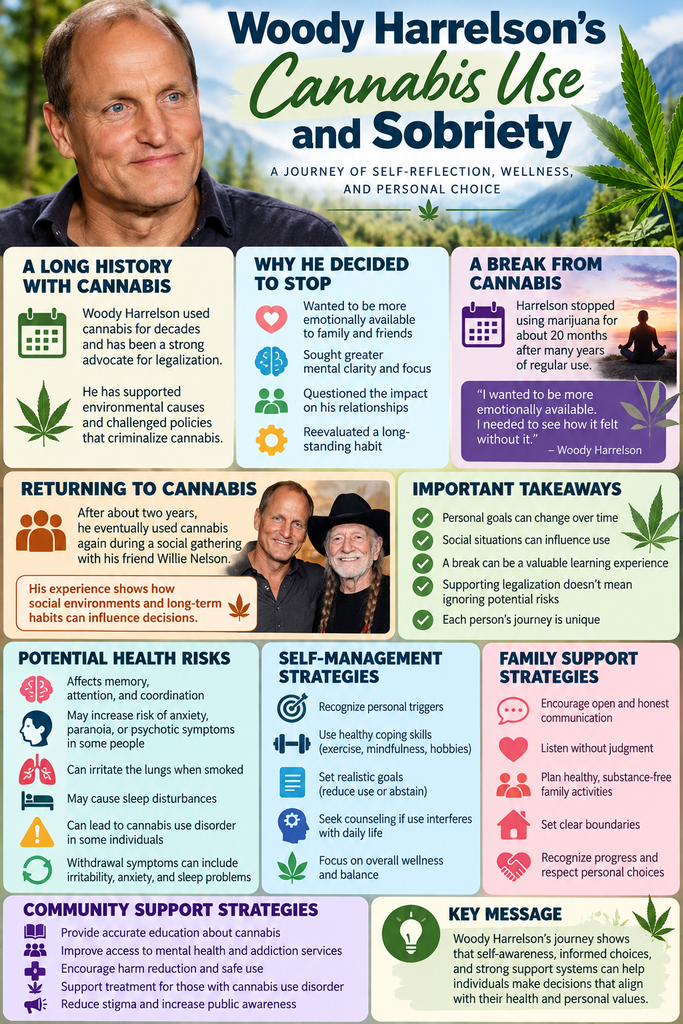
Woody Harrelson is an award-winning Hollywood actor known for his performances in Cheers, Natural Born Killers, The Hunger Games, and True Detective. Beyond his acting career, Harrelson has become a recognizable advocate for cannabis legalization, environmental sustainability, and natural living.
Throughout his life, Harrelson has openly discussed his relationship with cannabis, including his decision to stop using marijuana for several years and his eventual return to consumption. His experience offers an opportunity to explore the relationship between substance use, personal responsibility, emotional well-being, and lifestyle choices.
Importantly, Harrelson’s experience should not be described as permanent cannabis sobriety or a documented recovery from cannabis use disorder. His public statements reflect periods of abstinence, changing priorities, and continued support for cannabis legalization.
His story also raises an important question: How can individuals evaluate their relationship with cannabis and make informed decisions that support their physical, emotional, and social health?
Woody Harrelson’s Cannabis Journey: From Long-Term Use to Temporary Abstinence
Harrelson has been associated with cannabis culture for decades. He has frequently supported marijuana legalization and challenged policies criminalizing cannabis possession and cultivation.
However, in 2017, Harrelson publicly revealed that he had stopped smoking marijuana after approximately 30 years of regular use. He explained that his cannabis consumption had reached a point where he questioned its impact on his emotional availability.
He expressed concerns that frequent marijuana use was interfering with his ability to connect emotionally with others. His decision to stop was not presented as a formal addiction treatment experience but rather as a personal lifestyle change.
Harrelson also indicated that abstaining helped him maintain the mental clarity required for demanding creative projects.
Why Harrelson Decided to Stop Using Cannabis
Several factors influenced his decision:
- Emotional awareness: He questioned whether regular cannabis consumption affected his emotional connections.
- Personal relationships: He wanted to become more emotionally available to family and friends.
- Mental clarity: He recognized the importance of maintaining concentration and focus.
- Lifestyle evaluation: He reconsidered a long-standing habit and its place in his daily life.
- Personal choice: His decision demonstrated that individuals can reassess substance use even when they support legalization.
These factors reflect Harrelson’s publicly described motivations, rather than a clinical diagnosis.
Returning to Cannabis: Understanding the Complexity of Abstinence
Harrelson’s break from cannabis lasted approximately 20 months to two years.
In interviews, he explained that his longtime friend, musician Willie Nelson, repeatedly offered him cannabis during social gatherings. Harrelson initially declined but eventually accepted a vape pen while celebrating a successful poker hand.
He later described the experience humorously, indicating that his period of abstinence had ended.
In a 2023 CBS interview, Harrelson described his abstinence as a positive experiment intended to improve his emotional availability to loved ones.
This experience illustrates several important lessons about substance use:
- Social environments can influence decisions about cannabis consumption.
- Long-established habits may be associated with particular friends, activities, and celebrations.
- Personal goals regarding substance use can change over time.
- Returning to cannabis after abstinence does not automatically establish addiction or relapse.
- Individuals with cannabis use disorder may need additional support to maintain abstinence or reduce harmful consumption.
Harrelson has continued to advocate for cannabis legalization and has participated in the legal cannabis industry. His public journey is therefore more accurately described as one of cannabis use, temporary abstinence, and personal reassessment rather than sustained sobriety.
Understanding the Health Risks of Cannabis Use
Cannabis contains psychoactive compounds, particularly tetrahydrocannabinol (THC), that affect brain function, mood, perception, memory, and coordination.
Although some individuals report relaxation or temporary relief from certain symptoms, cannabis use also carries potential health risks.
Possible complications include:
- Cognitive impairment: THC can temporarily affect attention, memory, decision-making, and reaction time.
- Cannabis use disorder: Some individuals develop difficulty controlling cannabis consumption despite negative consequences.
- Mental health concerns: Frequent use, especially of high-potency THC products, may increase the risk of anxiety, paranoia, or psychotic symptoms in susceptible individuals.
- Respiratory problems: Smoking cannabis exposes the lungs to irritants and harmful combustion products.
- Sleep disturbances: Regular cannabis use may contribute to dependence on the substance for sleep, while withdrawal can cause insomnia and vivid dreams.
- Withdrawal symptoms: Irritability, anxiety, reduced appetite, restlessness, and sleep difficulties can occur after stopping frequent use.
Cannabis use does not automatically indicate addiction. Cannabis use disorder is diagnosed based on patterns of impaired control, continued use despite harm, and other established clinical criteria.
Self-Management Strategies: Building Awareness and Healthy Habits
Harrelson’s decision to temporarily stop using cannabis demonstrates the potential value of self-reflection and reassessing long-standing habits.
For individuals concerned about cannabis use, self-management begins with understanding why they consume cannabis and how it affects their lives.
1. Recognize Personal Triggers
Cannabis consumption may become associated with stress, boredom, social situations, or emotional discomfort.
Helpful strategies include:
- Identify situations that increase the desire to use cannabis.
- Keep a journal documenting cravings, moods, and use patterns.
- Recognize whether cannabis is being used to avoid difficult emotions.
- Develop alternative responses to anxiety, loneliness, or boredom.
- Avoid high-risk environments when pursuing abstinence.
2. Develop Healthier Coping Mechanisms
Healthy activities can support emotional regulation and reduce reliance on substances.
Recommended approaches include:
- Practice mindfulness, meditation, or breathing exercises.
- Participate in regular physical activity.
- Maintain consistent sleep and meal schedules.
- Explore creative hobbies and recreational activities.
- Seek counseling when cannabis is being used to manage persistent psychological distress.
3. Establish Realistic Goals
Not everyone approaches cannabis use with the same objectives. Some individuals want to reduce consumption, while others pursue complete abstinence.
Effective self-management involves identifying meaningful goals and evaluating progress.
Individuals with cannabis use disorder may benefit from evidence-based treatments such as cognitive behavioral therapy, motivational enhancement therapy, and contingency management.
Family Support Strategies: Encouraging Emotional Connection
Family relationships can influence substance use behaviors and support positive lifestyle changes.
Harrelson has publicly emphasized his desire to be emotionally available to his family and friends. His reflections demonstrate how relationships may motivate individuals to reconsider their habits.
Families can provide meaningful support without judgment, shame, or excessive control.
1. Encourage Open Communication
Family members should create opportunities for honest conversations about substance use.
Supportive approaches include:
- Listen carefully without immediately criticizing.
- Ask how cannabis affects the person’s mood and daily functioning.
- Express concerns using respectful, nonjudgmental language.
- Encourage discussions about emotional needs and personal goals.
- Recognize progress rather than focusing exclusively on setbacks.
2. Promote Healthy Family Activities
Shared activities can strengthen relationships and reduce dependence on substance-centered social interactions.
Examples include:
- Planning outdoor activities and family gatherings.
- Participating in exercise or recreational programs.
- Establishing substance-free family traditions.
- Encouraging shared hobbies and meaningful conversations.
- Supporting consistent routines and healthy boundaries.
3. Respect Individual Autonomy
Family support should encourage responsible decision-making without attempting to control another person’s behavior.
Families can:
- Respect personal choices while communicating safety concerns.
- Establish boundaries around substance use in shared spaces.
- Avoid enabling behaviors that create financial, emotional, or physical harm.
- Encourage professional evaluation when substance use interferes with responsibilities.
- Seek family counseling when relationships become strained.
Family support is most effective when compassion is combined with clear boundaries and realistic expectations.
Community Support Strategies: Education, Treatment, and Harm Reduction
Harrelson’s advocacy for cannabis legalization highlights the broader discussion surrounding substance use, public policy, personal freedom, and public health.
However, legalization and health safety are separate considerations. A substance can be legally available while still presenting risks for certain individuals.
Communities play an important role in helping people make informed decisions and access treatment when needed.
1. Expand Public Education
Community education should provide accurate, balanced information about cannabis.
Important initiatives include:
- Teaching the effects of THC on brain development and cognition.
- Explaining the signs and symptoms of cannabis use disorder.
- Raising awareness about high-potency cannabis products.
- Educating families about mental health risks and impaired driving.
- Addressing misinformation without stigmatizing individuals who use cannabis.
2. Improve Access to Behavioral Health Services
Individuals experiencing problematic cannabis use may benefit from professional assessment and treatment.
Community resources should include:
- Mental health and substance use screening programs.
- Outpatient addiction counseling.
- Cognitive behavioral therapy and motivational interventions.
- Peer recovery support groups.
- Integrated treatment for co-occurring mental health conditions.
3. Encourage Harm Reduction
Harm reduction focuses on decreasing negative consequences, including for individuals who are not ready to stop using cannabis.
Community strategies may include:
- Discouraging cannabis use during pregnancy and adolescence.
- Promoting safe storage to prevent accidental exposure among children.
- Educating individuals about avoiding driving while impaired.
- Providing information about THC potency and delayed effects of edible products.
- Encouraging people to avoid combining cannabis with alcohol or other impairing substances.
These approaches support informed choices while recognizing the importance of individual health and public safety.
Lessons From Woody Harrelson’s Experience
Harrelson’s public discussions about cannabis provide several insights into substance use and personal wellness.
His experience emphasizes that:
- Self-awareness matters: Evaluating how a substance affects emotions and relationships can motivate change.
- Abstinence can be an opportunity for reflection: A break from cannabis may help individuals assess their functioning without it.
- Social influences are powerful: Friends and familiar environments can shape decisions about substance use.
- Personal beliefs can coexist with self-evaluation: Supporting legalization does not prevent someone from questioning their own consumption.
- Recovery is individualized: People with cannabis use disorder may require structured treatment, while others may make changes without meeting diagnostic criteria.
Importantly, Harrelson’s experience should not be interpreted as evidence that cannabis is harmless or that everyone who uses cannabis requires addiction treatment.
When Should Someone Seek Professional Help?
Professional evaluation is appropriate when cannabis consumption begins interfering with daily functioning, emotional well-being, relationships, or personal responsibilities.
Warning signs may include:
- Repeated unsuccessful attempts to reduce or stop cannabis use.
- Increasing consumption or tolerance.
- Strong cravings or persistent preoccupation with cannabis.
- Continued use despite relationship or occupational problems.
- Withdrawal symptoms after reducing consumption.
- Using cannabis despite worsening anxiety, paranoia, or other mental health symptoms.
Treatment can be tailored to the individual’s symptoms, goals, and circumstances.
In the United States, the SAMHSA National Helpline at 1-800-662-HELP (4357) provides confidential treatment referral information.
Conclusion: Personal Growth Through Awareness and Choice
Woody Harrelson’s relationship with cannabis illustrates the complexity of substance use, personal beliefs, and lifestyle decisions. His temporary abstinence was motivated partly by a desire to improve emotional availability and mental clarity, while his eventual return to cannabis demonstrated how personal priorities and behaviors can change.
His story is not a traditional account of addiction recovery or permanent sobriety. Instead, it offers an opportunity to discuss the importance of recognizing how substance use affects personal well-being.
Self-management strategies can help individuals identify triggers, develop healthier coping skills, and establish meaningful goals. Family support can strengthen emotional connections through understanding, communication, and healthy boundaries. Community resources can provide education, evidence-based treatment, and harm reduction services.
Ultimately, the most important lesson is that personal wellness requires ongoing self-awareness, informed choices, and a willingness to reconsider behaviors that may no longer support one’s health and relationships.
Recovery and behavior change are not defined by celebrity experiences. They are guided by individual needs, evidence-based care, and meaningful support.
Frequently Asked Questions and Answers
1. Did Woody Harrelson struggle with cannabis addiction?
Woody Harrelson has openly discussed his long history of marijuana use, but he has not publicly confirmed a diagnosis of cannabis use disorder. Although he used cannabis regularly for decades, frequent use alone does not establish addiction. His experience highlights the importance of evaluating how substance use affects emotional health, relationships, and daily functioning.
2. Why did Woody Harrelson stop smoking marijuana?
In 2017, Harrelson revealed that he had stopped smoking marijuana because he wanted to become more emotionally available to family and friends. He expressed concern that years of frequent cannabis use had affected his emotional connections. His decision reflected personal self-awareness and a desire to improve his overall well-being.
3. How long was Woody Harrelson sober from cannabis?
Harrelson abstained from cannabis for approximately 20 months to two years after stopping around 2016. During this period, he explored life without marijuana and reflected on his emotional well-being. However, his abstinence was temporary, and he later resumed cannabis use.
4. Did Woody Harrelson relapse after quitting marijuana?
Harrelson eventually resumed cannabis use after spending time with his longtime friend, musician Willie Nelson. He described accepting a cannabis vape pen during a social gathering. Although this ended his period of abstinence, describing the event as an addiction relapse would be inaccurate without evidence that he had cannabis use disorder or was pursuing addiction recovery.
5. What role did Willie Nelson play in Woody Harrelson’s cannabis journey?
Willie Nelson, a longtime cannabis advocate and friend of Harrelson, was present when Harrelson resumed cannabis use. Harrelson has explained that Nelson had offered him cannabis on previous occasions. Their experience illustrates how friendships, social environments, and established habits can influence substance use decisions.
6. Does Woody Harrelson still use cannabis?
Harrelson has publicly discussed returning to cannabis and has remained involved in cannabis advocacy and the legal cannabis industry. However, his exact consumption habits in 2026 are not independently confirmed. His public statements should not be interpreted as evidence of continuous abstinence.
7. Why does Woody Harrelson support cannabis legalization?
Harrelson has advocated for cannabis legalization for decades. His public position emphasizes personal freedom, changes to cannabis-related criminal laws, and the potential uses of hemp. Supporting legalization does not necessarily mean believing cannabis is harmless. Public health education remains important because cannabis can produce adverse effects, particularly with frequent or high-potency use.
8. Can long-term cannabis use affect emotional health?
Yes. Frequent cannabis use may influence mood, motivation, memory, attention, and emotional regulation. Some individuals experience anxiety, irritability, or emotional difficulties associated with cannabis consumption. However, effects vary depending on THC potency, frequency of use, individual vulnerability, and underlying mental health conditions. Harrelson’s personal reflections are not proof that cannabis caused a specific psychological condition.
9. Can cannabis use lead to addiction?
Yes. Cannabis use disorder can develop when individuals experience difficulty controlling their consumption despite negative consequences. Symptoms may include cravings, tolerance, withdrawal, unsuccessful attempts to quit, and continued use despite problems with relationships or responsibilities. Not everyone who uses cannabis develops a disorder.
10. What are common cannabis withdrawal symptoms?
Individuals who regularly consume cannabis may experience withdrawal symptoms after reducing or stopping use.
Common symptoms include:
- Irritability, anxiety, or restlessness.
- Difficulty sleeping or vivid dreams.
- Reduced appetite.
- Mood changes or depressed mood.
- Strong cravings for cannabis.
- Headaches or physical discomfort.
Symptoms commonly begin within 24–48 hours, peak during the first week, and gradually improve. Sleep disturbances may persist longer in some individuals.
11. What self-management strategies can help someone reduce cannabis use?
Self-management begins with recognizing personal triggers, understanding consumption patterns, and setting realistic goals.
Helpful strategies include identifying situations that encourage cannabis use, practicing mindfulness, exercising regularly, maintaining healthy sleep routines, and developing alternative coping mechanisms. Individuals who have difficulty reducing consumption may benefit from cognitive behavioral therapy or motivational enhancement therapy.
12. How can families support someone who wants to stop using cannabis?
Families can support someone by encouraging open communication, emotional understanding, and healthy boundaries. Listening without judgment can help individuals discuss their concerns and goals.
Family members can also encourage substance-free activities, recognize positive changes, and support professional treatment when needed. Avoiding criticism, threats, and shame may improve communication and strengthen relationships.
13. What community resources are available for cannabis addiction?
Community support can include behavioral health clinics, outpatient counseling, addiction treatment programs, and peer support organizations.
Evidence-based treatments for cannabis use disorder include cognitive behavioral therapy, motivational enhancement therapy, and contingency management. Mutual-help groups such as Marijuana Anonymous may also provide peer support.
In the United States, individuals can contact the SAMHSA National Helpline at 1-800-662-HELP (4357) for confidential treatment referrals.
14. Is cannabis safer than alcohol or other substances?
Cannabis and alcohol have different health risks, making direct comparisons complicated. Alcohol can cause severe withdrawal, liver disease, and fatal poisoning, while cannabis may impair cognition, coordination, and mental health and can lead to cannabis use disorder.
Neither substance should be considered completely risk-free. Combining cannabis with alcohol can increase impairment and the risk of accidents.
15. Can cannabis worsen anxiety, depression, or other mental health conditions?
Yes. Cannabis, particularly high-potency THC products, may worsen anxiety, trigger paranoia, or contribute to psychotic symptoms in vulnerable individuals. Frequent cannabis use is associated with certain mental health problems, although the relationships are complex and do not always establish direct causation.
Individuals with existing mental health conditions should discuss cannabis use with a qualified healthcare professional.
16. Does quitting cannabis improve mental clarity?
Some individuals report improved concentration, memory, sleep quality, or emotional awareness after reducing or stopping cannabis. Cognitive improvements may occur over time, particularly after frequent use.
However, the degree of improvement varies, and some individuals experience temporary sleep disturbances, irritability, or difficulty concentrating during withdrawal.
17. Can someone recover from cannabis addiction without professional treatment?
Some individuals successfully reduce or stop cannabis use independently. However, people experiencing cannabis use disorder, repeated unsuccessful attempts to quit, or significant withdrawal symptoms may benefit from structured treatment.
Professional counseling can help individuals recognize triggers, manage cravings, address co-occurring mental health conditions, and develop strategies for maintaining long-term behavioral changes.
18. What does Woody Harrelson’s experience teach us about social influences?
Harrelson’s experience demonstrates how familiar social environments can influence decisions about substance use. His return to cannabis occurred in a social setting with a close friend.
For individuals pursuing abstinence, recognizing social triggers, communicating boundaries, and developing supportive relationships can help maintain personal goals.
19. Does supporting cannabis legalization conflict with choosing sobriety?
No. Individuals can support cannabis legalization while personally choosing to abstain from marijuana. Legalization concerns public policy, while abstinence is an individual health or lifestyle decision.
Harrelson’s experience illustrates how personal beliefs about cannabis can coexist with periods of self-evaluation and behavioral change.
20. What is the most important lesson from Woody Harrelson’s cannabis journey?
The most important lesson is the value of self-awareness and informed decision-making. Harrelson’s temporary abstinence reflected his desire to evaluate how cannabis affected his emotional connections and personal well-being.
His experience emphasizes that substance use decisions may change over time and that personal wellness involves understanding risks, maintaining healthy relationships, and seeking support when needed.
His story is not a documented journey of permanent sobriety or addiction recovery. Instead, it demonstrates how individuals can reconsider long-standing habits and make choices based on their changing priorities.
Video: