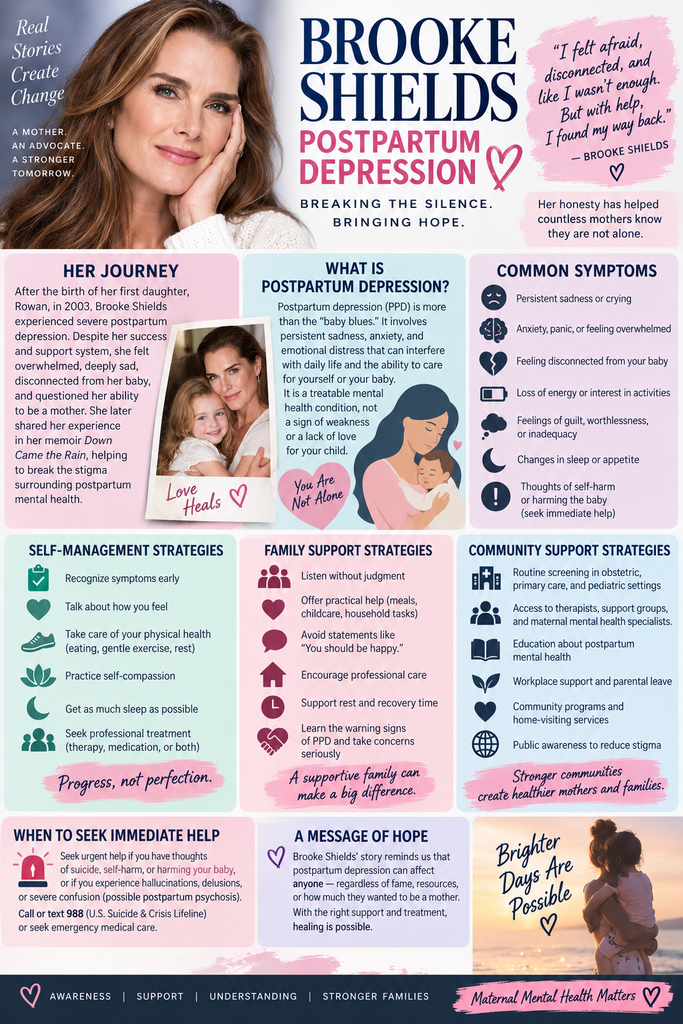
Brooke Shields has become an important public voice in conversations about postpartum depression after openly discussing the severe depression she experienced following the birth of her first daughter, Rowan, in 2003. In her memoir Down Came the Rain: My Journey Through Postpartum Depression, Shields described feelings of sadness, disconnection, fear, and difficulty bonding with her baby. By speaking publicly about an experience that many mothers once felt pressured to hide, her story helped challenge the stigma surrounding postpartum mental health.
Understanding Brooke Shields’ Experience
After giving birth, Shields expected motherhood to bring happiness and fulfillment. Instead, she experienced intense emotional distress. She has described crying, feeling disconnected from her daughter, and questioning her ability to be a mother. She also disclosed frightening thoughts associated with the severity of her depression.
Her experience demonstrates an important distinction between temporary postpartum emotional changes and postpartum depression. The “baby blues” commonly involve mild sadness, irritability, anxiety, or tearfulness during the first days after childbirth and usually improve within about two weeks. Postpartum depression is more persistent and can significantly interfere with a person’s ability to function, care for themselves, or connect with their baby.
Shields eventually received professional treatment, including psychotherapy and antidepressant medication. She has credited appropriate treatment and support as important parts of her recovery.
Why Her Story Matters
Postpartum depression can occur even when a pregnancy is wanted, a family is supportive, and a mother appears successful or fortunate. It is not evidence that someone does not love their baby or is an inadequate parent.
By discussing her experience publicly, Shields helped bring postpartum depression into mainstream conversation. Her story encouraged women and families to recognize symptoms as legitimate health concerns rather than something that should simply be overcome through willpower.
Self-Management Strategies
Self-management can complement professional treatment, although significant postpartum depression should not be managed through self-help alone.
- Recognize symptoms early. Persistent sadness, hopelessness, excessive guilt, severe anxiety, emotional numbness, loss of interest, or difficulty bonding with the baby deserve attention.
- Tell someone what is happening. Hiding symptoms because of embarrassment or fear of judgment can delay treatment.
- Protect sleep whenever possible. Sleep deprivation can intensify mood and anxiety symptoms. Sharing nighttime responsibilities may provide opportunities for restorative sleep.
- Accept practical assistance. Allow trusted people to help with meals, household responsibilities, childcare, or errands.
- Maintain basic physical needs. Regular meals, hydration, gentle physical activity when medically appropriate, and opportunities to rest can support overall recovery.
- Avoid unrealistic expectations. Social media and cultural expectations can create an idealized picture of motherhood. Recovery does not require being a “perfect” parent.
- Seek professional treatment. Psychotherapy, medication, support programs, or combinations of treatments may be appropriate depending on symptom severity and individual circumstances.
Family Support Strategies
Partners and family members can make a significant difference by recognizing that postpartum depression is a health condition rather than a character flaw.
- Listen without judgment or statements such as “You should be happy.”
- Reassure the mother that seeking treatment does not mean she has failed as a parent.
- Help with feeding, household responsibilities, appointments, and childcare when appropriate.
- Encourage adequate opportunities for sleep and personal recovery time.
- Learn the warning signs of postpartum depression and postpartum psychosis.
- Encourage professional evaluation when symptoms persist or worsen.
- Take any discussion of suicide, self-harm, or harming the baby seriously and obtain immediate professional assistance.
Families should also remember that support does not mean trying to replace professional mental health treatment.
Community Support Strategies
Healthcare systems and communities have an important role in identifying postpartum mental health conditions before they become crises.
- Obstetric, primary-care, and pediatric settings can routinely screen for postpartum depression and anxiety.
- Hospitals can provide postpartum mental health education before families leave after delivery.
- Communities can increase access to therapists, psychiatrists, support groups, home-visiting programs, and maternal mental health specialists.
- Employers can support parental leave and reasonable opportunities for postpartum healthcare appointments.
- Peer-support groups can connect mothers with others who understand similar experiences.
- Public education campaigns can challenge the misconception that motherhood should always be joyful.
- Healthcare professionals should make mental health referrals accessible rather than simply telling patients to “get help.”
Recognizing an Emergency
Postpartum depression can sometimes become severe. Thoughts of suicide or harming oneself require urgent professional attention. Postpartum psychosis is a different and particularly serious condition that may involve hallucinations, delusions, extreme confusion, paranoia, severe agitation, or rapidly changing behavior.
These symptoms constitute a psychiatric emergency. The individual should not be left alone with the baby while emergency medical and psychiatric assistance is obtained. In the United States, people experiencing a suicidal or mental health crisis can call or text 988, while immediate danger warrants emergency medical services.
Lessons From Brooke Shields’ Journey
Brooke Shields’ experience demonstrates that postpartum depression can affect women regardless of fame, resources, professional success, or how much they wanted to become mothers. Her willingness to describe her symptoms publicly helped give other women permission to acknowledge experiences that had often been surrounded by shame.
Her journey also reinforces that recovery usually involves more than simply trying harder to feel happy. Recognizing symptoms, accepting support, obtaining appropriate professional treatment, and allowing time for recovery can all be important.
Conclusion
Brooke Shields’ postpartum depression journey helped transform a deeply personal struggle into a broader conversation about maternal mental health. Her experience reminds families that depression after childbirth is not a sign of weakness, ingratitude, or poor parenting. It is a treatable mental health condition deserving the same compassion and medical attention as other illnesses.
For mothers experiencing postpartum depression, asking for help can be an important part of protecting both their own well-being and their family’s well-being. For families and communities, listening without judgment, recognizing warning signs, providing practical support, and connecting mothers with appropriate healthcare can help replace isolation and shame with understanding, treatment, and hope.
Frequently Asked Questions
Here are some common questions:
1. Did Brooke Shields experience postpartum depression?
Yes. Brooke Shields has publicly described experiencing severe postpartum depression after the birth of her first daughter, Rowan, in 2003. She later documented her experience in her memoir Down Came the Rain: My Journey Through Postpartum Depression.
2. What symptoms did Brooke Shields describe?
Shields has discussed overwhelming sadness, crying, anxiety, difficulty bonding with her baby, feelings of inadequacy, and frightening thoughts. Her experience illustrates how postpartum depression can affect emotions, thoughts, relationships, and everyday functioning.
3. Did Brooke Shields have difficulty bonding with her baby?
Yes. Shields has spoken about initially feeling emotionally disconnected from her daughter. Difficulty bonding can occur with postpartum depression and does not mean that a mother does not love her child.
4. How did Brooke Shields receive treatment?
Shields has discussed receiving psychotherapy and antidepressant medication as part of her treatment. Her experience highlights that postpartum depression is a treatable medical condition and that different people may require different treatment plans.
5. What is the difference between the “baby blues” and postpartum depression?
The baby blues commonly involve temporary mood changes, tearfulness, irritability, or anxiety shortly after childbirth and generally improve within about two weeks. Postpartum depression tends to be more persistent or severe and can interfere with a person’s ability to function or care for themselves and their baby.
6. What causes postpartum depression?
There is usually no single cause. Hormonal changes, sleep deprivation, psychological stress, previous mental health conditions, difficult pregnancy or birth experiences, limited social support, and other biological and environmental factors may contribute.
7. Can postpartum depression happen to someone who wanted a baby?
Absolutely. Postpartum depression does not indicate that a mother did not want or love her child. It is a health condition rather than a measure of someone’s ability or desire to be a parent.
8. What self-management strategies may support recovery?
Helpful strategies can include protecting sleep, accepting assistance, eating regularly, engaging in gentle physical activity when medically appropriate, staying connected with supportive people, practicing self-compassion, and discussing symptoms openly. These approaches should complement—not replace—professional treatment when depression is significant.
9. How can families support someone with postpartum depression?
Families can listen without judgment, help with childcare and household responsibilities, encourage rest, attend appointments when invited, and support professional treatment. Statements such as “you should be happy” can increase guilt and should be avoided.
10. How can communities better support mothers with postpartum depression?
Communities can improve routine screening, expand access to maternal mental health professionals and support groups, educate families about warning signs, provide home-visiting services, and promote workplace policies that support postpartum recovery and parental leave.
11. Why was Brooke Shields speaking publicly about postpartum depression important?
Her openness brought greater public attention to a condition that many mothers had experienced privately due to embarrassment, guilt, or fear of judgment. Her story helped reinforce that postpartum depression deserves recognition and appropriate treatment.
12. Can postpartum depression be treated successfully?
Yes. Many people improve with appropriate care. Treatment may include psychotherapy, medication, social and practical support, or a combination of approaches depending on symptoms, medical history, breastfeeding considerations, preferences, and severity.
13. Is postpartum depression the same as postpartum psychosis?
No. Postpartum psychosis is much less common and is a psychiatric emergency. Symptoms can include hallucinations, delusions, severe confusion, paranoia, extreme agitation, or dramatically altered behavior.
14. When should someone seek immediate help?
Immediate assistance is needed when a postpartum person has thoughts of suicide or harming themselves or their baby, develops hallucinations or delusions, becomes severely confused, or appears unable to remain safe. In the United States, call or text 988 for a mental health crisis or call 911 when there is immediate danger.
15. What is the main lesson from Brooke Shields’ journey?
Her experience demonstrates that postpartum depression can affect anyone, regardless of success, resources, or how much they love their child. Recognizing symptoms, reducing shame, accepting family support, and obtaining professional treatment can create a path toward recovery.
Video: What Brooke Shields wants you to know about postpartum #mentalhealthawareness #shorts