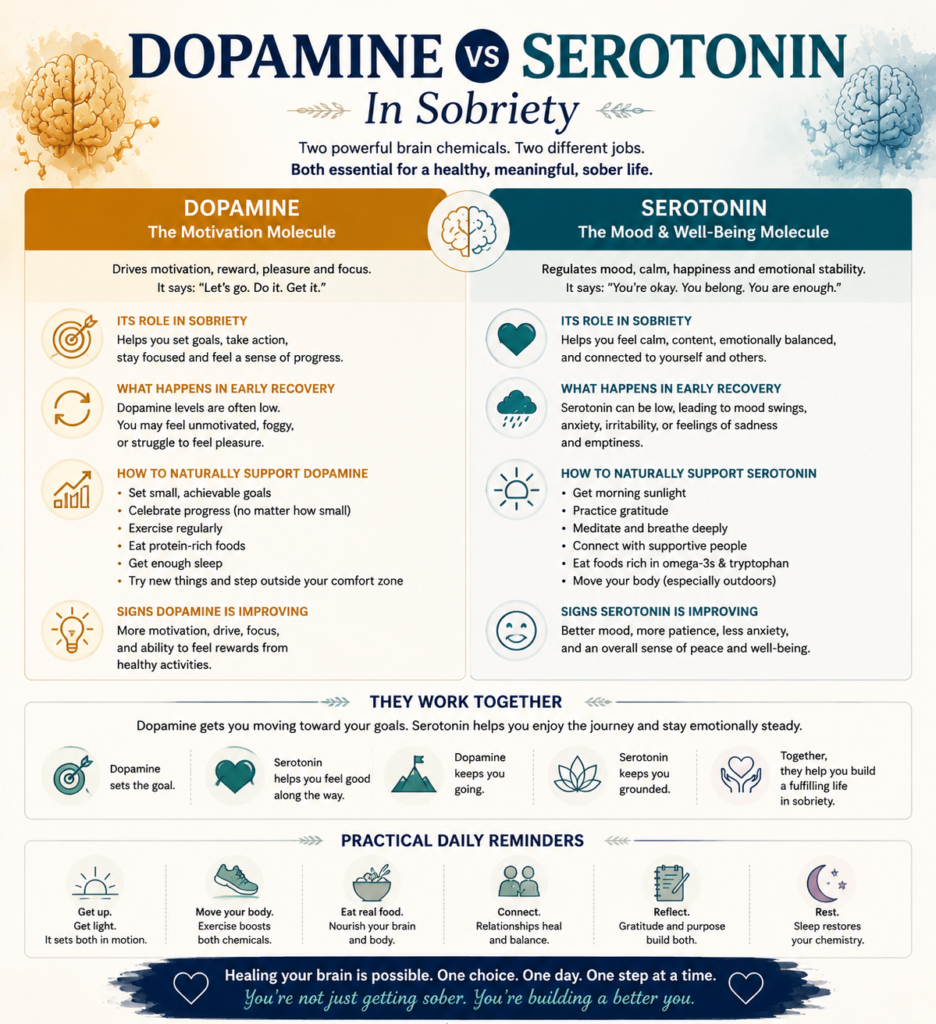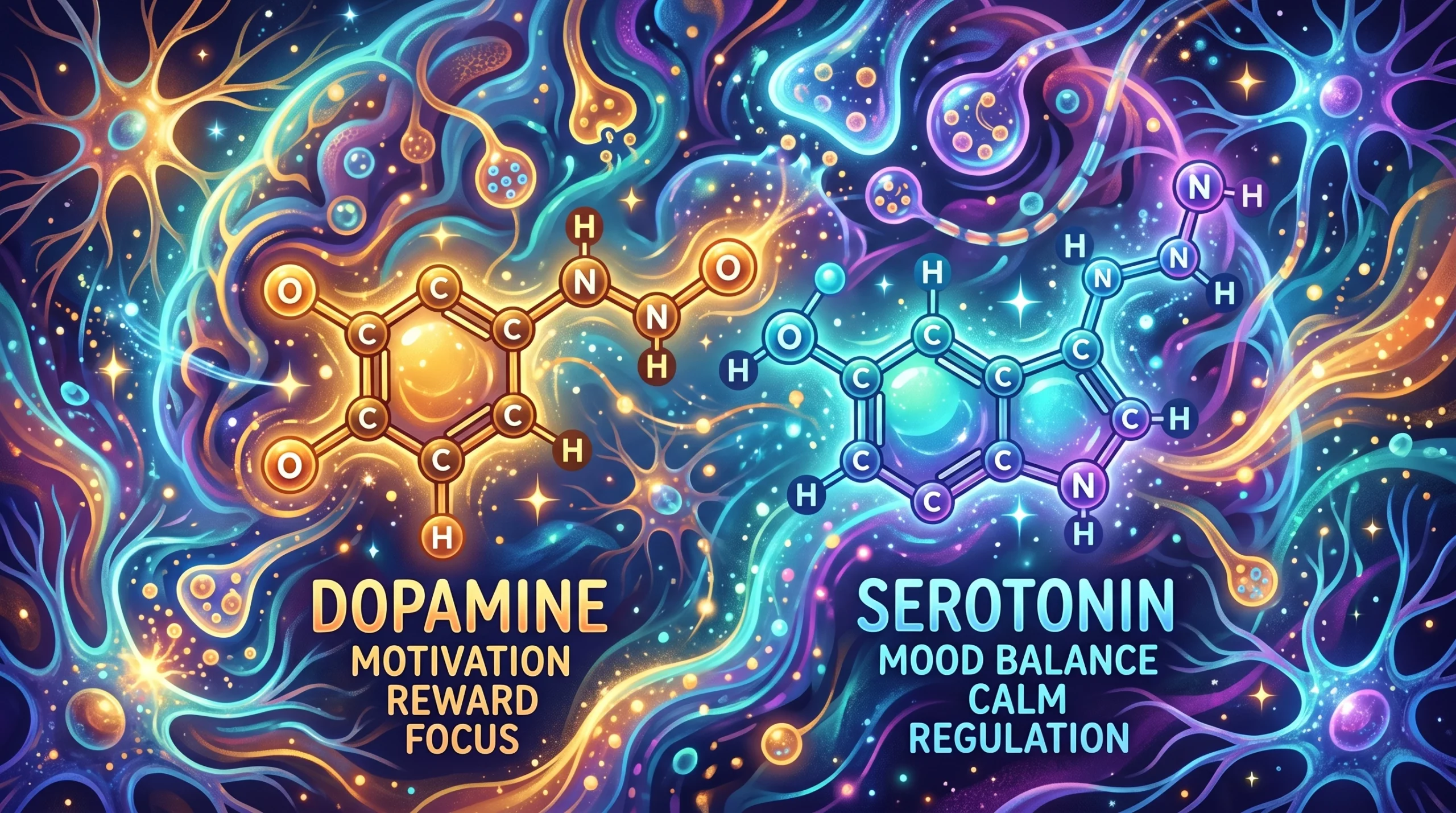
Dopamine and serotonin are two brain chemicals I hear about a lot when it comes to mental well-being, motivation, happiness, and especially recovery from drugs or alcohol. Both play a big part when someone is working through sobriety, but their roles, effects, and even the way they change during recovery are pretty different. I’m breaking down what makes dopamine and serotonin tick, how they show up in sober life, and why understanding them can add a lot of clarity to the ups and downs of the recovery adventure.
Understanding Dopamine and Serotonin
Dopamine and serotonin are both neurotransmitters. That just means they help send signals in the brain and keep everything running smoothly. While they sometimes get lumped together, each has its own job and “personality.”
- Dopamine: This one usually deals with pleasure, motivation, and reward. Any time you’re excited about a goal, chasing a buzz, or even feeling a burst of creativity, dopamine is working in the background.
- Serotonin: Think more along the lines of calm, mood balance, and well-being. Serotonin plays a bigger part in helping you feel stable and steady, less anxious and less impulsive.
Both are really important for mental health, but they influence sobriety quite differently. Knowing the nuts and bolts helps clear up a lot of confusion about cravings, relapses, or feeling “blah” in recovery.
Dopamine’s Role in Addiction and Sobriety
Dopamine is what scientists often call the “reward chemical.” It shoots up any time you get something your brain enjoys, like eating good food, getting praise, or doing drugs and drinking. Substances like alcohol, nicotine, and lots of drugs basically take over this system. They push your dopamine levels through the roof, causing that rush, buzz, or sense of ease that makes the habit hard to break.
Over time, intense or repeated substance use changes how your brain works. It can make regular, everyday things less satisfying, since nothing compares to that dopamine spike from your drug of choice. This is a big reason early sobriety can feel flat or joyless for many people. Regular things just don’t light up your reward system the same way.
When you stop using, dopamine drops fast, and your brain needs time to get back to normal. During this phase, motivation and energy are usually pretty low. The craving for those quick dopamine hits can stick around for a while, which makes relapse more tempting, especially when things get tough or boring.
Serotonin’s Contribution to Mood and Recovery
Serotonin doesn’t offer the instant buzz or thrill that dopamine does. Instead, it’s more of a steadying, mood-balancing force. Higher serotonin makes you feel calm, optimistic, and less anxious. Low serotonin, on the other hand, is connected with depression, irritability, and sometimes problems sleeping.
Lots of people in recovery deal with mood swings, anxiety, or trouble sleeping. Sometimes these are withdrawal symptoms, and sometimes they’re the original issues that made someone want to use substances in the first place. Serotonin helps keep these symptoms manageable. Balanced serotonin makes sticking with sobriety a bit easier because the urge to soothe yourself with substances goes down.
Certain medications for depression or anxiety specifically target serotonin (SSRIs, for example) for good reason. They work to increase serotonin inside the brain, smoothing out rough moods and giving people a more even keel.
How Dopamine and Serotonin Interact During Recovery
Dopamine and serotonin often affect each other, and they’re both heavily involved in how someone experiences sobriety. Here’s what really matters:
- Early Recovery: Dopamine bottoms out after quitting alcohol or drugs. People might feel bored, empty, or unable to find pleasure in normal activities. Serotonin may be off kilter, too, leading to mood swings and anxiety.
- Long-Term Sobriety: Over time, and with healthy routines, dopamine slowly resets. Every day “wins,” positive routines, and hobbies start to feel rewarding again. Serotonin also stabilizes with good sleep, connection, and self-care, making moods less likely to spiral and lessening impulsivity.
New, positive habits help both systems recalibrate. Social support, exercise, sleep, hobbies, and therapy all boost dopamine and serotonin, the natural way, helping to fill in the gaps left behind by substance use.
Ways to Support Healthy Dopamine and Serotonin in Sobriety
There are some pretty effective, realistic ways to help these two neurotransmitters do their job, especially if you’re trying to stay sober for the long haul. Here’s what has worked well for me and others I know in the sober community:
- Exercise: Physical activity, whether it’s a walk, gym session, or dance class, can give both dopamine and serotonin a natural boost. Plus, it burns off energy that might otherwise build up to anxiety or cravings.
- Consistent Sleep: Not getting enough sleep messes with both chemicals. Building better sleep routines helps with mood and energy.
- Nutrition: Foods like eggs, cheese, salmon, nuts, and dark chocolate contain elements that help your brain create more serotonin and dopamine. Regular meals stabilize your mood and energy.
- Connection: Even short chats or group meetings can make a difference. Community, or even pets, can naturally increase your feel-good chemicals.
- Creative Activities: Trying something new, like music, art, gardening, or writing, helps dopamine flow naturally and makes life more enjoyable in sobriety.
Building habits that work for you makes a big difference for both the reward system (dopamine) and the mood system (serotonin). Over time, your brain learns to feel satisfied and steady all on its own.
Challenges People Face with Dopamine and Serotonin in Recovery
While it’s good to know how these chemicals work, it’s also true that managing them in real life can be tricky. Here are some common hurdles I see, along with ways to move through them:
- The “Blahs”: That flat, unmotivated feeling is really common in early sobriety. It’s tempting to chase quick fixes for old habits, but healthy routines can help a lot, even if they take time to work.
- Mood Swings: Rollercoaster emotions show up, especially if serotonin is out of balance. Therapy and community can offer support; it’s easier when you aren’t going it alone.
- No Quick Results: Natural dopamine and serotonin resets don’t happen overnight. Reminding yourself (or hearing from others) that it gets better over time can help keep you patient.
- Mental Health Symptoms: Anxiety and depression sometimes get worse before they get better. Sometimes outside help, such as therapy or medication, makes a real difference.
It’s not unusual to need support, information, or even medical help to get through these stages. Everyone’s recovery timeline is a little different, so don’t be hard on yourself if it’s taking a while.
Real-World Examples and Common Scenarios
I’ve seen people make huge changes once they understand what’s actually happening in their brains. For example, someone who always felt unmotivated during the first months of sobriety learned it’s not “laziness”; it’s just their dopamine system slowly resetting. Or another friend who was constantly anxious realized small fixes, like better sleep or walks with a friend, could actually support serotonin levels. Knowing what’s going on behind the scenes really helps with self-compassion and sticking with new habits.
- Social Gatherings: Early on, parties or bars can seem much less fun without alcohol’s dopamine boost. Over time, new sources of reward, like talking, music, or even just showing up, start to feel naturally good again.
- New Challenges: Stressful events might trigger old cravings. That’s the dopamine system looking for relief. Recognizing the urge as a brain “glitch” helps with riding it out until it passes.
- Mental Wellness Check-Ins: Checking in with a mental health professional if things feel really off can rule out deeper problems with serotonin or dopamine, like clinical depression, and get a plan in place to make things easier on you.
Frequently Asked Questions
Some of the questions I get most around this topic tend to be similar, no matter who’s asking. Here are a few:
Question: Why do I feel less motivated after quitting drinking or drugs?
Answer: Your dopamine system is adjusting after being overstimulated by substances. Normal activities just feel less exciting for a while, but this changes as your brain heals.
Question: How can I feel happier in early sobriety?
Answer: Focus on daily routines that support serotonin (like healthy food, exercise, and sleep). Patience and consistency are key, and community helps a ton.
Question: Should I try supplements for dopamine or serotonin?
Answer: Some people consider supplements, but it’s best to chat with a healthcare provider first since underlying mental health conditions might need a different approach.
Dopamine and Serotonin in the Larger Sobriety Adventure
Sobriety isn’t just about cutting out drugs or alcohol. It’s about building a new way to find reward, joy, and balance. Understanding how dopamine and serotonin work in recovery can take away a lot of the mystery or shame around feeling low, flat, or anxious. Healthy routines, support, and a little patience go a long way. Over time, both of these brain chemicals learn to work with you, not against you, in building a new, rewarding life. If you stick with it, you’ll not only build lasting sobriety but also a deeper appreciation for all the ways your brain supports you as you keep moving forward.
Video: Dopamine vs Serotonin in Sobriety #holisticaddictionrecovery