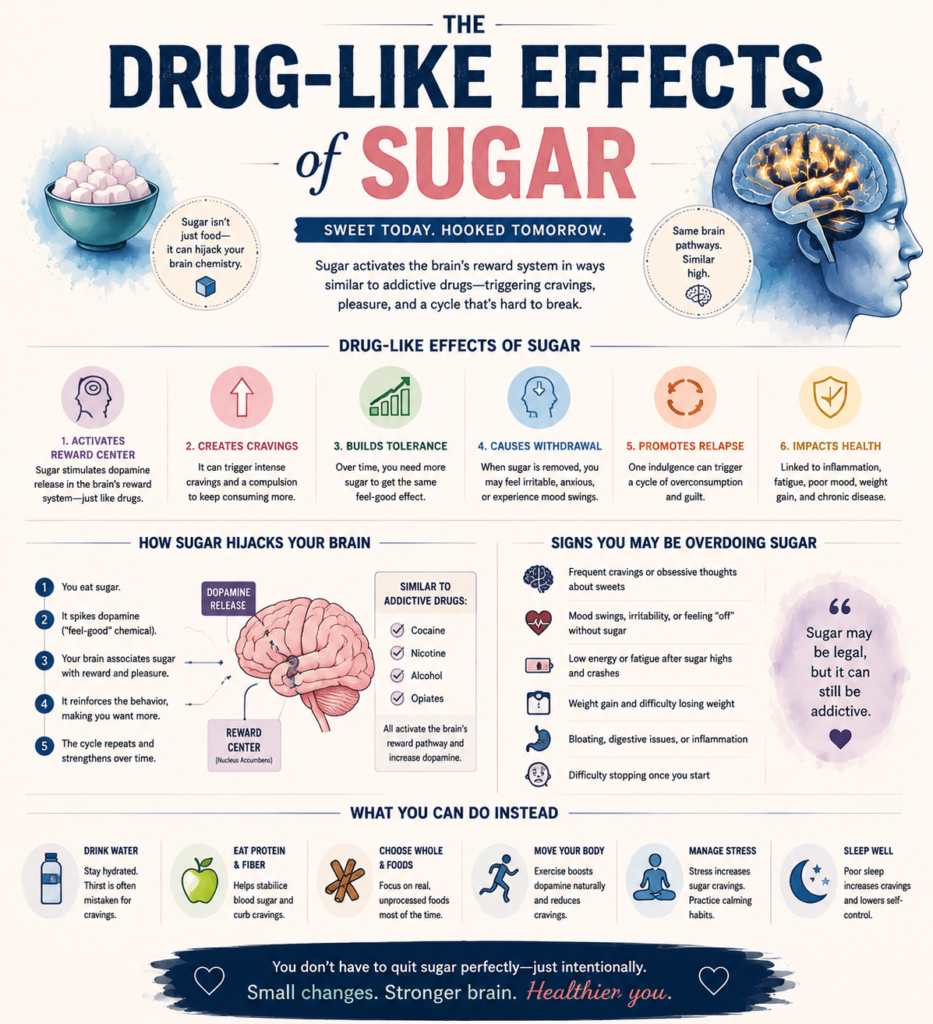
Sugar doesn’t just make your morning coffee sweeter. It can actually work on your brain in some pretty wild ways. The science around sugar and its drug-like effects is surprisingly deep, touching everything from brain chemistry to cravings and long-term health. I’m going to unpack how sugar influences both our minds and bodies, and why it sometimes feels impossible to resist that next cookie.
How Sugar Works in the Brain
Eating sugar sets off a chain reaction in your brain that’s oddly similar to what happens when you use certain recreational drugs. When you bite into a donut or sip a sugary soda, your body quickly breaks down the sugar, causing your blood glucose to rise. But the real action happens in your brain’s reward system, specifically in an area called the nucleus accumbens.
This part of your brain releases dopamine, the so-called “feel-good” chemical, when you eat something sweet. Dopamine plays a big part in pleasure, motivation, and forming habits. That rush you get when eating cake or chocolate is not so different from the way some drugs increase dopamine, making you want to chase the feeling again and again.
Some studies, such as this well-known review in Scientific American, even point out that your brain adapts over time. The more sugar you eat, the more you need to get that same pleasurable feeling, so you end up wanting more just to feel “normal.”
Sugar and Cravings: Why You Want More
Sugar cravings can feel ridiculous at times. You might eat lunch, swear you’re full, and then somehow still reach for something sweet, almost automatically. This isn’t about willpower. Sugar’s pull on your brain can override your body’s hunger signals.
Long-term sugary eating rewires your brain’s reward center. That’s why you might find yourself daydreaming about ice cream or cake when you’re bored or stressed. These cravings aren’t just a bad habit; they’re a real signal from your brain, prodded by the dopamine reward mechanism.
- Dopamine Tolerance: Over time, you can develop a sort of “tolerance,” meaning you need more sugar for the same buzz. This cycle closely matches what’s seen in some forms of addiction.
- Triggers: Stress, low mood, or even a habit can make sugar cravings hit harder. Some days, it can feel like sugar is the only thing that will lift your mood fast.
- Habits and Environment: Places loaded with sugar cues, like office birthdays, family treats, and vending machines, make resisting even tougher. Your brain isn’t just responding to what you eat but also to what you see and smell.
Physical Effects: Sugar’s Impact on the Body
Sugar doesn’t just hang out in your brain. It works its way through pretty much every part of your body, often in ways that aren’t so sweet over time.
- Blood Sugar Highs and Lows: That energy boost after a cupcake is thanks to a spike in your blood glucose. But what goes up must come down, and those rapid drops can leave you feeling moody, sleepy, or irritable.
- Inflammation: High sugar intake is linked with inflammation throughout the body. Chronic inflammation is linked to a range of issues, including joint pain, skin flare-ups, and an increased risk of disease over time.
- Fat Storage: Unused sugar gets converted and stored as fat, mostly around your belly. This isn’t just about appearance; it’s connected to heart disease, diabetes, and other long-term health problems.
Harvard Health talks about many of sugar’s health downsides here, which is worth checking out if you want details and references.
Why Sugar Feels So Rewarding
Your love for sugar is not just a personal quirk. It’s hardwired into humans. Back in prehistoric times, sweet foods meant energy and survival, so our brains grew to treat sugar as a reward. Today, though, we’re surrounded by sugar, and those same instincts drive us to seek out sweet stuff even when we don’t really need it.
The combination of dopamine release, emotional comfort, and that instant taste satisfaction makes sugar a triple threat. No wonder so many people feel like cravings are tough to ignore; you’re wrestling with your biology, not just your willpower.
Common Roadblocks When Cutting Back on Sugar
Trying to scale back on sugar sometimes feels tougher than giving up coffee. The drug-like effects show up in withdrawal, cravings, and side effects.
- Withdrawal Symptoms: Coming off sugar, especially at first, can lead to headaches, mood swings, fatigue, and even irritability. This is your brain’s reward system pushing back against the change.
- Social Pressure: Parties, family dinners, or even movie nights can turn into tests of willpower.
- Hidden Sugars: Sugar hides in places you wouldn’t expect, like pasta sauce, salad dressing, or bread, making it tricky to cut out entirely.
Tips for Overcoming Sugar’s Pull
I’ve had plenty of customers and friends work through these challenges, and a few practical steps usually help. Swapping out sugar-laden snacks for fruit, upping your protein intake for more stable energy, and reading labels more carefully are great places to start. Sometimes I even keep a food diary for a week, just to track where sneaky sugar is slipping in.
To make cutting down on sugar easier, mix up your snack routine: try crunchy veggies with hummus or popcorn with a little olive oil and sea salt. Drink more water, especially when you think you might be hungry. Thirst can sometimes be confused with sugar cravings. Planning meals ahead of time helps reduce the temptation to grab something sugary when you’re rushed or feeling low.
Dealing With Cravings
Cravings hit everyone, including me. I try to make small switches, like having tea with cinnamon instead of honey, or choosing Greek yogurt over those super-sweet flavored ones. Having handy snacks such as nuts, cheese sticks, or a banana can keep you from reaching for a candy bar when hunger or boredom strikes.
Social support counts for a lot, too. Tell a friend or family member about your goal to cut down on sugar. Sometimes, when the people around you know what you’re working on, they’re less likely to offer sweets or snacks that could set you off track. Group challenges, even informal ones, can help keep your motivation up and make the whole process feel less lonely.
Advanced Insights: How Sugar Hooks the Brain
If you want to geek out a bit, scientists have done experiments comparing sugar’s ability to trigger addictive-like responses in animals. In these studies, rats given intermittent access to sugar show withdrawal-like signs and even changes in their brain chemistry, much like the effects seen with drugs of abuse.
One of the more interesting findings is that the brain’s opioid system, which is involved with both pain and pleasure, lights up in response to sugar much as it does with some pain medications. This doesn’t mean sugar is exactly like a hard drug, but it does show the brain processes pleasure and the urge for more in consistent ways, no matter the source.
Check out this National Institutes of Health review for a more academic look.
Frequently Asked Questions
Here are some things people ask me regularly about sugar and its drug-like effects.
Is sugar really addictive?
While the word “addictive” is still debated, sugar does have properties that keep you coming back for more by influencing your brain’s reward system the way some drugs do. Not everyone gets hooked, but a lot of people do battle with cravings that feel just as real.
Why do I get headaches or feel cranky when I skip sugar?
This is usually your brain’s way of reacting to a sudden drop in dopamine stimulation. It’s super common and usually fades as your body adjusts to a lower-sugar routine.
How much sugar is actually okay each day?
Guidelines from organizations like the American Heart Association suggest aiming for under 25–36 grams a day (about 6–9 teaspoons), though even less is better for most folks. The less added sugar, the easier it is to keep energy and mood steady.
Are natural sugars healthier?
Sugar in fruit (fructose) or dairy (lactose) is paired with fiber, vitamins, and minerals, which help it break down more slowly and provide additional nutrients. It’s the added sugars in packaged goods and drinks that tend to hit the brain and body hardest.
What I’ve Learned About Sugar’s Druglike Effects
Over the years, seeing how easy it is for people (myself included) to slip into a sugar-heavy routine has really mixed up how I view “just one treat.” Knowing sugar can light up my brain and drive long-term cravings means I pay more attention to how much sweet stuff sneaks in, and I’m quicker to swap sweets for savory snacks when I know I’ll be tempted.
Building awareness, staying honest with yourself about how sugar makes you feel, and leaning on friends or family for support can go a long way. If cutting back feels tough, know you’re working against both habit and biology, but it is definitely doable.
Understanding the druglike effects of sugar isn’t only about health warnings; it’s about reclaiming control over what you eat and how you feel, one small choice at a time.
Video: Compulsive Eating Has a Brain Reason #SugarAddiction #NeuroscienceExplained