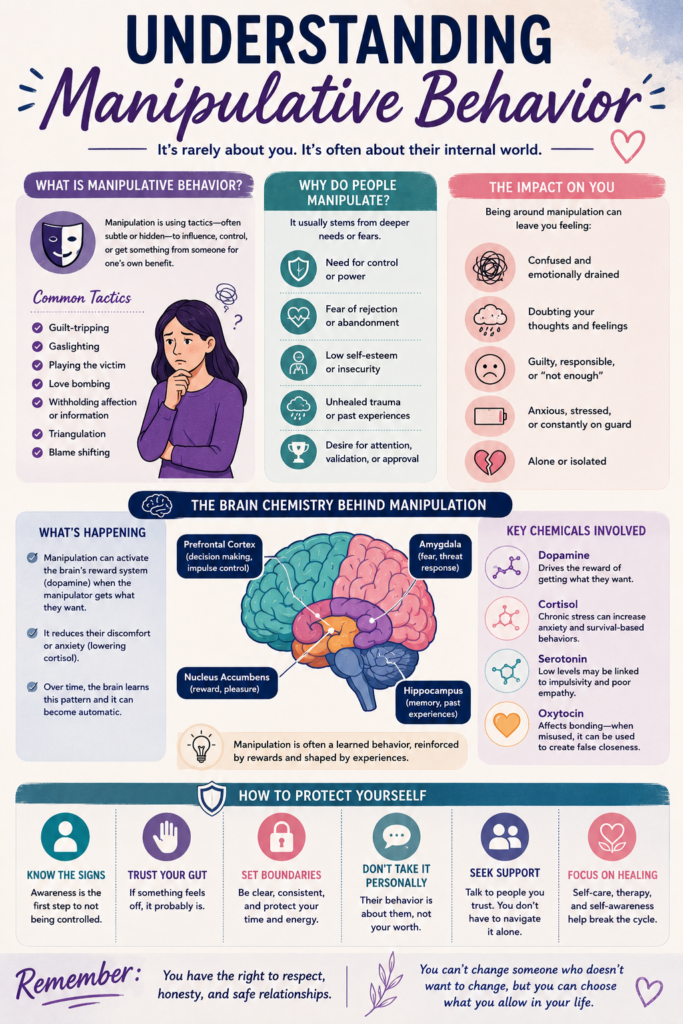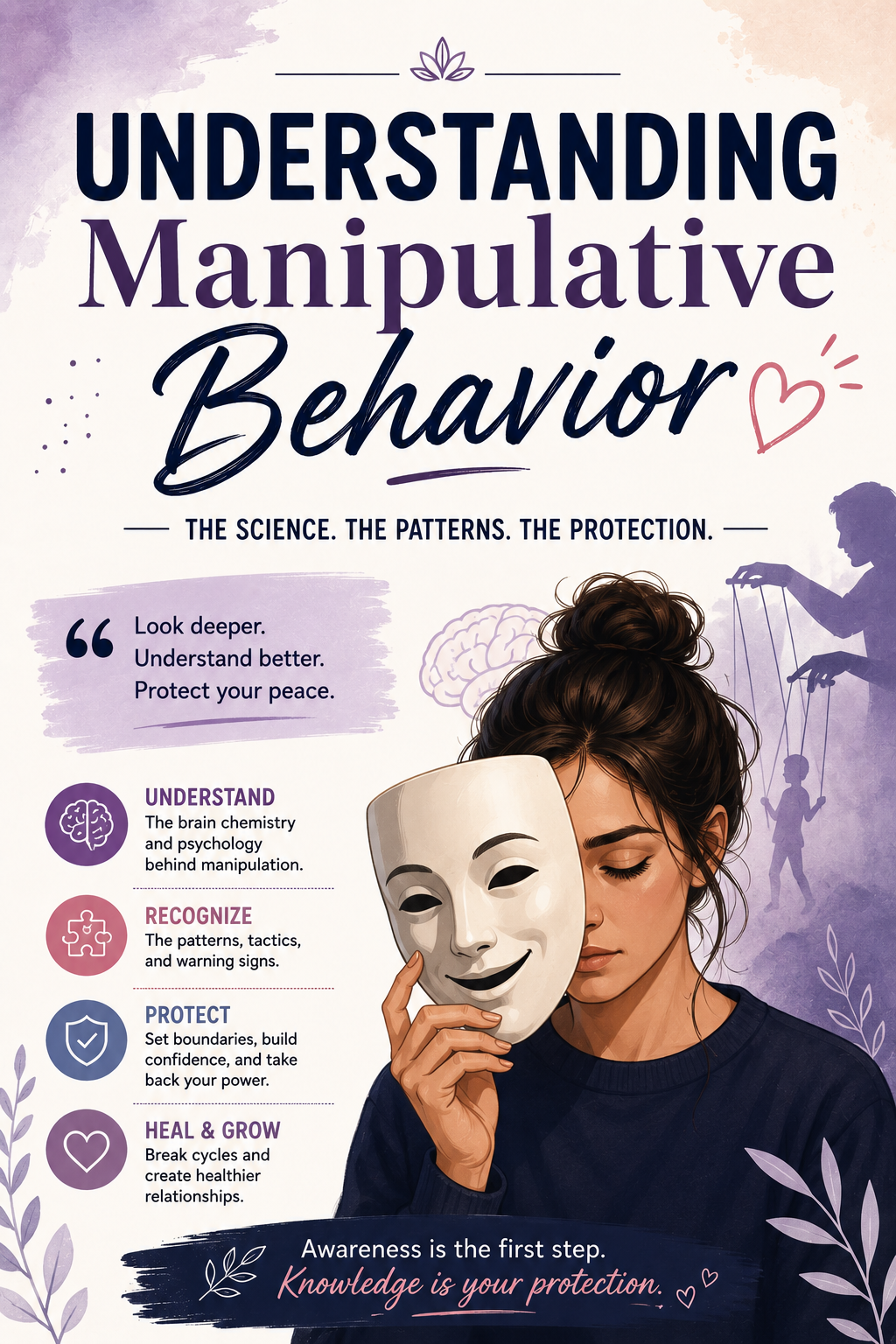
Manipulative behavior often has deeper roots than it appears. Brain chemicals such as dopamine, serotonin, cortisol, and oxytocin influence emotions, stress, rewards, and relationships. Trauma, insecurity, chronic stress, and unhealthy childhood experiences can shape how people respond to others. For some, manipulation becomes a learned way to gain control, avoid rejection, reduce anxiety, or get emotional needs met. Because these behaviors can trigger the brain’s reward system, they may become automatic over time. Understanding the brain science behind manipulation does not excuse harmful actions, but it helps explain how emotional wounds and learned patterns influence behavior. With self-awareness and healthier coping skills, people can develop more honest and positive ways of connecting with others.
The Role of Brain Chemistry in Manipulative Behavior
Chemical messengers, called neurotransmitters, help the brain send signals. When it comes to social interactions and manipulation, three main chemicals get involved: dopamine, serotonin, and cortisol. Each one of these can encourage or even reinforce behaviors that bend the truth, push boundaries, or exploit relationships.
Dopamine is known as the “reward” chemical. For some people, getting away with something or convincing others to do something can cause a tiny rush similar to winning a game. This rewarding feeling can actually encourage a person to use manipulation again because their brain connects the act with a positive outcome. If you’ve ever felt proud or sneaky after a prank or bending the rules just a bit, you’ve tasted a small version of this effect.
Serotonin, often associated with mood and a sense of being valued, can also come into play. When a manipulative person gets positive attention or social approval, serotonin levels rise. This good feeling reinforces the behavior and helps them feel more confident repeating those social tricks.
Cortisol, the stress hormone, spikes in tense or confrontational situations. Manipulation can sometimes be a way to avoid direct stress or conflict and control stressful situations. If someone feels backed into a corner, their brain might trigger tactics designed to get them out quickly, even if they aren’t entirely fair to others.
Adding to this mix, oxytocin – often called the “bonding” hormone – may also play a role. It’s usually linked to trust and connection. Sometimes, individuals skilled at manipulation use tactics that boost oxytocin in others, making their targets feel more comfortable and open. This makes manipulation easier and sometimes harder to detect, since the manipulator seems trustworthy or even caring.
How Manipulative Behaviors Develop
Brain chemistry doesn’t tell the whole story by itself. Upbringing, early relationships, social learning, and even trauma set the foundation on which those brain chemicals act. People often pick up manipulative habits early on by watching how problems are solved or avoided in their families, at school, or among peers.
For example, if a child learns that they can get what they want through guilt-tripping or exaggeration, their brain forms connections between these actions and the rewards they bring. Each successful attempt builds these neural pathways, making them easier to use next time. The brain gets conditioned by experience, so the more the behavior is used, the more natural it becomes.
Stressful or unstable environments can push this even further. If someone grew up in a place where honesty led to punishment or resources were scarce, the brain becomes better at detecting subtle signals from others and seeking shortcuts to avoid danger or discomfort. Manipulation can become a coping tool, not just a way to “win” in social settings.
At times, manipulation may be modeled by adults or even subtly encouraged. If caregivers use manipulation to move through their own challenges, children may learn those strategies as the norm. In schools or groups where competition is fierce, the use of manipulation can even be seen as a survival skill, further reinforcing those neural pathways and strengthening the habit over time.
Key Brain Regions Involved in Manipulation
It’s not just chemicals—it’s also about the actual structures in our heads. The prefrontal cortex, amygdala, and areas associated with empathy all play a role in the process of manipulation.
- Prefrontal Cortex: This part of the brain handles planning, decision-making, and weighing consequences. When this area is highly active, people can better control impulses, but it can also help them plan complex social strategies, including those that twist the truth or skirt the rules.
- Amygdala: Responsible for emotional processing, the amygdala reacts fast to threats or stress. In some cases, if it pushes out too much anxiety or defensiveness, a person might act manipulatively to protect themselves or calm down a stressful situation.
- Empathy Circuits: Brain regions such as the anterior insula and parts of the cingulate cortex are associated with empathy. When these aren’t as active, or when someone learns early on to tune out others’ feelings, manipulation becomes easier and less emotionally difficult to pull off.
The insula also plays a role in processing emotions and bodily sensations, which manipulators may use to gauge their impact on others—allowing them to adapt their approach in real time to be more effective.
Common Manipulative Tactics and Their Brain Links
Manipulative behaviors take a bunch of different forms, and each works a little differently in the brain. Here are a few common ones and what’s likely happening chemically and neurologically:
- Gaslighting: This is when someone makes another person doubt their memory or perception. The manipulator’s brain may release dopamine each time they successfully create confusion and gain control, reinforcing the pattern.
- Guilttripping: Making someone else feel responsible or at fault triggers discomfort for the other person and relief for the manipulator. That sense of relief is often fueled by a drop in cortisol and a boost in serotonin if the tactic works.
- Lovebombing: Using excessive attention or affection to influence another person’s choices. Here, dopamine surges in both parties initially, creating a “high” that can be addictive and works to build trust that’s later exploited.
- Emotional Withdrawal: Sometimes, manipulators might deliberately withhold affection or communication. This can trigger anxiety—and a rise in cortisol—in the target, who then tries harder to win back approval, giving the manipulator more power.
- Triangulation: Involving a third party to control or confuse a situation is a common manipulation tactic; it can give the manipulator a sense of dominance and trigger reward circuits in the brain.
When Does Manipulation Turn Into a Pattern?
There’s a difference between a little bending of the truth and having a full-on pattern of manipulative behavior. This usually happens when the habit is repeated and rewarded over time. The brain’s pathways become well-worn, essentially teaching the person that manipulation is a reliable choice in difficult situations.
Some people develop personality styles, like “Machiavellianism” or even antisocial tendencies, that involve manipulation as a regular strategy. In those cases, the brain shows less activity in empathy-related areas and more in reward-driven circuits.
Learning to spot these patterns, both in yourself and in others, can really help you set boundaries and respond in healthy ways. Even though not every manipulator has a diagnosable mental health issue, those who often rely on these tactics might benefit from support or counseling to address deeper roots.
Challenges and Considerations in Understanding Manipulative Behaviors
Brain chemistry offers useful clues, but it’s not an excuse for harmful actions. It’s really important to remember that personal responsibility and growth are always possible. Understanding where manipulative behaviors come from can actually make it easier to create change. Getting help or practicing new, healthier responses can slowly reshape those brain pathways.
Research on manipulation and the brain is still developing. Some studies highlight the roles of genetics and inherited personality traits, while others examine how social and cultural factors play a role. What’s clear so far is that a mix of nature (your biology) and nurture (your environment) shapes how manipulative habits develop and stick around.
Another challenge is that society sometimes rewards manipulative tactics, whether at school, in the workplace, or in pop culture. This can make it confusing to know what’s acceptable and what’s harmful, especially for people still learning boundaries. Keeping an eye out for ethics and empathy is an ongoing challenge for everyone.
Genetics and Manipulation
You might be wondering if manipulation runs in families. There’s some evidence that genetic factors can influence impulsivity, risk-taking, or low empathy—all pieces that can contribute to manipulation. However, it’s usually the interaction between genes and environment that matters most.
Family studies suggest that certain personality traits—such as sensation seeking and low emotional sensitivity—may be inherited. Still, environmental influences, such as role modeling, have a powerful impact on which children pick up manipulative styles and which do not.
Social Learning and Media Influence
We’re all shaped in part by what we see in movies, TV, or online. Characters who use manipulation are often celebrated or rewarded in stories, which shapes how young people, in particular, learn what’s “okay.” Being exposed to manipulative role models can nudge someone to test these strategies on their own.
For example, children observing reality TV personalities or fictional characters who win out through manipulation may try these tactics in their own lives—especially if the media narrative frames those characters as clever or successful. This kind of modeling can set behavioral expectations in subtle but long-lasting ways.
Frequently Asked Questions
Here are some real-world questions about how brain chemistry ties to manipulation and what you can do with this information.
Question: Can people change manipulative habits even if their brains are wired that way?
Answer: Yes, new research on brain plasticity shows that with consistent effort and support, people can form new habits and reduce reliance on manipulation. Therapy, honest conversations, and mindfulness can really help.
Question: Do some people have a natural tendency to manipulate more than others?
Answer: Some people might be more likely due to genetics or early life experiences, but environment and learning have big impacts. No one is “stuck” being a manipulator forever.
Question: How can I protect myself from being manipulated?
Answer: Awareness of manipulative tactics, setting boundaries, and practicing assertive communication are all super important. If you feel off-balance or consistently question your reality around someone, consider seeking an outside perspective or professional support.
Real-Life Applications and Moving Forward
Knowing how brain chemistry and experience tie into manipulative tendencies isn’t just about understanding others; it’s about helping yourself set better boundaries and grow healthier relationships. Building skills like active listening, empathy, and clear communication can actually boost positive brain chemistry, boosting genuine connection and trust.
Therapists and counselors often use techniques to break old habits and rewire the brain for more honest, direct communication. Seeking this kind of support, especially if manipulation is hurting your relationships, can be really helpful and opens up new ways of relating to others.
By looking at both the brain science and the real-world side of things, many people find that understanding is the first step toward lasting change. The bottom line: manipulation, at its root, is complex, but it’s a pattern that can be recognized, understood, and changed. Growing awareness and learning new ways to relate can let you break the cycle, whether for yourself or in your relationships with others.
Video: The Exact Moment Manipulation Takes Hold #psychology #narcissist